

Executive Overview
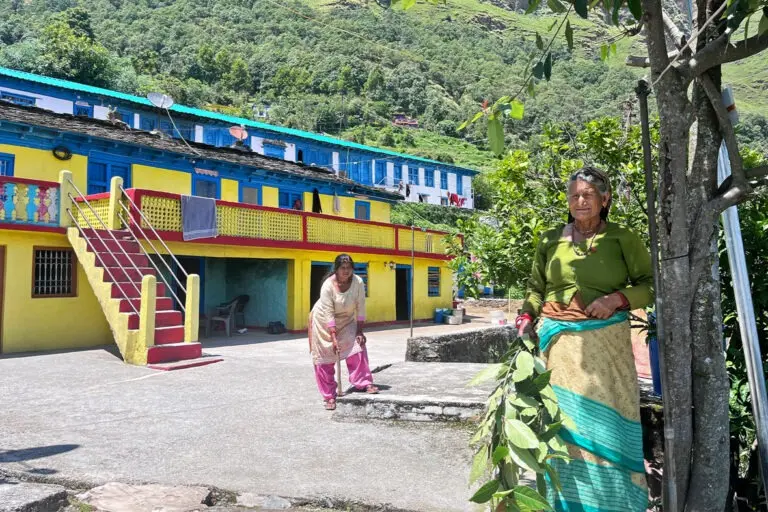
In the rugged, cloud-draped terrain of India’s Western Himalayas, a quiet ecological and humanitarian crisis is unfolding out of sight of mainstream urban consciousness. As escalating climate pressures turn the state of Uttarakhand into the most fire-prone region in the Indian Himalayas, an invisible workforce has emerged as the primary line of defense against encroaching infernos. They are the rural women of the hills—mothers, farmers, and community leaders who routinely risk their lives to protect their homes, families, and vital ecosystems.
Armed with little more than traditional household sickles, wearing flammable synthetic sarees, and receiving neither formal training, protective gear, nor financial compensation, these women act as the de facto first responders to devastating forest fires. Driven by a combination of generational stewardship, economic necessity, and systemic institutional neglect, their daily reality stands as a stark testament to the gendered burdens of climate change.
While male migration to urban centers leaves rural households increasingly female-headed, these women manage arduous agricultural cycles, livestock maintenance, and firefighting simultaneously. Despite facing severe health hazards—ranging from smoke inhalation and severe burns to chronic respiratory ailments—their grassroots interventions have proven remarkably effective. In villages where women hold genuine decision-making power through traditional councils known as van panchayats, community-led prevention models have successfully suppressed blazes, proving that local empowerment is just as crucial to ecological preservation as heavy machinery and state intervention.
Detailed Chronology: The Anatomy of a Grassroots Defense
To understand how rural women became the frontline defense against Himalayan wildfires, one must examine the daily mechanics of survival, crisis response, and the chronological escalation of ecological threats in Uttarakhand.
The Daily Routine and the Spark of Crisis
The sequence of events leading to a wildfire response almost always begins with traditional labor. Because over 71% of Uttarakhand is forested, serving as the ecological backbone that provides drinking water, firewood, and cattle fodder, rural women spend hours daily navigating dense woodlands. Kavya Pandey, a researcher at the Centre for Wildlife Studies (CWS) in Bengaluru, notes that historical gender divisions of labor dictate that women collect firewood. Consequently, they are organically positioned on the frontlines when spontaneous blazes ignite.
When a fire breaks out in remote areas lacking telecommunications infrastructure, the chain of command is entirely decentralized and manual. "If a woman sees fire anywhere, and she does not have a phone, she calls out to others by ululating or whistling, and all the women go together to snuff the fire," explains Kamla Devi, head of the Marhmanley village van panchayat. This acoustic early-warning system bridges deep geographical isolation, summoning neighbors across steep ravines within minutes.
Engagement and Tactial Defense
Upon gathering at the site of the blaze, the women execute a rapid, improvisational tactical assessment. Equipped primarily with household sickles, they harvest green branches to construct jhapa—makeshift, dense fire brooms.
According to Asha Devi, a resident of Bhetuli village, the tactical response bifurcates based on fire intensity:
- Low-Intensity Blazes: "When the flames are not too high, we use jhapa to beat back the fire directly," Asha Devi explains. The heavy foliage smothers oxygen supply and beats down the flames.
- High-Intensity Blazes: When crown fires or high-wind blazes outpace direct suppression, the women switch to engineering fire lines. "If they are high, we clear a fire line instead; some of us push the fire back toward the already-burnt ground, while others use their sickle to pull away dry grass and twigs so it has nothing left to catch on."
This hand-to-hand combat against nature is executed without flame-retardant suits, heavy boots, or respirators. The physical toll is immediate and severe. Women battle towering infernos clad in standard synthetic nylon sarees—fabrics notoriously prone to melting and adhering to skin upon exposure to extreme heat. Burns to the hands, singed facial features, and severe foot injuries are commonplace.
Following the immediate suppression effort, the physiological aftermath lingers for days. Tulsi Devi, a resident of Ayarpani village, describes the heavy toll: "We are all coughing our lungs out; during that time, our eyes are bloodshot, irritated by all the smoke, and it’s hard to breathe in the thick air."
Supporting Context & Metrics: Climate Pressures and Socioeconomic Shifts
The escalation of forest fires in Uttarakhand is not merely a localized phenomenon; it is deeply intertwined with macro-level environmental degradation and shifting socioeconomic demographics across the Western Himalayas.
Environmental Catalysts and Climate Metrics
Data from ecological monitoring agencies highlights alarming trends across the Indian Himalayan Region (IHR):

- Accelerated Warming: High-elevation warming in the Western Himalayas currently exceeds global average rates. This thermal shift has fundamentally altered regional weather patterns, shrinking winter snowpacks and extending the wildfire season well into traditional winter months.
- Fire-Prone Landscapes: Uttarakhand consistently ranks as the most fire-prone state within the Indian Western Himalayas. The convergence of dry pine needles (which are highly flammable and resinous) and extended drought periods creates a continuous tinderbox.
- Ecosystem Disruptions: Frequent, unmanaged fires trigger massive ecosystem-level changes, destroying broad-leaved native flora—like oak trees that retain soil moisture—and encouraging the monoculture proliferation of highly combustible chir pine.
Socioeconomic Shifts: Male Migration and Female-Headed Landscapes
Compounding these environmental stressors is a profound economic transition. Climate change directly impacts local agriculture, reducing crop yields, disrupting traditional sowing calendars, and drying up natural water springs. As agrarian livelihoods become increasingly precarious, a socioeconomic migration wave has seen men leave rural villages en masse to seek wage labor in urban centers.
This phenomenon has left Uttarakhand’s mountain villages in a state of hyper-feminization regarding labor. Rural women are left behind to shoulder the tripartite burden of subsistence farming, livestock rearing, and forest fire defense. While regional authorities occasionally hire male villagers as paid, seasonal fire watchers, women are almost systematically excluded from formal employment roles, emergency stipends, and institutional protection, despite performing the vast majority of actual suppression work.
Official Statements and Community Governance
The institutional gap in wildfire management has forced rural communities to innovate from the bottom up, leaning on traditional governance systems to protect their natural capital.
The Role of Van Panchayats
Van panchayats (community-managed forest councils) represent a crucial institutional framework in Uttarakhand, granting local populations a degree of autonomy over forest resource management. Where these councils are functional and led by empowered women, the results in fire mitigation are striking.
Research indicates that roughly 95% of forest fires in India are anthropogenic—sparked by human negligence, discarded cigarette butts, unattended agricultural burnings, or malicious intent. Recognizing that prevention is far more effective than reactive suppression, leaders like Kamla Devi have instituted strict community protocols.
"Before, people burned brush haphazardly, but now we insist on planning. We show them where and how to set small, controlled burns," notes Kamla Devi.
Under her leadership, the Marhmanley village van panchayat has successfully kept its surrounding forests completely free of major blazes for three consecutive years. By replacing chaotic, uncoordinated burning practices with rigorous community oversight, these councils demonstrate that traditional ecological knowledge combined with female-led enforcement offers a blueprint for modern fire management.
The Policy Disconnect
Despite these localized successes, critical policy gaps remain. Conservationists and researchers, such as Kavya Pandey of the Centre for Wildlife Studies, emphasize that state disaster management frameworks frequently overlook the gendered realities of environmental labor.
Official state standard operating procedures (SOPs) for forest fire management heavily prioritize centralized bureaucratic responses, aerial tracking, and deployment of forest department personnel. Yet, because fires often start in remote upper reaches where department response times can stretch into days, it is invariably the local women who arrive first. Institutional recognition of this reality—translating into hazard pay, basic firefighting equipment, safety gear, and formal inclusion in disaster response planning—remains glaringly absent from state budgets.
Future Outlook: Sustainable Pathways for Himalayan Fire Management
As global temperatures continue to rise, the trajectory of Western Himalayan forest fires points toward longer, more intense seasons. Without structural interventions, the physical and economic burdens borne by the women of Uttarakhand will become entirely unsustainable. Experts suggest a multi-pronged roadmap for the future:
- Formal Integration and Compensation: State disaster management authorities must formally recognize rural women as official community first responders. This must include fair wages, seasonal hazard allowances, and institutional integration into district-level emergency frameworks.
- Provision of Basic Safety Equipment: Moving away from vulnerable synthetic attire and makeshift jhapa brooms is a humanitarian necessity. Equipping van panchayat members with flame-retardant clothing, proper footwear, hand-held fire-beaters, and basic communication devices (such as satellite or ruggedized two-way radios) will drastically reduce injury rates.
- Strengthening Community-Led Governance: Scaling up successful models like Marhmanley’s proactive burning protocols across all of Uttarakhand can curb anthropogenic fire starts. Financial and logistical support should be channeled directly through van panchayats, empowering local women to manage controlled burns and forest clearance safely.
- Addressing Climate-Driven Migration: Long-term resilience requires bolstering rural economic opportunities so that families are not fractured by forced migration, ensuring that a balanced labor force is present to manage land stewardship.
The women of Uttarakhand stand today as the literal and figurative shields of the Western Himalayas. Their courage preserves not only their immediate homes and livelihoods, but also the vast ecological watersheds that sustain millions downstream. Until institutional policies catch up with ground-level realities, these women will continue to face smoke, sickles, and flames alone—guarding a fragile paradise at great personal cost.



