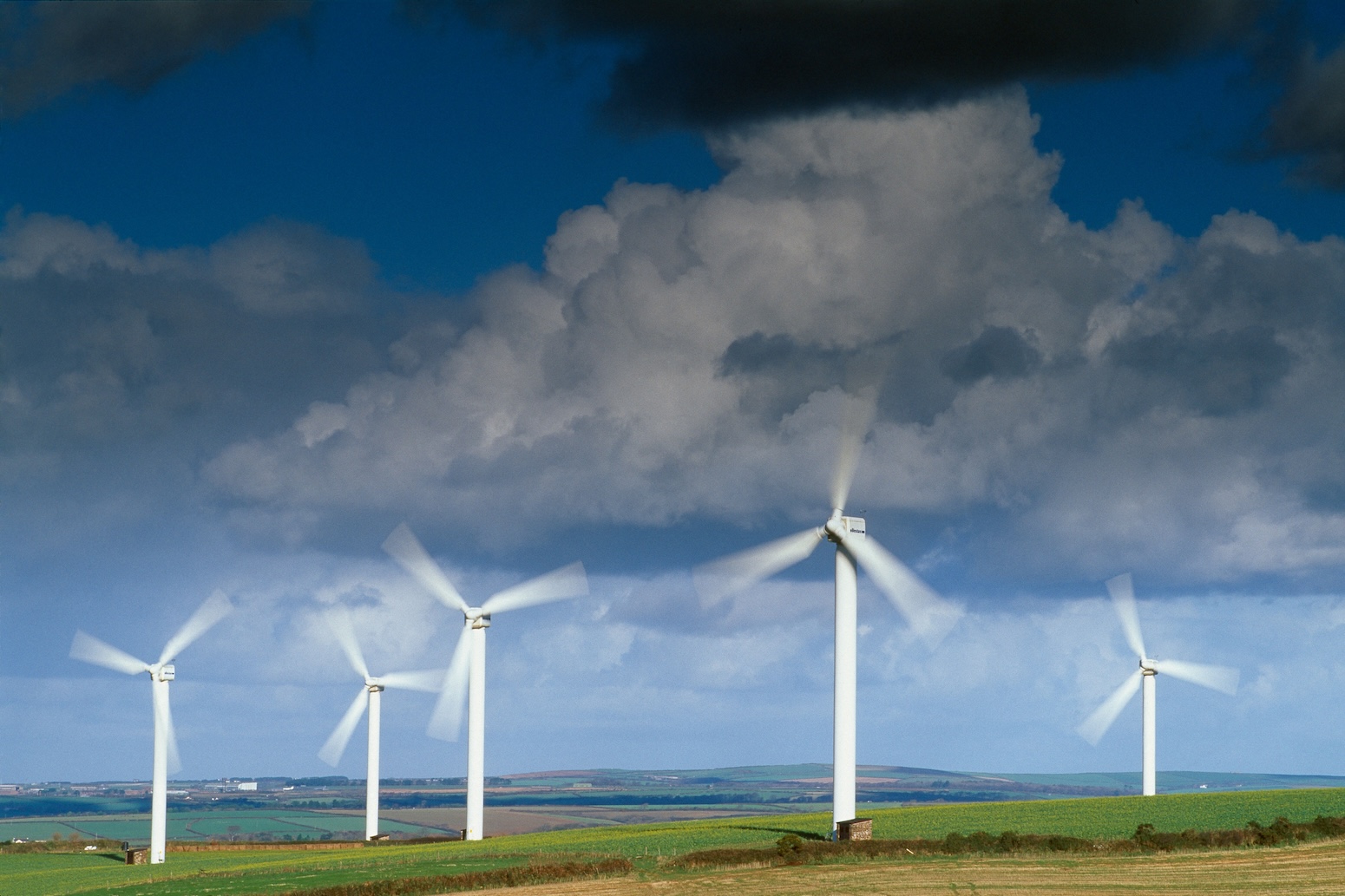
As Great Britain accelerates its transition away from fossil-fuelled electricity toward a grid powered overwhelmingly by wind and solar, energy policy faces an existential physical reality: weather intermittency. When atmospheric high-pressure systems stall over Western Europe—bringing motionless air and overcast skies in a phenomenon known in the energy sector by the German term dunkelflaute ("dark doldrums")—solar panels and wind turbines fail to generate power for days or weeks at a time.
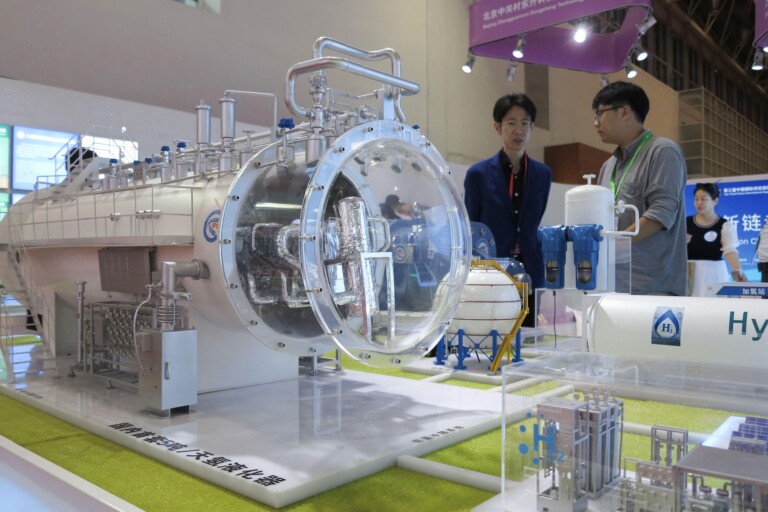
To bridge these supply gaps without relying on unabated natural gas generators, the United Kingdom is launching a national strategy to deploy Long-Duration Energy Storage (LDES)—colloquially termed "super batteries." Designed to store massive quantities of energy when generation is abundant and dispatch it over extended periods, these systems represent the missing structural link in the UK’s bid for clean power.
       TYPICAL ELECTRICITY STORAGE SPECTRUM IN THE UK GRID
  ┌───────────────────────┬───────────────────────┬───────────────────────┐
  │   Short-Duration      │    Medium-Duration    │ Long/Ultra-Long (LDES)│
  │     (0 - 4 Hours)     │    (4 - 12 Hours)     │  (12+ Hours to Weeks) │
  ├───────────────────────┼───────────────────────┼───────────────────────┤
  │ • Standard Li-ion     │ • Extended Li-ion     │ • Pumped Hydro (PSH)  │
  │ • Grid Frequency Control│ • Flow Batteries     │ • Compressed Air (CAES)│
  │ • Short Demand Spikes │ • Intraday Shifting   │ • Hydrogen / Thermal  │
  └───────────────────────┴───────────────────────┴───────────────────────┘
The scale of this infrastructure expansion is unprecedented in modern British history. Energy regulator Ofgem has identified an initial tranche of 16 commercial LDES projects totaling 7.6 gigawatts (GW) of capacity—and provisionally approved them for support under a newly crafted financial framework known as the "cap-and-floor" scheme.
By guaranteeing a revenue baseline for developers while placing a ceiling on outsized profits, the mechanism aims to unlock private capital for high-upfront-cost infrastructure. Modeling indicates that integrating LDES at scale could reduce broader UK energy system operating costs by more than £24 billion between 2030 and 2050, primarily by reducing network congestion payments, avoiding fuel costs, and curbing the wasteful "curtailment" of green electricity.
Detailed Chronology
The technological and regulatory journey to modernise Great Britain’s energy storage grid spans four decades of shifting market priorities and policy regimes.
                  CHRONOLOGY OF UK ENERGY STORAGE DEVELOPMENT

  1984 ─── Dinorwig Power Station ("Electric Mountain") Commissioned (1.7 GW)
    │
  2015 ─── UK Battery Grid Capacity near 0 GW; heavy reliance on Gas Peakers
    │
  2024 ─── Labour Government publishes Clean Power 2030 Action Plan (4-6 GW LDES target)
    │     Ofgem introduces LDES "Cap-and-Floor" Financial Framework
    │
  2025 ─── Cap-and-Floor Application Window: 171 proposals (52.6 GW) submitted
    │     77 projects (28.7 GW) pass initial eligibility screening
    │
  2026 ─── Ofgem issues "Minded-To" decisions for 16 flagship projects (7.6 GW)
          Innovate UK launches £10m funding scheme for 100+ hour storage
The Early Era: Hydroelectric Dominance (1984–2014)
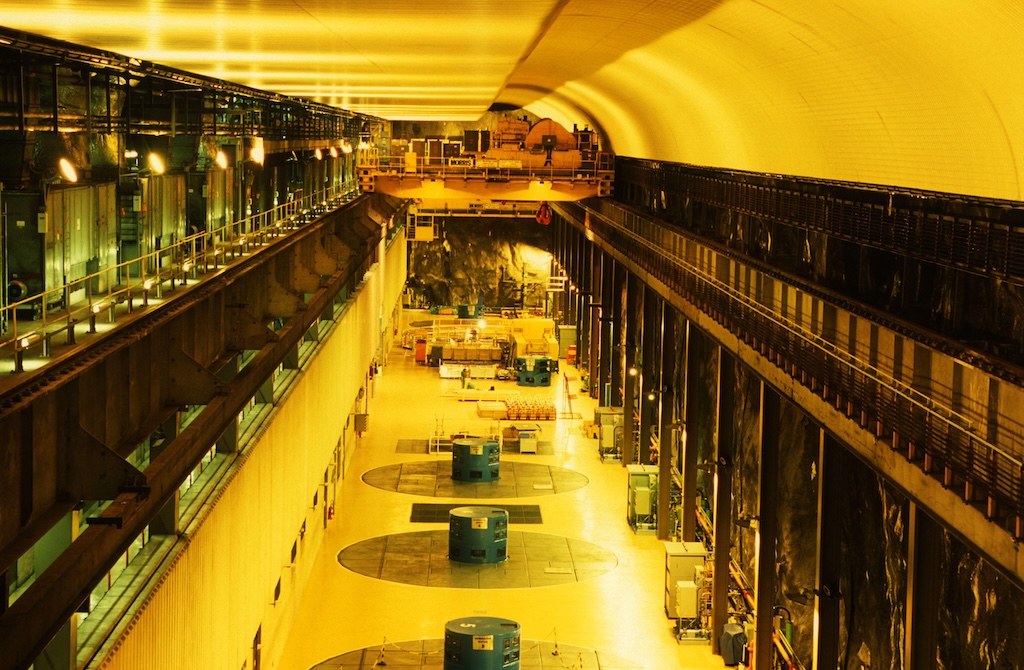
For decades, British energy storage was defined by a single major civil engineering achievement: the Dinorwig Power Station in Snowdonia, North Wales. Commissioned in the 1980s and dubbed the "electric mountain," the 1,728-megawatt (MW) pumped hydro asset was built primarily to absorb off-peak overnight electricity from baseload nuclear power stations and release it rapidly during sharp peak demand events.
Along with three smaller Scottish hydro facilities, Dinorwig formed Great Britain’s baseline asset pool of 2.8 GW of long-duration capacity. However, following market deregulation in the late 1980s and the expansion of cheap natural gas generation, no new major storage installations were constructed for over thirty years.
The Lithium-Ion Surge (2015–2024)
As renewable installations mounted in the mid-2010s, short-duration battery energy storage systems (BESS)—dominated by short-run lithium-ion chemistries rated for 1 to 2 hours of output—expanded rapidly. Driven by falling technology costs, commercial utility-scale battery deployment grew from virtually zero in 2015 to over 6 GW by mid-decade.
These assets excelled at short-run grid frequency balancing and absorbing intraday demand spikes, such as TV-pickup events during major sporting broadcasts. During the 2026 FIFA World Cup, for example, national demand surged by 1.7 GW at full-time during key matches—a spike instantly absorbed by batteries and hydro units. However, these short-run batteries lacked the storage volume needed to sustain energy supply during multi-day weather lulls.
Recognizing that short-duration lithium assets could not resolve multi-day balancing issues, the UK government formulated a dedicated policy architecture:
2024 Strategy Target: The Department for Energy Security and Net Zero (DESNZ) embedded a target of 4 to 6 GW of LDES deployment by 2030 into its Clean Power 2030 Action Plan.
Cap-and-Floor Architecture: Ofgem structured a underwriting framework modeled on Great Britain’s successful subsea electricity interconnector program. Under this policy, if an asset’s market revenue falls below an agreed floor, consumers cover the shortfall via grid tariffs; if earnings exceed a pre-set cap, excess profits are returned to billpayers.
The 2025–2026 Application Window: Developer response was overwhelmingly strong. A total of 171 projects representing 52.6 GW applied for entry into the cap-and-floor regime. Ofgem filtered these down to 77 eligible proposals (28.7 GW) before issuing a "minded-to" decision in June 2026 to back 16 primary projects totaling 7.6 GW.
Legislative and Innovation Backing: Parliament supported the rollout by amending statutory planning rules through the Planning and Infrastructure Act, while national agency Innovate UK opened a targeted £10 million funding round in August 2026 specifically focused on "ultra-long duration" storage solutions capable of continuous discharge for 100 hours or more.
Supporting Context & Metrics
Defining the Storage Spectrum
A key technical issue in energy governance involves standardizing what qualifies as "long duration." Discrepancies persist across institutional definitions:
                      LDES DEFINITIONAL THRESHOLDS

  DESNZ (Government Dept.)   │ [== 4 Hours to Years ========================>]
                             │
  Ofgem (Regulator)          │      [== 8 Hours to Years =──────────────────>]
                             │
  Royal Society (Academia)   │                   [== Days to Seasons =======>]
                             └────────────────────────────────────────────────
Sir Chris Llewellyn Smith, emeritus professor of physics at Oxford University and lead author of a landmark Royal Society study on energy storage, argues that policy classifications must distinguish medium-term load shifters from true strategic reserves:
"The government seems to describe LDES as including things which we would regard as short or medium duration storage. For us, long duration is technology that can endure not just for hours, but into seasons, years, and decades."
Technology Breakdown of Provisional Cap-and-Floor Winners
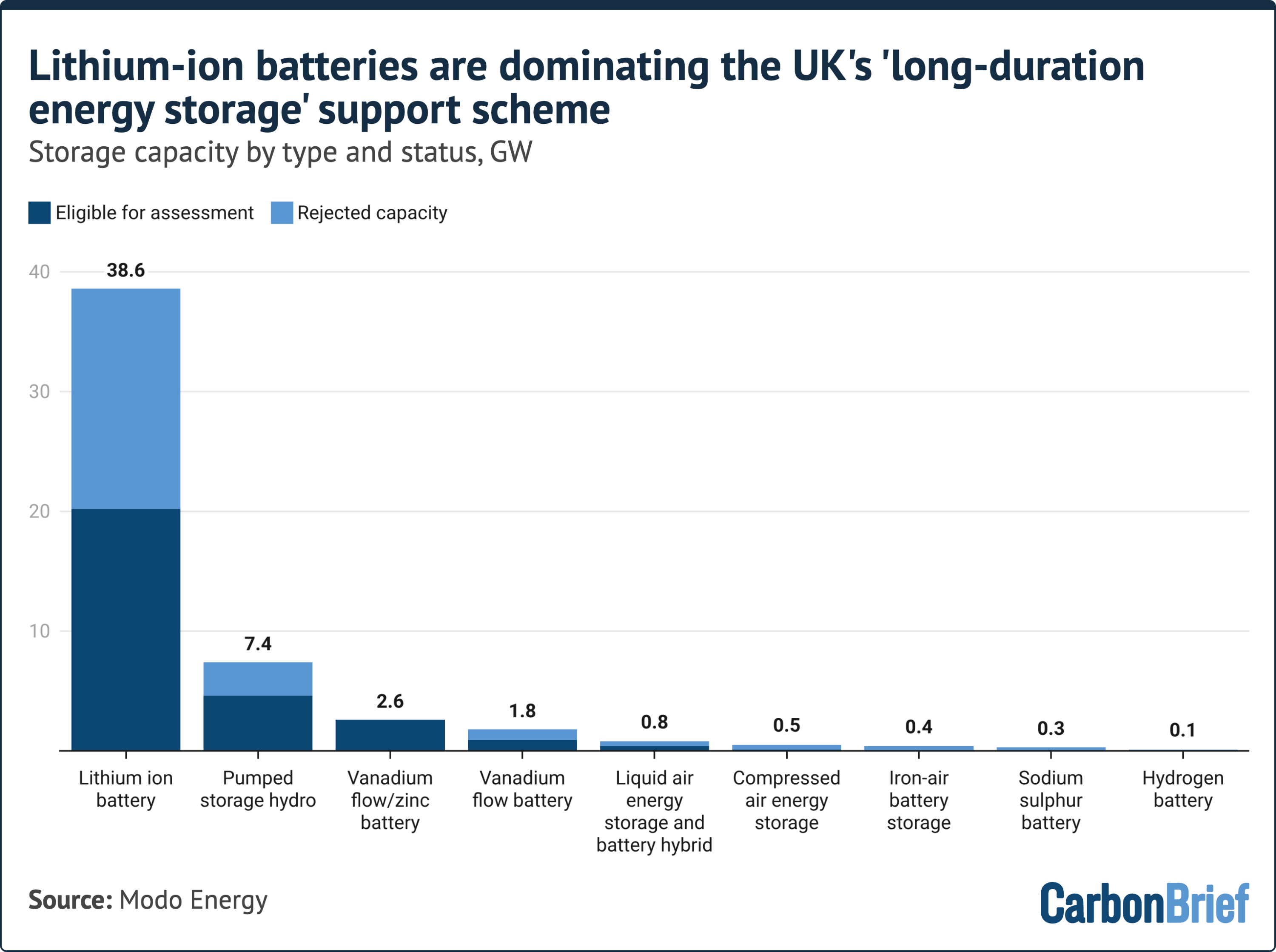
Ofgem’s June 2026 selection of 16 projects highlights the market maturity of different storage options. While emerging alternative technologies like liquid air, iron-air, and pure hydrogen were submitted, the winning projects clustered into four primary categories:
A key trend in these results is the evolution of lithium-ion systems into extended-duration operations. Driven by battery cell cost declines averaging 20% annually, developers submitted lithium-based configurations capable of delivering sustained output for up to 18 hours, challenging the traditional view that lithium-ion is strictly a short-duration solution.
Financial and Grid Infrastructure Metrics
The economic rationale for LDES relies on tackling grid bottleneck costs, particularly in Scotland:
              UK GRID BALANCING COST BREAKDOWN (2024-2025)

  Total Balancing Costs: £2.7 Billion (~£40 per household bill)
  ├───────────────────────────────────────────────────────────┐
  │ Curtailment / Constraint Payments: £1.9 Billion (70.4%)   │
  │ (Paying wind farms to turn off & gas plants to turn on)   │
  ├───────────────────────────────────────────────────────────┘
  │ Other Balancing Operations: £0.8 Billion (29.6%)
  └───────────────────────────────────────────────────────────
Because 79% of the provisionally approved LDES storage volume is situated in northern Scotland, these facilities sit directly behind the national grid’s major transmission bottlenecks.
By capturing Scottish offshore wind power that would otherwise be curtailed due to limited cross-border line capacity into England, these massive batteries can store clean energy locally and release it back to the grid when transmission corridors free up.
       CAPITAL INVESTMENT VS. LONG-TERM SYSTEM BENEFIT PER GW (LDES)

  Upfront Capital Cost     [£2.0bn - £2.5bn / GW]
                           ───────────────────────────────────────────
  Annual System Savings    [£0.5bn - £1.0bn / GW / Year]
                           ───────────────────────────────────────────
  25-Year Net System Value [£30bn - £60bn Total Net Savings Across Grid]
Analyses by consultancy LCP Delta, research group Regen, and the public-private Transition Finance Council indicate that:
Net Savings: 20 GW of LDES capacity deployed by mid-century will generate £16 billion to £51 billion in system-wide cost reductions.
Capital Efficiency: Although deploying 1 GW of long-duration storage requires £2.0 billion to £2.5 billion in upfront capital expenditure, it yields £0.5 billion to £1.0 billion in annual operational grid savings, effectively repaying its initial investment within three to five years of operation.
Official Statements & Industry Perspectives
The announcement of Ofgem’s cap-and-floor shortlist and the broader push for long-duration assets drew key perspectives from policy leaders, regulatory officials, and academic specialists.
┌──────────────────────────────────────────────────────────────────────────┐
│                             OFFICIAL STATEMENTS                          │
├──────────────────────────┬───────────────────────────────────────────────┤
│ Speaker                  │ Role / Entity                                 │
├──────────────────────────┼───────────────────────────────────────────────┤
│ Michael Shanks MP        │ UK Energy Minister                            │
│ Julia Souder             │ CEO, Global LDES Council                      │
│ Dr. Jamie Speirs         │ Co-Director, UK Energy Research Centre        │
│ Prof. Seamus Garvey      │ Dynamics Chair, University of Nottingham      │
│ George Martin            │ Principal Analyst, LCP Delta                  │
└──────────────────────────┴───────────────────────────────────────────────┘
Michael Shanks MP, UK Energy Minister, framed the cap-and-floor rollout as a decisive turn toward infrastructure modernization:
"Forty years after the country’s last pumped storage facility was built, this government is getting Britain building again. We are going further and faster in delivering our clean-power mission by rolling out a new generation of pumped-hydro storage and state-of-the-art super batteries. This strategy will make more of the clean, homegrown power we already produce, cutting waste, lowering energy bills, and strengthening our energy security."
Julia Souder, Chief Executive of the global LDES Council, emphasized the UK’s position in international energy policy:
"The UK is leading the charge on technology diversity. We are witnessing matching different LDES solutions to real differences in market structure and grid requirements. A handful of proven LDES technologies will do the heavy lifting over the next decade, and we are seeing that reality play out in the projects coming through the government’s cap-and-floor mechanism."
Dr. Jamie Speirs of the University of Strathclyde and Co-Director of the UK Energy Research Centre, welcomed the capital injection for long-duration research:
"By providing operational flexibility across hours, days, and even seasons, LDES can enable a resilient, low-carbon electricity grid—reducing curtailment, strengthening security of supply, and ensuring intermittent renewables maximize their contribution. Investing in market deployment is key to bringing these solutions online in time for net-zero milestones."
Professor Seamus Garvey of the University of Nottingham, offered a note of structural caution regarding market design:
"Energy storage is required across multiple timescales, and as we decarbonize further, the need for longer durations grows exponentially. One central issue is that by buying heavily into short-duration assets early on, we risk cannibalizing market revenues that longer-duration stores depend on to be commercially viable. This makes the already challenging task of financing multi-day facilities even harder."
George Martin, principal analyst at power modeling firm LCP Delta, observed that while the cap-and-floor framework is a major step forward, regulatory oversight remains active:
"It’s not over yet. There will be significant scrutiny during the consultation phase regarding how Ofgem calibrated its methodology. While I do not expect the total approved capacity to decrease, we could see minor shifts in individual project approvals or adjustments to terms ahead of the next application window."
Future Outlook
As the UK moves toward its targets of a decarbonised electricity grid by 2030 and net-zero emissions by 2050, the strategic deployment of long-duration energy storage will transition from a policy initiative into a core component of national infrastructure.
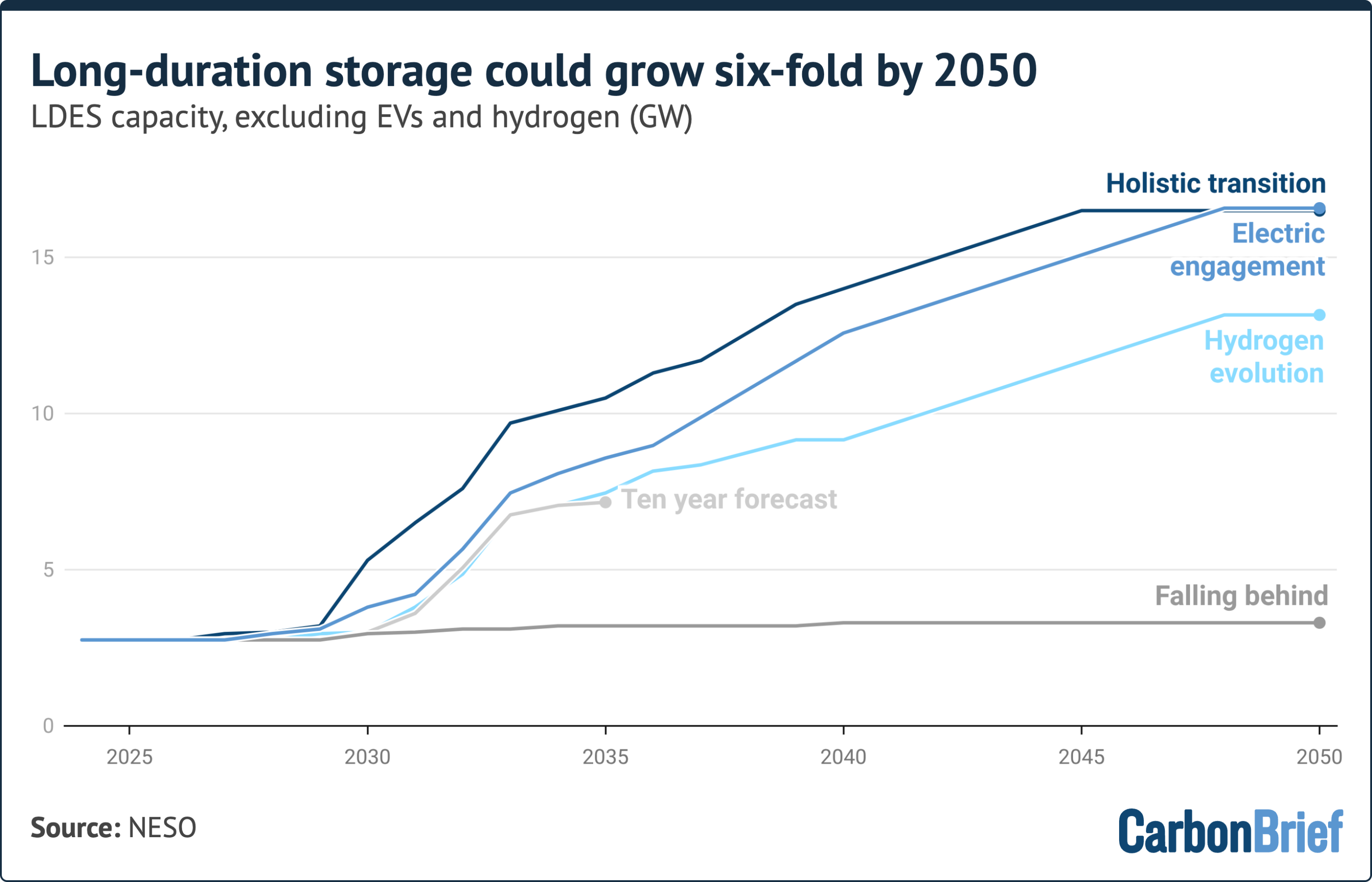
The National Electricity System Operator (NESO) projects that total operating LDES capacity must grow from today’s 2.8 GW to between 3.8 GW and 5.3 GW by 2030 to remain on track for net-zero goals. With Ofgem’s first cap-and-floor tranche slated to deliver 4.0 GW of operational assets by 2030, the country is positioned to meet the lower end of this target range.
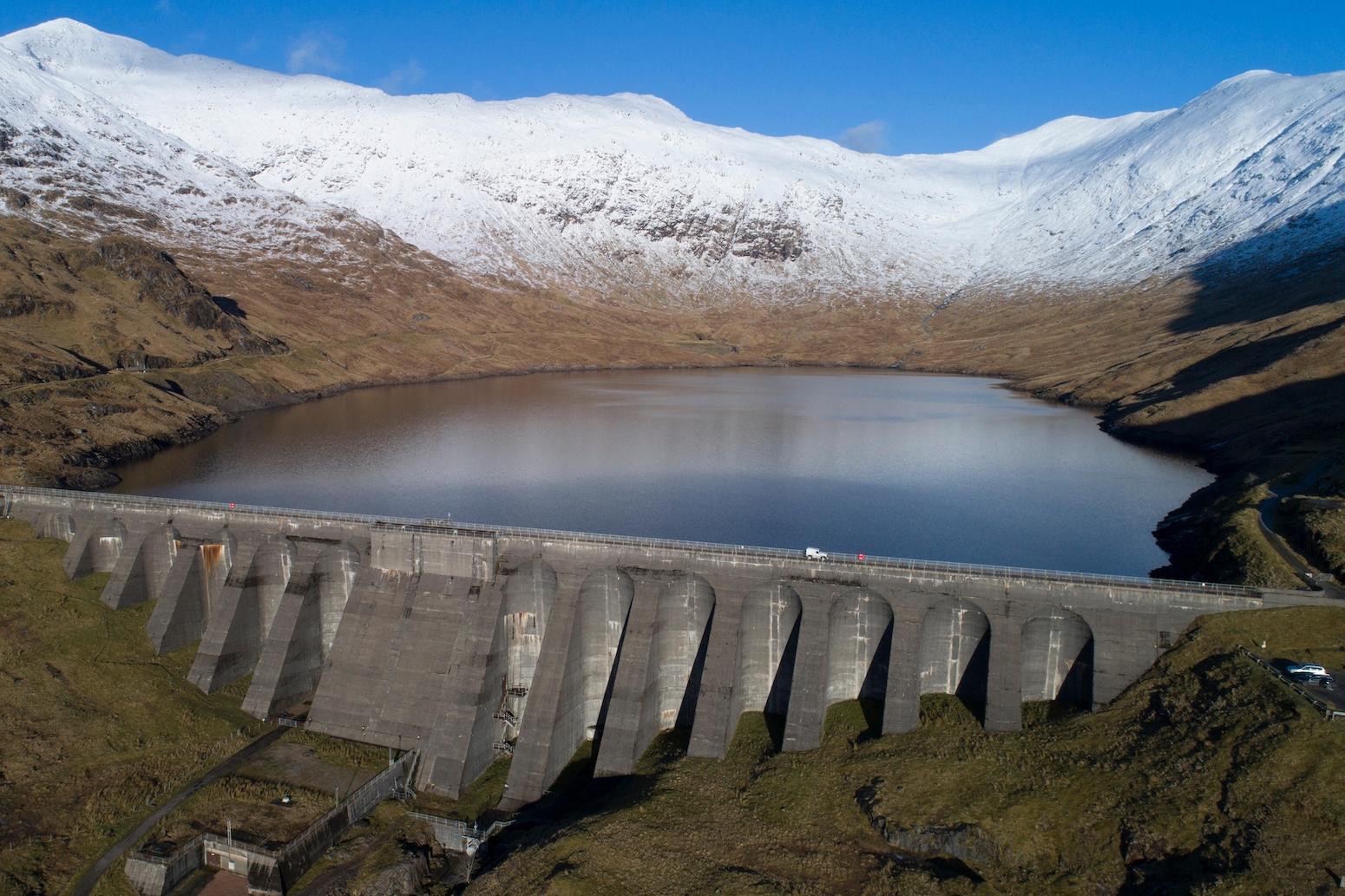
However, long construction lead times—particularly for large civil works like the 1,440 MW Coire Glas pumped hydro project in North Scotland—mean that execution timelines will be tight.
Beyond 2030, system modeling indicates an acceleration in storage requirements:
Capacity Requirements: NESO pathways show LDES requirements rising to between 13.2 GW and 16.6 GW by 2050. The final capacity will depend heavily on how secondary technologies—such as green hydrogen derived from electrolysis and stored in salt caverns—are integrated into the power generation stack.
Technological Diversification: While lithium-ion and pumped hydro dominate initial cap-and-floor approvals, longer-term grid stability will rely on alternative chemistries and mechanical systems. Projects like TeesCAES (compressed air storage in underground salt caverns) and Frontier Legacy (vanadium-zinc flow technology) serve as practical proving grounds for non-lithium assets that do not suffer from thermal degradation over multi-day discharge cycles.
Market Integration: Regulators face the ongoing challenge of refining future cap-and-floor funding windows to ensure that "ultra-long duration" systems (100+ hours) can compete commercially against cheaper short-duration batteries. Without explicit policy incentives for multi-day storage, the market risks over-investing in intraday load-shifting while remaining vulnerable to seasonal dunkelflaute events.
Ultimately, the successful rollout of long-duration super batteries will determine whether Great Britain can operate an electricity grid powered primarily by renewable energy. By insulating consumers from international gas price volatility, capturing constrained Scottish wind energy, and avoiding billions in annual grid balancing penalties, LDES represents a central pillar of the UK’s long-term strategy for energy independence and economic decarbonisation.