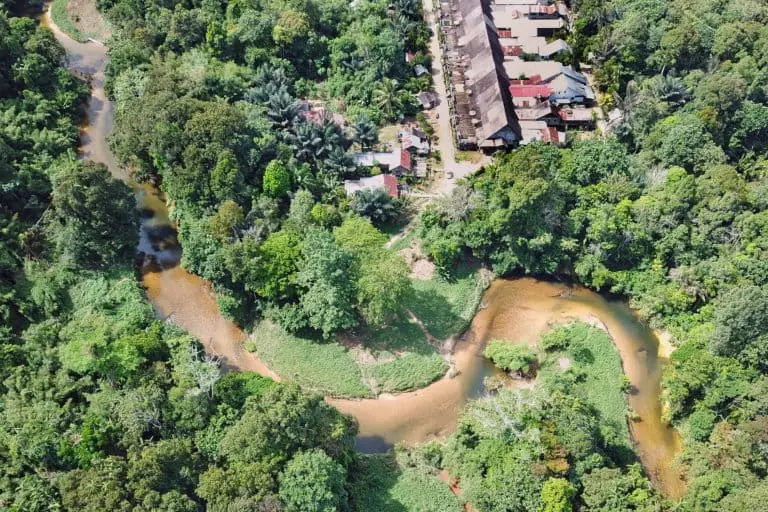
Amid the unprecedented global disruption of the COVID-19 pandemic, a quiet conservation success story unfolded in the heart of Indonesia’s West Kalimantan province. Conventional economic theory suggested that widespread lockdowns, soaring unemployment, and systemic poverty shocks would drive rural populations deeper into illegal logging, slash-and-burn agriculture, and resource extraction just to survive.
However, a landmark peer-reviewed study published in Lancet Planetary Health reveals a striking counter-narrative. Forest loss across protected areas in West Kalimantan actually dropped sharply during the height of the pandemic. Researchers discovered that villages equipped with localized social safety nets—specifically integrated health and alternative livelihood programs administered by grassroots conservation organizations—experienced significantly lower rates of deforestation than their unsupported neighbors.
By combining rigorous household surveys with high-resolution satellite remote sensing and machine-learning models, the study offers empirical proof that investing in community well-being acts as a powerful buffer for tropical ecosystems. While travel restrictions and plummeting timber demand temporarily disrupted global supply chains, it was the presence of localized health and economic support systems that allowed rural communities on Borneo to weather the storm without resorting to environmental degradation. Experts argue that this intersection of public health, community resilience, and ecological preservation provides a vital blueprint for future conservation frameworks in the face of escalating global crises.
Detailed Chronology: The Pandemic, the Pressures, and the Data
To understand how West Kalimantan’s rainforests weathered the pandemic, researchers had to examine a precise timeline of events, contrasting pre-pandemic realities with the unprecedented socioeconomic shifts triggered by COVID-19.
The Pre-Pandemic Baseline
Before the World Health Organization declared COVID-19 a global pandemic in March 2020, Indonesia’s third-largest tropical forest area—situated on the island of Borneo—was already under severe, continuous pressure. Home to vast carbon sinks, critical peatlands, and critically endangered species such as the Bornean orangutan (Pongo pygmaeus), the region’s forests faced relentless encroachment from industrial logging, small-scale agricultural conversion, mining, and uncontrolled fires.
Even during this baseline period (spanning Jan. 1, 2018, to March 9, 2020), a stark contrast existed between communities. Villages partnering with local non-governmental organizations (NGOs) such as Alam Sehat Lestari (ASRI) and Yayasan Planet Indonesia (YPI) demonstrated an average forest loss that was 52% lower than in villages without NGO affiliation.
The Lockdown Shock (March 2020 – November 2021)
When the pandemic struck in March 2020, the scientific community braced for environmental catastrophe. Economic shutdowns threatened to thrust rural families into destitution, which many conservationists feared would inevitably trigger a surge in illegal poaching and logging.
Yet, when researchers analyzed satellite data covering the pandemic period from March 16, 2020, to Nov. 22, 2021, the macro-level trend defied expectations. Overall forest loss across three distinct types of protected areas in West Kalimantan fell by 39% compared to pre-pandemic baselines.
The primary drivers of this decline were multifaceted:
Market Disruption: Weak global timber demand made commercial logging economically unviable.
Mobility Restrictions: Strict government travel and quarantine rules made transporting heavy equipment and timber products exceptionally difficult and risky.
Risk Perception: Roughly 7% of surveyed households reported engaging in logging, but those who stopped pointed out that heightened enforcement, strict prohibitions, and low profitability made the endeavor too dangerous.
Crucially, the deceleration of deforestation was not uniform. Villages that had established long-term relationships with health and livelihood NGOs saw their average forest loss plummet to 68% lower than unsupported villages during the pandemic—widening the protective gap observed prior to 2020.
Supporting Context & Metrics: Unpacking the Mixed-Methods Study
Authored by an interdisciplinary team led by Skylar Hopkins, an assistant professor at North Carolina State University, and co-authored by Stanford University’s Giulio De Leo, the study represents a methodological milestone. It is among the first to successfully pair granular household-level interviews with advanced satellite data within the exact same geographic communities.
Methodology and Scope
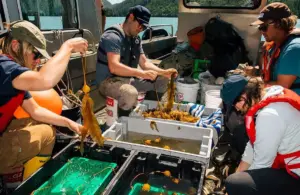
In late 2021, the research team surveyed 10 specific villages in West Kalimantan:
Six communities supported by the health and livelihood initiatives of ASRI and YPI.
Four nearby control communities operating without structured NGO support.
To scale these findings regionally, the researchers integrated machine-learning models with weekly satellite observations across 28 NGO-affiliated villages, meticulously controlling for confounding variables such as baseline forest area, topography, and distance to urban centers.
The Socioeconomic Nexus
The data revealed that health and livelihood interventions do not merely boost human welfare; they fundamentally decouple community survival from ecosystem destruction. In rural Indonesia, medical emergencies often force families into irreversible debt, frequently leading them to sell land or clear protected forests for quick cash crops and timber.
By providing affordable healthcare (often accepting non-cash payments like seedlings or handicrafts) alongside agricultural training, microfinance, and alternative income streams, organizations like ASRI and YPI successfully lowered community reliance on the forest. When the pandemic threatened household incomes, these pre-existing safety nets absorbed the shock, preventing a cascading resort to illegal resource extraction.
Official Statements and Expert Perspectives
The study’s findings have elicited widespread acclaim within the conservation and sustainability sectors, alongside important caveats regarding scalability and policy alignment.
The Researchers’ View
Lead author Skylar Hopkins emphasized how the findings subverted initial expectations:
"As the pandemic started, we expected economic hardships to cause illegal logging to increase again. Our research shows that investing in health and livelihood solutions designed by communities can build resilience for both people and ecosystems."
Co-author Giulio De Leo of Stanford University underscored the broader implications for planetary health:
"COVID-19 is just one example of local and global disruptions creating challenges for health and conservation. Investing in community-led solutions builds long-term adaptive capacity that protects both human populations and natural habitats."
Independent Analysis: The BLESS Indonesia Perspective
Gita Syahrani, founder and executive director of the sustainability-focused nonprofit BLESS Indonesia, who reviewed the study at the request of Mongabay, praised its empirical rigor while calling for a more holistic interpretation of cause and effect.
Syahrani noted that similar community-based economic transitions have been successfully deployed across other regions of Indonesia, including:
Developing snakehead fish and pineapple economies in Siak, Riau province (Sumatra).
Promoting tengkawang tree products and nuts in Sintang, West Kalimantan (Borneo).
Implementing community conservation and carbon credit schemes in Jambi province (Sumatra).
However, Syahrani cautioned that grassroots programs cannot shoulder the burden of conservation alone. Sustainable alternative economies require systemic alignment. She pointed out that villages cannot protect forests if provincial and district policies, government investments, and regional budgets continue to prioritize resource extraction.
"A transition to sustainable alternative economies therefore needs to be viewed holistically, including its relationship with health considerations and the urgency of disaster prevention," Syahrani wrote in an email to Mongabay.
She emphasized that viable business models, reliable market access, modern technology, financial capital, skills training, and supportive regulatory frameworks are absolute prerequisites if alternative livelihoods are to outcompete destructive industries over the long term.
Future Outlook: Challenges and Pathways for Borneo’s Rainforests
As Indonesia navigates the post-pandemic era, the lessons learned in West Kalimantan offer a vital roadmap, but profound challenges remain.
Ongoing Threats
West Kalimantan’s ecosystems are still under severe duress. Recent wildfire seasons have scorched tens of thousands of hectares of peatlands and primary forests, releasing massive volumes of carbon dioxide and threatening remaining Bornean orangutan populations. Furthermore, ongoing land clearing for industrial oil palm plantations frequently encroaches upon buffer zones earmarked for wildlife restoration.
The Path Forward
The Lancet Planetary Health study fundamentally shifts how conservationists must approach crisis management. Traditional fortress conservation—relying solely on policing, perimeter fences, and punitive enforcement—proves fragile during systemic global shocks like pandemics, economic recessions, or climate-driven disasters.
Instead, the future of tropical rainforest conservation hinges on integrated models that treat human health, economic security, and ecological stewardship as inseparable pillars. For initiatives in West Kalimantan and beyond to achieve lasting success, international donors, national governments, and regional policymakers must scale up funding for community-led health and livelihood programs. Only by building genuine socioeconomic resilience within forest-edge communities can Indonesia hope to secure its invaluable natural heritage for generations to come.