Executive Overview
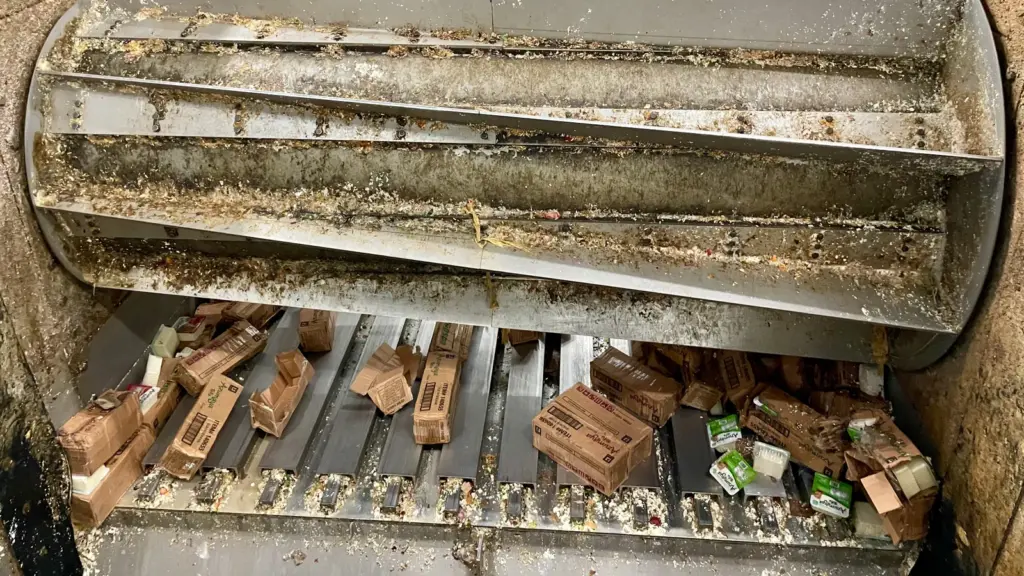
As the United States accelerates its push toward zero-waste initiatives and the diversion of organic material from landfills, a new technological frontier has emerged at the center of the food waste recycling supply chain: industrial depackaging equipment. These powerful mechanical systems—capable of tearing open, separating, and sorting food from its packaging at high volumes—are unlocking massive quantities of preconsumer and postconsumer food waste that were previously locked inside plastic wrappers, cardboard boxes, and aluminum cans.
However, this technological leap forward has introduced a complex web of environmental, regulatory, and operational challenges. Chief among them is the threat of microplastic pollution and physical contamination entering agricultural soils through finished compost and digestate.
In response, regulatory bodies across the country are grappling with how to oversee this rapidly growing sector. A recent collaborative survey conducted by the organics publication BioCycle and the Natural Resources Defense Council (NRDC) revealed that out of 23 states surveyed, only three—Vermont, Washington, and North Carolina—are actively crafting bespoke regulations for commercial depackaging equipment.
The findings underscore a fragmented national landscape defined by significant knowledge gaps. Regulators are attempting to thread a fine needle: balancing the urgent need to divert large volumes of commercial food waste with the imperative to protect soil health from persistent contaminants. During a recent virtual panel hosted by BioCycle, industry experts, state environmental engineers, and policy analysts explored the multifaceted hurdles of setting the nation’s first rules for depackaging technology. From the absence of standardized testing protocols for slurries to philosophical debates over contamination thresholds, the path forward requires a delicate calibration of safety, scale, and science.
Detailed Chronology of Regulatory Development
The journey toward establishing dedicated rules for depackaging machinery is moving slowly, reflecting the novelty of the technology and the complexity of the materials it processes.
The Vermont Blueprint: A Multi-Year Evolutionary Process
Vermont has spent more than five years grappling with the regulatory implications of depackaging equipment, making it a pioneer in the space. The state’s Department of Environmental Quality has steadily worked to integrate depackaging oversight into its broader solid waste management framework.
- May 2024: Vermont released updated draft solid waste rules featuring critical provisions regarding depackaging. Notably, the draft introduced a strict prohibition on the commingling of source-separated organics (SSO) with packaged organics, aiming to isolate potential contamination sources. Furthermore, the state tightened testing requirements for finished compost to account for unseen pollutants.
- The Regulatory Philosophy: Vermont’s approach is rooted in precautionary principle economics and environmental protection. State officials operate under the assumption that industrial processes carry inherent risks unless proven otherwise.
Washington State: Iterative Rulemaking and Evolving Thresholds
Washington has taken an iterative approach, testing various contamination limits and adapting its proposals based on stakeholder feedback from composters, anaerobic digestion operators, and waste haulers.
- Initial Proposals: The Washington Department of Ecology initially floated a stringent 2% contamination limit for feedstocks entering commercial composting facilities, designed to mirror historical purity standards for source-separated food scraps.
- June 2024: Following extensive pushback and dialogue with compost facility operators who argued they possessed the mechanical screening capabilities to handle slightly higher impurity loads, Washington relaxed its proposed contamination limit to 5% in its newest draft rules as part of broader updates to organic materials management regulations.
North Carolina: Laying the Groundwork Through Permitting Mandates
While Vermont and Washington are deep into drafting comprehensive operational standards, North Carolina is currently in the foundational phases of developing its regulatory framework.
- Early Identification Phase: Rather than immediately imposing rigid operational caps, the North Carolina Department of Environmental Quality (NCDEQ) has begun requiring facilities to formally notify the state agency of any active depackaging operations.
- Leveraging Statutory Flexibility: This notification requirement was made possible by broad language embedded within North Carolina’s existing environmental statutes. This legal "wiggle room" empowers the Division of Waste Management to collect baseline data, catalog the universe of active sites, and dynamically adapt to on-the-ground complications such as odor complaints or localized litter.
Supporting Context & Metrics: The BioCycle-NRDC Survey
To map the current state of national oversight, BioCycle and the Natural Resources Defense Council (NRDC) surveyed environmental officials across 23 states. The results paint a picture of a regulatory blind spot: while depackaging machines are processing thousands of tons of packaged food waste daily, the vast majority of state environmental agencies lack the specific oversight tools required to monitor them.
Key Survey Findings:
- Low Adoption Rate: Out of 23 states surveyed, only 3 states (13%)—Vermont, Washington, and North Carolina—are actively developing regulatory frameworks specifically targeting depackaging technology.
- The Slurry Data Void: A critical finding of the survey is the near-total absence of standardized measurement protocols for physical contamination within the "slurries" produced by depackagers. While many states enforce microplastic or inert contamination limits for finished compost and anaerobic digestate solids, virtually no states regulate or test the raw or processed liquid/semi-solid slurries generated immediately after depackaging.
- The Divergence of Composters and Digesters: Public comment periods in states like Washington and Vermont have exposed structural tensions within the organics recycling industry. Commercial compost facilities generally demand the cleanest possible feedstock to protect their end-product quality and market reputation. Conversely, anaerobic digesters often prioritize sheer volume and operational fluidity, sometimes accepting higher contamination tolerances if their downstream mechanical systems can filter out foreign objects.
This dichotomy leaves regulators searching for a functional middle ground. As Paula Luu, managing director of BioCycle, emphasized during the panel discussion:
"The question… is not necessarily whether depackaging should exist, the question here is under what conditions should it scale and with what guardrails. We’re not in the business of creating new problems while trying to solve old ones."
Official Statements & Expert Perspectives
The BioCycle virtual panel brought together leading voices from state environmental agencies and industry organizations to dissect the technical barriers and philosophical dilemmas shaping the emerging regulations.
The Challenge of Unknowns and Data Deficits
Nora Goldstein, editorial chairperson and consulting principal at BioCycle, highlighted the severe data deficit plaguing the industry. Without mandatory testing, the true environmental footprint of depackaged slurries remains an educated guess.
"I think there’s a reluctance, because of all the unknowns on the part of depackaging operators, to just volunteer to have slurries tested if it’s not required," Goldstein noted. "At the end of the day, without that information, regulation is going to be blind."
Goldstein advocates for mandated contaminant data collection—potentially anonymized to protect proprietary business interests—as an essential foundational step for crafting intelligent, evidence-based public policy.
The Precautionary Approach vs. Economic Growth
For state regulators tasked with defending public health and natural resources, erring on the side of caution is often seen as the safest legal and environmental posture. Ben Gauthier, an environmental analyst at the Vermont Agency of Natural Resources, explained the rationale behind Vermont’s stringent initial framework:
"We assume there’s going to be some impacts, otherwise there wouldn’t be a permit required. It’s easier to be less stringent as you learn more about the process and the characteristics of the digestates or the slurries than it is to shut the gate valve off."
By starting with tighter controls and robust permitting, Vermont aims to prevent environmental degradation before it occurs, retaining the flexibility to loosen restrictions later if scientific data proves the technology is safe.
Embracing Regulatory Flexibility
In North Carolina, permitting engineer Lauren Hill underscored the value of statutory flexibility. Because the state’s environmental laws grant broad authority to request operational notifications, regulators can map out the industry in real-time without getting bogged down in premature legislative battles.
However, Hill also acknowledged the difficult trade-offs inherent in organic waste management:
"The trade-off is in the contamination. Whether you’re accepting contamination in the form of microplastics, or in what depackaging is able to prevent or take out… that is something I don’t think we can make a fair determination on without the testing process for microplastics."
Future Outlook: Building the Guardrails for Next-Generation Organics Recovery
As the U.S. organics recycling sector continues to mature, the integration of depackaging equipment will play a decisive role in determining whether municipal and commercial diversion goals are met. Without these machines, mountains of expired grocery store goods, off-spec manufacturing batches, and packaged institutional food waste will continue to find their way into landfills, where they generate potent methane emissions.
Yet, scaling this technology without uniform regulatory guardrails invites disaster for agricultural soils. Microplastics—tiny fragments of degraded packaging polymers—are notoriously difficult to remove from finished compost once embedded. When spread across farmland, these synthetic particles can alter soil hydrology, stunt plant growth, and ultimately enter the human food chain through crops and livestock.
To prevent long-term soil contamination, the roadmap for the future of depackaging regulation must focus on three core pillars:
- Standardized Testing Protocols: Federal and state agencies must collaborate with scientific institutions to establish universal testing methodologies for quantifying microplastics and physical contaminants in high-moisture slurries.
- Harmonized Standards Across State Lines: A fragmented regulatory patchwork creates compliance nightmares for regional waste haulers and food manufacturers. Developing cohesive federal guidelines or multi-state compacts will streamline operations while maintaining high environmental standards.
- Data-Driven Policy Adaptation: Regulators must follow the lead of North Carolina, Vermont, and Washington by requiring baseline data collection, mandatory incident reporting, and continuous dialogue with facility operators.
Ultimately, the successful integration of depackaging equipment represents a crucial test for the modern circular economy. By establishing rigorous, science-backed guardrails today, regulators can unlock unprecedented volumes of wasted food safely, turning an environmental liability into a sustainable agricultural asset without compromising the health of the earth.