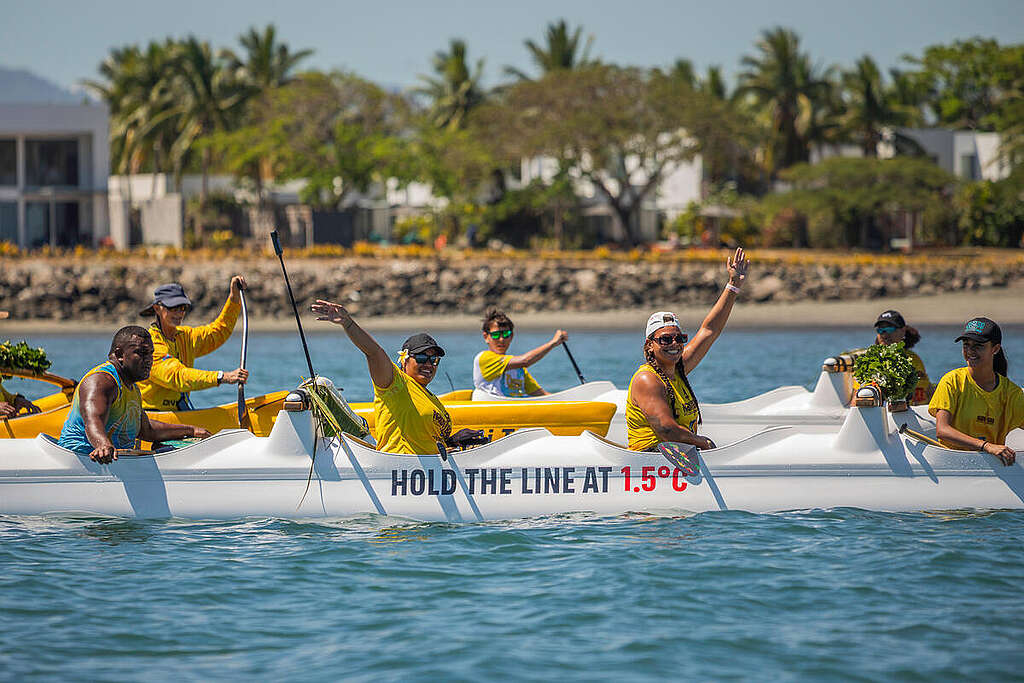
Across the globe, the drumbeat of environmental activism and social resistance has reached a fever pitch. In an era defined by compounding ecological crises, geopolitical shifts toward militarization, and widening socioeconomic inequalities, civil society organizations are stepping up to demand systemic accountability. Over the past week, Greenpeace and its allied coalitions have mobilized communities across multiple continents—deploying everything from traditional outrigger canoes in the South Pacific to high-impact street theater outside United Nations offices in Southeast Asia.
This weekly dispatch captures a critical snapshot of global mobilization. From the fight against runaway plastic production in Bangkok and the defense of the Paris Agreement’s 1.5°C threshold in Fiji, to grassroots resistance against wildfire smoke in Indonesia, soaring summer temperatures in Switzerland, compulsory military conscription in Germany, the housing crisis in Spain, and severe climate-induced flooding in rural Thailand, these actions paint a vivid picture of a planet at a crossroads. For over half a century, visual activism has served as a powerful catalyst for change, bearing witness to injustice and holding power to account. This week’s images and events underscore a unified global message: the status quo is unsustainable, and the time for decisive, equitable action is now.
Detailed Chronology of Global Actions
1. Bangkok, Thailand: Striking at the Source of Plastic Pollution
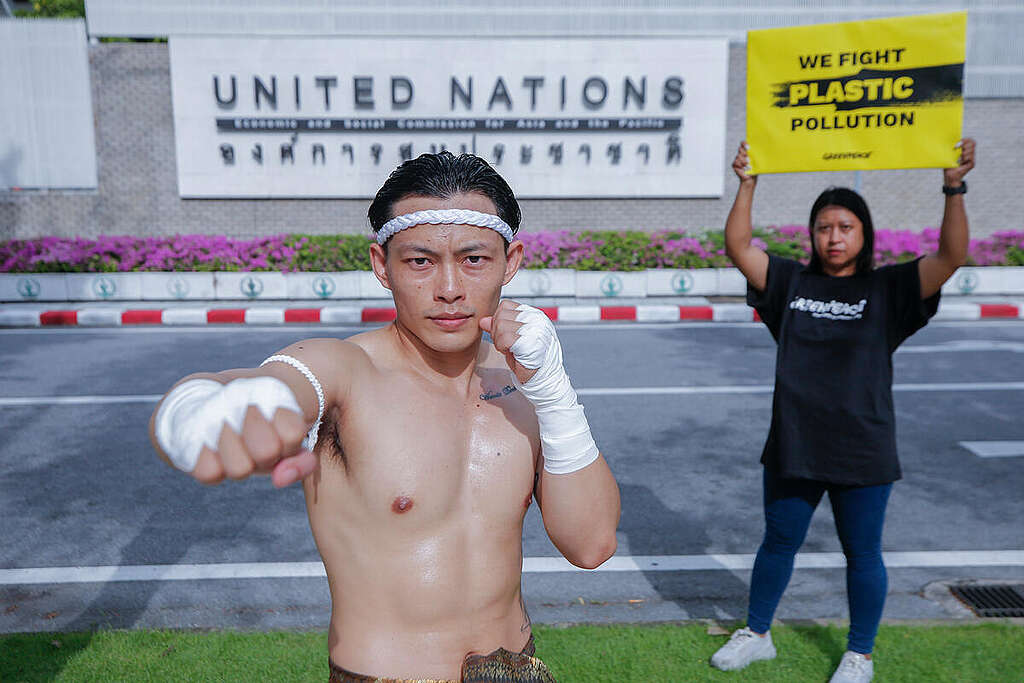
The Action: Activists from Greenpeace Thailand, joined by a professional Muay Thai fighter, staged a high-visibility symbolic action outside the United Nations regional offices in Bangkok.
The Context: The demonstration coincided with a crucial meeting of Heads of Delegation (HODs) from Member States deliberating on the parameters of the Global Plastics Treaty. Utilizing the martial art of Muay Thai, the protest delivered a visual metaphor: just as a fighter strikes at an opponent’s core, global governments must "tackle" plastic pollution directly at its source.
The Demand: Greenpeace is pressing world leaders to reject weak, downstream mitigation strategies—such as relying solely on recycling—and instead enshrine mandatory reductions in virgin plastic production at the heart of the treaty. Without strict production caps, advocates warn that the plastic pollution crisis will continue to overwhelm municipal waste systems and choke global ecosystems.
2. Berlin, Germany: Rallying Against Rearmament and Conscription
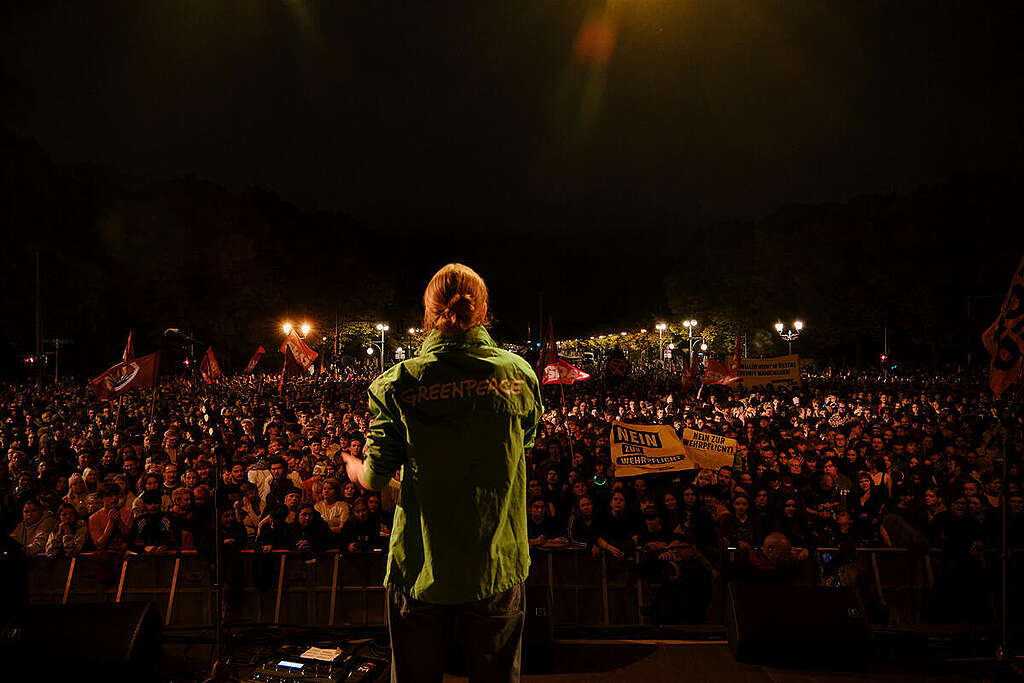
The Context: Moving from ecological to geopolitical battlegrounds, Berlin’s iconic Brandenburg Gate played host to a massive youth-led concert and demonstration under the banner "Unzwingbar – kein Bock auf Krieg und Wehrpflicht" ("Indomitable – No Interest in War and Conscription").
The Coalition: Partnering with a broad front of peace movements, civil society groups, and youth organizations, Greenpeace Germany mobilized thousands to push back against proposed re-armaments and the potential reinstatement of compulsory military service.
The Core Message: Speakers, including representatives from Greenpeace Youth, argued that an over-reliance on swelling defense budgets diverts vital fiscal resources away from genuine human security threats—chiefly, the climate crisis. The rally challenged the framing of modern security policies, advocating instead for sustainable, diplomatic, and climate-conscious approaches to international relations.
3. Nadi, Fiji: Holding the Line at 1.5°C
The Action: In the South Pacific, a vibrant and determined flotilla of roughly 80 people—comprising Pacific and Torres Strait Islander community members, Indigenous Elders, and youth activists—navigated past the Pre-COP climate summit venues in Nadi, Fiji. Aboard the vessel SV Oceania and a fleet of traditional outrigger canoes bearing banners that read "Hold the Line at 1.5°C" and "Keep 1.5°C Alive", the participants sent an unmistakable message to international negotiators.
The Stakes: With Australia preparing to assume leadership over the upcoming COP31 negotiations in Türkyie, Pacific frontline communities are intensifying pressure on regional superpowers to halt fossil fuel expansion. For low-lying island nations, the 1.5°C limit established under the Paris Agreement is not a flexible policy guideline; it is a strict, non-negotiable threshold for human survival.
4. Palembang, South Sumatra, Indonesia: Breathing Through the Haze
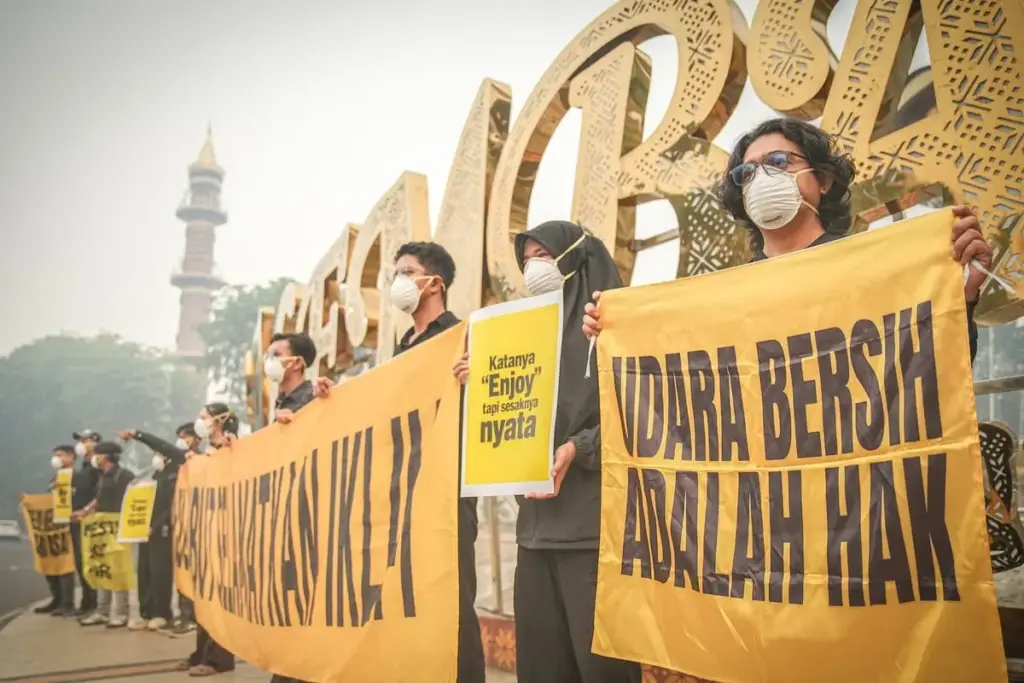
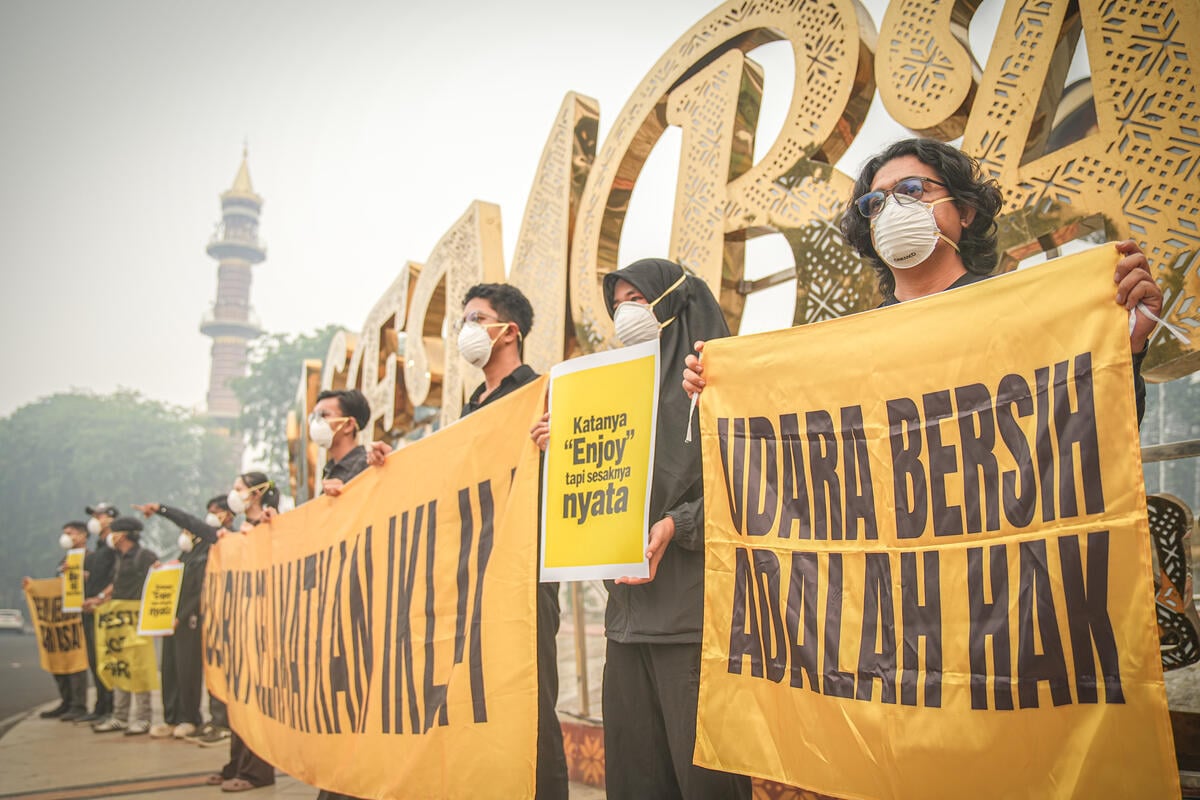
The Situation: For nearly two months, the city of Palembang in South Sumatra has been blanketed by a dense, toxic haze generated by seasonal and agricultural wildfires. Air pollution has soared to hazardous levels, threatening public health and degrading air quality far beyond national borders into neighboring Singapore and Malaysia.
The Action: Members of the Greenpeace Indonesia Forest Fires Prevention Team (Tim Cegah Api) staged a peaceful protest, unfurling posters and banners to demand immediate government intervention and stronger corporate accountability for land-clearing practices. The recurring devastation of peatland and forest fires highlights the urgent need for stringent enforcement of environmental protections in Southeast Asia’s agricultural sectors.
5. Zurich, Switzerland: Demanding "No 50°C Summers!"
The Action: A coalition of approximately 7,000 citizens marched through the streets of Zurich, Switzerland, under a unified, urgent banner: "No 50°C summers!"
The Alliance: Coordinated by a powerful coalition of more than 70 organizations spanning civil society, environmental protection, public health, and agricultural sectors, the mobilization reflects growing public anxiety over accelerating Alpine warming and extreme heatwaves.
The Demands: Protesters called on Swiss authorities to implement immediate, legally binding climate adaptation strategies and aggressive greenhouse gas emission reductions to prevent catastrophic urban heat stress and protect vulnerable populations.
6. Madrid, Spain: Occupying the Square for Decent Housing
The Action: In the heart of Spain’s capital, Greenpeace Spain activists and local housing advocates staged a determined sit-in at the historic Puerta del Sol.
The Socioeconomic Crisis: The demonstration directly targeted the escalating housing affordability crisis sweeping urban centers across Spain. Skyrocketing rents, unchecked speculative real estate practices, and a lack of public housing stock have pushed countless families and young people to the brink. By linking housing rights to environmental justice, the protest emphasized that sustainable cities must also be livable, equitable spaces for all residents.
7. Chachoengsao Province, Thailand: Dual Crises of Flooding and Fossil Fuels
The Crisis: While urban activists lobbied in Bangkok, rural communities in Thailand’s Chachoengsao Province were grappling with devastating floods that began on September 25, ultimately inundating 11 districts and displacing or severely affecting over 23,790 households.
The Double Standard: Even as local populations reeled from the immediate impacts of climate-amplified extreme weather, controversy erupted over plans to construct the Burapha Power project—a massive 540 MW fossil gas power plant in the province. Residents and Greenpeace volunteers voiced grave concerns over the plant’s anticipated strain on local water resources, its contribution to local air pollution, and its locked-in carbon emissions. Greenpeace Thailand used the crisis to demand an immediate halt to fossil fuel expansion and a rapid, just transition to decentralized renewable energy systems.
Supporting Context & Metrics
The convergence of these distinct actions reveals a systemic interconnectedness across global crises. The data underpinning these movements illustrates the gravity of the challenges at hand:
The Plastic Burden: Current global projections estimate that plastic production will double over the next two decades unless legally binding international treaties establish strict caps on virgin polymer manufacturing.
The 1.5°C Precipice: According to data from the World Meteorological Organization (WMO) and the Intergovernmental Panel on Climate Change (IPCC), global average temperatures have repeatedly flirted with—and temporarily breached—the 1.5°C warming mark, rendering the demands of the Pacific flotilla an urgent reality check.
Air Quality and Wildfires: In Southeast Asia, transboundary haze pollution routinely exposes tens of millions of citizens to particulate matter (PM2.5) concentrations that far exceed World Health Organization (WHO) safety guidelines, resulting in significant respiratory illness and economic disruption.
Urban Heat Islands: European alpine regions, including Switzerland, are warming at roughly twice the global average rate, threatening vital water towers, accelerating glacier melt, and creating life-threatening urban heat island effects during summer months.
Official Statements
Activists, community leaders, and organizational representatives underscored the moral imperative behind this week’s mobilizations:
"The science is unequivocal, and the lived experiences of frontline communities confirm it: we cannot negotiate with a rising tide or bargain with a burning forest. Whether we are fighting plastic production in Bangkok or holding the line at 1.5°C in the Pacific, our message to world leaders is simple: stop appeasing polluting industries and start protecting people."
— Representative, Greenpeace International
"For the people of the Pacific, the 1.5-degree limit is not a political negotiation point. It is our ancestral heritage, our homes, and our future. Leaders meeting at Pre-COP must understand that every new fossil fuel project approved is an active sentence passed on island nations."
— Pacific Youth Activist, Nadi Flotilla
"We are seeing a dangerous pivot toward militarization across Europe, where governments are eager to pour billions into defense budgets while short-changing the existential security threat of our time: ecological collapse. True security begins with a stable climate, healthy ecosystems, and a livable future for the next generation."
— Greenpeace Youth Spokesperson, Berlin
Future Outlook
As the global community looks toward upcoming international policy milestones—including the finalization of the Global Plastics Treaty and the formal transition toward COP31 negotiations—the momentum generated by these grassroots actions will prove indispensable.
The juxtaposition of militarization debates in Europe, housing protests in Spain, wildfire smoke in Indonesia, and climate disasters in Thailand and Fiji demonstrates that environmentalism can no longer be siloed as a single-issue concern. It is inextricably linked to human rights, economic justice, geopolitical stability, and public health. Greenpeace’s half-century legacy of photo-activism and direct engagement continues to serve as an indispensable mirror reflecting both the depth of our global crises and the unbreakable resilience of those fighting for a sustainable world.
To explore further documentation of these events and access high-resolution media assets from around the globe, visit the official Greenpeace Media Library.