The unfolding ecological crisis across the globe presents an unprecedented challenge to governments, civil society, and environmental guardians alike. Over the past week, Greenpeace and its allied networks have mobilized across continents—from the melting public squares of Berlin to the contested waters of the Black Sea and the indigenous-led coral nurseries of Southwest Papua. These actions highlight a sobering reality: the compounding impacts of climate change, industrial pollution, and corporate lobbying are no longer distant threats. They are immediate, visible emergencies reshaping our world.
This comprehensive review chronicles a defining week of environmental activism, international mobilization, and localized resistance. Through evocative photojournalism, direct peaceful protest, and grassroots community organizing, Greenpeace continues a half-century legacy of bearing witness to environmental degradation. From deadly European heatwaves and catastrophic peatland fires to marine ecosystem collapses and critical biodiversity hotspots under siege, the events of this past week underscore the urgent necessity for systemic policy changes. As international bodies prepare for pivotal biodiversity summits, the collective voice of global activists demands a decisive shift away from fossil fuels, extractive industries, and ecological exploitation toward a sustainable, resilient future.
Detailed Chronology: A Week of Global Mobilization
The rhythm of environmental activism over the past seven days has been relentless, marked by high-visibility protests, ecological restoration efforts, and stark warnings delivered straight to the doorsteps of power.
Europe: Heatwaves, Wildfires, and Policy Showdowns
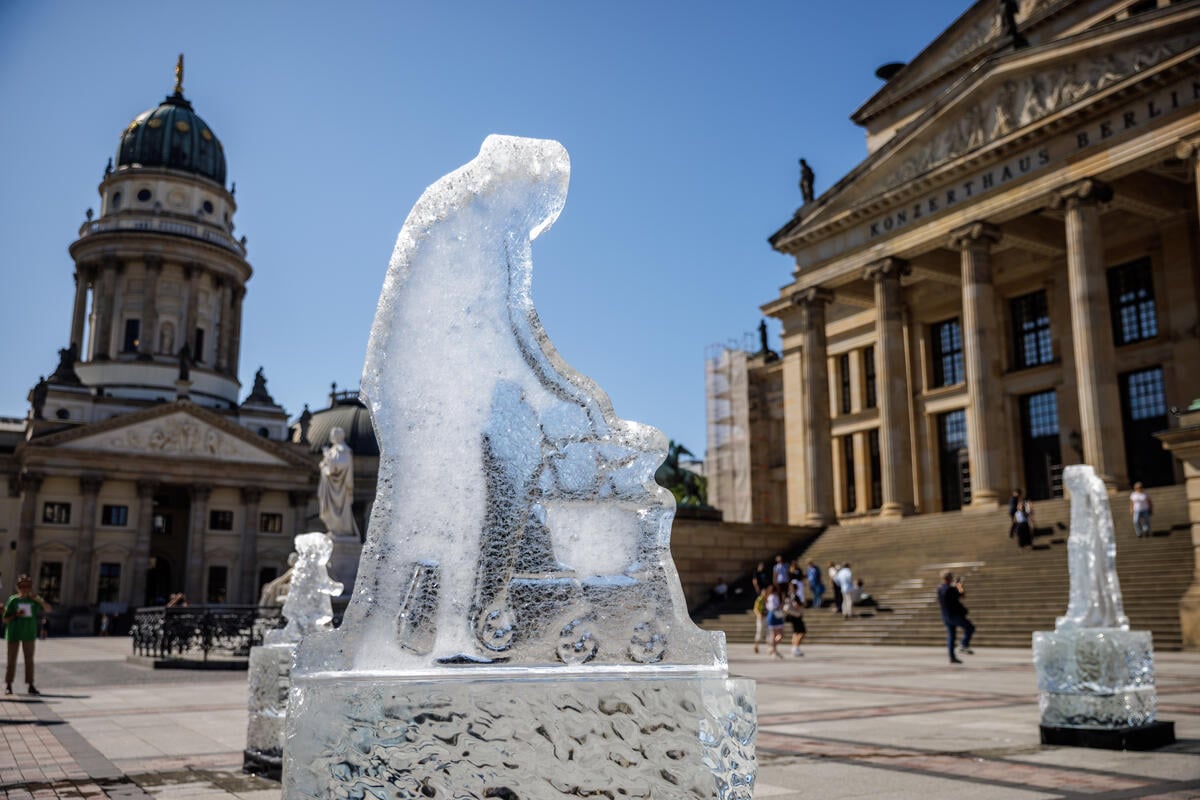
In Germany, the human toll of the climate crisis was thrust into the public consciousness with striking visual clarity. At Berlin’s treeless Gendarmenmarkt, Greenpeace Germany erected four life-size ice sculptures to commemorate the victims of an extreme summer. At the center of these melting figures, activists displayed an updated, sobering statistic from the Robert Koch Institute: 15,800 people died prematurely from heat-related effects during the summer of 2026. This artistic and protest intervention sought to make the invisible dangers of urban heat islands tangible to policymakers and citizens alike.
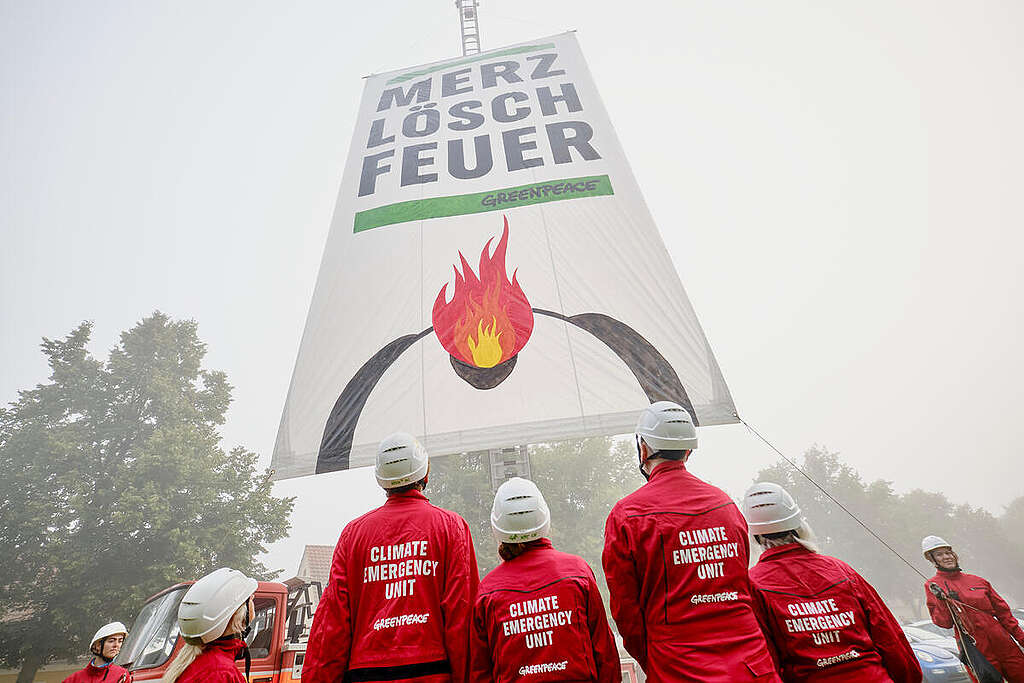
The political friction surrounding climate adaptation was further emphasized near Berlin, where activists demonstrated outside Neuhardenberg Castle during a cabinet meeting. Using a vintage fire truck and a bold banner reading "Merz, put out the fire," protesters targeted the governing coalition’s economic focus. While federal discussions touched upon heat protection, deep divisions remained. The conservative Union bloc continued to categorically reject the Social Democratic Party’s (SPD) demand to enshrine a "joint mission for climate adaptation and nature conservation" in Germany’s Basic Law.
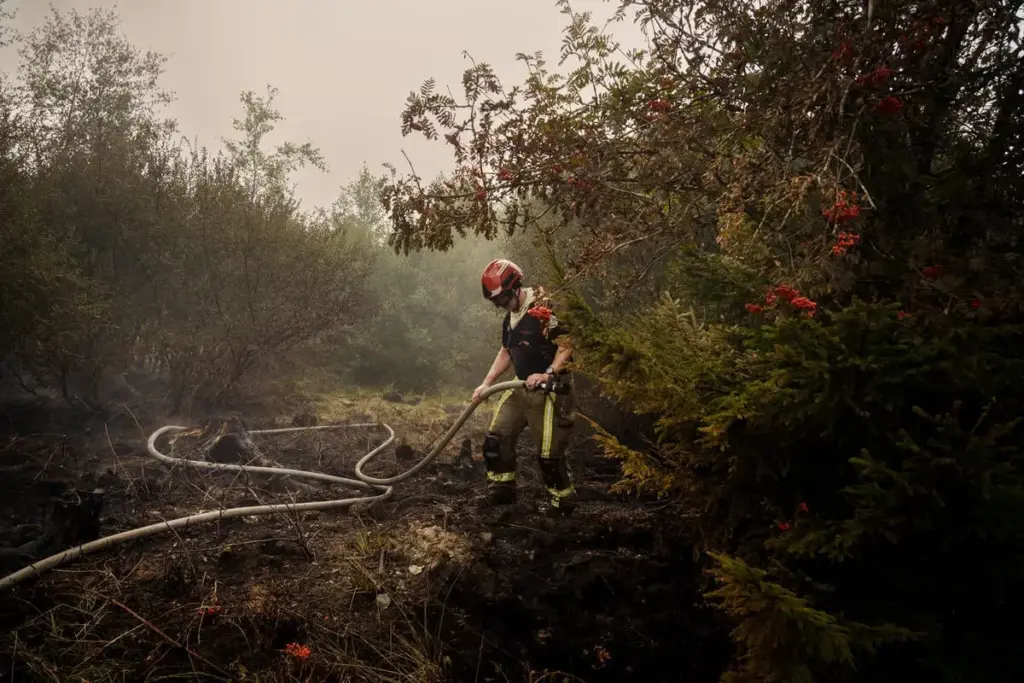
Further west in Belgium, the devastating vulnerability of European ecosystems was laid bare when a massive fire broke out in the High Fens nature reserve in the country’s eastern region. Fuelled by unseasonably dry vegetation, the peatland fire tore through more than 3,000 hectares of vital natural habitat, releasing vast amounts of stored carbon and destroying pristine landscapes.
Across the North Sea in Wales, Greenpeace UK targeted newly elected Prime Minister Andy Burnham with a massive land artwork inscribed on a scorched mountain slope in Conwy—a landscape recently ravaged by terrifying wildfires. Utilizing eco-friendly, plastic-free paint, activists painted the message "Our house is on fire Andy" alongside an illustration depicting the Prime Minister poised to pour oil and gas onto the flames. The action served as a direct plea for the UK government to abandon plans for new North Sea oil and gas licensing rounds and to confront the domestic impacts of the climate crisis head-on.
In Denmark, Greenpeace Nordic activists escalated pressure on corporate agriculture. Scaling the headquarters of the influential lobbying organization, the Danish Agriculture & Food Council in Copenhagen, protesters raised a red warning flag and unfurled a massive banner reading "Dead fjords start here." The action targeted the lobby group’s long-standing efforts to downplay the agricultural sector’s heavy contribution to nitrogen pollution, which causes severe oxygen depletion and marine dead zones in Danish fjords and coastal waters.
Marine Environments and Maritime Protests
At sea, the Black Sea became a focal point for geopolitical and environmental warnings. Aboard the Greenpeace ship Arctic Sunrise, an international crew of activists from Romania, Austria, Slovenia, and Slovakia executed a peaceful protest in international waters. Deploying an 11-meter floating banner, the crew highlighted the extreme vulnerabilities of offshore gas extraction projects—such as the controversial Neptun Deep initiative. Activists argued that drilling in the Black Sea not only poses catastrophic risks to fragile marine ecosystems but also exposes energy infrastructure to severe military security threats, proving that fossil fuels can never guarantee true energy security.
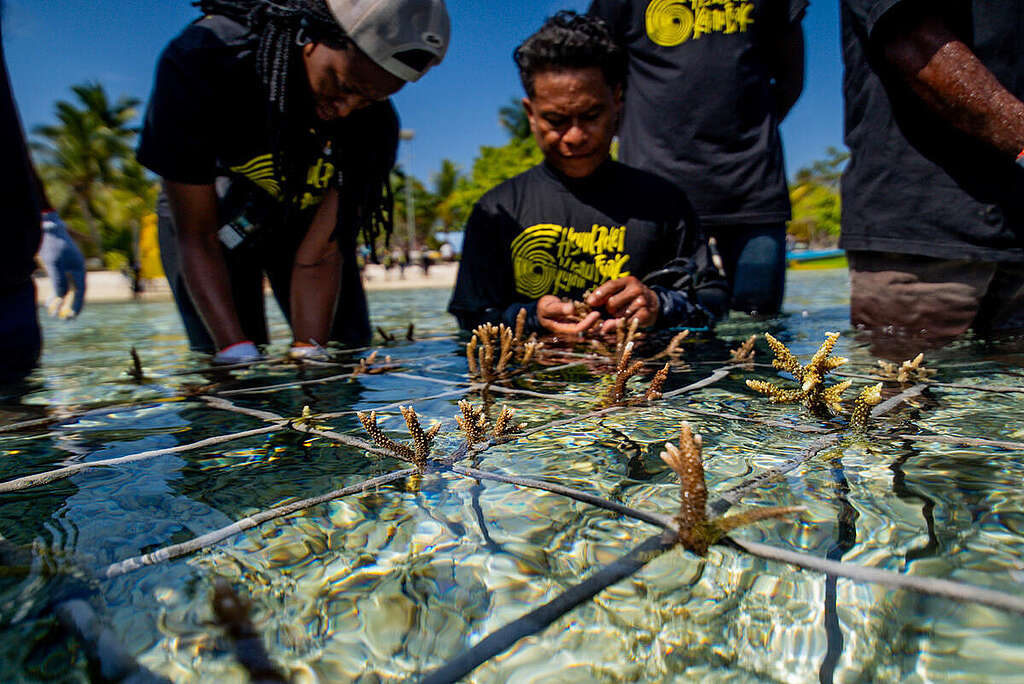
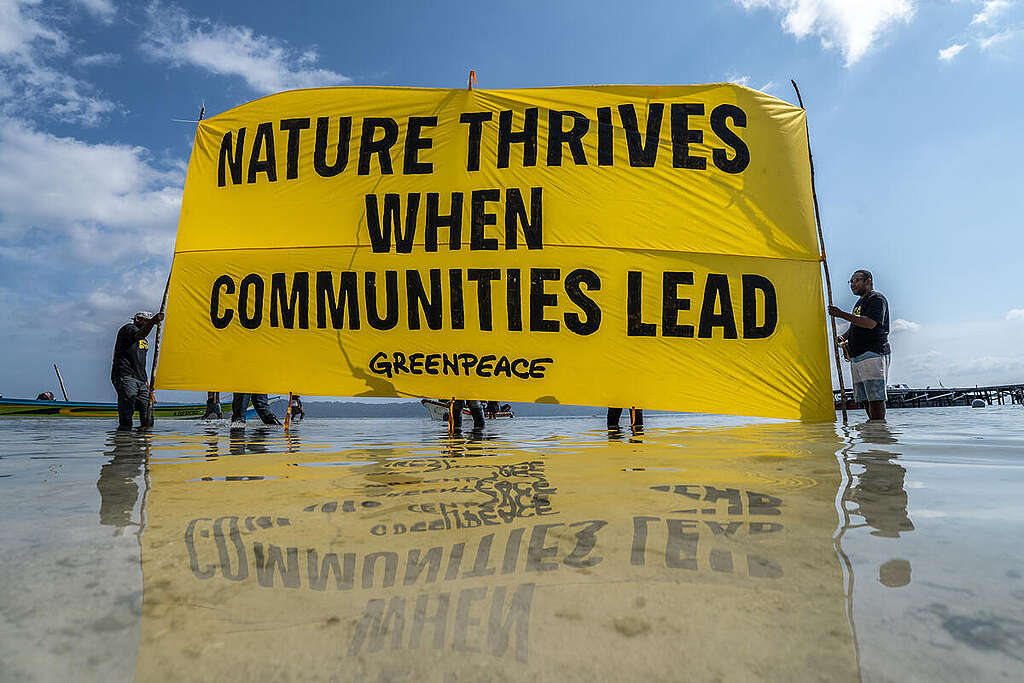
Meanwhile, in Southwest Papua, Indonesia, a profound convergence of Indigenous stewardship and marine conservation unfolded on Arborek Island. To celebrate the International Day of the World’s Indigenous Peoples and bolster the ongoing #SaveRajaAmpat campaign, Greenpeace Indonesia, the USBA Institute, and local Indigenous communities hosted the Raja Ampat Indigenous Grand Assembly. Alongside representatives from the Brazilian Amazon, participants engaged in coral reef restoration through hands-on coral transplantation. This collaborative act served as a powerful counter-narrative to industrial exploitation, reinforcing Indigenous leadership ahead of the upcoming UN Biodiversity Conference (CBD COP17) in Armenia.
Africa: Grassroots Engagement and Youth Leadership
In Cameroon, the observance of International Youth Day shifted the focus toward forest conservation and community mobilization. The Greenpeace Youth and Volunteers Programme organized the "SPORT FOR EBO FOREST" initiative at Parcours Vita in Yaoundé. Bringing together young advocates, environmental volunteers, and local sports coaches, the event combined fitness walks, educational photo sessions, and community bonding to rally public support for the protection of the irreplaceable Ebo Forest from logging and industrial degradation.
Supporting Context & Metrics
To fully understand the urgency driving these global protests, one must examine the hard metrics and scientific data underpinning the environmental crises of 2026:
Human Cost of Extreme Heat: The Robert Koch Institute’s estimate of 15,800 premature heat-related deaths in Germany alone underscores the lethal nature of urban warming trends and inadequate climate adaptation policies across Central Europe.
Peatland Destruction: The High Fens fire in Belgium, which consumed over 3,000 hectares of protected peatland, illustrates the compounding feedback loops of climate change. As dry spells lengthen, peatlands—historically functioning as robust carbon sinks—transition into volatile carbon sources.
Agricultural Nitrogen Pollution: In Denmark, industrial farming practices pump immense quantities of nitrogen and phosphorus into aquatic ecosystems. This nutrient overloading triggers severe eutrophication, leading to widespread oxygen depletion (hypoxia) and the creation of "dead zones" where marine life cannot survive.
Marine Biodiversity & Indigenous Land Rights: Approximately 80% of the world’s remaining biodiversity is located within Indigenous-managed territories. Initiatives in Raja Ampat, Indonesia, and the Amazon basin emphasize that safeguarding these lands is not merely a human rights imperative, but a scientific necessity for global climate stabilization.
Energy Security vs. Fossil Extraction: Protests in the Black Sea emphasize that expanding offshore gas reserves offers a false sense of energy independence. Renewable energy installations, conversely, provide decentralized, secure, and climate-safe alternatives that do not compromise marine biomes or invite geopolitical conflict.
Official Statements
Greenpeace representatives and coalition partners around the world issued strong statements emphasizing accountability, structural reform, and community-led protection:
"The staggering number of premature heat-related deaths in Germany is not merely a statistic; it is an indictment of political inaction. When leaders prioritize economic stagnation over legally binding climate adaptation and nature conservation, they are writing a death sentence for vulnerable populations. We need systemic protection, not hollow rhetoric."
— Greenpeace Germany Campaign Spokesperson
"Our fjords are suffocating under the weight of political cowardice and unchecked agricultural lobbying. For decades, the Danish Agriculture & Food Council has systematically obfuscated the industry’s role in nitrogen pollution. Politicians must cut these toxic ties and enforce strict limits on fertilizer and manure runoff before our marine ecosystems pass the point of no return."
— Rasmus Preston, Greenpeace Nordic
"The fossil fuel industry and short-sighted governments are playing with fire—literally and figuratively. From the scorched mountains of Wales to the contested waters of the Black Sea, new drilling projects and gas extraction schemes are a direct threat to our collective security. We call on Prime Minister Andy Burnham and European leaders to reject fossil fuel expansion and pivot unconditionally toward safe renewables."
— Greenpeace International Maritime Campaign Team
"Protecting our oceans and forests cannot be achieved in boardrooms thousands of miles away. True conservation is led by the Indigenous custodians who have protected these ecosystems for generations. Our assembly in Raja Ampat, uniting Papuan and Amazonian voices, proves that global biodiversity protection must begin with Indigenous land rights and community-led action."
— Participant Statement, Raja Ampat Indigenous Grand Assembly
Future Outlook
As the global community looks toward the remainder of 2026 and preparations accelerate for upcoming international milestones—including the UN Biodiversity Conference (CBD COP17) in Armenia—the trajectory of environmental policy remains fiercely contested.
The events of this past week demonstrate that civil disobedience, grassroots education, and direct peaceful intervention will remain vital instruments for holding governments and corporations accountable. The friction between political stagnation and ecological necessity is reaching a boiling point. Whether in the legislative chambers of Berlin, the lobbying corridors of Copenhagen, the scorched peatlands of Belgium, or the vital coral reefs of Indonesia, the message from the environmental frontlines is unequivocal: half-measures and empty promises are no longer viable.
Moving forward, the success of global climate and biodiversity frameworks will depend entirely on whether world leaders heed the warnings of scientists, youth activists, and Indigenous communities. Only through an immediate halt to fossil fuel expansion, strict regulation of polluting industries, and the legal codification of climate adaptation can society hope to extinguish the fires—both literal and metaphorical—that currently threaten our shared global home.