Executive Overview
As the global energy transition accelerates, the search for reliable, emissions-free, 24/7 power sources has taken on unprecedented urgency. While wind and solar power have captured the lion’s share of public attention and capital investment, they remain inherently intermittent, requiring massive battery storage or fossil-fuel backups to stabilize the grid. Enter geothermal energy—the ultimate baseload renewable resource capable of tapping into the earth’s limitless internal heat. Yet, conventional geothermal energy has long suffered from high exploration risks, declining well performance, and economic stagnation.
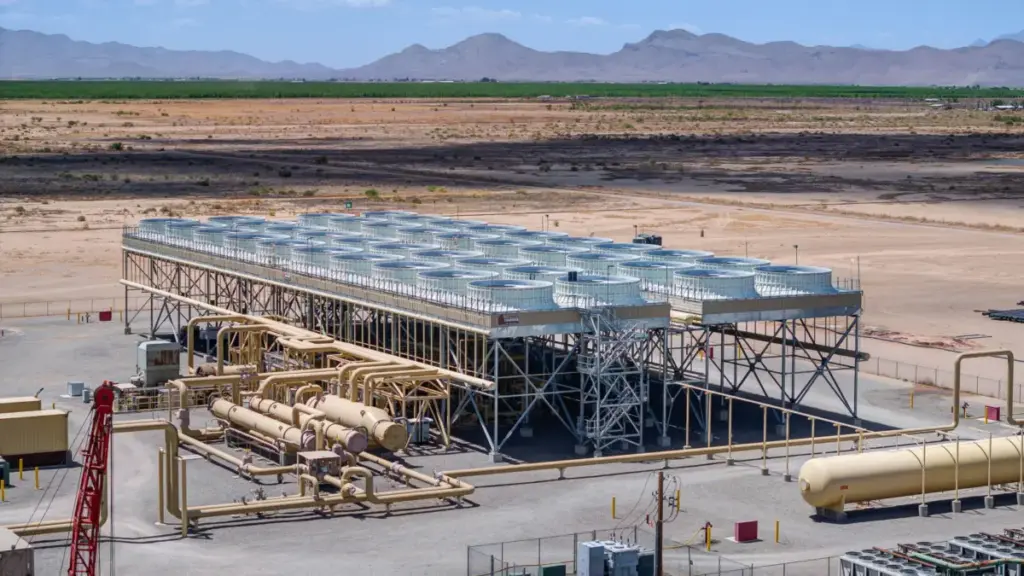
Enter Zanskar, an agile energy startup that is rewriting the playbook for renewable subsurface asset management. In June 2024, Zanskar acquired the Lightning Dock geothermal power plant in New Mexico. At the time of purchase, the facility was a financial and operational liability. Water temperatures in the underground reservoir were plummeting at an alarming rate, rendering the plant completely uneconomical to run.
Just two years later, following a strategic intervention driven by advanced predictive modeling and precision drilling, the Lightning Dock plant is operating at full capacity once more. By drilling down to 8,000 feet—far deeper than the site’s original shallow wells—Zanskar not only reversed the facility’s decline but discovered a counterintuitive geological reality: fluid flow actually increased at greater depths.
This breakthrough challenges long-held assumptions across the geothermal sector. By proving that conventional hydrothermal assets can be dramatically revitalized through modern technology, Zanskar’s success at Lightning Dock signals a massive, untapped potential for geothermal power across the United States and beyond.
Detailed Chronology: From Near-Collapse to Complete Rebirth
The story of Lightning Dock is a testament to the power of technological intervention in aging industrial infrastructure. Originally brought online in 2013, the geothermal site in southwestern New Mexico was designed to harness underground hydrothermal resources to generate clean electricity for the local grid. However, subsurface assets are notoriously dynamic, and subterranean conditions can deteriorate rapidly if not understood and managed with pinpoint precision.
The Downward Spiral (Pre-2024)
In the geothermal industry, a gradual temperature drop of 1 to 2 degrees Fahrenheit per year in a production well is considered a normal part of a field’s lifecycle. However, Lightning Dock experienced a catastrophic departure from this baseline. In the five years leading up to Zanskar’s acquisition, the site suffered a staggering temperature crash of 50 degrees Fahrenheit—averaging a devastating loss of 10 degrees per year.
By the time Zanskar stepped in to purchase the facility in June 2024, the water feeding the power plant had cooled to a meager 250 degrees Fahrenheit. The plant, conversely, was engineered to operate efficiently at temperatures of at least 310 degrees Fahrenheit. The mismatch between design parameters and operational reality made the facility economically unviable, pushing it to the brink of permanent closure.
The Turning Point and Modern Diagnostics
Rather than writing off the plant as a stranded asset, Zanskar’s engineering team applied sophisticated subsurface modeling techniques to diagnose the root cause of the failure. Traditional operators had relied on surface-level observations and historical drilling practices, which often left critical blind spots regarding the true architecture of underground reservoirs.
Through advanced predictive modeling, Zanskar’s engineers discovered that the site’s historical production wells—sitting at a relatively shallow 2,500 feet—were merely scratching the surface of the geological formation. According to Joel Edwards, Zanskar’s co-founder and Chief Technology Officer (CTO), these original wells were not only too shallow, but they were also poorly positioned to tap into the core of the hydrothermal plume.
The Deep-Drilling Intervention
Armed with actionable data from their predictive models, Zanskar’s team drafted a bold remediation plan: drill a new, significantly deeper production well in an entirely new geographic spot within the leasehold.
In May 2025, the company brought its new well online, reaching a staggering depth of 8,000 feet into the New Mexico crust. The gamble paid off immediately. After a full year of continuous operation, the new well has consistently maintained a formidable flow rate exceeding 4,000 gallons per minute. The facility has undergone what Edwards describes as a "complete turnaround," transforming from a dying financial burden into a shining model of engineering efficiency.
Supporting Context & Metrics: Challenging Conventional Geothermal Wisdom
To fully appreciate the magnitude of Zanskar’s achievement at Lightning Dock, it is essential to examine the underlying physics and traditional paradigms of geothermal energy extraction.
Understanding Conventional Hydrothermal Systems
Conventional geothermal power plants rely on a delicate triad of subsurface conditions: heat, permeability, and fluid. Naturally occurring water flows through fractured, superheated rock formations deep underground, absorbing thermal energy. This heated water or steam is then brought to the surface to drive turbines connected to electrical generators.
If the underground water cools down, or if the volumetric flow rate drops, the efficiency of the power plant plummets. This is why well degradation has historically spelled doom for many geothermal ventures.
The Deep-Earth Trade-Off
For decades, the conventional wisdom within the geothermal sector has been governed by a frustrating geological trade-off. It is an established scientific fact that the deeper you drill into the earth’s crust, the hotter the rocks become—a principle known as the geothermal gradient.
However, drilling deeper has traditionally introduced a severe engineering hurdle: lithostatic pressure. As you go deeper, the surrounding rock layers are compressed much tighter together, drastically reducing the permeability of the rock. In simpler terms, while deeper rocks are hotter, they are usually much denser, meaning the hot water cannot flow freely through them. Without sufficient fluid flow, generating commercial electricity becomes nearly impossible.
Shattering Industry Dogma
Zanskar’s experience at Lightning Dock upended this foundational assumption. When the engineering team drilled down to 8,000 feet, they discovered that permeability and fluid flow did not drop off as expected; instead, the flow rates actually increased in the newly targeted zone.
This unexpected geological finding has profound implications. Ben Brenner, director of federal affairs at Zanskar, notes that this discovery "fundamentally changes how you think about not just Lightning Dock but all hydrothermal assets in America and what the potential can be for all of them."
Hard Metrics and Grid Impact
The performance metrics recorded over the past year of operation speak for themselves:
- Capacity: The Lightning Dock facility generates 15 megawatts of clean baseload electricity, feeding directly into the local utility grid.
- Household Equivalency: This output is sufficient to reliably power approximately 11,000 typical U.S. homes.
- Output Multiplication: Over the past year, the modernized plant generated more than twice the electricity it would have produced utilizing the failing, legacy shallow wells.
Official Statements and Industry Perspectives
The success at Lightning Dock has sent ripples through the clean energy sector, drawing commentary from key leadership figures at Zanskar who view this project as a proof-of-concept for a broader industry evolution.
Reflecting on the rapid recovery of the plant, CTO Joel Edwards emphasizes the importance of long-term empirical validation in the energy sector.
"Ultimately you need to run these things for long time frames to get confidence in their performance over long time frames," Edwards explains.
Despite the early success, the company is taking a disciplined, data-driven approach to ensure the asset’s sustained durability. Speaking on the overall trajectory of the project, Edwards adds that current operational indicators show the facility is positioned for success well into the future:
"It looks really exciting… The plant has completely turned around."
Ben Brenner, Zanskar’s director of federal affairs, points out the macro-level significance of their subsurface findings. By demonstrating that deeper drilling can yield high-flow, high-temperature hydrothermal resources, Zanskar has unlocked a new paradigm for asset evaluation.
"That fundamentally changes how you think about not just Lightning Dock but all hydrothermal assets in America and what the potential can be for all of them," Brenner states.
Furthermore, industry observers have drawn parallels between the evolution of the geothermal sector and the historical trajectory of the oil and gas industry. Over the past several decades, fossil fuel developers steadily pushed operations deeper underground. While early oil and gas extraction occurred relatively close to the surface, modern operations routinely stretch down 20,000 feet or more into the earth.
Edwards believes a similar maturity curve is destined to play out in geothermal energy:
"I think that arc is going to play out in geothermal. While typical geothermal well fields range from 3,000 to 5,000 feet deep, it could become more common to go deeper in the future."
Future Outlook: The Road Ahead for Geothermal Energy
As the energy landscape continues its rapid transformation, Zanskar’s turnaround of the Lightning Dock facility serves as both a roadmap and a wake-up call for the broader renewable energy community.
Expanding Horizons at Lightning Dock
Zanskar is far from finished with its New Mexico asset. The company has laid out ambitious plans for continued development at the site. With a few more years of targeted subsurface development and upcoming capital upgrades to the surface power plant infrastructure, Zanskar expects to extract even higher volumes of electricity from the area, maximizing the economic and environmental return of the leasehold.
The Broader Geothermal Renaissance
The market has recently witnessed an explosion of interest and venture capital pouring into Enhanced Geothermal Systems (EGS). Innovative companies like Fervo Energy are pioneering advanced hydraulic fracturing ("fracking") techniques—borrowed directly from the oil and gas sector—to artificially create permeability in hot, impermeable rock formations that would otherwise be unusable for traditional geothermal power.
While EGS represents an exciting frontier that will dramatically expand the geographic footprint of where geothermal energy can be deployed, Zanskar’s leadership reminds the industry that plenty of untapped opportunity remains within conventional hydrothermal systems.
As Joel Edwards points out, there is still an abundance of "low-hanging fruit" sitting right beneath our feet. Many existing, conventional geothermal resources around the world possess massive hidden potential; they simply require modern diagnostic tools, advanced predictive modeling, and a courageous second look.
Conclusion: A Deeper Well of Possibility
The revival of the Lightning Dock power plant is more than just a localized engineering triumph—it is a bellwether for the future of baseload renewable energy. By fusing cutting-edge software modeling with deep-earth drilling technology, Zanskar has proven that aging, written-off energy assets can be brought back to life with astonishing efficiency. As the world intensifies its quest for reliable, emissions-free power that can run 24 hours a day, 365 days a year, the solutions may not require inventing entirely new physics. Instead, as Lightning Dock demonstrates, we simply need to look deeper, model smarter, and unlock the hidden power waiting beneath our feet.