Executive Overview
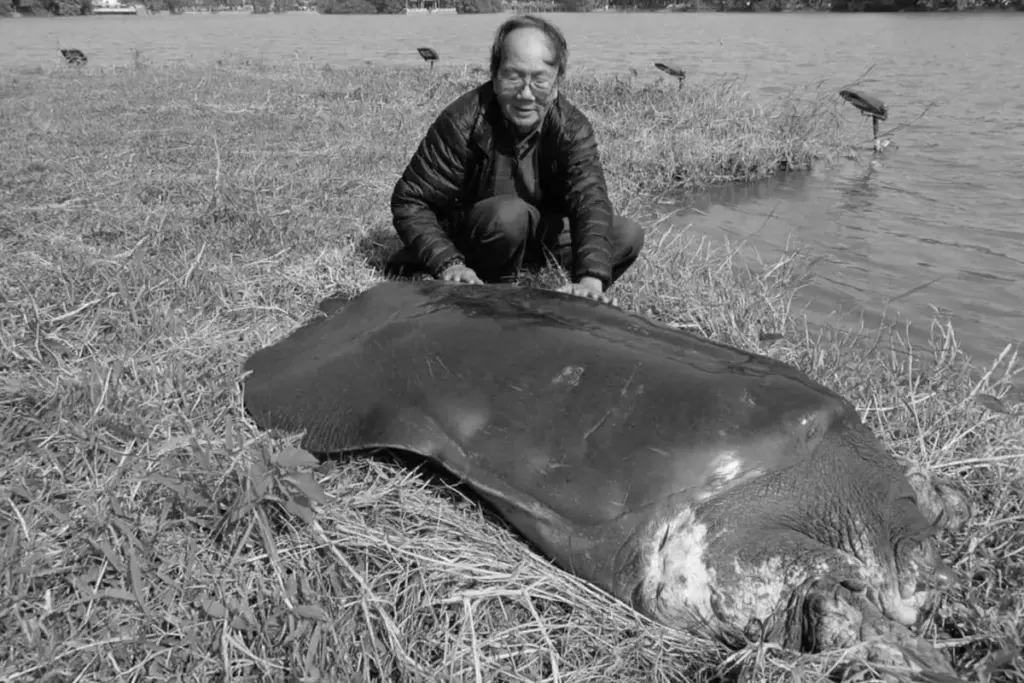
On August 7, 2026, Hà Đình Đức—affectionately and respectfully known across Vietnam as “Professor Turtle” or “Đức Rùa”—passed away in Hanoi at the age of 86. His passing marks the end of a remarkable, singular chapter in the intersection of modern zoological science and ancient cultural mythology. For over three decades, Đức’s life was inextricably linked to Hồ Gươm (the Lake of the Returned Sword) at the absolute center of Vietnam’s bustling capital, and to the colossal, ancient softshell turtle that called its murky waters home.
What began as a chance encounter on a brisk March afternoon in 1991 transformed into a lifelong obsession, a profound spiritual duty, and an unyielding conservation crusade. Long after the official research grants dried up, Đức remained the self-appointed sentinel of the lake. He photographed the creature through decades of environmental degradation, fiercely defended its habitat against aggressive urban development, and sought out elusive surviving relatives across the Vietnamese countryside to keep both a species and a legend alive.
This retrospective explores the extraordinary life of Hà Đình Đức, the intersections of folklore and hard science in Southeast Asia, and the enduring legacy of a man who viewed a rare freshwater reptile as nothing less than the living soul of a nation’s capital.
Detailed Chronology: A Life Bound to the Water
1. The Fateful Encounter (March 15, 1991)
On a seemingly ordinary spring day in 1991, zoologist Hà Đình Đức was passing by Hồ Gươm—the historic heart of Hanoi. Suddenly, the water parted, and the massive, ancient form of a giant softshell turtle surged to the surface to bask in the sunlight.
For most passersby, it was a momentary spectacle, a rare glimpse of urban wildlife. For Đức, however, it was a watershed moment. Arriving home, he meticulously marked the exact date on his calendar. Years later, he would describe the incident as having forged an "invisible bond" with the animal—an almost hypnotic pull that redirected the entire trajectory of his professional and personal life.
2. From Accidental Witness to Dedicated Researcher
Initially, formal academic inquiry provided Đức with an official mandate to study the enigmatic creature. He began tracking its movements, documenting its appearances, and assessing its environmental interactions. But when the academic funding expired and institutional projects wound down, Đức refused to stop.
For the next twenty-five years, his routine rarely wavered. Armed with cameras and notebooks, he spent countless hours by the lakeside. He recorded every surfacing, monitored the animal’s physical condition, and grew deeply anxious over the increasing anthropogenic pressures threatening the lake’s ecosystem. Over time, the local populace stopped seeing him as an eccentric academic and instead embraced him as a fixture of the lake’s landscape, dubbing him "Professor Turtle" or simply "Đức Rùa."
3. The Crisis of 2011 and the Loss of 2016
As decades passed, the environmental strains on Hồ Gươm took a severe toll on its most famous resident. By 2011, the elderly turtle had developed visible, distressing lesions on its skin and shell, sparking a national health emergency. The creature required capture, intensive medical intervention, and rehabilitation. During this tense period, Đức maintained a nearly constant vigil by the lake, arriving almost daily to monitor treatment updates and advocate for the animal’s well-being.
Despite rescue efforts, the fragile giant succumbed to age and environmental stress, passing away in 2016. The death of the Hồ Gươm turtle plunged Hanoi into collective mourning. Yet, even in the wake of this profound loss, Đức did not sever his ties to the lake. He continued to speak out against poorly planned urban construction around the shoreline and relentlessly pursued expeditions into rural Vietnam to search for other surviving giant softshell turtles.
4. Final Chapter (August 7, 2026)
Hà Đình Đức passed away in Hanoi on August 7, 2026, at the age of 86. His death closed the book on an era where individual human stewardship and folkloric heritage were bridged by a single, passionate scientist.
Supporting Context & Metrics: Myth, Science, and Environment
The Legend of Hồ Gươm
To fully understand why Hà Đình Đức dedicated his life to a single reptile, one must understand the mythos of Hồ Gươm. According to 15th-century Vietnamese lore, Lê Lợi led a historic rebellion that successfully drove Ming dynasty forces out of Vietnam. This victory was allegedly aided by a magical sword bestowed by the Heaven-sent Kim Quy (Golden Turtle God).

Following the cessation of war, Lê Lợi was boating on the central Hanoi lake when the golden turtle surfaced once again, gracefully reclaiming the divine weapon on behalf of its celestial master. The body of water was subsequently renamed Hồ Hoàn Kiếm—the Lake of the Returned Sword.
For Đức, the presence of a real, living, colossal softshell turtle swimming beneath the capital’s surface transformed this ethereal myth into a tangible reality. In his eyes, the animal was not merely a biological specimen; it was the literal and metaphorical "soul" of the lake.
Conservation Realities of Rafetus swinhoei
The creature that captivated Đức and all of Hanoi belongs to one of the rarest and most critically endangered species on Earth: the Yangtze giant softshell turtle (Rafetus swinhoei), or Swinhoe’s softshell turtle.
- Global Status: Considered among the rarest large vertebrates on the planet, with only a tiny handful of confirmed living individuals remaining globally.
- Habitat Vulnerability: Historically inhabiting large river systems and deep lakes in northern Vietnam and southern China, the species has suffered catastrophic population declines due to historical overhunting, targeted capture for meat and traditional medicine, and severe degradation of freshwater habitats.
- The Hanoi Specimen: The Hồ Gươm turtle was long celebrated as a cultural icon, though taxonomists debated its exact subspecific designation within the Rafetus genus. Regardless of taxonomic nuances, its isolation in a heavily urbanized, polluted city lake made its multi-decade survival under the watchful eye of Hà Đình Đức a modern conservation marvel.
Official Statements and Public Legacy
Throughout his life, Đức’s unwavering advocacy frequently put him at loggerheads with municipal authorities, urban developers, and commercial interests in Hanoi.
Voicing the Unheard Stakeholder
Whenever city planners proposed dredging projects, shoreline commercial expansion, or massive infrastructural developments around Hồ Gươm, Đức was invariably the first to raise scientific objections. He argued passionately that municipal authorities bore an ethical and ecological responsibility to conduct rigorous environmental impact assessments before turning a spade of earth.
"Scientists have a moral obligation to ask what will happen to the voiceless inhabitants before engineering projects begin," Đức frequently argued, highlighting the dangers of industrial pollution, heavy metals, and construction runoff into the confined lake ecosystem. His public stances forced city officials to approach environmental management with a higher degree of caution than they might have otherwise exercised.
Tributes and Tributes to "Professor Turtle"
Following news of his death in August 2026, environmental groups, academic institutions, and everyday citizens of Hanoi took to social media and local press outlets to pay tribute.
"Hà Đình Đức taught us that conservation is not merely a set of biological metrics on a spreadsheet; it is an act of deep cultural memory and emotional responsibility. He looked at Hồ Gươm and saw a living bridge to our ancestors." — Vietnamese Ecological Society Tribute, August 2026
His legacy remains preserved not only in academic papers and conservation archives, but in the collective consciousness of a capital city that learned to look at its central lake with renewed reverence and environmental awareness.
Future Outlook: The Road Ahead for Vietnam’s Freshwater Giants
The passing of Hà Đình Đức and the earlier loss of the Hồ Gươm turtle raise urgent questions regarding the future of freshwater conservation in Vietnam:
- Renewed Search Efforts: Conservationists inspired by Đức’s tireless fieldwork continue to survey remote wetlands and river systems in northern Vietnam and neighboring regions, hoping to find surviving Rafetus swinhoei individuals capable of forming a viable breeding program.
- Urban Lake Governance: Hanoi’s municipal administration faces mounting pressure to implement stricter ecological protections for Hồ Gươm and other urban water bodies. Water quality monitoring, pollution mitigation, and habitat restoration have taken center stage in modern civic planning.
- Cultural Preservation: Educational initiatives are increasingly pairing indigenous folklore with modern biodiversity education. By framing wildlife protection through the lens of national heritage—much as Đức did for decades—younger generations of Vietnamese are being mobilized to defend their vanishing natural ecosystems.
Ultimately, Hà Đình Đức’s life stands as a testament to the profound impact that one dedicated individual can have on the preservation of history and nature. Though both the guardian and the legendary turtle have now passed into memory, the ripples of their shared existence will continue to shape the environmental conscience of Hanoi for generations to come.