By Craig R. McClain
Deep-Sea Biologist and Marine Ecosystem Researcher
Executive Overview
It is 3 a.m. aboard a research vessel drifting quietly over the open waters of the Gulf of Mexico. Standing on the darkened deck, I stare down into water so black and profound it appears almost solid. At moments like this, looking out over the abyssal plains or standing at the rim of the Grand Canyon as the sun dips below the horizon, I am struck by a singular realization: there are places on this Earth that demand our reverence, our protection, and our deep humility.
The Orca Basin is indisputably one of those places.
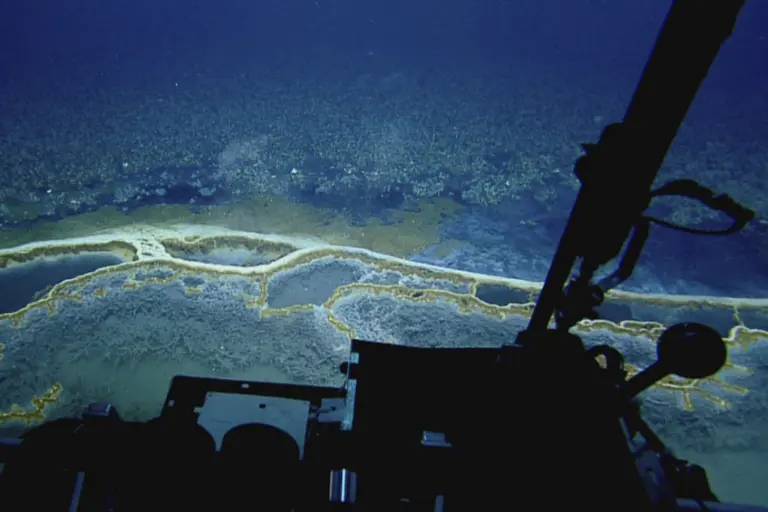
Located approximately 168 miles (270 kilometers) off the coast of Louisiana, resting beneath more than a mile (2.2 kilometers) of freezing, relentless seawater, the Orca Basin is an extraordinary geographical and ecological anomaly. It is, effectively, a hyper-saline lake hidden upon the deep-sea floor. Trapped within a vast submarine depression for millennia, its waters are nearly ten times as salty as standard seawater. Because this brine is extraordinarily dense, it fiercely resists mixing with the water column above, forming a ghostly, shimmering boundary layer that mirrors the heat-haze rising off a sunbaked asphalt highway—a mirage unfolding a mile beneath the surface of the ocean.
Despite being devoid of oxygen and multicellular animal life below its halocline, the basin is far from a biological wasteland. It teems with specialized microbial communities that have evolved over thousands of years to thrive in extreme conditions. Its layered sediments serve as an invaluable archive of Earth’s history, preserving organic material in pristine, oxygen-free isolation.
Yet, this fragile, irreplaceable natural laboratory now faces a startling and potentially irreversible threat.
Carboniferous Inc., an atmospheric carbon removal startup, has secured a landmark research permit from the U.S. Environmental Protection Agency (EPA) to dump 20 tons of compressed agricultural waste—specifically, sugarcane bagasse—into the heart of the Orca Basin. Dubbed the Marine Anoxic Carbon Storage (MACS) project, the initiative aims to test whether the basin’s oxygen-free depths will prevent the biomass from decomposing, thereby locking away carbon permanently.

Proponents frame this as a vital step in the global battle against climate change. But as a deep-sea biologist who has spent decades studying the Gulf of Mexico—including the long-term ecological fallout of disasters like the Deepwater Horizon oil spill—I view the MACS project as a profound miscalculation. It is a poorly designed, short-sighted experiment that risks damaging a uniquely rare ecosystem for dubious scientific returns. Worst of all, it reinforces a dangerous historical precedent: treating the deep ocean as a remote, out-of-sight dumping ground for human convenience.
Detailed Chronology: From Abyssal Discovery to the MACS Permit
To understand the gravity of the MACS project, one must trace the timeline of humanity’s evolving relationship with the deep ocean—and the Orca Basin specifically.
- Pre-Discovery Era: For millions of years, the Orca Basin operated in total isolation, an ancient geological depression shaped by the movement of subsurface salt deposits (salt tectonics) in the northern Gulf of Mexico. Its unique density stratification stabilized over millennia, creating an undisturbed geochemical archive.
- Late 20th Century (Scientific Discovery): Oceanographers mapping the Gulf of Mexico floor identified the basin, revealing its hyper-saline, anoxic brine pool properties. Over subsequent decades, marine geologists and microbiologists recognized the basin as a premier natural laboratory for studying extreme microbial life, early diagenesis (how sediments turn to rock), and potential planetary analogs for the icy moons of Jupiter and Saturn, such as Europa and Enceladus.
- The Deepwater Horizon Era (2010–Present): The catastrophic blowout of the Macondo well in 2010 served as a brutal lesson in how human industrial activity can severely disrupt deep-sea ecosystems. Years of post-disaster monitoring revealed that deep benthic communities possess agonizingly slow recovery rates, underscoring that subterranean and abyssal environments do not bounce back on human timelines.
- The Emergence of Marine Carbon Dioxide Removal (mCDR): As global greenhouse gas emissions mounted and political pressure for climate solutions intensified, startups began looking toward the oceans—the planet’s largest carbon sink—for techno-fix solutions. Among these is ocean biomass sinking, which theorizes that dropping terrestrial plants into deep, oxygen-depleted marine zones can trap carbon away from the atmosphere for centuries.
- Recent EPA Approval: Carboniferous Inc. pursued and ultimately obtained an MPRSA (Marine Protection, Research, and Sanctuaries Act) research permit from the U.S. Environmental Protection Agency. This greenlit the transport and deposition of 20 tons of sugarcane bagasse directly into the Orca Basin as part of a 14-month trial to evaluate carbon stability and monitoring methodologies.
Supporting Context & Metrics: The Scale of the Risk vs. Reality
To evaluate whether the MACS project represents a legitimate climate intervention or a reckless environmental gamble, we must examine the hard metrics regarding ecosystem scale, carbon math, and chemical vulnerability.
1. The Ecological Footprint of the Basin
The Orca Basin spans roughly 154 square miles (nearly 400 square kilometers). Within this depression:
- Salinity: Reaches levels roughly 10 times higher than normal oceanic water.
- Oxygen Content: Zero oxygen is present below the halo-boundary, establishing a permanent anoxic zone.
- Biodiversity: While macrofauna cannot survive the brine, the sediments are inhabited by complex, slow-metabolizing microbial communities that cycle sulfur and carbon.
2. The Carbon Mathematics
Even under the most aggressively optimistic theoretical projections, the math behind ocean biomass dumping fails to measure up to the scale of the climate crisis:
- Global Emissions Output: Global annual human carbon emissions exceed 35 gigatons of $CO_2$.
- Basin Capacity Limit: If the entire floor of the Orca Basin were blanketed in compressed agricultural waste—an act that would constitute an unmitigated ecological catastrophe—the total carbon sequestered would amount to a fraction of a percent of annual global emissions (specifically, roughly six-tenths of a percent).
- The Timeframe Mismatch: The Carboniferous Inc. pilot project is scheduled for a 14-month monitoring window. Biogeochemical changes in extreme deep-sea environments move at glacial speeds. Shifts in dissolved carbon, sulfate, methane, or ammonium take years, if not decades, to register detectably. Checking on a deep-sea carbon burial experiment after 14 months is scientifically equivalent to planting a sapling and declaring victory the following morning.
3. Geochemical and Biological Hazards
By introducing 20 tons of sugarcane bagasse—a high-quality organic carbon source—scientists risk upending the very conditions that make the basin unique:
- Microbial Stimulation: The basin’s microbes are limited not by metabolic capacity, but by the scarcity of high-quality organic carbon. Introducing massive amounts of bagasse will cause microbial populations to surge, potentially triggering rapid metabolic shifts, the production of unwanted greenhouse gases such as methane, and unforeseen local anoxic shifts.
- Density Gradient Disruption: Lowering heavy, ballasted containers through the delicate halocline risks churning and destabilizing the density layers that have kept the basin stratified for ages.
Official Statements and Industry Perspectives
The approval of the MACS permit has triggered sharp divisions within the scientific and regulatory communities regarding how emerging climate technologies should be governed.

Proponents of marine carbon removal argue that desperate times require aggressive experimental measures. In project filings with the EPA, representatives for Carboniferous Inc. maintain that utilizing natural anoxic sinks is a crucial pathway for permanent carbon isolation. They emphasize that the 20-ton deployment is strictly scaled as a localized research trial designed to gather empirical data on degradation rates, benthic interactions, and monitoring protocols under real-world conditions.
However, independent deep-sea researchers and conservation advocates view the EPA’s greenlight with profound alarm. Critics point out that the permit was issued despite a glaring absence of foundational baseline science.
“Before we introduce 20 tons of foreign material into an irreplaceable ecosystem—and before we run a single bale of compressed sugarcane bagasse over the rail of a ship—we should know what lives there,” notes the scientific consensus surrounding deep-sea stewardship. “We should have rigorous baseline surveys. We should understand the spatial heterogeneity of its microbial communities, the natural flux of its greenhouse gases, and the precise structure of its salinity gradient. We have none of that, but the permit was approved anyway.”
Furthermore, experts emphasize that the Orca Basin is geochemically unique; its conditions cannot be replicated across the broader ocean. Even one of the permit’s own contributing researchers has published work acknowledging that the basin’s dynamics are an isolated anomaly rather than a blueprint for scalable global carbon storage.
Future Outlook: Protecting the Yellowstone of the Deep
We stand at a critical crossroads regarding how humanity treats the final wild frontiers of our planet. Historically, the deep ocean has been treated as an out-of-sight, out-of-mind receptacle. We have dumped military munitions, sewage sludge, and industrial waste into the abyss, convincing ourselves that the deep sea was too vast, too dark, and too alien to possess any real intrinsic value.
We were wrong then, and we are dangerously wrong now.
The Orca Basin deserves the same steadfast protection and reverence that we afford to our most cherished terrestrial national parks. Yet, because it sits hidden beneath a mile of pitch-black water—where no hiker can walk, no tourist can camp, and no camera can capture casual beauty—its silent vulnerability makes its defense all the more urgent.

If we allow industrial startups to treat unique deep-sea basins as corporate testing grounds without comprehensive, independent baseline science, we risk opening the floodgates to unchecked geoengineering experiments that view marine ecosystems as mere carbon ledgers.
What Can Concerned Citizens Do?
For those who recognize that the deep ocean is not a waste repository, constructive action is both possible and necessary:
- Congressional Oversight: Contact your congressional representatives—particularly those serving on the House Natural Resources Committee and the Senate Commerce Committee, which hold direct jurisdiction over marine environments. Demand rigorous congressional oversight regarding how the EPA review process evaluated this permit and what long-term safeguards are mandated.
- Mobilize Regional Advocacy: If you reside along the Gulf Coast, your state’s legislative delegation has a direct, localized stake in the health of the Gulf of Mexico. Urge them to press for independent, third-party baseline science conducted by researchers with no financial or operational stake in commercial carbon removal outcomes.
The Orca Basin deserves better than an irreversible experiment wrapped in a press release. The science of carbon removal is vital, but it must be built on credible, rigorous, and genuinely scalable foundations—not at the expense of our planet’s most fragile and irreplaceable deep-sea sanctuaries.
Cite this Article
APA Style:
McClain, C. R. (2026). The Deep Abyss on Trial: Why the Gulf of Mexico’s Orca Basin Must Not Become a Carbon Dump. Conservation and Marine Science Journal / Mongabay Insights. DOI: https://doi.org/10.66709/news-328050