Executive Overview
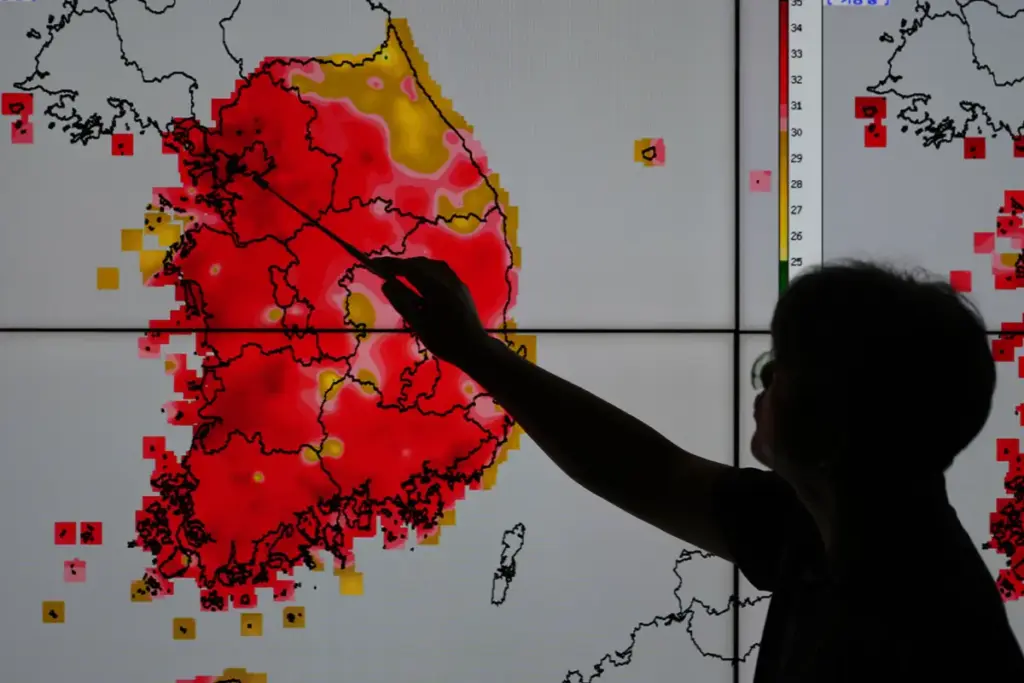
A blistering, record-shattering heatwave swept across a broad swath of Asia earlier this year, overwhelming power grids, devastating agricultural yields, and claiming dozens of human and animal lives. From the Korean Peninsula down to the urban centers of Southeast Asia, extreme heat anomalies redefined historical meteorological markers, fueled by a potent combination of human-induced climate change and the resurgence of a powerful El Niño cycle.
Weather experts have confirmed that this meteorological event—officially arriving in June and intensifying through the latter half of the year—is developing into one of the strongest El Niño episodes ever recorded. The "super" El Niño has left millions across East and Southeast Asia exposed to prolonged elevated temperatures, severe rainfall deficits, and complex public health hazards.
While urban areas grapple with the immediate fallout of heatstroke, the crisis extends far beyond human populations. Agricultural sectors are facing catastrophic losses, ranging from scorched crops left boiling in the ground to millions of farm animals and fish perishing from thermal stress. Furthermore, health authorities warn that the environmental disruptions triggered by this climate phenomenon are fueling secondary public health crises, including spikes in vector-borne diseases like dengue fever and respiratory illnesses linked to regional wildfires.
As climate scientists warn that these deadly heatwaves will only increase in frequency and intensity, vulnerable nations are forced to re-evaluate their urban resilience strategies, exploring nature-based adaptations to combat the escalating threat of urban heat islands.
Detailed Chronology of the Crisis
The unfolding climate catastrophe reached unprecedented milestones throughout the mid-summer months, transforming routine weather tracking into a succession of grim historical records.

Early August: East Asia Breaches Historical Ceilings
The most dramatic temperature anomalies materialized in early August across the Korean Peninsula and neighboring regions. On August 2, the mercury in Yangsan, South Korea, surged to an astonishing 42.5° Celsius (108.5° Fahrenheit)—the highest reading recorded since official meteorological tracking began in 1904. The intensity of the subterranean heat was so extreme that agricultural reports confirmed unharvested potatoes were literally "boiled" while still embedded in the soil.
Simultaneously, metropolitan hubs and regional prefectures across Japan and China breached the 40°C (104°F) threshold in late July. The escalation culminated on August 9, when the Hong Kong Observatory logged a sweltering 39.8°C (103°F), marking the city’s highest temperature since automatic weather stations were introduced in the 1980s.
Southeast Asian Anomalies and Rain Deficits
While East Asia contended with direct heat spikes, Southeast Asia experienced profound thermal anomalies coupled with widespread precipitation shortages. Vietnamese meteorological officials reported that thermal readings between July 11 and August 10 consistently hovered between 39°C and 40°C (102–104°F), setting new historical benchmarks across vast portions of the country.
Concurrently, official monitoring networks identified severe rainfall deficits stretching across a transnational corridor encompassing the Philippines, Cambodia, Laos, Thailand, Vietnam, Malaysia, and Indonesia. This absence of normal monsoon moisture set the stage for severe agricultural stress and heightened fire risks across the region.
Supporting Context & Metrics: The Mechanics of a "Super" El Niño
To understand the severity of the 2026 heat crisis, scientists point to the convergence of long-term anthropogenic global warming and the natural mechanics of the El Niño-Southern Oscillation (ENSO).

Disrupted Atmospheric Circulation
Under normal climatic conditions, robust trade winds sweep across the Pacific Ocean, pushing warm surface water toward the western Pacific. This accumulation of thermal energy acts as the primary engine for Asia’s summer monsoons, providing crucial cloud cover and precipitation.
However, the onset of the current "super" El Niño fundamentally disrupted this system. The phenomenon weakens trade winds, preventing warm water from migrating westward. According to Justin Sentian, a professor of atmospheric science at Universiti Malaysia Sabah, this dynamic left Southeast Asia and East Asia trapped beneath a heavy, descending mass of high-pressure air.
This sinking air mass effectively suppressed the formation of summer storms, stripping the region of the protective, sunlight-reflecting canopy typically provided by monsoon clouds. Consequently, unmitigated solar energy struck the Earth’s surface directly across Asia, compounding the baseline warming driven by greenhouse gas emissions.
Quantitative Toll on Public Health and Agriculture
The physical toll of these sustained temperatures manifested quickly in emergency rooms, morgues, and agricultural sectors across the affected nations:
- South Korea: By August 18, the Ministry of the Interior and Safety reported 3,445 official cases of heat-related illnesses and 31 fatalities. The Korea Disease Control and Prevention Agency noted that more than 80% of those who perished were aged 60 or older. Agricultural losses were equally staggering, with the heatwave killing nearly 1.2 million livestock—including poultry and pigs—and approximately 2.83 million farmed fish.
- Japan: Japanese authorities reported on July 22 that 14 people had died from suspected heatstroke within a single week, while more than 10,800 individuals required hospitalization. Over 60% of hospitalized patients were elderly citizens aged 65 and older. The crisis also impacted younger populations; 26-year-old Fiji rugby player Saimoni Vunilagi collapsed on August 3 following a training session in Fukuoka and succumbed to heat-related complications four days later. The extreme temperatures even affected captive wildlife, resulting in the heatstroke-induced deaths of three lions at a Tokyo zoo.
- Secondary Health Risks: The World Health Organization (WHO) warns that extreme heat stress significantly exacerbates underlying health conditions, including cardiovascular disease, diabetes, asthma, and mental health disorders. Furthermore, environmental shifts accelerated the life cycle of Aedes mosquitoes, the vectors for dengue fever. Health ministries in Malaysia and Singapore issued urgent alarms as dengue cases surged past previous years’ totals—Malaysia’s caseload jumped from over 33,000 in June to roughly 55,800 by August. A 2025 study published in Nature Communications projects that El Niño cycles could drive a 39% to 81.7% increase in cumulative global dengue cases between 2020 and 2099.
- Wildfires and Haze: The El Niño-induced drought conditions also fueled severe wildfire seasons across Indonesia, blanketing nearby communities in toxic haze that drifted across borders into Malaysia and Singapore, threatening public respiratory health on an international scale.
Official Statements and Expert Perspectives
As governments scrambled to issue public safety warnings, prominent climate scientists and institutional leaders provided stark assessments of the ongoing meteorological crisis.

Yi Ming, a climate scientist at Boston College in the United States, underscored the long-term trajectory of these events, noting:
"Deadly heatwaves are almost certain to be more frequent as Earth becomes warmer."
He added that the current El Niño event will continue to exacerbate systemic vulnerabilities as it reaches its peak strength during the Northern Hemisphere’s fall and winter.
Bin Wang, an emeritus professor of atmospheric sciences at the University of Hawaii at Manoa, highlighted the complex regional variations associated with El Niño years. While Southeast Asia faces prolonged dry conditions, southern China, western Japan, and the southern tip of the Korean Peninsula often experience excessive precipitation anomalies.
As evidence of this dynamic, Geoje on the southern coast of South Korea was inundated with more than 950 millimeters (37 inches) of rain between August 15 and August 17—an amount equivalent to two-thirds of the city’s total annual precipitation from the previous year. Looking ahead, Wang warned that the summer following a severe El Niño—such as the upcoming summer of 2027—is likely to feature excessively strong seasonal monsoons, including the meiyu in China, baiu in Japan, and changma in Korea.

Future Outlook: Urban Resilience and Adaptation Strategies
With extreme weather events cementing themselves as the new normal, municipal governments across Asia are increasingly turning to nature-based urban planning to mitigate the impacts of urban heat islands (UHIs).
Seoul’s Green Infrastructure Initiatives
Seoul has emerged as a leader in urban cooling interventions. Between 2014 and 2021, the South Korean capital planted more than 30 million trees to combat air pollution and the urban heat island effect. Research by the Seoul Institute demonstrated that roadside trees can reduce localized temperatures by up to 1.09°C (1.96°F).
Furthermore, the city’s landmark early-2000s restoration of the Cheonggyecheon stream—which involved removing an elevated concrete highway—successfully lowered surrounding temperatures by up to 5.9°C (10.6°F) while simultaneously slashing air pollution and reviving urban biodiversity.
Singapore and Taipei’s Canopy Expansion
Singapore has integrated climate resilience into its core urban master planning, focusing on maximizing natural wind flow, shade structures, and green spaces. According to the Urban Redevelopment Authority, strategically placed urban greenery can lower temperatures by up to 9°C (16.2°F). The city-state has committed to expanding its rooftop greenery from 143 hectares (353 acres) in 2026 to 200 hectares (494 acres) by 2030.
Similarly, in Taiwan, the Taiwan Forestry Research Institute notes that urban parks can lower ambient temperatures in Taipei by 2°C (3.6°F). The Ministry of Environment has announced plans to expand native tree coverage across Greater Taipei, with the explicit goal of ensuring that commuters can traverse the urban landscape without navigating extended stretches of exposed, heat-absorbing pavement.

Despite these proactive measures, experts caution that many developing tropical cities lack the financial resources required to implement comprehensive urban cooling infrastructure. Without sustained international climate adaptation funding and aggressive global emissions reductions, vulnerable populations across Asia will remain on the front lines of an increasingly hostile thermal reality.