Executive Overview
On Earth Day 2026, the global sustainable agriculture community turned its gaze toward the high desert of California, where the fragile ecosystems of the Eastern Sierra traditionally pose monumental hurdles to commercial agriculture. It was here, in Bishop, California, that Rachel Kulchin established Blue Heron Farm—a thriving 10-acre mixed orchard and vegetable operation that has fundamentally reshaped local food security.
In recognition of this remarkable feat, the Davines Group and the Rodale Institute named Kulchin the second annual recipient of The Good Farmer Award U.S. Selected from a competitive pool of 118 applicants across 25 states, Kulchin stands out not merely as a grower of crops, but as a systems architect who has proven that regenerative organic agriculture can flourish in the most arid and challenging climates.
The award—which includes a $10,000 cash prize designated for critical infrastructure upgrades and an all-expenses-paid international research exchange to Italy—highlights a growing movement within agriculture: honoring early-career farmers who transcend traditional soil management to weave ecological restoration directly into the fabric of their communities. Alongside Kulchin, finalists Nia Kiara Cole of North Carolina and Nailah Marie Ellis of Georgia were celebrated for their trailblazing work in ancestral land reclamation and urban food sovereignty.
This comprehensive report examines the trajectory of Blue Heron Farm, the rigorous criteria behind the Good Farmer Award, and the broader corporate and institutional partnerships driving the global transition toward regenerative organic systems.
Detailed Chronology: From Concept to Community Anchor
The journey of Blue Heron Farm is a masterclass in rapid agricultural establishment and community integration. Founded just one year prior to receiving national recognition, the 10-acre enterprise faced a landscape defined by scarce water resources, fragile agricultural infrastructure, and a heavy reliance on imported produce.
Season One: Breaking Ground in the Eastern Sierra
When Rachel Kulchin launched Blue Heron Farm, local skeptics questioned the viability of a diversified fruit and vegetable operation in the high desert. Undeterred, Kulchin deployed regenerative organic practices centered on soil microbial health and extreme water conservation. By planting over 1,000 fruit trees alongside a robust rotation of diversified vegetable crops, she immediately set out to establish biological activity in a landscape where soil organic matter is historically difficult to build.
Rather than relying strictly on traditional wholesale distribution channels, Kulchin implemented an innovative U-Pick model. This direct-to-consumer framework invited local residents and regional visitors to harvest directly from the earth, bridging the psychological and physical gap between consumers and their food sources.
The strategy yielded staggering results during its inaugural season:
- Production Volume: Over 47,000 pounds of nutrient-dense food harvested.
- Community Engagement: More than 3,000 individual customers connected with the farm.
- Market Impact: Blue Heron Farm swiftly established itself as the single largest diversified fruit and vegetable producer in the region.
The Earth Day 2026 Recognition
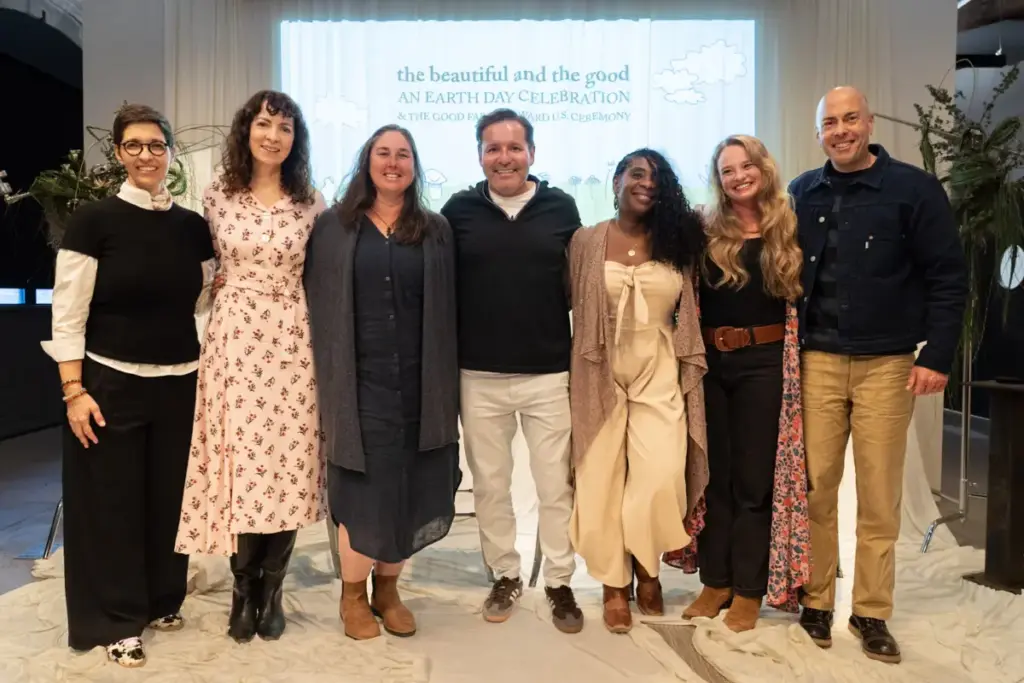
The culmination of this intensive first year was recognized on April 22, 2026, during an Earth Day celebration hosted at the Davines Group House in Brooklyn, New York. Surrounded by leaders in sustainable business, organic advocacy, and environmental science, Kulchin accepted the honor alongside fellow finalists Nia Kiara Cole and Nailah Marie Ellis.
The celebration marked a vital milestone not only for Blue Heron Farm but for the broader mission of the Davines Group and Rodale Institute partnership, which seeks to elevate farmers working the land for 10 years or less who are generating measurable, systemic community change.
Supporting Context & Metrics: The Anatomy of Modern Regenerative Farming
To fully comprehend the significance of Rachel Kulchin’s achievement, it is necessary to examine the broader metrics of the 2026 Good Farmer Award program and the ecological frameworks defining contemporary regenerative agriculture.
The 2026 Applicant Pool and Judging Criteria
The 2026 U.S. Good Farmer Award received applications from 118 farmers representing 25 states and a rich tapestry of cultural backgrounds. The selection process was governed by a multi-disciplinary panel of judges comprising leaders in sustainable agriculture, environmental science, and green beauty:
- Renée Baran: Dean of Education at Rodale Institute.
- Dario Fornara: Research Director of the European Regenerative Organic Center (EROC).
- Kegan Hilaire: Farmer, owner of Blackbird Farms, and Small Farms/Diversified Vegetable Consultant at Rodale Institute.
- Hayley and Stephanie Painter: Co-Founders of Painterland Sisters (Icelandic Style Skyr Yogurt).
Candidates were rigorously evaluated against metrics designed to measure systemic impact:
- Biodiversity Enhancement: Practices that actively restore native flora, fauna, and soil microbiome diversity.
- Climate Resilience: Strategies that buffer agricultural systems against extreme weather events, drought, and temperature fluctuations.
- Environmental Stewardship: Holistic management of water, energy, and land inputs.
- Social Contribution: Initiatives that foster food sovereignty, equitable access to nutrient-dense food, and community education.
Celebrating the Finalists: Cole and Ellis
While Kulchin claimed the top honor, the second and third-place finalists exemplify the diverse approaches required to transform American agriculture:
- Nia Kiara Cole (Kin & Flo Farm, North Carolina): Recognized for reclaiming ancestral family land and championing Afro and Indigenous restorative land practices. Cole trains the next generation of BIPOC farmers, advancing food sovereignty and cooperative food systems for Black and Brown communities across the North Carolina Piedmont.
- Nailah Marie Ellis (Blessed Up Blooms, Georgia): Honored for establishing a soil-first, community-centered farm in Atlanta. Spanning from Bankhead to Buckhead, Ellis utilizes regenerative agriculture and direct-to-consumer models to integrate urban beautification with the production of nutrient-dense food.
Official Statements: Voices from the Forefront of Sustainability
The partnership between the Davines Group and the Rodale Institute represents a powerful convergence of corporate responsibility and agricultural science. Leadership from both organizations emphasized the transformative nature of Kulchin’s work.
"Rachel embodies the resilient, systems approach that regenerative organic agriculture demands," said Jeff Tkach, CEO of Rodale Institute. "In just one year, she has built a thriving 10-acre operation that is not only producing nutrient-dense food and restoring soil health, but also inspiring an entire community to reimagine what’s possible for local food security. Her work proves that small farms can be economically viable and ecologically sound, even in the most challenging climates."
For Kulchin, the recognition serves as validation for an unconventional approach to high-desert farming:
"I am standing behind a belief that feels both stubborn and bold," said Rachel Kulchin. "The recognition through the Good Farmer Award affirms the work we are doing to build something different in Eastern Sierra. Our goal is not just to grow food, but to demonstrate that regenerative agriculture can thrive in challenging climates and build the resilience our valley desperately needs. This award will be transformational for Blue Heron Farm and for our community."
Davide Bollati, Chairman of the Davines Group, highlighted the symbiotic relationship between corporate ingredient sourcing and institutional farming expertise:
"We are delighted to welcome Rachel to Italy and to guide her through our European Regenerative Organic Center," said Davide Bollati. "This year’s award demonstrates why Davines continues to partner with Rodale Institute—not only to source regenerative organic ingredients for our products, but to learn from the Institute’s rigorous research and farmer-first expertise. Rachel’s farm is a living example of building resilient systems with regenerative organic agriculture. By supporting farmers like Rachel, we invest in the future of beauty, agriculture, and the planet."
Future Outlook: Investment, Education, and Global Exchange
The impact of the 2026 Good Farmer Award extends far beyond the prestige of the title. The financial and educational capital accompanying the prize is strategically structured to ensure long-term viability and knowledge transfer.
Allocation of the $10,000 Award
Blue Heron Farm will deploy the $10,000 grant directly into essential infrastructure upgrades designed to maximize resource efficiency in the desert climate:
- 90% ($9,000): Dedicated to advanced water conservation and orchard irrigation systems, ensuring that every drop of water is utilized with maximum efficiency to support the 1,000+ fruit trees.
- 10% ($1,000): Allocated toward educational signage and demonstration infrastructure, transforming the farm into an interactive classroom for visiting community members and aspiring regional growers.
The International Exchange: EROC Parma, Italy
As part of her prize package, Kulchin will embark on an all-expenses-paid educational visit to the European Regenerative Organic Center (EROC), located adjacent to the Davines Group Village in Parma, Italy.
Established in 2021 through the strategic partnership between Davines Group and Rodale Institute, EROC spans a 17-hectare site and stands as the first training and research center in Italy and Europe dedicated exclusively to regenerative organic agriculture. Here, Kulchin will exchange insights with international researchers, agronomists, and corporate sustainability leaders, bringing global perspectives back to the high desert of California.
Institutional Foundations: Rodale Institute and Davines Group
- Rodale Institute: A 501(c)(3) nonprofit with a 78-year history, recognized as a 2025 Fast Company Most Innovative Company. Through rigorous scientific research, farmer training, and public education, the Institute continues to prove that regenerative organic farming is an absolute necessity for global climate resilience and human survival.
- Davines Group: Founded in Parma, Italy, in 1983 by the Bollati family, Davines Group operates in over 90 countries through its sustainable haircare brand Davines and skincare brand [ comfort zone ]. Certified as a B Corporation since 2016, the company integrates environmental regeneration into every facet of its business model—from manufacturing its formulas in Parma using renewable energy to partnering with agricultural pioneers who protect biodiversity and soil health.
Through the ongoing success of programs like the Good Farmer Award, the coalition between Rodale Institute and Davines Group continues to chart a definitive course for the future: one where agriculture, commerce, and ecology are harmonized to heal the planet from the soil up.