

Executive Overview
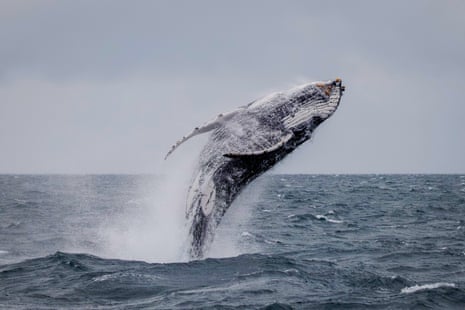
Sixty years after the formal ban on commercial whaling in the southern hemisphere, Australia’s east coast humpback whale (Megaptera novaeangliae) population stands as one of the most triumphant conservation recovery stories of the modern era. From a devastated baseline of fewer than 300 individuals in the 1960s, contemporary estimates indicate that between 40,000 and 50,000 of these majestic mammals now undertake their epic annual migration along the eastern seaboard.
Yet, this ecological victory has spawned a complex, modern paradox. As the oceanic "humpback highway" crowds with hundreds of thousands of marine tourists, commercial vessels, and recreational watercraft, a grim physical toll is emerging from the depths. Gruesome photographic evidence gathered by WWF-Australia and marine conservation groups reveals a disturbing prevalence of severe, agonizing boat and propeller strikes.
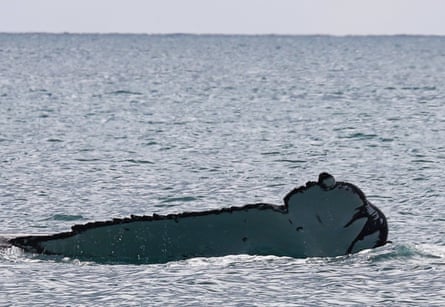
From deep, red-raw lacerations slicing across the spines of dependent calves to adults missing entire tail flukes, these injuries paint a harrowing picture. Experts warn that while many collisions go completely unnoticed or unreported, the sheer density of boat traffic in critical nursery and migratory bottlenecks is pushing ship strikes to crisis levels. This comprehensive report investigates the growing danger to Australia’s humpback population, the physiological and long-term welfare consequences for injured whales, and the urgent technological and regulatory interventions required to protect them.
Detailed Chronology and The Human-Wildlife Interface
The Anatomy of a Sighting: Joy Shattered by Reality
To understand the visceral nature of the crisis, one must look to the frontline of Australia’s multi-million-dollar whale-watching industry. Operating out of Hervey Bay in Queensland—a crucial resting and nursing sanctuary for mothers and calves during their long northward and southward migrations—tour vessels routinely offer passengers what many describe as a life-changing encounter.
Isabel Taylor, a senior naturalist with the Pacific Whale Foundation’s Eco Adventures Australia, has witnessed the unbridled elation of international tourists gazing upon breaching leviathans. However, her perspective shifted dramatically during a routine excursion last season.
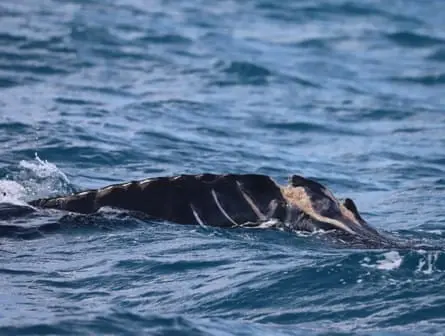
While two pods of mothers and calves surfaced nearby, one particular pair stood out for all the wrong reasons. While the first group was playful and surface-active, putting on a quintessential acrobatic show, the second mother and calf were notably reserved, maintaining a guarded posture near the surface. As the vessel drifted closer, the atmosphere onboard shifted from joyous elation to profound shock. Clearly visible across the young calf’s tender back were fresh, broad, deep-tissue slash marks—undeniable evidence of a brutal encounter with a high-speed boat propeller.

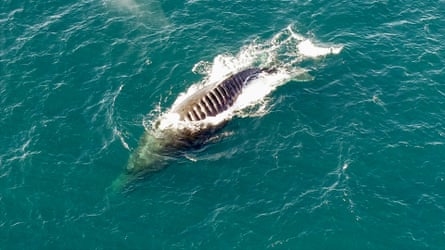
A similar incident unfolded off the coast of Sydney’s iconic Bondi Beach, where drone photography captured a humpback bearing raw, exposed red flesh from repeated, violent sweeps of a ship’s propeller.
The Legacy of "Bladerunner"
Perhaps the most famous living testament to the longevity of these trauma injuries is a female humpback known colloquially as "Bladerunner." First identified off the coast of southern New South Wales, Bladerunner bears a horrifyingly distinctive sequence of deep, calcified propeller slashes running across her back and tail—injuries marine scientists estimate she sustained more than two decades ago.
While Bladerunner’s survival demonstrates the resilience of the species, she is an outlier. Most individuals subjected to similar high-energy impacts are not so fortunate. Experts point out that the majority of documented strikes feature injuries concentrated on the dorsal surface and posterior anatomy of the whales.
Dr. Rebecca Dunlop, an associate professor and humpback whale behavior expert at the University of Queensland, explains the biomechanical mechanics behind these patterns:
"When migrating humpbacks travel and surface like clockwork, they don’t seem to be able to change their dive and travel behaviour to avoid an intercept pathway. This could be due to a boat approaching the intercept point at speed where they just don’t have the time to make an avoidance decision."
As a result, as these animals break the surface to breathe, passing vessels—often moving too fast to react—slice directly over their spines and flukes.
Supporting Context & Metrics: The "Humpback Highway" Conundrum
A Conservation Triumph Unfolds
To contextualize the current crisis, it is vital to examine the trajectory of the Australian east coast humpback stock. Commercial whaling drastically depleted the population throughout the 19th and early 20th centuries. Following the International Whaling Commission’s (IWC) ban on southern hemisphere humpback whaling in 1963—though rogue Soviet fleets continued illegal harvesting in the Southern Ocean into the early 1970s—the population bottomed out at an estimated 300 individuals.
Protected by law and granted space to reproduce, the population began an exponential recovery:
- 2004: Scientific surveys estimate the east coast population has recovered to approximately 7,800 individuals.
- 2015: Numbers triple to roughly 25,500 whales.
- Present Day: Contemporary models estimate a massive cohort of 40,000 to 50,000 animals navigating the coastline annually, with mathematical modeling suggesting the population is approaching a natural ecological carrying capacity and plateauing.
The Boating Boom
While whale numbers have skyrocketed, human utilization of Australian coastal waters has surged in parallel. Current demographic data indicates that approximately one in ten Australians holds a boat licence. Within the key migration corridor states of Queensland and New South Wales alone, more than 500,000 registered vessels ply the coastal waters, contributing to a national fleet exceeding 970,000 boats.
This overlap creates a high-stakes maritime traffic jam along the narrow migratory routes hugging the Australian coast. Yet, despite the massive proliferation of watercraft, tracking vessel strikes remains exceptionally difficult.
According to the IWC, the vast majority of marine mammal collisions globally go completely unseen, undocumented, and unreported. Dr. Raphael Mayaud, a marine ecologist at Griffith University and advisor to the IWC on vessel strikes, notes that Australia’s legal framework technically mandates the reporting of collisions with protected marine species. In reality, however, most incidents occur in open water without the vessel operator ever realizing they have struck a 40-ton animal, or out of fear of legal repercussions, the event is swept under the rug.
Official Statements and International Action
Recognizing the escalating global threat posed by maritime traffic to recovering cetacean populations, the International Whaling Commission took decisive action during a recent plenary meeting, passing a landmark resolution to prioritize the mitigation of vessel strikes worldwide.
Chris Johnson, WWF’s global lead on whale conservation initiatives who attended the summit, emphasized the gravity of the situation:
"Humpbacks have been one of the great conservation success stories. But along Australia’s humpback highway, there’s growing risk for them to be hit by vessels. Those strikes would have been incredibly painful. We can see the evidence, but we have a black hole of information."
Echoing these concerns, Dr. Mayaud highlighted that the welfare implications extend far beyond immediate fatalities:
"The big thing is that a strike doesn’t have to kill a whale to have a serious impact. If a whale loses part of its fluke, it may still survive, but swimming is likely to become less efficient and more energetically costly. That can then have knock-on effects on things like migration, feeding, body condition, and potentially reproduction."
Furthermore, the initial trauma—characterized by massive blood loss, excruciating localized pain, and prolonged open wounds vulnerable to secondary marine infections—can haunt an animal for the remainder of its life. For calves, whose metabolic energy must be dedicated entirely to growth and learning how to complete the arduous polar migration, a severe propeller strike is frequently a death sentence, whether through immediate trauma or subsequent starvation.
Future Outlook and Mitigation Strategies
Addressing the vessel strike crisis along the Australian seaboard requires moving past passive observation toward proactive, systemic marine spatial planning and technological innovation. Conservationists and marine ecologists argue that a multi-pronged approach is urgently needed to safeguard both human maritime safety and whale welfare.
1. Mandatory Speed Restrictions and Seasonal Zoning
Imposing strict, enforceable speed limits for all commercial and recreational vessels operating within identified high-risk migration bottlenecks during peak seasons is viewed as the most immediate intervention. Slower vessel speeds give both marine mammal observers and the animals themselves a fighting chance to alter trajectories and prevent catastrophic collisions.
2. Accountability Models and Public Scorecards
Australia can look to international precedents for inspiration. In California, shipping lanes intersecting with blue and humpback whale habitats utilize competitive public scorecards. Shipping lines voluntarily compete for top environmental grades based on their adherence to seasonal slow-speed zones, leveraging corporate social responsibility to achieve voluntary compliance.
3. Artificial Intelligence and Early-Warning Systems
Technological integration is also paving the way forward. Innovations such as the AI-assisted whale-spotting cameras currently being trialled in San Francisco Bay offer a glimpse into the future of maritime navigation. By deploying real-time thermal and optical AI sensors along busy Australian coastal routes, port authorities and vessel captains could receive automated, immediate alerts regarding whale presences directly in their path.
Conclusion
The emergence of propeller scars, severed flukes, and deep spinal lacerations on Australia’s humpback whales serves as a stark reminder that nature conservation does not end with the cessation of hunting. As thousands of whales continue to traverse the bustling waters of the "humpback highway," society has a moral and ecological obligation to adapt its behavior. Without coordinated policy changes, stricter speed controls, and advanced technological safeguards, Australia risks undermining one of its greatest environmental triumphs through sheer maritime complacency.



