

Executive Overview
The global electric vehicle (EV) landscape is experiencing a high-stakes realignment, characterized by aggressive marketing, shifting political headwinds, and a fundamental race for consumer affordability. As legacy automakers navigate post-election market contractions and shifting policy landscapes, the gloves have officially come off in the battle for market dominance.
In one corner stands Tesla, perpetually dominating the cultural and technological zeitgeist through autonomous promises, premium branding, and its long-anticipated push into robotaxi fleets. In the other corner stands Ford Motor Co., a historic titan executing a calculated strategy to capture the everyday consumer.
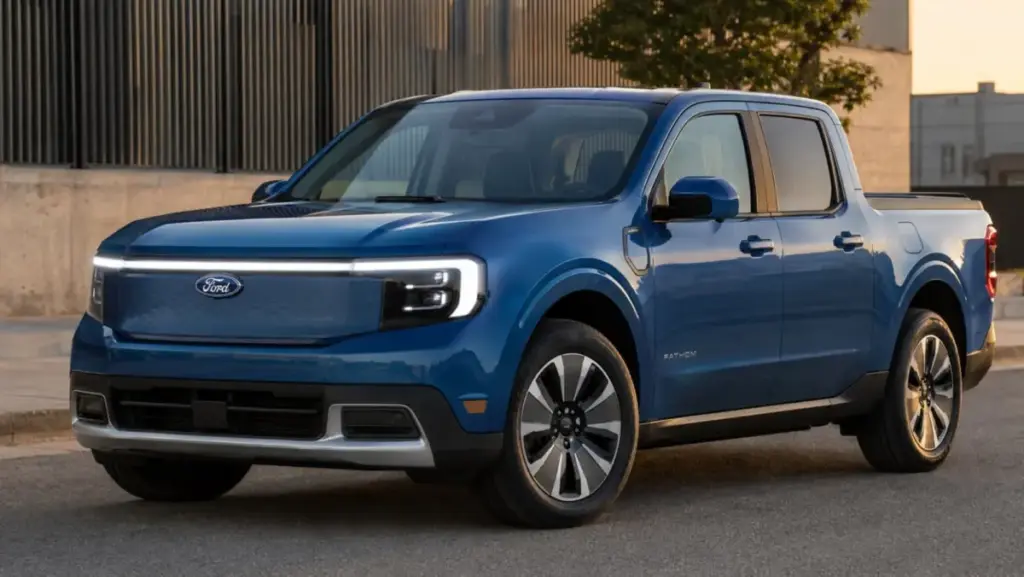
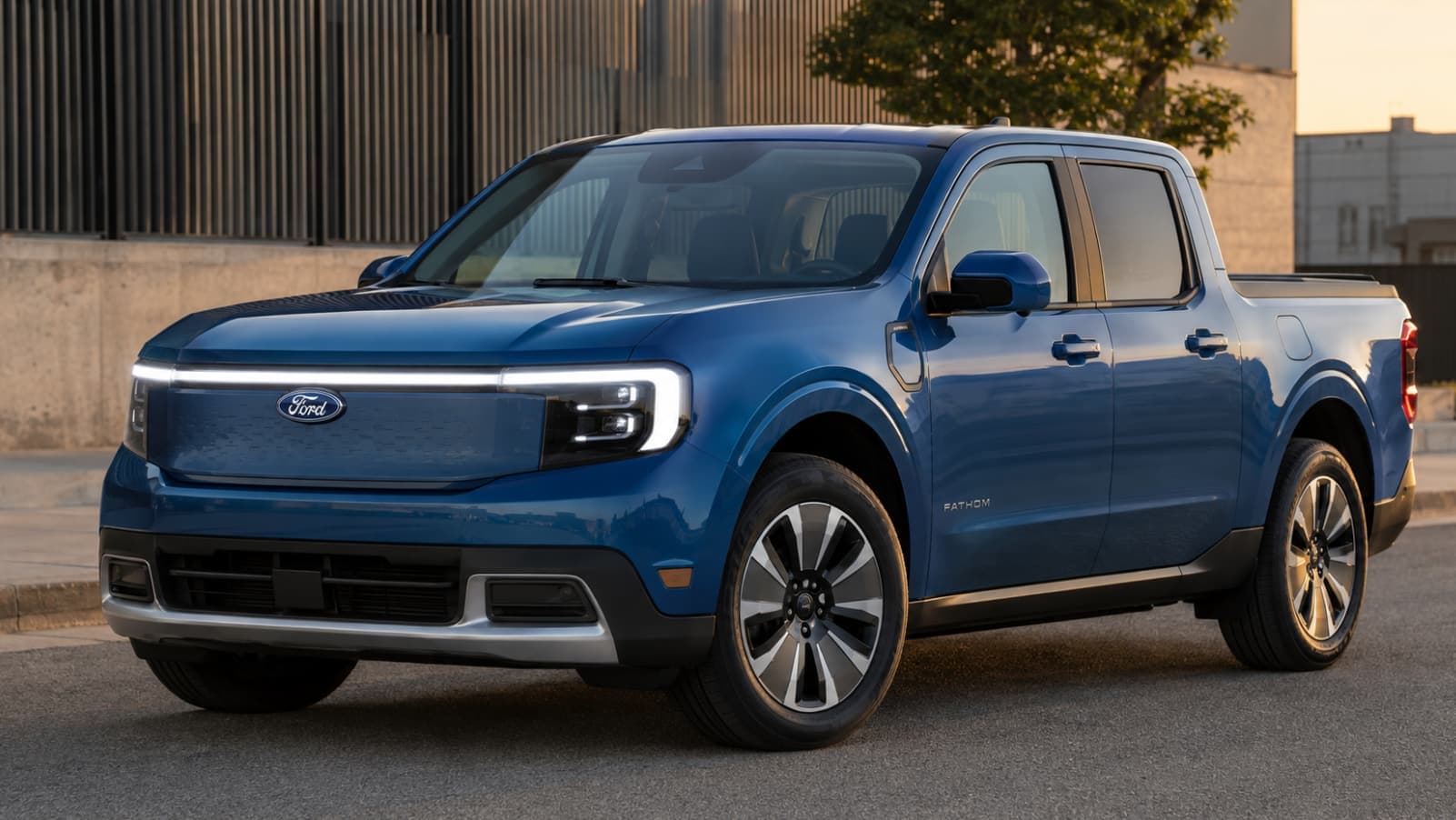
The focal point of this brewing conflict is the forthcoming Ford Fathom, an all-electric midsize pickup truck engineered to disrupt the market with a sub-$30,000 price tag and an ambitious production target of 100,000 units in its very first year. Strategically timed to coincide with Tesla’s high-profile rollout of the "Cybercab" in Austin, Texas, Ford’s aggressive public relations campaign signals a deliberate effort to pivot the national EV conversation away from niche luxury automation and toward practical, high-volume accessibility.
This article explores the colliding narratives of the Ford Fathom and the Tesla Cybercab, examining how manufacturing innovations, pricing pressures, and powertrain diversification—including the resurgence of Extended Range Electric Vehicles (EREVs)—are shaping the next generation of personal and commercial mobility.
Detailed Chronology: A Week of High-Stakes PR and Industry Leaks
The friction between Ford and Tesla reached a boiling point during a tightly contested week in late August and early September, setting a dramatic stage for the automotive press.
- Mid-August: Anticipation for the Fathom received an unexpected grassroots boost when an enterprising Ford dealership in Palestine, Texas, inadvertently leaked early imagery and conceptual explanations of a Fathom-adjacent midsize pickup truck on its official website. Meanwhile, automotive intelligence reported that Tesla was finalizing its operational preparations to launch the steering-wheel-free Cybercab into its Austin-based robotaxi fleet.
- August 17: The Information broke the story that Tesla was actively priming its autonomous fleet ecosystem for the upcoming Cybercab debut, though precise operational details remained scarce.
- September 1: Ford CEO Jim Farley—leveraging his extensive background in automotive marketing—took the fight directly to Elon Musk’s digital turf. Farley posted a series of teaser photographs showcasing a camouflaged prototype of the Fathom during a promotional photoshoot in Las Vegas. The platform of choice? X (formerly Twitter), owned by Musk himself.
- September 2 (7:00 PM EST): The Wall Street Journal published an exclusive scoop from an anonymous industry insider revealing Ford’s internal milestone: the automaker is targeting an aggressive 100,000 sales for the Fathom during its inaugural production year.
- September 2 (Concurrent): As the WSJ report sent shockwaves through the industry, Reuters and other major outlets reported on the unfolding "Exclusive Access: Cybercab" event in Austin. Despite intense marketing via X, Tesla faced mounting scrutiny from automotive journalists for withholding specific operational timelines, vehicle specifications, and public rollout dates.
- September 3: On the eve of the Cybercab showcase, the Detroit Free Press published an in-depth feature highlighting Ford’s masterclass in counter-programming, underscoring Farley’s strategic deployment of social media buzz to keep the Dearborn-based manufacturer top-of-mind.
Supporting Context & Metrics: Affordability vs. Exclusivity
To understand the gravity of this showdown, one must examine the macroeconomic pressures defining the contemporary automotive market. The automotive sector is currently grappling with a complex convergence of factors: lingering inflationary pressures, shifting trade policies, and the evolving impacts of federal leadership changes.
The Mathematics of the Ford Fathom
Set to roll off production lines as the inaugural vehicle built on Ford’s purpose-built "Universal" EV platform, the Fathom represents a radical departure from traditional manufacturing. Eschewing the conventional gas-mobile assembly line model in favor of an innovative, labor-saving, tree-like manufacturing process, Ford has engineered the Fathom to drastically reduce production overhead.
- Starting Price: Positioned aggressively at $29,945 (inclusive of a $1,595 destination and delivery fee), the truck slips comfortably beneath the critical $30,000 psychological threshold.
- First-Year Target: Aiming for 100,000 units in year one, automotive analysts note that if Ford achieves this benchmark, the Fathom will instantly secure its position as one of the best-selling electric vehicles in the United States.
- Market Positioning: The vehicle is designed to appeal directly to budget-conscious individual buyers and commercial fleets alike, offering a utilitarian alternative to polarizing luxury entries.
The Cybercab Paradox
By contrast, Tesla’s Cybercab targets a fundamentally different demographic and operational use case. Priced similarly around the $30,000 mark, the Cybercab is built exclusively as an autonomous robotaxi stripped of traditional driver controls like steering wheels and pedals.
However, industry observers point out a stark disconnect between Tesla’s marketing strategy and the current economic reality of American households. With inflation, housing crises, and broader economic stressors heavily weighing on consumers—particularly across states like Texas—Tesla’s emphasis on exclusive, elite-tier access ("Golden Chariot" optics) risks alienating the broader driving public.
While the Fathom addresses an acute market demand for affordable, highly functional utility vehicles, the Cybercab remains constrained by regulatory hurdles, infrastructure readiness, and a business-to-consumer model that limits its utility for everyday private ownership.
Official Statements and Industry Analysis
The tactical maneuvering between Ford and Tesla has drawn sharp commentary from industry analysts, automotive journalists, and corporate leadership.
Ryan Felton, writing for the Wall Street Journal, underscored the sheer magnitude of Ford’s commercial ambitions:
"If it meets Ford’s targets, Fathom would instantly become one of the top-selling EVs in the U.S. in the first year of its production."
Jamie L. LaReau of the Detroit Free Press highlighted the calculated nature of Ford’s leadership under CEO Jim Farley, noting his deliberate use of digital media to disrupt Tesla’s announcements:
"Ford Motor Co. plans to officially reveal its new all-electric midsize pickup Fathom by year-end, but until then, CEO Jim Farley is teasing car buyers with peeks at it… Farley, who has a background in marketing and was previously Ford’s head of marketing before becoming CEO in Oct. 2020, shared the photos to keep the buzz buzzing on this very important vehicle for the Dearborn-based automaker."
Meanwhile, financial and news wires captured the administrative ambiguity surrounding Tesla’s launch events. Reuters reporters Abhirup Roy and colleagues noted the friction in Tesla’s communication strategy:

"Tesla offered riders of its current robotaxi fleet based on its Model Y a chance to join a ‘Cybercab Launch Event,’ but it has given no details about what kind of launch is planned… Tesla has been marketing the event as ‘Exclusive Access: Cybercab’ in posts on X and has sent out invites to select guests, according to some user posts."
Future Outlook: The Universal Platform and the Rise of EREVs
The rivalry between the Fathom and the Cybercab is merely the opening salvo in a much broader structural evolution at Ford Motor Co.
The Universal Platform Rollout
The Fathom is only the vanguard. It serves as the trailblazer for a family of five upcoming electric vehicles engineered around Ford’s cost-cutting Universal platform. By fundamentally rethinking how electric architectures are assembled—prioritizing structural efficiency and shared components—Ford aims to achieve structural profitability on EVs, a financial milestone that has eluded many legacy competitors.
Hedging Bets with Extended Range EVs (EREVs)
Beyond pure battery-electric vehicles (BEVs), Ford is executing a diversified powertrain strategy by re-embracing Extended Range Electric Vehicles (EREVs). Capitalizing on a concept first popularized by the Chevrolet Volt in the early 2000s, Ford is preparing to reintroduce an EREV variant of its popular F-150 Lightning pickup truck.
- The Technology: EREVs operate primarily on electric propulsion at all times, supplemented by an onboard internal combustion engine and generator that acts exclusively as a range extender when battery reserves run low or when heavy-duty towing demands it.
- The Capability: This configuration is projected to unlock a total driving range exceeding 700 miles, directly addressing the "range anxiety" and towing efficiency concerns that have historically deterred traditional truck owners from transitioning to electric power.
- Pro-Power Utility: Building on the success of the original Lightning—which gained immense popularity as a mobile power source during grid outages—the forthcoming EREV variants will maintain exportable electricity features, turning the truck into a mobile generator for worksites and emergency situations.
Conclusion
As the dust settles on the initial PR skirmishes between Austin and Dearborn, one reality remains clear: the era of speculative, high-end EV hype is giving way to an era of pragmatic, high-volume execution.
While Tesla continues to chart a visionary course toward autonomous autonomy and shared robotaxi infrastructure, Ford is aggressively staking its claim on the practical heartland of America. With the sub-$30,000 Fathom, an army of Universal platform vehicles on the horizon, and a strategic hedge into EREV technology, Ford is positioning itself not just to compete with Tesla, but to capture the definitive majority of the mainstream EV-buying public.



