

Executive Overview
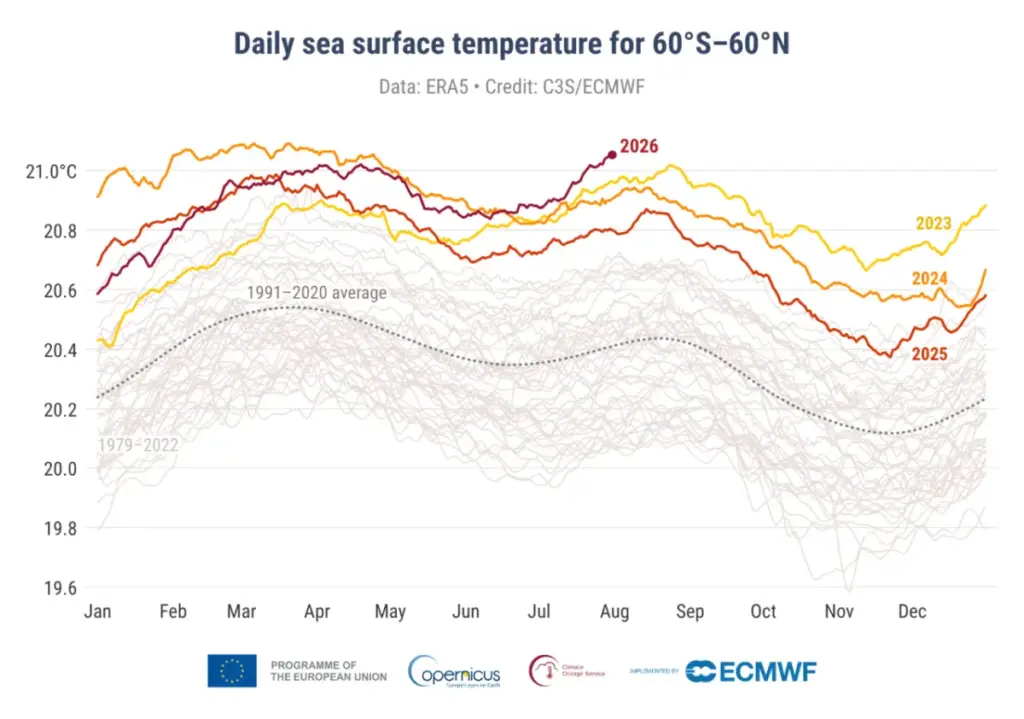
For decades, the Earth’s oceans have functioned as an invisible planetary buffer, absorbing more than 90 percent of the excess heat generated by human-induced greenhouse gas emissions and capturing roughly a quarter of all anthropogenic carbon dioxide. However, groundbreaking scientific research published in Nature reveals a disturbing reality: record-breaking ocean temperatures are actively degrading this massive carbon sink. As marine heatwaves intensify, thermal stratification locks nutrients in the deep ocean, and warming waters lose their capacity to dissolve gases, the planetary blue engine is faltering.
In response to this ecological crisis, a broad international coalition—comprising Small Island Developing States (SIDS), the European Union, the African Group of Negotiators, and key Latin American nations—is mounting an unprecedented diplomatic push. Ahead of the upcoming UN Climate Change Conference (COP31), these nations are demanding a structural shift in how marine ecosystems are treated within international climate policy. Rather than relegating ocean discussions to peripheral, informal side events, this bloc is campaigning to embed binding marine protection measures directly into official, negotiated COP decisions.
This diplomatic initiative faces formidable obstacles. COP31 co-presidents Türkiye and Australia have sought to channel this momentum into a voluntary "ocean roadmap"—a concise action plan designed to harmonize regional and international ocean-climate strategies. Yet experts warn that any substantive marine strategy could be rendered ineffective by a systemic crisis in global climate finance. With public capital flows shrinking, adaptation funds oversubscribed, and negotiations over broader finance targets plagued by geopolitical polarization, the ambition to safeguard the world’s oceans threatens to collide with the stark reality of empty coffers.
Detailed Chronology: The Evolution of Marine Diplomacy in the UNFCCC
+-----------------------------------------------------------------------------------+
| CHRONOLOGY OF OCEAN DIPLOMACY IN THE UNFCCC PROCESS                              |
+-----------------------------------------------------------------------------------+
| 2015 (COP21 - Paris)        | Ocean health recognized in Preamble, but lacks       |
|                             | operational mechanisms in the main text.            |
+-----------------------------+-----------------------------------------------------+
| 2019 (COP25 - Madrid)       | Dubbed the "Blue COP"; mandates formal mandate for   |
|                             | annual ocean-climate dialogues under SBSTA.         |
+-----------------------------+-----------------------------------------------------+
| 2021–2024 (COP26 to COP29)  | Ocean dialogues remain non-negotiated informal      |
|                             | side-tracks; scientific warnings intensify.         |
+-----------------------------+-----------------------------------------------------+
| 2025 (Nature Study Release) | Empirical data confirms weakening of ocean carbon   |
|                             | sink due to sustained sea surface temperature highs.|
+-----------------------------+-----------------------------------------------------+
| COP31 Preparations          | Coalition demands formal "negotiated outcomes";     |
|                             | Türkiye & Australia propose voluntary roadmap.      |
+-----------------------------------------------------------------------------------+
The campaign to elevate oceans within the United Nations Framework Convention on Climate Change (UNFCCC) has been a slow, decade-long struggle against institutional inertia. Historically, climate diplomacy prioritized terrestrial decarbonization—focusing on industrial energy transitions, transport, and land-use emissions—while treating the marine environment as a passive backdrop.
The Pre-Paris and Paris Eras (2015)
When the Paris Agreement was adopted in 2015, ocean advocates secured a minor diplomatic victory by ensuring the word "ocean" appeared in the treaty’s non-binding preamble. However, operational mechanisms, actionable targets, and dedicated financial pathways for marine conservation were entirely omitted from the core text. Oceans were recognized as important, but legally disconnected from national climate targets.
The "Blue COP" Breakthrough (2019)
The trajectory shifted at COP25 in Madrid in 2019, explicitly branded by host nation Chile as the "Blue COP." Intensive negotiations led to a formal mandate instructing the Subsidiary Body for Scientific and Technological Advice (SBSTA) to convene an annual Ocean and Climate Change Dialogue. This created a dedicated institutional space within the UNFCCC framework to explore the nexus between marine health, biodiversity, and atmospheric mitigation.
Informal Dialogues and Growing Frustration (2020–2024)
Between 2020 and 2024, these annual dialogues brought together scientists, ocean advocates, and state delegates to discuss marine spatial planning, ocean acidification, coastal restoration, and blue carbon ecosystems. However, procedural limitations soon became apparent. By design, the SBSTA dialogues were non-negotiated platforms. They yielded thematic summary reports but possessed no authority to mandate state action, allocate funding, or enforce target integration into Nationally Determined Contributions (NDCs).
The Escalation to COP31
As empirical research progressively demonstrated the destabilization of the ocean sink, developing nations and coastal states grew increasingly frustrated with mere dialogue. The coalition led by the Alliance of Small Island States (AOSIS), the European Union, the Independent Association of Latin America and the Caribbean (AILAC), and the African Group began mobilizing to dismantle the partition between informal discussions and formal decision-making. Their goal for COP31 is clear: transition from procedural exchanges to binding, negotiated mandates that legally tie marine protection to global climate governance.
Supporting Context & Metrics: Science, Economics, and Strategy
1. The Science of a Faltering Carbon Sink
The physical mechanisms underlying the oceans’ capacity to absorb atmospheric carbon are undergoing profound disruption. Oceans sequester carbon through two main processes: the solubility pump and the biological pump.
       ATMOSPHERIC CO2
              │
      ┌───────┴───────┐
      ▼               ▼
 SOLUBILITY       BIOLOGICAL
    PUMP             PUMP
 (Gas Dissolution) (Marine Organisms)
      │               │
      ▼               ▼
 Decreased by    Disrupted by
 High Surface    Stratification
 Temps & Warm   & Nutrient Blockade
 Oceans
      │               │
      └───────┬───────┘
              ▼
SYSTEMIC SINK WEAKENING- The Solubility Pump: Carbon dioxide dissolves more readily in cold water than in warm water. As sea surface temperatures hit unprecedented highs across the Atlantic, Pacific, and Indian Oceans, the physical solubility of CO2 drops. Warm water acts as a barrier, diminishing the rate at which gas crosses the air-sea interface.
- The Biological Pump: Phytoplankton photosynthesize CO2 at the ocean surface, locking carbon into organic matter that eventually sinks into the deep ocean upon their death. Rising temperatures drive severe thermal stratification, where a layer of warm, light surface water sits atop colder, denser deep waters. This layering acts as a physical barrier, preventing deep ocean nutrients from reaching the surface. Starved of vital nutrients like nitrate and iron, phytoplankton populations plummet, suppressing the biological carbon pump.
Recent marine modeling published in Nature indicates that sustained ocean warming could reduce the global marine carbon sink’s efficiency by up to 15 percent over the coming decades, creating a compounding feedback loop that accelerates global atmospheric warming.
+-----------------------------------------------------------------------------------+
| OCEAN-CLIMATE INTERACTION METRICS                                                 |
+-----------------------------------------------------------------------------------+
| Excess Global Heat Absorbed by Oceans     | > 90%                                 |
+-------------------------------------------+---------------------------------------+
| Annual Anthropogenic CO2 Sequestered      | ~ 25% - 30%                           |
+-------------------------------------------+---------------------------------------+
| Climate Finance Allocated to Marine Action| < 1% of total global allocations      |
+-------------------------------------------+---------------------------------------+
| Projected Sink Efficiency Loss (by 2050)  | 10% - 15% under high-warming pathways |
+-----------------------------------------------------------------------------------+
2. The Ocean Finance Gap
While the ocean engine breaks down, international capital allocation remains starkly skewed. Ocean-related climate initiatives—spanning mangroves, salt marshes, seagrass restoration, marine protected area (MPA) enforcement, and blue economy transitions—receive less than 1 percent of total tracked global climate finance.
GLOBAL CLIMATE FINANCE ALLOCATION
┌─────────────────────────────────────────────────────────┐
│ Terrestrial, Energy, & Transport Finance: ~99%          │
└─────────────────────────────────────────────────────────┘
┌──┐
│  │ Ocean Finance: <1%
└──┘
The financial challenge is compounded by wider macroeconomic headwinds:
- Debt Distress in SIDS and Coastal Developing Nations: Many coastal developing countries face severe debt service burdens, restricting their capacity to borrow for marine conservation or coastal resilience projects.
- The Post-COP29 NCQG Bottleneck: The agreement on the New Collective Quantified Goal (NCQG) for climate finance fell short of the trillions required by developing nations. With public funding constrained in major donor capitals across Europe and North America, ocean projects are forced to compete against critical terrestrial grid transitions, renewable energy rollouts, and immediate humanitarian adaptation needs.
3. The Dual Co-Presidency Dynamic
The geopolitical backdrop of COP31 adds another layer of complexity. The shared presidency between Türkiye and Australia brings contrasting priorities to the table:
- Australia: Deeply intertwined with Pacific Island diplomacy, Australia presents itself as a climate champion for Oceania. However, it faces intense domestic and regional scrutiny due to its status as one of the world’s largest fossil fuel exporters. Highlighting ocean protection allows Canberra to strengthen diplomatic ties with its Pacific neighbors while navigating contentious debates over coal and gas production.
- Türkiye: Facing immediate environmental threats in the Mediterranean and Black Seas—including marine heatwaves, invasive species, and coastal degradation—Ankara supports regional marine protection frameworks. However, its geopolitical positioning requires balancing Western European environmental mandates with the economic priorities of emerging economies within the UNFCCC negotiating blocs.
Official Statements and Diplomatic Positions
The diplomatic tug-of-war ahead of COP31 reflects fundamentally different views on how the UNFCCC should mandate marine action.
The Coalition for Negotiated Outcomes
Speaking on behalf of the Alliance of Small Island States (AOSIS), negotiators underscored that informal discussions are no longer sufficient to protect low-lying coastal populations:
"For SIDS, the ocean is not an optional agenda item or a secondary topic for a side event; it is our living environment, our economic base, and our primary defense against climate ruin. We cannot accept another summit that confines ocean health to non-binding side talks. COP31 must deliver explicit, negotiated decision text that compels parties to incorporate ocean targets into their national climate strategies and mandates dedicated financing for marine adaptation."
This position is strongly supported by the European Union and its Member States, which have sought to align global climate negotiations with the Kunming-Montreal Global Biodiversity Framework’s "30×30" target (protecting 30 percent of coastal and marine areas by 2030). In a formal submission, the EU stated:
"Integrating marine ecosystems into negotiated COP decisions is critical to maintaining the structural integrity of the Paris Agreement. The science is unequivocal: we cannot meet our target of limiting global warming to 1.5°C without maintaining the functional capacity of the ocean carbon sink. Formal decisions are required to institutionalize ocean mitigation and adaptation metrics within national monitoring frameworks."
The African Group of Negotiators (AGN) emphasized the economic and human security aspects of coastal ocean degradation:
"African coastal nations are facing devastating sea-level rise, severe coastal erosion, and the collapse of artisanal fisheries driven by marine thermal stress. We support an explicit negotiated track for ocean action at COP31, provided it is backed by predictable, accessible, and non-debt-creating climate finance tailored to the unique vulnerabilities of developing coastal states."
The Co-Presidency Response: A Voluntary Roadmap
Recognizing the challenges of achieving consensus among nearly 200 parties on binding text—where a single dissenting state can stall negotiations—Türkiye and Australia have proposed a voluntary "ocean roadmap."
A joint statement outlining the initiative described the vision:
"The COP31 Co-Presidency recognizes the critical mandate to address the ocean-climate nexus. We are actively engaging with interested parties across all regions to construct a concise, actionable, and voluntary ocean roadmap. This action plan will provide practical guidance to harmonize international efforts, integrate blue carbon into national planning, and accelerate targeted ocean investments, ensuring that marine protection remains central to global climate action."
While welcomed by some delegates as a pragmatic way forward, the voluntary nature of the proposal has drawn criticism from developing nations, who argue that voluntary frameworks lack the legal weight and financial backing needed to drive real change.
Future Outlook: Navigating the Path to COP31
As the road to COP31 unfolds, climate negotiators face a critical test of diplomatic willpower. The central debate will pivot on whether a voluntary action roadmap can offer a meaningful solution, or if it simply serves as a compromise that allows high-emitting nations to sidestep legal and financial commitments.
       DIPLOMATIC OPTIONS FOR COP31
                    │
      ┌─────────────┴─────────────┐
      ▼                           ▼
VOLUNTARY ROADMAP          NEGOTIATED OUTCOMES
(Australia/Türkiye)        (AOSIS/EU/AGN Coalition)
      │                           │
      ├─ High Flexibility         ├─ Legally Binding
      ├─ Faster Consensus         ├─ Linked to Finance
      └─ Non-Binding Commitments  └─ Difficult Consensus
Key Priorities for the COP31 Agenda
- Formally Binding Ocean Targets vs. Voluntary Pledges: Advocates will continue pushing to convert elements of the proposed voluntary roadmap into formal decision language. Key proposals include requiring nations to detail blue carbon restoration strategies and ocean acidification monitoring in their next iteration of Nationally Determined Contributions (NDCs 3.0).
- Unlocking Marine Climate Finance: Without concrete funding targets, any agreement risks becoming rhetoric. Negotiators must identify mechanisms to de-risk private investment in coastal nature-based solutions, scale up public adaptation grants, and introduce innovative instruments such as sovereign debt-for-ocean-swaps.
- Synergy with International Treaties: Aligning UNFCCC ocean decisions with external international legal agreements will be critical. This includes ensuring COP31 decisions reinforce the implementation of the UN High Seas Treaty (BBNJ Agreement), which provides a legal framework for establishing marine protected areas in international waters.
- Addressing the Root Cause: Ultimately, no amount of targeted marine conservation can save the global ocean sink if atmospheric warming continues unchecked. The primary determinant of ocean health remains the rapid, sustained phase-out of global fossil fuel emissions.
If COP31 fails to elevate marine ecosystems into the binding architecture of international climate law, the world risks allowing its primary atmospheric thermal buffer to degrade past a critical point of recovery. The negotiations in 2026 will reveal whether global diplomacy can respond quickly enough to protect the Earth’s blue engine before its critical ecological functions are lost.



