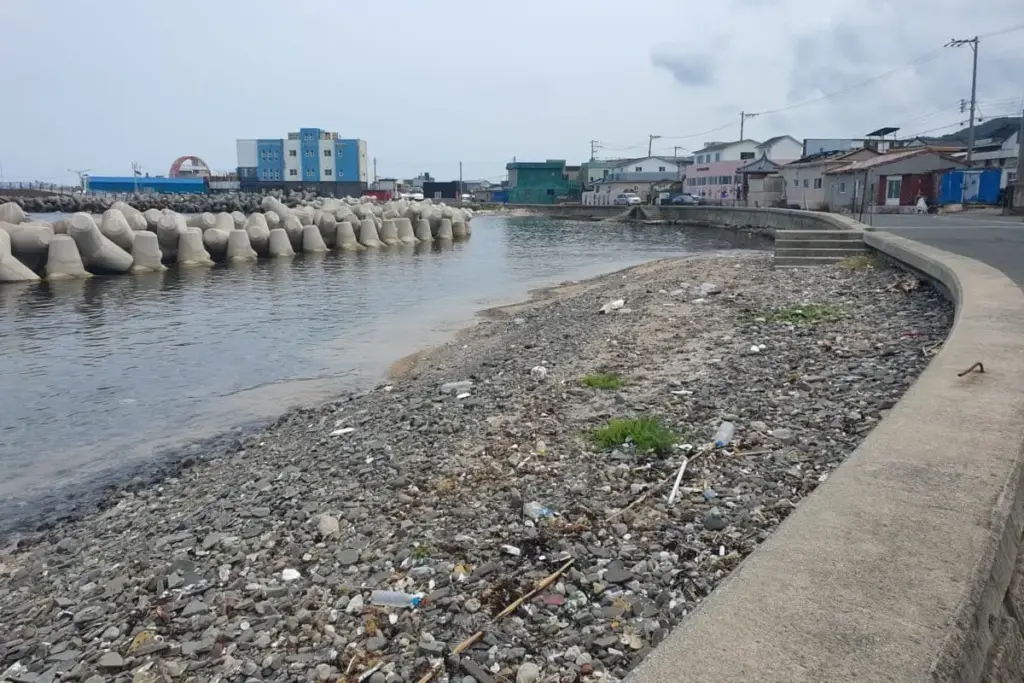
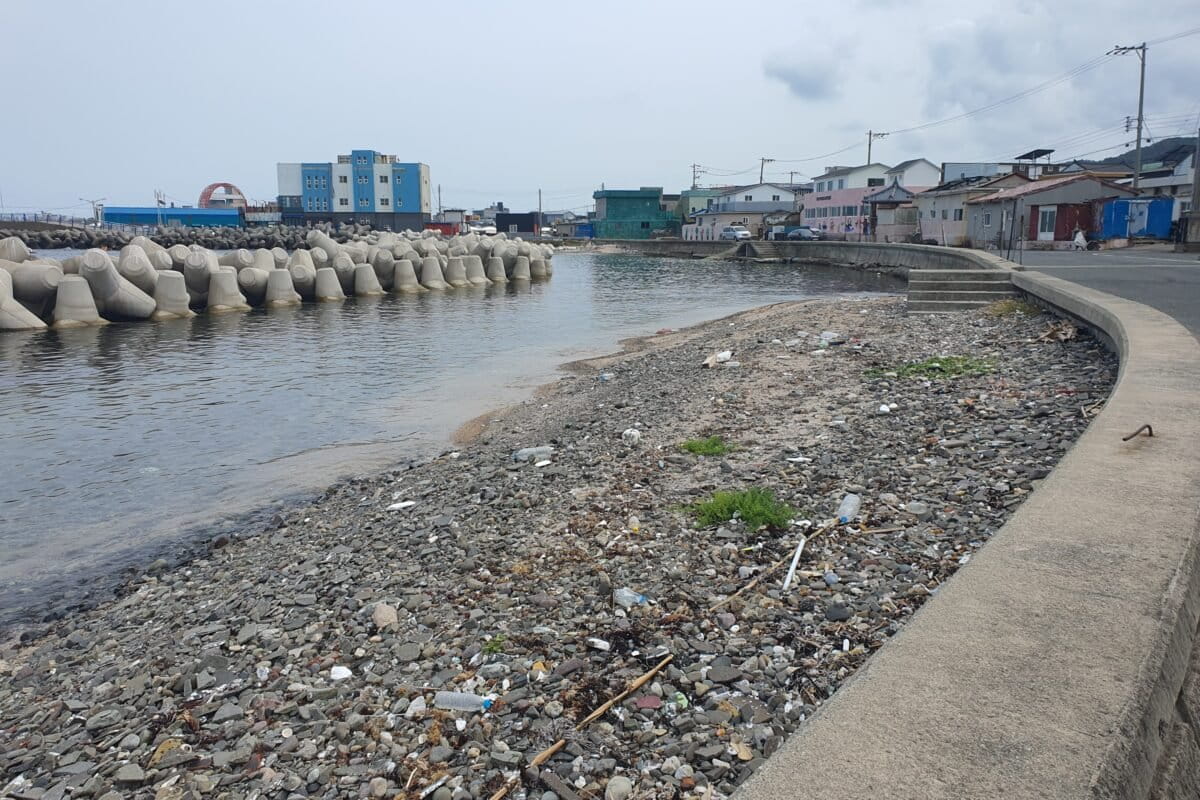
Along the rugged, wind-whipped eastern coastline of the Korean Peninsula, the small fishing village of Guman-ri has long been defined by a precarious coexistence with nature. For generations, its residents have endured the fury of Pacific typhoons, maritime accidents, and the deep generational trauma of the 1950–1953 Korean War. Yet, time and again, the community has rebounded through sheer grit and resilience.
Today, however, Guman-ri faces a silent, anthropogenic crisis that threatens its very identity. What was once a flourishing, protected marine sanctuary has devolved into a dusty underwater graveyard. A localized collapse of coastal ecosystems—manifested by choking layers of white cement debris, vanishing sea vegetation, and dead marine life—has devastated the livelihoods of the region’s haenyeo. These legendary, free-diving "sea women" harvest shellfish and seaweed without oxygen tanks, embodying a UNESCO-recognized cultural heritage that spans centuries.
At the center of this environmental and socioeconomic disaster is a harbor expansion project initiated in 2021 by South Korean construction giant Ssangyong Engineering & Construction Co., backed by local government proposals. With their traditional fishing grounds rendered barren, more than 50 haenyeo across Guman-ri and neighboring Daebo-ri are caught between an inadequate out-of-court settlement offer and the daunting prospect of a prohibitively expensive, decade-long environmental lawsuit. This investigative feature explores the structural failures, legal hurdles, and human toll of a modern development project colliding with ancient tradition.
Detailed Chronology: From Protected Sanctuary to Concrete Wasteland
A Resilient Haven Faces an Unseen Threat
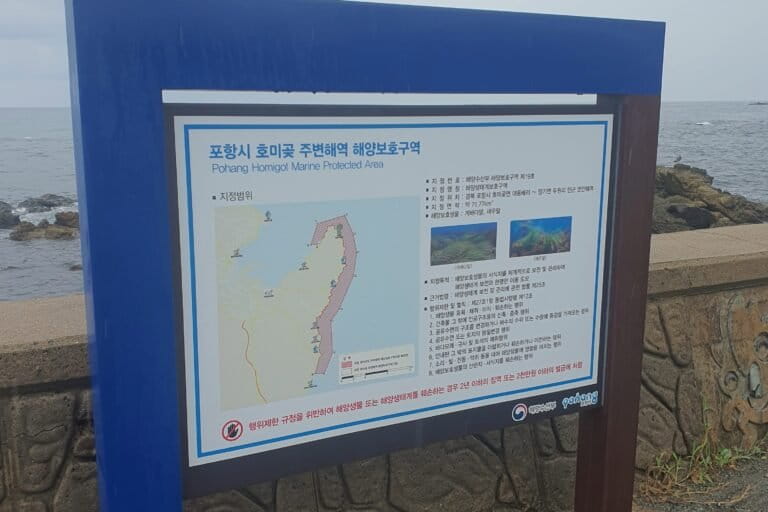
Guman-ri and the adjacent village of Daebo-ri, tucked away in South Korea’s North Gyeongsang province, sit within a designated protected marine area. Historically, these waters functioned as an aquatic "gold mine." Teimming with glimmering abalones, chunky sea snails, and dense, translucent green seaweed, the vibrant seabed sustained generations of villagers.
The custodians of this wealth have been the haenyeo. Among them are inseparable best friends Kim Choon-hee, Im Gil-seok, and Lee Yeon-oak—all born in 1947. On land, the toll of their punishing life is visible: Lee struggles with a chronic back condition that prevents her from sitting for more than ten minutes; Im relies on daily medication following a stroke; and Kim bears a stooped posture. Yet beneath the surface, these septuagenarians transform. Gliding effortlessly to depths of up to 10 meters (33 feet) and holding their breath for up to 90 seconds without oxygen tanks, they practice a craft that feels, in Kim’s words, "like flying."
Their daily routines are grueling: 12-hour shifts that begin with bone-chilling swims, hauling 20-kilogram (44-pound) catches to the shore, and spending hours squatting to clean and prepare seafood for local markets. For decades, this labor provided financial independence, putting food on tables and sending children to school.
The Breakdown of an Ecosystem (2021–2025)
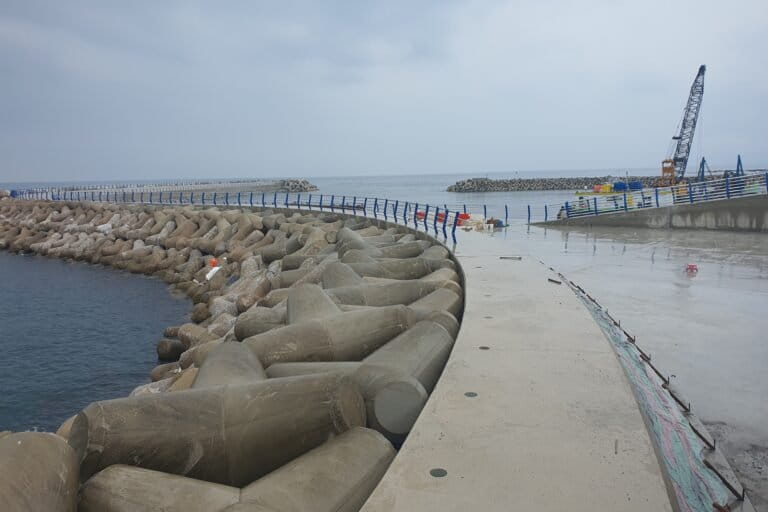
The turning point arrived in 2021, when Ssangyong E&C launched a major infrastructure project to expand and repair breakwaters at the local harbor, ostensibly to protect fishing boats from seasonal typhoons.
Initially, the haenyeo were unalarmed as heavy construction cranes hoisted five-ton rocks and sent gravel and sand flying. By 2023, however, the ecological fallout became impossible to ignore. Abalones shrank drastically in size, carcasses of sea cucumbers littered the seafloor, and entire shrubs of surfgrass vanished.
By early 2025, the once-lush marine forest was entirely dead. In place of vibrant aquatic life and gravel beds lay thick layers of white, dusty cement debris. The local marine habitat had collapsed, delivering an emotional and financial death knell to 23 haenyeo in Guman-ri and 30 in Daebo-ri.
The Road to Seoul: Protests and Political Awakening
Unbeknownst to the divers, the construction was rooted in a 2017 proposal by the Pohang Regional Office of the Ministry of Oceans and Fisheries. The plan had been endorsed by seven elderly male fishers representing the villages—men who admitted later that they never consulted the haenyeo and failed to foresee the catastrophic impact on the coastal habitat. When the divers confronted them in 2025, the men apologized, but the ecosystem was already dead.
Left with no recourse, all the haenyeo of Guman-ri and Daebo-ri—ranging in age from their 60s to their 80s—pooled their resources in June 2026. They hired two buses for a grueling five-hour drive to Seoul to stage a high-profile sit-in outside the corporate headquarters of Ssangyong E&C.
Clad in black rubber diving suits, carrying their traditional tewak (floating baskets), and wearing red headbands demanding compensation for lost livelihoods, the women endured two days under a scorching sun. Unable to afford hotel rooms, they slept on the pavement. The protest drew national media attention and forced local lawmaker Lee Sang-hwi to intervene, ultimately compelling Ssangyong to offer an out-of-court settlement.
Supporting Context & Metrics: The Science of Coastal Destruction
The grievances of the Guman-ri haenyeo are supported by established marine science. Coastal construction projects of this scale inherently disrupt fragile nearshore environments.
According to research by Yoon Han-sam, a professor of marine and harbor engineering at Pukyong National University in Busan, published in the Journal of the Korean Society for Marine Environment and Energy:
"The diffusion of suspended sediment resulting from construction clouds the water, undermines marine animals’ ability to breathe and feed, and destroys spawning grounds and habitats. This is the most common cause of damage to fishing grounds."
Key Metrics and Figures
53: The total number of haenyeo across Guman-ri (23) and Daebo-ri (30) whose livelihoods have been eradicated.
154.2 Billion Won ($112 Million USD): The net profit reported by Ssangyong E&C for the preceding fiscal year, contrasting sharply with the meager out-of-court settlement offered to the aging divers.
10 Meters (33 Feet): The depth to which septuagenarian divers like Kim, Im, and Lee routinely dive without oxygen tanks.
16 Hours: The length of the modified daily work schedule required for divers who now must commute by bus to distant coastal towns like Yeongdeok just to secure an income.
Official Statements and Institutional Accountability
The path to accountability is fraught with bureaucratic deflection.
When questioned, the Pohang Regional Office of the Ministry of Oceans and Fisheries denied any administrative wrongdoing. An official maintained that the agency properly notified village representatives multiple times between 2017 and 2020. According to the government, the legal responsibility rested entirely on those local representatives to inform the broader community—including the haenyeo.
Legal experts point out the severe structural disadvantages faced by the villagers. Choi Jae-hong, a Seoul-based attorney specializing in environmental litigation, explains that suing either the corporate contractor or the government is a formidable uphill battle:
Proving Causation: The plaintiffs must establish a direct scientific link proving that construction debris either starved marine life of food sources or suffocated them by clogging respiratory organs—a process that requires expensive, specialized expert testimony.
Property Rights: Because South Korean coastal waters are not classified as private property, traditional users face higher legal hurdles in claiming direct damages.
Government Immunity: Under current legal frameworks, state agencies are not legally mandated to directly notify informal user groups like the haenyeo regarding public infrastructure plans, making corporate litigation the more viable, albeit deeply flawed, route.
Ssangyong E&C has declined multiple requests for comment from environmental journalists regarding the specifics of the ecological damage or the adequacy of their settlement proposals.
Future Outlook: A Community at the Crossroads
As the summer of 2026 draws to a close, the haenyeo of Guman-ri find themselves trapped between bad options. Accepting Ssangyong’s paltry out-of-court settlement offers quick relief, but as unofficial leader Jeong Mi-ja notes, "After we pay for the costs of going to Seoul, it’s finished."
Conversely, pursuing a civil lawsuit could drag on for a decade or more. For women in their late 70s, a protracted legal battle means many might pass away before seeing a verdict.
To survive economically, some divers now wake at 2:00 AM, prep their gear for two hours, and ride buses for three hours north to fish in unfamiliar waters, enduring grueling 16-hour days that even they acknowledge are unsustainable.
Yet, the vision of the village extends beyond personal compensation. Seo In-mahn, a 67-year-old resident and nephew of Jeong, frames the tragedy as a global loss:
"The marine habitat in front of Guman-ri and Daebo-ri isn’t the sole possession of the haenyeo grandmothers. It is the community’s. If you think about it, the habitat is also that of the entire country, and the world. So shouldn’t the entire world care about what’s happening here?"
Without systemic reform in how South Korea evaluates environmental impact assessments for coastal engineering—and without meaningful corporate accountability—the quiet erasure of Guman-ri’s marine ecosystem may serve as a sobering bellwether for the future of traditional maritime cultures worldwide.