Executive Overview
In an era defined by global climate urgency and rapid environmental degradation, the search for effective, equitable, and sustainable conservation models has never been more pressing. Across the globe, traditional conservation frameworks have historically relied on "fortress conservation" strategies—displacing Indigenous populations and restricting access to ancestral lands under the assumption that human habitation is inherently harmful to wildlife and ecosystems. However, a paradigm shift is underway in the dramatic landscapes of northern Tanzania. Here, the Indigenous Datooga and Hadza communities are proving that the most effective custodians of the earth are those who have inhabited, respected, and sustained it for millennia.
At the heart of this transformation is the Yaeda-Eyasi Carbon Offset Project, an ambitious, community-led initiative that leverages the global voluntary carbon market to achieve dual imperatives: mitigating global climate change and securing the territorial rights, livelihoods, and cultural heritage of vulnerable Indigenous groups. Through a sophisticated blend of ancestral wisdom and modern climate finance, the project incentivizes forest protection, combats external land encroachment, and injects much-needed economic capital directly into local communities.
This comprehensive report explores the multifaceted dimensions of the Yaeda-Eyasi landscape initiative. By examining community testimonies, ecological recovery metrics, economic impacts, and the foundational insights of project administrators like German Sedoyeka, this article illuminates how market-based climate solutions can empower local populations. Furthermore, it contextualizes this initiative within the broader framework of the Climate Impact Portfolio managed by organizations like Sustainable Travel and Carbon Tanzania, offering an authoritative look at the future of indigenous-led environmental conservation.
Detailed Chronology: The Evolution of the Yaeda-Eyasi Landscape Project
To fully comprehend the success and ongoing impact of the Yaeda-Eyasi carbon initiative, it is essential to trace its historical trajectory—moving from a landscape threatened by external pressures to a globally recognized model of community-based natural resource management.
Pre-Project Era: Vulnerability and Encroachment
For centuries, the Hadza—one of the last remaining hunter-gatherer groups in Africa—and the Datooga, a community of traditional pastoralists, coexisted in the rugged terrain surrounding Lake Eyasi and the Yaeda Valley. Their lifestyles depended entirely on the health of the local ecosystems: the Hadza for foraging, hunting, and honey collection; the Datooga for livestock grazing.
However, entering the 21st century, these communities faced unprecedented existential threats. Rapid demographic shifts, agricultural expansion from neighboring Bantu-speaking farmers, and commercial livestock incursions drastically reduced available land. Deforestation accelerated as outsiders cleared woodlands for charcoal production and farming. Without formal land titles, the Hadza and Datooga watched helplessly as their ancestral territories were steadily chipped away, threatening not only their immediate food security but the very fabric of their cultural identities.
The Intervention: Introducing Community-Based Carbon Finance
Recognizing the imminent collapse of these ecosystems and the displacement of their inhabitants, local non-governmental organizations, most notably Carbon Tanzania, stepped in to facilitate a transformative solution. Collaborating closely with village governments and community elders, the initiative was designed around a groundbreaking premise: what if the global value of sequestered carbon could be monetized to pay Indigenous communities to do what they have always done—protect their forests?
- Securing Land Tenure (The Foundation): Before any carbon credits could be generated or sold, legal recognition of land rights was paramount. Using Tanzanian land law, the project assisted local communities in securing Certificates of Customary Rights of Occupancy (CCROs). This gave the Hadza and Datooga legal ownership and management authority over their territories, effectively halting illegal land grabs by outsiders.
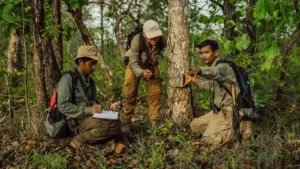
- Establishing Monitoring and Enforcement Systems: With legal boundaries established, the communities instituted local ranger networks. Locally appointed community members were trained to monitor forest health, log illegal activities such as unauthorized logging or grazing, and protect wildlife corridors.
- Issuing and Selling Carbon Offsets: By halting deforestation and degradation, the project calculated verified emissions reductions (VERs). These verified offsets were subsequently sold on the voluntary carbon market to eco-conscious businesses and travelers via platforms like Sustainable Travel’s Climate Impact Portfolio.
The Present Era: Measurable Resilience and Expansion
Today, the Yaeda-Eyasi project stands as a shining example of how carbon finance can directly fund local empowerment. The steady stream of revenue has transformed the valley. Forests are visibly regenerating, wildlife populations are rebounding, and communities are no longer living under the constant threat of displacement. The project has shifted from a reactive defense mechanism to a proactive blueprint for sustainable development, inspiring similar community-led conservation models across East Africa.
Supporting Context & Metrics: Ecological Recovery and Socioeconomic Impact
The success of the Yaeda-Eyasi Carbon Offset Project is not merely anecdotal; it is backed by profound ecological and socioeconomic metrics that demonstrate tangible improvements in environmental health and human well-being.
Ecological Restoration and Carbon Sequestration
The primary metric of any carbon offset initiative is its ability to prevent greenhouse gas emissions through avoided deforestation. In the Yaeda Valley, thousands of hectares of acacia-commiphora woodlands are now actively protected.
- Regeneration of Flora: Satellite data and ground surveys reveal a significant decrease in canopy loss. Indigenous trees, vital for both carbon storage and local utility, are recovering naturally without the pressure of commercial logging and slash-and-burn agriculture.
- Revitalization of Traditional Livelihoods: The health of the forest directly correlates with the availability of non-timber forest products. Most notably, honey production—a critical source of nutrition and income for the Hadza—has flourished. Flowering trees supported by forest protection have led to higher honey yields, providing a sustainable, resilient economic output that does not require cutting down trees.
- Biodiversity Co-Benefits: Protected corridors have allowed native wildlife populations, including leopards, hyenas, and numerous bird species, to reclaim their historic ranges, enhancing overall ecosystem resilience.
Socioeconomic Uplift and Infrastructure Development
Carbon finance does more than preserve trees; it empowers human lives. The revenue generated from carbon credit sales is funneled directly into community-managed bank accounts, where village assemblies democratically decide how funds are allocated.
+-----------------------------------------------------------------+
|                  CARBON REVENUE ALLOCATION                      |
+-----------------------------------------------------------------+
          |                                     |
          v                                     v
+--------------------+               +--------------------+
|   Ranger Salaries  |               |  Public Services   |
+--------------------+               +--------------------+
  - Stable incomes                     - School construction
  - Local employment                   - Health clinic funds
- Enhanced security - Accessible care- Stable Employment via Local Rangers: By employing community members as forest rangers, the project injects reliable cash flow into local households. These rangers earn stable incomes, elevating their purchasing power and elevating living standards within remote settlements that previously operated almost entirely outside the formal cash economy.
- Educational Advancements: Carbon revenues have directly subsidized the construction and maintenance of local schools. Children who once had to walk prohibitive distances—or forego education entirely to help herd livestock or forage—now have access to foundational learning closer to home.
- Healthcare Accessibility: Proximity to medical care was historically a major challenge for the Datooga and Hadza. Funding from the project has supported the establishment and equipping of local health clinics, drastically improving maternal health, reducing child mortality, and providing rapid response capabilities for preventable diseases.
Official Statements and Community Perspectives
To truly understand the impact of the Yaeda-Eyasi project, one must listen to the voices of those whose lives have been reshaped by its implementation. Indigenous narratives provide an unvarnished window into the emotional and practical stakes of conservation.
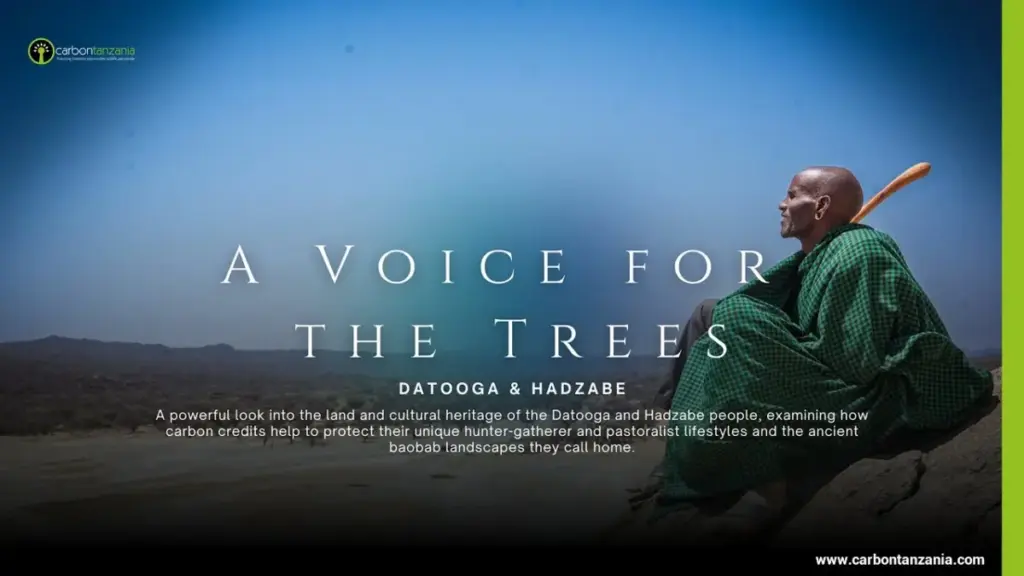
"This land has been our home forever. It is part of who we are."
— Member of Tanzania’s Indigenous Datooga Community
This sentiment captures the spiritual and ontological connection these communities maintain with their environment. For the Hadza and Datooga, conservation is not a modern policy objective; it is an inheritance and a daily practice.
The integration of carbon finance has provided them with the modern legal and financial tools necessary to defend this ancient heritage. However, the vulnerability of relying on external market mechanisms remains a sobering reality. German Sedoyeka, the Yaeda-Eyasi Project Manager, shares a sobering conversation that highlights the indispensable nature of the project:
"I once asked a community member what would happen if the carbon project were to leave. He said, ‘If the carbon project were to leave today, the situation would be very bad. Life would be very difficult.’"
— German Sedoyeka, Yaeda-Eyasi Project Manager
Sedoyeka’s observation underscores the heavy responsibility carried by carbon offset programs. For the residents of the Yaeda Valley, the project is no longer an optional environmental program—it is an economic and territorial lifeline. Without the protective barrier and financial dividends provided by carbon revenues, these communities would likely face renewed onslaughts from land speculators, agricultural encroachers, and systemic poverty.
Furthermore, institutions like Carbon Tanzania, which administers the technical and logistical frameworks on the ground, emphasize that success relies on absolute transparency and community consent. By ensuring that every decision is vetted and approved by local village assemblies, the project bridges the gap between global corporate climate goals and grassroots Indigenous autonomy.
Future Outlook: Challenges, Scalability, and the Path Ahead
As the Yaeda-Eyasi Landscape Project looks toward the future, it navigates a complex global landscape characterized by both unprecedented opportunities and emerging challenges within the voluntary carbon market.
Navigating the Volatility of Carbon Markets
The global voluntary carbon market has experienced intense scrutiny in recent years, with corporate buyers and regulatory bodies demanding higher standards of transparency, permanence, and additionality. Projects that rely on simplistic tree-planting schemes have frequently faced criticism for overstating their climate benefits.
However, Yaeda-Eyasi occupies a gold-standard tier within this ecosystem. Because it focuses on avoided deforestation through legally binding community land titles and active, on-the-ground patrolling by local rangers, its carbon metrics are highly verifiable and resilient to greenwashing accusations. Maintaining this integrity will be crucial as the project seeks to secure long-term corporate buyers through portfolios managed by organizations like Sustainable Travel.
Scaling Indigenous-Led Conservation Models
The triumphs of the Yaeda-Eyasi initiative beg a compelling question: Can this model be replicated across other ecologically sensitive regions of Sub-Saharan Africa and beyond?
The answer lies in adaptability. While the specific legal mechanisms (such as Tanzania’s CCRO framework) are unique to national laws, the core philosophy—indigenous land rights paired with direct economic incentives for conservation—is universally applicable. Governments and international conservation bodies are increasingly recognizing that top-down, exclusionary conservation parks often fail, whereas empowering local populations yields superior biodiversity and climate outcomes.
Long-Term Sustainability and Community Self-Determination
Looking ahead, the ultimate objective of the Yaeda-Eyasi project is not perpetual dependence on carbon credits, but the cultivation of enduring socio-ecological resilience. As infrastructure improves, schools graduate new generations of literate youth, and health standards rise, the communities are building institutional capacity to govern their own affairs with increasing autonomy.
Initiatives are underway to diversify local economies even further. Beyond carbon revenue and traditional honey harvesting, low-impact cultural ecotourism managed directly by the Hadza and Datooga offers a promising frontier for supplementary income. By welcoming visitors who respect their traditions, these communities can share their heritage on their own terms while generating additional financial buffers against global economic fluctuations.
Conclusion
The Yaeda-Eyasi Carbon Offset Project transcends the traditional boundaries of environmental offsets. It is a masterclass in socio-ecological integration, demonstrating that the fight against climate change does not require the displacement of people, but rather the elevation of those who have stewarded the earth for generations.
Through the unwavering dedication of the Indigenous Datooga and Hadza communities, the logistical expertise of Carbon Tanzania, and the vital market connections provided by organizations like Sustainable Travel, the Yaeda Valley has transformed from a contested, vulnerable frontier into a beacon of hope. As German Sedoyeka and local community members remind us, the continuation of this project is essential—not just for the global reduction of carbon emissions, but for the preservation of human dignity, cultural diversity, and the sacred bond between Indigenous peoples and their ancestral homelands.