

By Global Environmental Desk
Published: September 2026
Executive Overview
For decades, modern environmental policy operated on a parallel track: reducing greenhouse gas emissions to slow down planetary warming was treated as one objective, while curbing tailpipe and industrial smoke to protect public health was viewed as another. According to a landmark global warning issued by United Nations experts, that separation of priorities is not only obsolete—it is dangerously flawed.
A comprehensive new bulletin published by the World Meteorological Organization (WMO) reveals that the escalating climate crisis is aggressively reversing hard-won air quality improvements across the globe. Driven by a surge in catastrophic wildfires and prolonged, punishing heatwaves, regions that once celebrated declines in urban pollution are now experiencing unprecedented atmospheric degradation.
Crucially, this is not a one-way street. The smoke and chemical pollutants spewed by these climate-fueled disasters are themselves accelerating environmental breakdown. By altering cloud formations, darkening polar ice, and generating lethal ground-level ozone, air pollution is feeding a relentless, self-reinforcing feedback loop. UN scientists warn that unless governments abandon siloed policies and tackle climate change and air pollution as a singular, indivisible emergency, humanity risks sliding deeper into an irreversible environmental catastrophe.
Detailed Chronology: The Convergence of Climate and Air Quality
To understand how the world arrived at this critical juncture, it is necessary to examine how climatic shifts began dismantling decades of legislative progress in air pollution control.
The Illusion of Urban Clean Air Progress
Throughout the late 20th and early 21st centuries, stringent environmental regulations—such as catalytic converters in vehicles, the phase-out of coal-fired power plants, and the establishment of low-emission zones in major metropolitan areas—yielded measurable successes. Urban centers in North America, Europe, and parts of Asia recorded steady declines in sulfur dioxide, nitrogen oxides, and primary particulate matter.
Policy-makers believed the corner had been turned. Urban populations were breathing safer air, and public health metrics in industrialized zones showed fewer respiratory admissions. However, these localized victories failed to account for systemic, macro-level atmospheric shifts catalyzed by global temperature anomalies.
The Tipping Point: The 1990s to the Present
According to historical data cited in the WMO report, the frequency and intensity of extreme wildfires have roughly tripled since the 1990s. As global temperatures ticked upward, turning vast tracts of forest and grassland into tinderboxes, the nature of air pollution changed fundamentally.
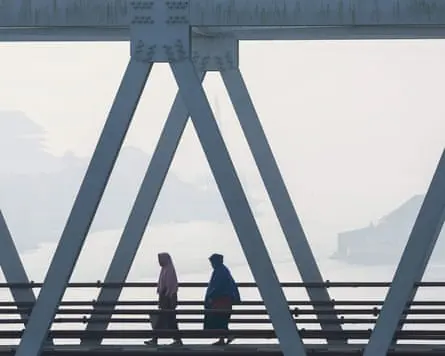
No longer was poor air quality confined to smog-choked industrial valleys or congested traffic corridors. Instead, smoke from transcontinental and cross-border wildfires began blanketing entire regions—transforming pristine rural air and supposedly "clean" suburban environments into hazardous zones.
This shift culminated over the past several summers, notably in Europe and North America, where persistent, blocking high-pressure systems triggered severe heatwaves. These meteorological conditions trapped stagnant air over population centers, cooking chemical precursors in the atmosphere and driving ground-level ozone concentrations to record highs. What began as a warming trend rapidly transformed into an acute, atmospheric public health crisis.

Supporting Context & Metrics: The Science of the Feedback Loop
The WMO’s annual air quality and climate bulletin places particular emphasis on particulate matter and atmospheric chemistry, shedding light on the mechanics of environmental degradation.
The Anatomy of PM2.5 and Aerosols
At the center of the WMO’s findings are PM2.5 microscopic particles and liquid droplets measuring 2.5 micrometers or smaller in diameter. Because of their minute size, these particles bypass the body’s natural filtration systems, penetrating deep into the lungs and entering the human bloodstream.
Traditionally, PM2.5 has been associated with anthropogenic sources:
- Fossil-fuel combustion from heavy industry and power generation
- Internal combustion engines in transport
- Residential heating systems using coal or biomass
- Agricultural ammonia emissions
However, the modern profile of PM2.5 is increasingly dominated by natural and quasi-natural disasters, specifically wildfires and dust storms. When suspended in the atmosphere, these collections of particles and gases form what scientists call aerosols.
How Aerosols Modify the Climate
Airborne aerosols do not merely sit in the atmosphere; they actively alter it. By interacting with clouds, aerosols change cloud droplet size, brightness, and lifespan. This modifies how much incoming solar radiation is reflected back into space versus how much is trapped within the lower atmosphere, directly influencing regional weather patterns and hydrological cycles.
The Darkening of the Cryosphere
The threat extends far beyond the atmosphere. Eventually, suspended particles settle back onto the Earth’s surface—a process known as deposition.
When windborne black carbon (soot) settles on snowpack, glaciers, and polar ice sheets, it drastically reduces the surface’s albedo (reflectivity). Instead of bouncing sunlight back into space, the darkened ice absorbs solar radiation. This accelerates surface melting, releasing trapped greenhouse gases, shrinking freshwater reserves, and reinforcing global heating.
The WMO report outlines this vicious cycle clearly:
"Increasing aridity and land-use change are expected to enhance aerosol emissions, creating a powerful climate feedback loop where a warming climate increases fires and dust emissions, which enhances deposition on snow and ice surfaces, which in turn accelerates melt, thereby ultimately reinforcing warming."
Official Statements and Health Impacts
The human cost of this atmospheric convergence is staggering. During the 2010–2018 period alone, studies cited by the UN attribute nearly 100,000 deaths annually to the tripling of wildfire activity.
The Toxicity of Wildfire Smoke
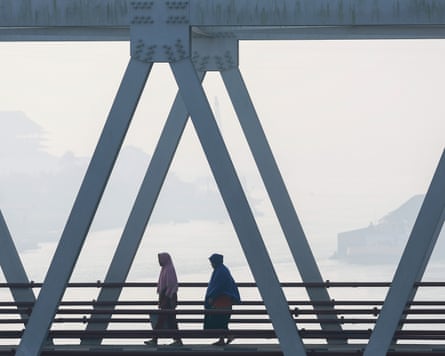
Speaking on the release of the report, Lorenzo Labrador, a scientific officer at the World Meteorological Organization, emphasized that the medical community is only beginning to grasp the true lethality of wildfire smoke. Unlike ordinary urban smog, wildfire smoke contains complex mixtures of pyrolyzed organic compounds, heavy metals, and vaporized synthetic materials from burned infrastructure.
When inhaled, this cocktail induces severe oxidative stress across multiple organ systems.
- Respiratory Damage: Systematic reviews consistently link wildfire smoke exposure to a dramatic surge in asthma attacks, acute exacerbations of chronic obstructive pulmonary disease (COPD), and spikes in rescue-inhaler usage.
- Systemic Health Effects: Beyond the lungs, exposure triggers systemic inflammation linked to cardiovascular events, adverse birth outcomes (such as low birth weight and premature birth), and measurable impacts on mental health.
Ground-Level Ozone: The Invisible Tissue Damager
While wildfire smoke is visible and dramatic, another silent threat is expanding across heatwave-stricken continents: ground-level ozone ($O_3$). Unlike the stratospheric ozone layer that protects Earth from harmful ultraviolet radiation, ground-level ozone is a secondary pollutant created when sunlight bakes volatile organic compounds (VOCs) and nitrogen oxides ($NO_x$) emitted by cars, factories, and burning vegetation.
"Ozone is a very powerful oxidant," Labrador explained. "So once it gets to the lung, it essentially oxidises lung tissue and causes inflammation and circulatory problems, and eventually heart problems."
The health consequences are grim. In heavily polluted regions, long-term exposure to ground-level ozone is now estimated to account for roughly one in five deaths from chronic obstructive pulmonary disease (COPD).
Future Outlook: A Unified Path Forward
The central takeaway from the WMO bulletin is as simple as it is daunting: climate and air quality can no longer be treated in policy isolation.
The Co-Benefit Opportunity
For policy-makers and municipal leaders, however, the interconnected nature of these crises offers a unique silver lining. Because the primary drivers of greenhouse gas emissions—principally the burning of fossil fuels—are also the primary sources of air-polluting substances, climate mitigation and air purification share a single prescription.
"Which is not terribly hard because if you abate emissions of greenhouse gases, you are at the same time reducing emissions of air quality degrading substances," Labrador noted. "And that leads me to the best solution that there is, which is a general abatement of global greenhouse gas emissions and fossil fuel burning."
Policy Recommendations for the Decade Ahead
As global temperatures continue to track upward, experts argue that adaptation and mitigation frameworks must evolve rapidly:
- Integrated Governance: National governments must merge environmental protection agencies and climate ministries into unified regulatory bodies to ensure air quality forecasts factor directly into climate adaptation planning, and vice versa.
- Wildfire Resilience and Forest Management: Funding must pivot from emergency suppression toward proactive landscape management, controlled burns, and community-level smoke-filtration infrastructure (such as clean-air shelters in public buildings).
- Urban Heat Island Mitigation: Cities must expand green infrastructure, increase urban tree canopies, and enforce stricter caps on industrial and vehicular emissions to prevent the chemical cocktail that produces lethal ground-level ozone during heatwaves.
Without swift, synchronized intervention, the world risks entering a self-sustaining downward spiral—where a warming planet fuels more fires and heatwaves, those disasters degrade our air, and that very pollution accelerates the climate breakdown threatening human civilization.



