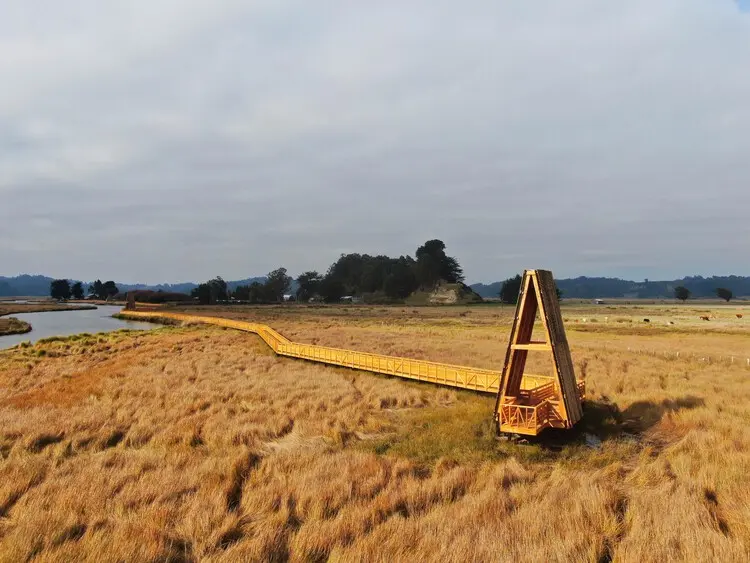
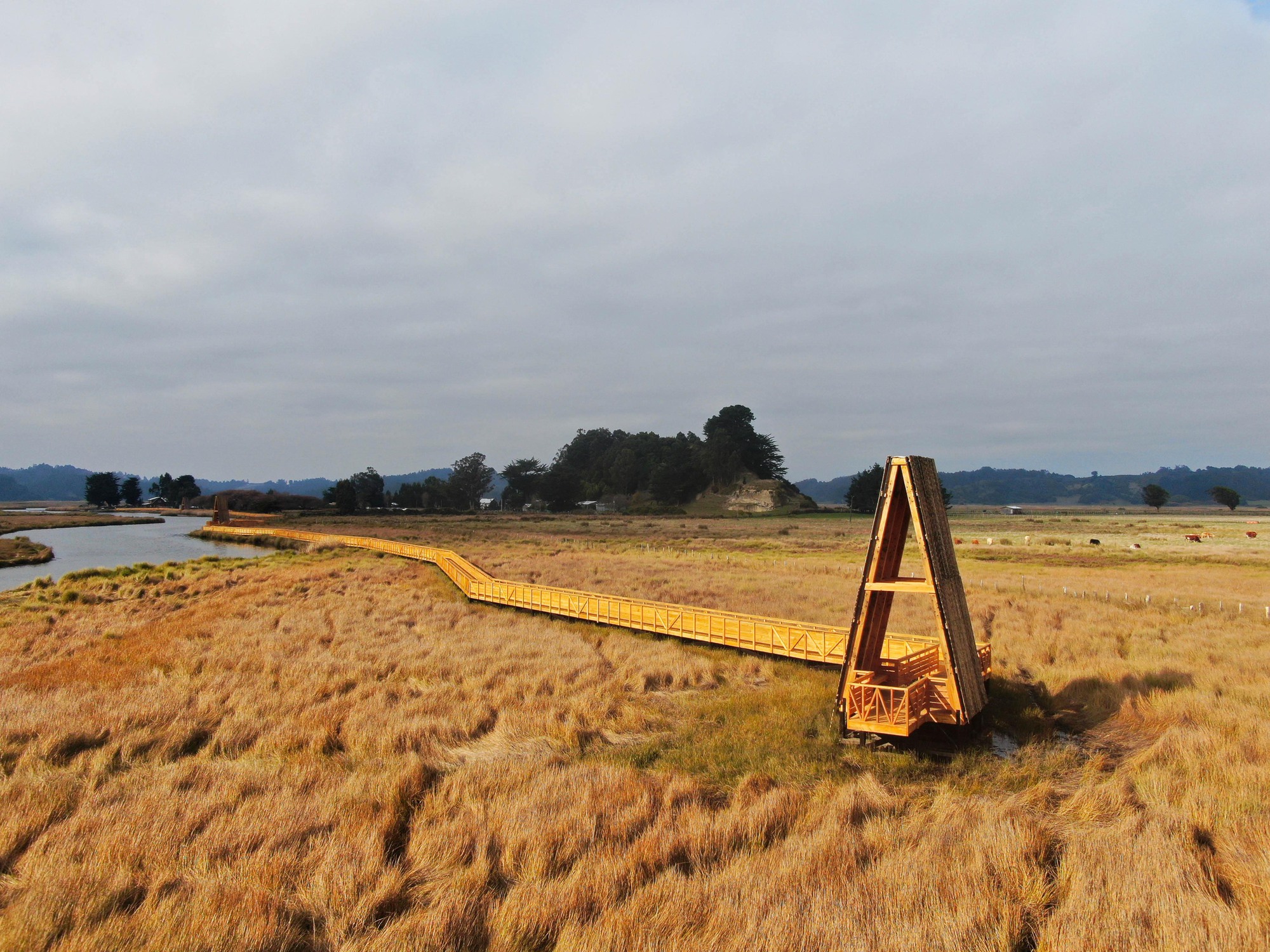
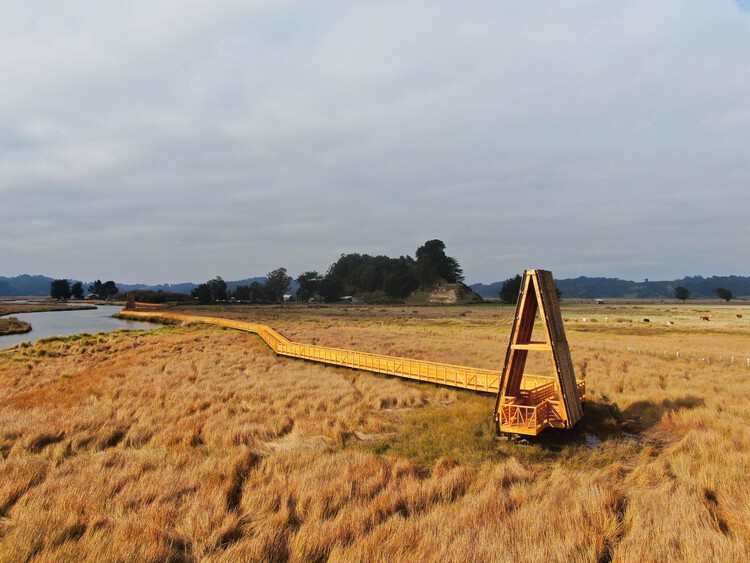
In an era defined by rapid urbanization and the continuous encroachment of built environments upon fragile natural habitats, contemporary architecture faces an existential challenge: how to facilitate human engagement with nature without compromising environmental integrity. The Kay Kay de Monkul Lookout Walkway, a striking wooden infrastructure project situated in the heart of southern Chile, offers a masterclass in ecological sensitivity and responsive design. Conceived through the collaborative vision of architects Gonzalo Verdugo and Carlos Seguel Arquitectos, and thoughtfully curated by Valentina Díaz, this project redefines the boundaries between public observation and ecological preservation.
Nestled within the Monkul Wetland—widely regarded as one of the most critical and ecologically sensitive coastal ecosystems in southern Chile—the lookout walkway is much more than a functional path. It is an exercise in restraint, a carefully calibrated architectural intervention designed to let visitors traverse, experience, and contemplate a pristine landscape while leaving virtually no permanent scar on the terrain. Through the strategic use of sustainable timber, elevated pathways, and low-impact construction methodologies, the design team has forged a harmonious bridge between human curiosity and environmental stewardship.
This comprehensive report examines the genesis, execution, structural characteristics, and broader environmental significance of the Kay Kay de Monkul Lookout Walkway, exploring how it sets a new benchmark for sustainable infrastructure in ecologically sensitive regions across Latin America and beyond.
Detailed Chronology
The realization of the Kay Kay de Monkul Lookout Walkway was a deliberate, multi-year process that prioritized community engagement, rigorous environmental assessments, and site-sensitive engineering.
Phase 1: Conceptualization and Environmental Mapping (Initial Planning)
Long before the first timber pile was driven into the soil, the project began as a response to a pressing local dilemma: how to manage increasing eco-tourism in the Monkul Wetland without damaging the delicate flora and fauna that make the area unique. Gonzalo Verdugo and Carlos Seguel Arquitectos recognized that traditional infrastructure—such as concrete pathways, asphalt roads, or heavy vehicular bridges—would permanently fracture the hydrological and biological continuity of the wetland.
During this initial phase, the architectural team collaborated closely with local environmental scientists, indigenous leaders, and municipal authorities. Mapping the wetland’s seasonal flood patterns, bird nesting grounds, and sensitive vegetation zones dictated the preliminary trajectory of the walkway. Every meter of the path was plotted to avoid critical ecological nodes while maximizing panoramic vistas of the surrounding coastal ecosystem.
Phase 2: Design Iteration and Material Selection
As the layout was refined, the architects focused heavily on material selection. Concrete and steel were quickly dismissed due to their heavy carbon footprints and disruptive wet-pour construction requirements. Instead, locally sourced structural timber emerged as the definitive material choice. Wood not only honors the vernacular building traditions of southern Chile but also offers structural flexibility, lower embodied carbon, and the potential to weather gracefully in a high-moisture coastal climate.
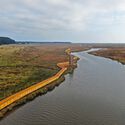
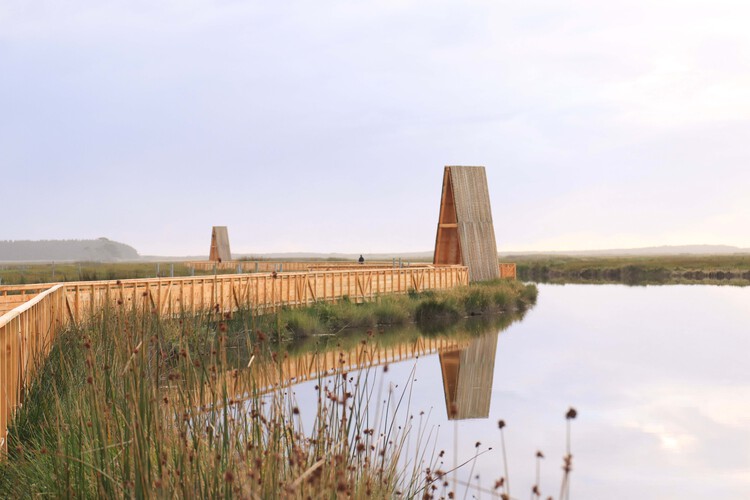
The design iterations focused on an elevated boardwalk typology. By lifting the walkway above the ground plane, the structure prevents soil compaction, allows unimpeded surface water runoff during heavy rains, and ensures that small terrestrial fauna can pass underneath the infrastructure undisturbed.
Phase 3: Low-Impact Construction and Assembly
Executing construction within a protected wetland requires surgical precision. Heavy machinery was largely restricted from entering the sensitive mudflats and marshlands. Instead, the building methodology relied on pre-fabricated timber components transported and assembled with minimal site disruption.
Foundation works were executed using lightweight, low-disturbance anchoring techniques that minimized sub-surface excavation. Carpenters and builders worked under strict environmental guidelines to ensure that waste materials, chemical treatments, and construction debris did not leach into the surrounding water tables. Through careful sequencing, the physical footprint of the construction process was kept to an absolute minimum, safeguarding the very landscape the project aims to celebrate.
Phase 4: Inauguration and Public Integration
Upon its completion, the Kay Kay de Monkul Lookout Walkway opened to the public, instantly transforming how visitors interact with the wetland. Rather than wandering haphazardly across fragile ecosystems—a practice that previously caused widespread soil erosion and habitat degradation—visitors are now guided along a curated, elevated journey. The integration of designated lookout points provides educational and contemplative spaces, encouraging a deeper appreciation for biodiversity conservation.
Supporting Context & Metrics
To fully understand the architectural significance of the Kay Kay de Monkul Lookout Walkway, one must examine the geographical, ecological, and technical parameters that shaped its creation.
The Ecological Significance of the Monkul Wetland
The Monkul Wetland is not merely a scenic backdrop; it is a complex, living machine. Coastal wetlands act as vital natural sponges, mitigating flood risks, filtering pollutants from freshwater runoffs, and sequestering significant amounts of carbon. Furthermore, they serve as critical sanctuaries for numerous native bird species, amphibians, and unique aquatic flora indigenous to the temperate rainforests of southern Chile.
However, these ecosystems are remarkably fragile. Unregulated human foot traffic can easily destroy delicate root systems, compact soil layers, disrupt nesting cycles, and introduce invasive seeds. The Kay Kay de Monkul Lookout Walkway addresses these vulnerabilities head-on by functioning as an environmental containment and guidance system. By concentrating visitors onto a controlled path, the rest of the wetland is left undisturbed to regenerate and thrive.
Architectural and Structural Specifications
Project Attribute
Detail
Project Title
Kay Kay de Monkul Lookout Walkway (Pasarela Mirador Kay Kay de Monkul)
Architectural Firms
Gonzalo Verdugo + Carlos Seguel Arquitectos
Curator
Valentina Díaz
Location
Monkul Wetland, Southern Chile
Primary Material
Sustainably sourced regional timber
Typology
Elevated pedestrian walkway and ecological lookout
Key Design Strategy
Low-impact infrastructure, elevated structural grid, zero soil compaction
Photography
Natalia Segura
Completion/Publication Date
September 2026
Technical Innovation in Wood Construction
The engineering of the walkway relies on a modular structural grid designed to distribute weight evenly across minimal point foundations. This prevents localized sinking in marshy soils and eliminates the need for continuous trenching. The timber used has been treated with non-toxic, eco-friendly preservatives designed to withstand high humidity, salt-laden coastal winds, and heavy rainfall without releasing harmful chemicals into the wetland ecosystem.
Handrails and balustrades are integrated seamlessly into the structural rhythm of the pathway, offering safety without obstructing sightlines. The height of the walkway varies dynamically in response to the topography and water levels, bringing users closer to the canopy in some areas and lifting them high above the marsh flats in others to reveal expansive vistas of the horizon.
Official Statements and Design Philosophy
In their project notes, the architects elaborate on the philosophical underpinning of their work:
"Located in the Monkul Wetland, one of the most valuable coastal ecosystems in southern Chile, this wooden boardwalk was conceived as a low-impact infrastructure that allows visitors to traverse and contemplate the landscape without disrupting its delicate environmental balance."
This statement encapsulates a profound shift in contemporary architectural practice—moving away from the arrogant imposition of monumental forms toward a philosophy of humility and ecological integration. Gonzalo Verdugo and Carlos Seguel understand that the true protagonist of this site is not the architecture itself, but the landscape it frames.
Curator Valentina Díaz highlights how the project bridges the gap between public accessibility and ecological preservation. By granting visitors safe, organized access to an otherwise impassable terrain, the project democratizes nature appreciation while actively funding and fostering local environmental awareness. The architecture acts as a mediator, whispering rather than shouting, inviting introspection rather than demanding attention.
Future Outlook: A New Paradigm for Eco-Tourism Infrastructure
As global climate change intensifies and ecological conservation becomes an urgent international priority, projects like the Kay Kay de Monkul Lookout Walkway point the way toward a sustainable future. The success of this intervention in southern Chile offers a replicable model for national parks, nature reserves, and urban wetlands worldwide.
Scalability and Global Relevance
The methodologies deployed by Gonzalo Verdugo and Carlos Seguel—modular timber prefabrication, elevated foundation grids, and rigorous environmental mapping—can be adapted to diverse ecosystems across the globe, from tropical mangroves in Southeast Asia to peat bogs in Northern Europe. By proving that infrastructure and ecology can coexist in a symbiotic relationship, the project challenges developers and city planners to abandon heavy-handed construction techniques in favor of lighter, more respectful interventions.
Long-Term Stewardship and Community Impact
Looking ahead, the longevity of the Kay Kay de Monkul Lookout Walkway will depend on ongoing maintenance and community stewardship. Because the structure is built from organic timber, cyclical maintenance programs will be required to replace weathered components and ensure structural safety. Crucially, involving local communities in the maintenance and guided interpretation of the walkway ensures that the economic benefits of eco-tourism directly support the people who have historically protected these lands.
Conclusion
The Kay Kay de Monkul Lookout Walkway is much more than a scenic path through a marshland. It is a manifesto built in wood—a testament to the fact that human ingenuity, when guided by respect and ecological empathy, can enhance rather than destroy the natural world. Through the visionary partnership of Gonzalo Verdugo and Carlos Seguel Arquitectos, this Chilean wetland has gained a silent guardian, a delicate ribbon of timber that allows humanity to witness the breathtaking beauty of nature while leaving the earth untouched.