

Executive Overview
For generations, humanity has treated the global ocean through a lens of infinite extraction and unaccountable disposal—viewing the vast blue expanse simultaneously as an inexhaustible larder and an endless waste receptacle. Yet, beneath the rolling waves lies a quiet, accelerating crisis that modern urbanized societies are largely ill-equipped to perceive.
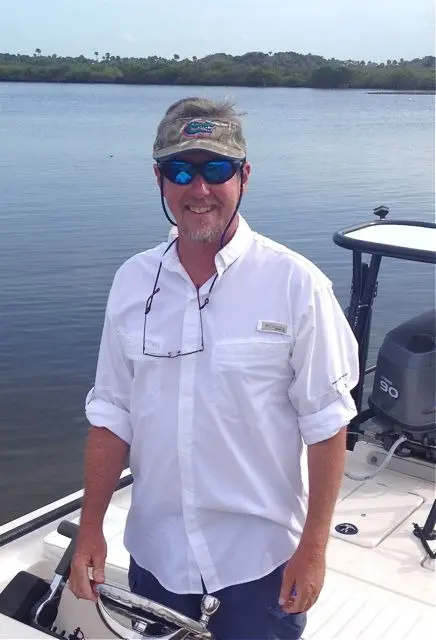
Bob Wallace, a lifelong conservationist, lifelong angler, and dedicated ocean advocate, has spent the better part of a lifetime bearing witness to this profound transformation. From the pristine, fish-laden barrier islands of Florida’s east coast during the mid-20th century to the plastic-choked coastlines of Indonesia and the algae-smothered reefs of the Grenadines, Wallace’s personal chronicle mirrors the broader ecological trajectory of our planet’s marine ecosystems.
However, this narrative is not merely an elegy for a lost maritime paradise. It is a rigorous examination of systemic ecological degradation countered by compelling proof of marine resilience. Through targeted conservation frameworks—such as the establishment of marine protected areas, science-backed regulatory interventions, and global initiatives like Dr. Sylvia Earle’s Mission Blue—this article explores how human agency can reverse the tide. By synthesizing historical observation, empirical ecological shifts, and modern advocacy, we examine the urgent imperative to safeguard our oceans before critical tipping points become irreversible.
Detailed Chronology: A Lifelong Odyssey with the Sea
The Golden Age of Coastal Immersion (1950s–1970s)
The foundation of Wallace’s relationship with the marine world was laid during his formative years, spent along the barrier beaches of Florida’s east coast. In an era before rampant coastal overdevelopment and unchecked urban sprawl, the Atlantic seaboard operated under different ecological rules. Summers were defined by rhythmic interactions with the marine environment: navigating coastal estuaries alongside his father, spending sun-drenched decades swimming and surfing, and walking tidal lines rich in biodiversity.
These early years were characterized by intimate, tactile encounters with thriving marine life. Collecting seashells, catching crabs for sustenance, and observing the nesting rituals of sea turtles provided a direct, empirical education in marine biology. Moreover, simple coastal pastimes—such as scooping sargassum weed into buckets of seawater—revealed microcosms teeming with juvenile pelagic fish, microscopic crustaceans, and complex invertebrate communities.
Crucially, this immersion was augmented by academic proximity. Wallace’s father maintained a close friendship with the preeminent head of marine biology at the University of Florida. This relationship granted the young naturalist early exposure to pioneering marine scientists, laying the intellectual groundwork for his subsequent pursuit of a zoology degree at the same institution. During his university years, interactions with legendary marine biologist Dr. Archie Carr—a foundational figure in sea turtle conservation—further cemented a lifelong dedication to understanding and protecting marine ecosystems.
The Great Unraveling: Witnessing Systematic Decline
As decades passed, the ocean of Wallace’s youth began to fray at the edges. The transformation was neither immediate nor invisible to those who remained close to the water, yet it escaped the notice of a society increasingly detached from natural rhythms.
In the Florida Keys, vibrant underwater cathedrals of staghorn coral—once stretching as far as the eye could see—began to bleach, fragment, and succumb to disease and warming waters. Further north, the once-clear waters of Mosquito Lagoon near Cape Canaveral deteriorated as lush, sprawling underwater meadows of seagrass withered away, depriving juvenile fish and manatees of critical nurseries.
The fisheries told an equally sobering story. Offshore angling for pelagic predators like king mackerel, yellowfin and bluefin tuna, mahi-mahi, and deep-water grouper degenerated into shadows of their historical abundance. Similar ecological attrition was observed across the turquoise waters of the Bahamas, signaling that localized depletion was merely a symptom of a larger, systemic malaise.
Global Scale of the Crisis: Indonesia to the Grenadines
Wallace’s observations soon transcended regional boundaries, revealing a planetary crisis of habitat destruction and pollution.
A three-month expedition to Indonesia laid bare the staggering scale of anthropogenic plastic pollution. Coastal waters and pristine beaches alike were overwhelmed by synthetic detritus—a mind-boggling volume of single-use plastics, abandoned fishing nets (ghost gear), and microplastics infiltrating the marine food web.
Later, during a sailing voyage through the Grenadines, Wallace observed the insidious impacts of eutrophication and overfishing at a popular regional anchorage. Coral reefs, smothered in thick blankets of suffocating macroalgae, struggled for oxygen and sunlight, while local markets traded in undersized reef fish—such as juvenile snapper—signalling the systematic harvesting of immature populations before they could reach reproductive maturity.
These localized snapshots reflect a global reality well-documented by marine scientists: commercial fisheries targeting foundational species—including cod, Atlantic and Pacific salmon, halibut, anchovies, and king crab—have been pushed to the brink of collapse. The underlying human failing remains consistent across continents: societies continue to harvest marine resources with unyielding efficiency until commercial and biological extinction leaves nothing behind.
Supporting Context & Metrics: The Science of Decline and Recovery
To contextualize anecdotal observations, one must look to marine science, fisheries data, and ecological metrics. The degradation of the global ocean is not a collection of isolated incidents; it is a synchronized unraveling driven by overfishing, coastal development, chemical runoff, climate-induced ocean warming, and acidification.
The Metrics of Degradation
- Coral Reef Systems: According to global marine assessments, over 50% of the world’s coral reefs have been severely degraded or lost over the past several decades due to rising sea surface temperatures, marine heatwaves, destructive fishing practices, and terrestrial runoff.
- Global Fisheries Collapse: The United Nations Food and Agriculture Organization (FAO) reports that more than 35% of global fish stocks are currently overfished at biologically unsustainable levels, a dramatic escalation from just 10% in the mid-1970s.
- Plastic Pollution Infestation: Scientific models estimate that upwards of 11 million metric tons of plastic enter the ocean annually, a figure projected to nearly triple by 2040 without sweeping structural interventions in waste management and material production.
The Mathematics and Mechanics of Recovery
Conversely, empirical data also demonstrates that the ocean possesses a remarkable, almost unprecedented capacity for biological self-repair—provided anthropogenic pressures are systematically lifted.
When marine ecosystems are granted legal protection or respite from intense industrial extraction, population rebounds can occur with astonishing speed. Historical precedents validate this phenomenon:
- The Florida Mullet Regulation: Following decisive legislative restrictions placed on commercial gill-net fishing for striped mullet in Florida waters, the recovery was not limited to the target species. Dependent apex and mid-tier predators—including redfish, snook, and tarpon—experienced dramatic population rebounds. Concurrently, dependent coastal avifauna, such as ospreys and brown pelicans, saw their breeding success surge as localized forage fish availability stabilized.
- Red Snapper Management: The implementation of strict, science-based catch limits and seasonal harvesting quotas for Gulf of red snapper has yielded measurable biomass recoveries, demonstrating that regulatory enforcement directly translates to population restoration.
- Cetacea Resurgence: Once hunted relentlessly to the precipice of total biological extinction during the commercial whaling era, several great whale species—including humpbacks, blues, and grey whales—are exhibiting encouraging population recoveries across multiple oceanic basins, proving that international moratoria can halt terminal decline.
Official Statements and Strategic Frameworks
The transition from despair to actionable hope hinges on structured conservation initiatives that bridge scientific research, public advocacy, and legal protection. Chief among these transformative frameworks is Mission Blue, founded by legendary oceanographer, explorer, and author Dr. Sylvia Earle.
Dr. Sylvia Earle and the Mission Blue Paradigm
Dr. Earle has long championed the concept that the ocean is the blue heart of our planet—the very life support system that dictates weather patterns, sequesters carbon, and produces the majority of the oxygen we breathe. Yet, humanity has treated this life support system as an expendable utility.
Mission Blue offers a clear, scalable solution to this existential threat through the establishment of Hope Spots.
"The only way to save sea life is to protect key areas," observes Wallace, echoing the core tenet of the Mission Blue initiative. "This is the proven promise of Hope Spots: identifying places that are critical to ocean health and building the support needed to protect them."
What are Hope Spots?
Hope Spots are special areas of the ocean that are scientifically identified as critical to the health of the marine environment. While marine protected areas (MPAs) often face political gridlock, Hope Spots leverage a grassroots-to-global approach. They bring together:
- Scientific Understanding: Rigorous ecological mapping to identify biodiversity hotspots, spawning grounds, and carbon-sink habitats.
- Conservation Vision: Clear, long-term strategic targets for habitat restoration and legal preservation.
- Public Engagement: Grassroots advocacy that mobilizes local communities, indigenous groups, policy-makers, and global donors to take direct ownership of their regional waters.
Protecting these physical spaces, however, is only half the battle. As conservation advocates emphasize, legislation and enforcement cannot exist in a vacuum; they must be underpinned by a profound cultural shift in how modern humanity perceives its relationship with the natural world.
Future Outlook: Awareness, Education, and the Power of the Individual
As humanity navigates the complexities of the 21st century, modern urbanized society faces a unique psychological hurdle: the "tyranny of detachment." Living in concrete jungles, insulated by digital screens, continuous advertising streams, and urban infrastructure, the average citizen has little direct, visceral experience with the natural world.
In this hyper-connected yet ecologically isolated landscape, conservation cannot afford to remain absent from the cultural conversation.
The Imperative of Public Education
To secure a sustainable maritime future, public awareness must be deliberately cultivated. People must not only be informed about the harrowing realities of ocean acidification, coral bleaching, and plastic inundation; they must also be empowered with clear, actionable steps to participate in global repair efforts.
Education serves as the primary catalyst for behavioral change. When individuals understand that their daily consumer choices—ranging from seafood consumption patterns to single-use plastic reduction—directly impact coastal nurseries thousands of miles away, the psychological distance between urban life and oceanic health collapses.
Mobilizing the "School of Fish"
In reflecting on the scale of the global conservation challenge, it is easy for the individual to succumb to fatalism or eco-anxiety. How can one person hope to stem a tide of global industrial degradation?
Dr. Sylvia Earle’s lifelong career stands as an enduring testament to what a single, resolute individual can achieve through vision, relentless advocacy, and unwavering dedication. Yet, impactful conservation does not rely solely on iconic figures; it depends on collective participation.
As Wallace eloquently notes, every citizen has the opportunity and ability to contribute, even if their role feels modest:
"Every one of us has this opportunity and ability, even if it is only being part of the greater effort. One member of the school of fish, so to speak."
This network of shared belief and collective action holds the power to reshape our cultural trajectory. It starts with individual awareness and ripples outward—educating our children, influencing our peers, demanding corporate accountability, and supporting organizations like Mission Blue.
The future of the global ocean is not predetermined. By marrying historical memory with modern scientific frameworks, respecting the ocean’s immense capacity for self-healing, and activating a global citizenry, we can steer our blue planet away from ecological collapse and toward a resilient, flourishing future.
Note: This comprehensive feature article has been expanded and adapted from the personal reflections and responses of Bob Wallace to provide an authoritative, investigative, and deeply contextualized exploration of marine conservation.



