Executive Overview
For centuries, the world’s most iconic hiking routes offered an unbridled promise of solitude, raw wilderness, and untamed exploration. Whether tracing the ancient stone pathways of the Andes in Peru, scaling the volcanic slopes of Mount Fuji in Japan, or traversing the sweeping alpine vistas of the Pacific Crest Trail in the United States, trekking was long viewed as a boundless, self-directed pursuit.
Today, that paradigm is shifting dramatically.
Driven by an unprecedented post-pandemic surge in adventure travel—propelling the global hiking industry past an $11 billion valuation in 2024—the world’s most legendary pathways are facing an existential crisis: they are being loved to death. Without structured oversight, rising foot traffic accelerates catastrophic soil erosion, ravages fragile high-altitude ecosystems, generates overwhelming volumes of waste, and degrades irreplaceable historic corridors that were never engineered to withstand modern mass tourism.
In response to this environmental and cultural emergency, governments, park authorities, and indigenous communities are increasingly turning to a vital, yet frequently debated, management tool: mandatory hiking permits.
Far from being arbitrary gatekeeping or measures designed to restrict adventure, permit systems have emerged as sophisticated mechanisms for conservation, public safety, and long-term trail management. From South America to Asia, North America, and Europe, regulated access is rapidly transitioning from the exception to the global standard. This article explores the anatomy of permit systems, the mounting crises driving their expansion, their economic and ecological impacts, and what this evolving landscape means for the future of global trekking.
Detailed Chronology: The Evolution of Trail Management
The transition from open-access wilderness to regulated, permit-based tourism did not happen overnight. It is the result of decades of escalating environmental degradation and a reactive shift in global park management strategies.
- 2002: The Watershed Moment for the Inca Trail. Recognizing the severe wear and tear inflicted by up to 1,500 daily trekkers and their supporting porters, the Peruvian government instituted a strict daily cap on the classic Inca Trail leading to Machu Picchu. The limit was set at 500 total permits per day—allocating roughly 200 for tourists and the remainder for licensed guides, cooks, and porters. This historic policy laid the groundwork for modern heritage trail management.
- The 2010s: The Rise of Global Overtourism. As social media fueled a boom in adventure travel, destinations worldwide experienced exponential surges in visitor numbers. Wilderness areas that once saw dozens of backpackers a week began seeing thousands. Campsites overflowed, waste management systems collapsed, and search-and-rescue teams faced unprecedented strain.
- 2021: Nepal Reforms the Himalayas. Amid growing concerns over missing solo trekkers and environmental degradation in remote corridors, Nepal introduced restricted area permits alongside a mandatory requirement for foreign trekkers to hire licensed guides through registered agencies in designated regions like Manaslu.
- 2023: Structural Shifts in Japan and the US. Japan tackled chronic congestion and environmental stress on Mount Fuji by introducing an entry fee and a daily climber cap on the famous Yoshida Route. Simultaneously, the Pacific Crest Trail (PCT) in the United States tightened its long-distance permit quotas, restricting northbound thru-hikers to 50 per day during peak season to protect the fragile Sierra Nevada ecosystems.
- 2024 and Beyond: The global hiking industry surpassed $11 billion, solidifying the economic importance of trekking while simultaneously accelerating the implementation of digital booking platforms, timed-entry slots, and mandatory campsite reservation frameworks across iconic global routes.
Supporting Context & Metrics: Why Permits Are Required
To understand why permits are rapidly becoming mandatory across the globe, one must examine the measurable pressures facing modern wilderness areas. Authorities rely on four core pillars when implementing these restrictions:
1. Preventing Environmental Degradation
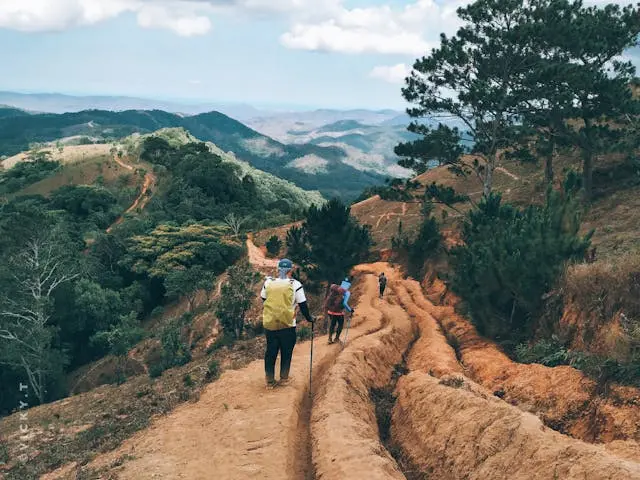
Trails are not indestructible arteries. Under repeated foot pressure, soil compacts, native vegetation dies off, and natural drainage systems fail. Without intervention, rainwater carves deep, destructive ruts into hillsides.
Before Peru’s 2002 regulations, the ancient stone paths of the Inca Trail were deteriorating rapidly, while the surrounding cloud forest ecosystem suffered under the weight of unmanaged waste and campfires. By capping daily access at 500 individuals, authorities stabilized the landscape, giving the fragile terrain time to recover while preserving local employment.
2. Safeguarding Cultural and Historic Sites
Many of the world’s most famous trails are not merely scenic walks; they are living archaeological corridors. At Machu Picchu, daily visitor numbers to the ancient citadel are capped at 5,600 during peak season and 4,500 in the low season. Visitors must adhere to strict, one-way directional circuits. Without these controls, the constant friction of thousands of daily footsteps accelerates the erosion of delicate Inca stonework, threatening the structural integrity of the ruins.
3. Mitigating Overtourism
The phenomenon of overtourism has transcended urban centers and deeply impacted alpine and remote environments. The implementation of caps on Mount Fuji’s Yoshida Route in 2023 serves as a striking case study: within a single season, climber numbers dropped by 14%. This deliberate reduction translated directly into fewer bottlenecks near the summit, significantly decreased waste accumulation, and improved the overall safety of the climb.
4. Enhancing Search, Rescue, and Safety
Remote and high-altitude trekking exposes travelers to sudden weather shifts, altitude sickness, and treacherous terrain. By tying permits to registered operators and licensed guides—as seen in Nepal’s Manaslu region—authorities maintain an accurate manifest of who is on the trail. This logistical transparency drastically improves emergency response times and reduces the incidence of lost or injured solo hikers.
Official Statements and Industry Perspectives
The implementation of rigid permit systems inevitably sparks debate within the global travel community. Park administrators, conservationists, and travel operators offer diverse perspectives on this new era of regulated exploration:
- Park Authorities and Ecologists: Environmental managers emphasize that finite natural resources demand proactive stewardship. Dr. Elena Vance, a conservation biologist specializing in alpine ecosystems, notes: "Wilderness can absorb impact, but modern tourism operates at a scale that exceeds natural regeneration rates. Permits are not built to keep people out; they are built to ensure that a trail still exists for the next generation."
- Local Communities and Workforce Advocates: On heritage routes like the Inca Trail or the Annapurna Circuit, structured access directly supports local livelihoods. Porters, guides, and lodge owners rely on stable, predictable visitor flows rather than chaotic, unregulated booms and busts that destabilize local economies.
- Independent Adventurers: Conversely, seasoned backpackers often express frustration over the bureaucratic hurdles of advance lotteries and booking fees. Spontaneous travel is increasingly difficult when permits for routes like the Pacific Crest Trail or Patagonia’s W Trek sell out months—or even a year—in advance. However, many seasoned trekkers concede that the trade-off is worth it to avoid overcrowded campsites and despoiled wilderness.
Future Outlook: The Next Decade of Trail Management
As the adventure travel market continues its upward trajectory, the landscape of global hiking will inevitably undergo further transformation. Several key trends are shaping the future of trail management:
- Digital Innovation and Dynamic Pricing: Park authorities are increasingly adopting advanced digital reservation portals, utilizing dynamic pricing models, and experimenting with lottery systems to manage high demand transparently.
- Expanded Regional Restrictions: Secondary and tertiary trekking routes that once absorbed displaced crowds from overcrowded trails are now experiencing their own influx of visitors. Consequently, expect permit systems to expand beyond marquee routes into lesser-known regional parks.
- Enhanced Carbon and Waste Tracking: Future permit applications may incorporate mandatory educational modules on Leave No Trace principles, digital tracking of waste pack-out compliance, and carbon offset contributions directly tied to trail maintenance funds.
- A Redefinition of "Adventure": The modern definition of outdoor adventure is evolving away from unfettered access toward responsible stewardship. True exploration in the 21st century requires respect for ecological limits and cultural heritage.
Conclusion
Iconic trails are finite, delicate resources. Once an ancient pathway is eroded beyond repair, or an alpine ecosystem collapses under the weight of human impact, it cannot simply be rebuilt.
Requiring hiking permits is not an assault on the adventurous spirit; rather, it is a commitment to preserving the very qualities that make these journeys worthwhile. By balancing visitor numbers with ecological capacity, permit systems ensure that the majesty of the world’s great trails remains intact.
For travelers planning their next expedition, the message is clear: responsible planning is now an indispensable component of responsible travel. Researching permit requirements early, respecting trail quotas, and supporting sustainable operators will ensure that the path ahead remains open, wild, and awe-inspiring for decades to come.