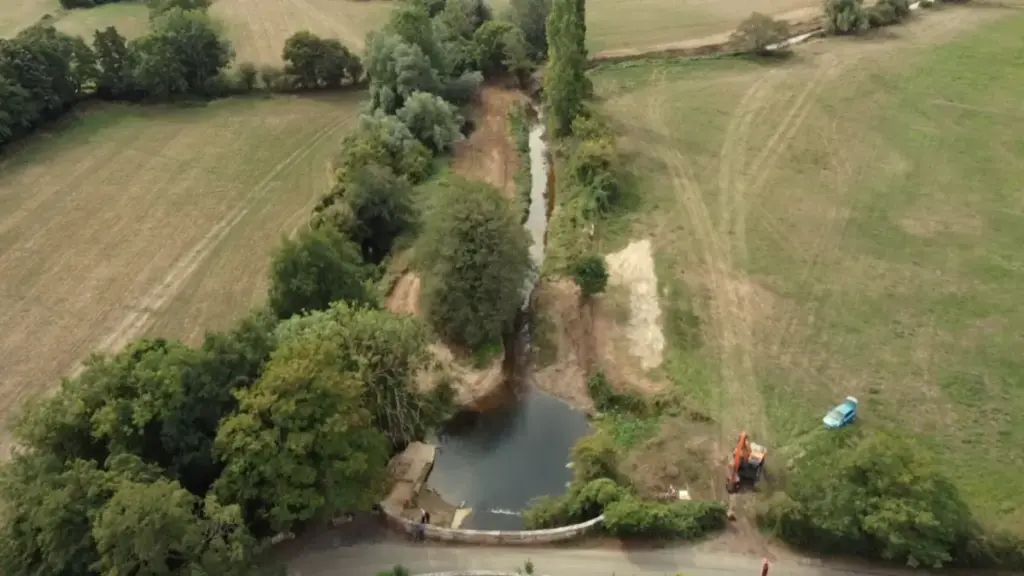
For the first time in a quarter of a century, the River Deben in Suffolk is running clear, dynamic, and unhindered through its historic channel near Ufford. This environmental milestone follows months of intense multi-agency labor, community mobilization, and emergency engineering interventions. Yet, beneath the celebration of flowing water lies an acute sense of urgency. Local authorities, environmental groups, and riparian landowners warn that the most critical phase of the restoration—securing a structural fix for a collapsed weir and stabilizing compromised civil infrastructure—still lies ahead.
The crisis began in April, when torrential heavy rains and aggressive root encroachment combined to breach a critical weir structure at Ufford, near Woodbridge. The ensuing structural failure triggered a catastrophic chain of events: water levels dropped precipitously by more than a metre, a prominent water-filled crater known as "Ufford Hole" catastrophically drained across neighboring land, and the resulting surge of water cracked the nearby Hawkeswade/Lower Ufford Bridge. The disaster not only disrupted local ecosystems, resulting in fish kills and habitat degradation, but also severed popular walking routes, impacted local businesses, and threatened nearby rail infrastructure along the East Suffolk line.
In response, a coalition of parish councils, landowners, farmers, regional trusts, and the Environment Agency forged an unprecedented collaborative task force. Phase one of their comprehensive recovery plan—focused on vital excavations, silt management, and tree removal between Old Melton Mill and Ufford Hole—has successfully restored river flow. However, as winter approaches, stakeholders face a race against time to engineer a permanent solution before seasonal floodwaters test the recovering channel to its absolute limits.
Detailed Chronology of a Disaster and Recovery
The April Breach: Anatomy of a Collapse
The events leading up to the crisis on the River Deben unfolded over years of hidden structural degradation, culminating in a catastrophic failure in April. According to local officials, intrusive tree roots had gradually infiltrated the masonry and foundation of the ageing weir structure at Ufford. While the weir had historically regulated water levels and maintained the integrity of the upstream aquatic environment, the root growth compromised its internal structural cohesion.
When a period of exceptionally heavy rainfall struck Suffolk, the compromised weir could no longer withstand the hydrostatic pressure. The structure literally "fell to pieces," according to local observations, releasing an immense volume of pent-up water in a sudden, violent surge.
The consequences were immediate and dramatic:
The Drainage of Ufford Hole: The sudden loss of structural retention caused the deep, water-filled basin locally known as Ufford Hole to completely drain out onto surrounding low-lying terrain. Water spilled over adjacent agricultural land and toward side channels threatening the integrity of the East Suffolk railway line embankment.
Infrastructure Strain: The deluge rushed downstream toward the single-arched red brick Hawkeswade/Lower Ufford Bridge. The sheer force and velocity of the water cracked the historic bridge structure and washed away portions of the adjacent footpath and wooden walkway.
Habitat Destruction: The sudden drop in water levels by over a metre abruptly transformed a vibrant, stable aquatic ecosystem into a dry, barren landscape, stranding and killing fish and devastating local biodiversity.
The Multi-Agency Mobilization
Faced with a mounting ecological and infrastructural emergency, local governance and environmental stakeholders abandoned bureaucratic silos in favor of a unified recovery operation. The Environment Agency joined forces with the Essex & Suffolk Rivers Trust, the Lower Deben Riparian Owners Group, Ufford Parish Council, and local farming syndicates.
The immediate priority was containment and assessment. Engineers mapped the structural damage to the bridge and weir while environmental scientists documented the scale of the habitat loss. By late spring, an ambitious action plan was codified, dividing the recovery effort into distinct operational phases designed to rehabilitate the channel before the onset of winter weather.
Phase One: Restoring the Flow
The initial phase of the restoration concentrated on clearing the choked, dried-out channel stretching from Old Melton Mill to Ufford Hole. Decades of accumulated silt, debris, and fallen timber—compounded by the recent collapse—had effectively choked the waterway.
Utilizing heavy excavation machinery alongside manual community clearing efforts, contractors and volunteers dredged accumulated sediment, removed obstructive root systems, and cleared invasive vegetation. This painstaking work gradually reintroduced hydraulic connectivity to the upper reaches of the river.
By successfully reconnecting the flow back to Old Melton Mill, the project achieved a vital hydrological milestone. For residents and river wardens who had watched the Deben stagnate and dry up, witnessing water move freely through the channel for the first time in 25 years marked a profound psychological and environmental turning point.
Supporting Context & Metrics: The Ecology and Geography of the Deben
A Lifeline Through Suffolk
To understand the significance of the Ufford restoration, one must appreciate the geographical and cultural footprint of the River Deben. Rising west of Debenham, the river carves a picturesque path through the heart of rural Suffolk before meandering past historic landmarks such as Melton, Woodbridge, and the Anglo-Saxon royal burial site at Sutton Hoo. As it progresses toward the North Sea, it transitions into a rich, tidal estuary of immense ecological and economic importance.
The upper freshwater reaches, such as those flowing through Ufford, act as the biological engine and nursery grounds for the wider river system. Maintaining a dynamic, oxygenated flow through these reaches is essential for migratory fish species, macroinvertebrates, and riparian flora.
Metrics of Change: Before and After the Breach
Water Level Drop: >1 metre drop across the affected stretch immediately following the weir collapse in April.
Temporal Milestone: 25 years since the river channel last experienced regular, structured maintenance and cleaning intervals of this magnitude.
Habitat Impacted: Several kilometers of sensitive freshwater habitats, including spawning grounds and recreational fishing zones.
Key Infrastructure Affected: 1 historic red-arched brick bridge (Hawkeswade/Lower Ufford Bridge), 1 major drainage feature (Ufford Hole), adjacent railway embankments, and local public rights-of-way including timber walkways.
Official Statements and Community Perspectives
The human element of the Deben restoration underscores how deeply intertwined local communities are with their natural surroundings. The disaster not only disrupted the environment but also severed the daily routines of anglers, swimmers, walkers, and local business owners.
Councillor David Finley, river warden at Ufford Parish Council, captured the dual sentiment of relief and lingering anxiety that characterizes the mood in the village:
"It’s a really exciting moment to actually see the water flowing again. This section of the river used to be cleaned out every five to 10 years, so it’s not been like this for 25 years. Now, you can see gravel bits and silt bits, and so it’s actually creating a really potentially dynamic river."
However, Finley was quick to pivot from recent successes to the immense challenges ahead, emphasizing that the structural repairs required are non-negotiable for long-term safety:
"The really critical bit is getting this weir sorted out so the water doesn’t just accelerate the channel and create real problems further down the river."
Echoing these concerns, Trevor Gill of the Lower Deben Riparian Owners Group highlighted the profound toll the disaster took on the local ecosystem and community well-being:
"It had a really big impact on nature, but also on people who love this, people who’ve been fishing and swimming here for decades. People were worried about fish dying, which did happened, and it was pretty barren. What we’ve done so far shows people that we are here to get behind this problem and fix it."
Business owners and recreational users alike have felt the pinch. The partial collapse of the footpath and the closure of the wooden walkway next to the bridge severed a popular local tourist and rambler route, denting footfall for nearby rural enterprises that rely on outdoor recreation.
Future Outlook: The Critical Road Ahead
As the dust settles on the initial excavation and clearing phase, stakeholders are acutely aware that the restoration of the River Deben remains a work in progress. The impending arrival of winter introduces significant hydrological risks that could undo months of hard-won progress if protective measures are not implemented swiftly.
Priorities for Phase Two
Weir Reconstruction and Stabilization: Engineering teams are currently drafting definitive proposals to rebuild or stabilize the failed weir structure at Ufford. The design must reconcile modern environmental standards—ensuring fish passage and natural sediment transport—with the structural robustness needed to withstand future extreme weather events. Without a controlled weir structure, unimpeded winter torrents threaten to scour the newly excavated channel, destabilize riverbanks, and cause secondary erosion further downstream.
Infrastructure Repairs: Suffolk County Council and local civil engineering partners must finalize plans to repair the structural cracks in the Hawkeswade/Lower Ufford Bridge. Concurrently, the closed wooden walkway and associated public footpaths must be reconstructed to restore full public access to the riverbank.
Long-Term Monitoring and Maintenance: The crisis has exposed the vulnerabilities of aging rural water infrastructure built decades ago. Parish councils and riparian groups are advocating for a formalized, proactive maintenance schedule—moving away from the neglect of the past quarter-century to ensure regular silt management, vegetation control, and structural audits.
Conclusion
The revival of the River Deben stands as a testament to what can be achieved when grassroots community stewardship aligns with institutional expertise. By pulling together in the wake of an environmental catastrophe, the people of Ufford and the broader Suffolk community have brought their river back to life after 25 years of stagnation.
Yet, as Councillor Finley noted, the project now enters its most critical crucible. The forthcoming winter months will test the resilience of the newly cleared channel. For the restoration to endure as a permanent triumph of modern conservation, stakeholders must successfully navigate the complex engineering hurdles of rebuilding the weir before the next seasonal deluge puts their efforts to the ultimate test.