

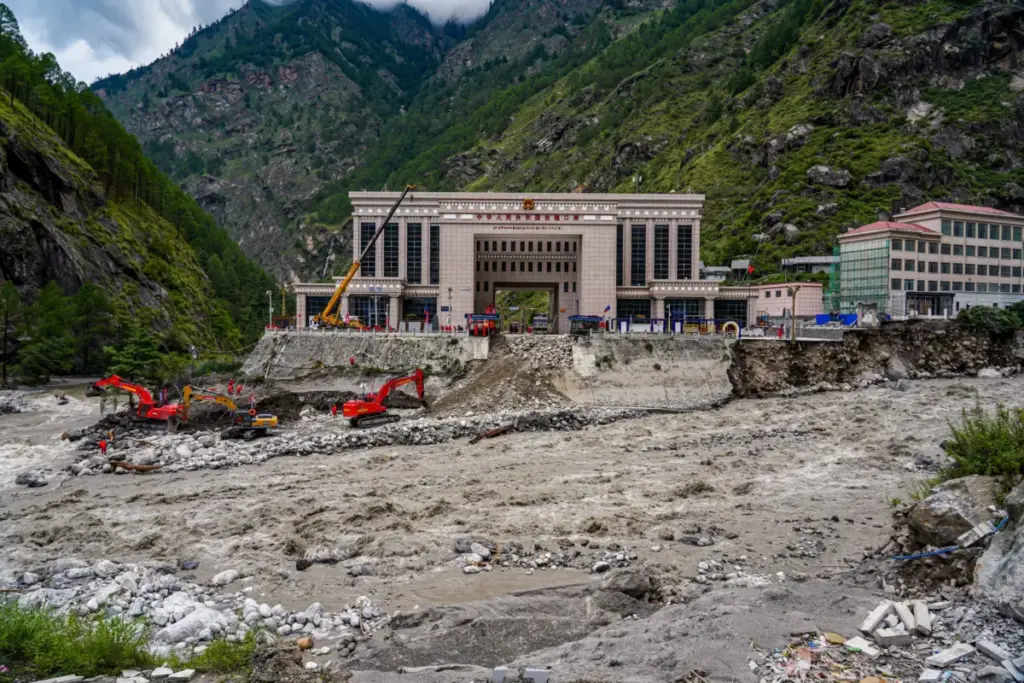
Executive Overview
In the wake of a catastrophic Himalayan flash flood that devastated entire communities, critical infrastructure, and fragile mountain ecosystems, the Government of Nepal has issued an urgent international appeal for emergency financial assistance. Seeking immediate disbursements from the United Nations Fund for Loss and Damage, Kathmandu is requesting specialized capital to support tens of thousands of displaced citizens and reconstruct vital public assets, including destroyed regional hospitals, schools, bridges, and energy installations.
The tragedy unfolded when a massive high-altitude glacier collapsed, triggering a monumental landslide that released millions of cubic meters of water, ice, and heavy sediment down the Bhote Koshi River valley. The resulting wall of water swept through downriver settlements with unprecedented force, leaving a staggering human toll: over 1,300 confirmed deaths and more than 5,300 individuals officially registered as missing. Entire municipal districts have been reduced to debris fields, severely straining Nepal’s national emergency response capacities.
Speaking in an exclusive interview, Nepal’s Foreign Minister Shisir Khanal emphasized that the disaster represents a text-book example of climate-induced loss and damage in a country that contributes virtually nothing to global greenhouse gas emissions. The appeal poses a crucial operational test for the newly established UN climate loss and damage facility. Designed precisely to cushion climate-vulnerable developing nations against sudden-onset climate disasters, the fund’s response speed to Nepal’s crisis will set a vital historical precedent for international climate equity and financial accountability.
Detailed Chronology of the Disaster
[Phase 1: Cryospheric Collapse]
High-altitude glacial block instability & ice shelf detachment
       │
       ▼
[Phase 2: Cascading Landslide & Damming]
Debris blocks natural drainage in upper catchment; catastrophic head pressure builds
       │
       ▼
[Phase 3: Outburst Breach & Torrent]
Massive wall of water & sediment surges down the Bhote Koshi River valley
       │
       ▼
[Phase 4: Downstream Destruction]
Erasure of towns, loss of 1,300+ lives, destruction of hospitals, schools & power grids
Thermal Pressures and Glacial Collapse
The origin of the disaster traces back to an acute compound meteorological event in the high-altitude zone of the High Himalayas. Prolonged above-average temperatures in the weeks preceding the event led to severe thermal destabilization of cryogenic layers and permafrost anchor points supporting a major high-altitude glacier overlooking the upper catchment of the Bhote Koshi River.
In the early morning hours, structural shear failure occurred at the glacier’s toe. Millions of tons of solid ice, combined with sub-glacial water pockets, detached abruptly from the bed face. The massive falling ice mass plunged hundreds of meters into a glacial lake bed below, displacing its waters instantly and destabilizing neighboring alpine slopes.
The Surge Along the Bhote Koshi Valley
The initial cryogenic failure ignited a catastrophic chain reaction. The volume of falling ice and liquid displaced an avalanche of lateral moraine soil, rocks, and glacial debris, creating a brief, unstable dam across the upper reaches of the river corridor. Within minutes, hydrostatic pressure breached this temporary barrier, triggering a violent Glacial Lake Outburst Flood (GLOF) mixed with hyper-concentrated sediment.
By mid-morning, a wall of slurry, boulders, and water—estimated by hydrologists to have reached heights exceeding 15 meters—slammed down the narrow, steep gradient of the Bhote Koshi River valley. Moving at velocities estimated between 40 to 60 kilometers per hour, the torrent carried uprooted forests, heavy earth-moving equipment, and structural remnants from upstream construction sites, transforming the river into a battering ram of immense kinetic force.
Immediate Aftermath and Search Operations
As the surge surged into populated downstream valleys, it engulfed riverbank townships, border infrastructure hubs, and agricultural terraces. Key transit corridors, including stretches of the Araniko Highway—Nepal’s strategic trade route connecting Kathmandu with the Tibetan border—were washed away, isolating dozens of mountain hamlets from immediate ground-based rescue efforts.
National security forces, including the Nepalese Army, the Armed Police Force, and local volunteer networks, were mobilized under emergency directives. However, search and recovery efforts were crippled by severe weather conditions, continuous landslips, and total communication blackouts caused by the destruction of power lines and cellular towers. Emergency workers were forced to manually excavate metres of dense, setting mud in search of survivors, while specialized military helicopters struggled to navigate low-cloud cover in the narrow valleys.
Supporting Context & Metrics
Quantifying the Human and Infrastructure Toll
The physical impacts of the Bhote Koshi flash flood highlight the severe socio-economic impact of rapid-onset climate disasters in rugged mountain topographies. Emergency response registries and local government administrative figures reveal a disaster footprint that has pushed the province’s medical and civil protection capabilities to complete exhaustion.
| Impact Category | Recorded Figures / Extent | Strategic Implications |
|---|---|---|
| Confirmed Casualties | 1,300+ deceased | Overwhelming of regional morgues and forensic facilities. |
| Missing Persons | 5,300+ unaccounted for | High probability of rising mortality figures as mud layers settle. |
| Displaced Persons | ~45,000 individuals | Massive demand for temporary shelters, clean water, and sanitation. |
| Educational Infrastructure | 142 schools destroyed/damaged | Severe disruption to child education across three districts. |
| Healthcare Facilities | 18 regional clinics/hospitals lost | Critical medical deserts created in high-altitude zones. |
| Critical Transport Assets | 12 bridges severed, 85 km road lost | Supply chains disrupted; trade corridors with China severed. |
| Energy & Utilities | 4 run-of-river hydro plants offline | Power deficits hitting national grids; localized utility blackouts. |
The Vulnerability of the ‘Third Pole’
The Hindu Kush Himalaya (HKH) region, often termed the earth’s "Third Pole" due to its vast ice reserves, is warming at a rate significantly higher than the global average. Recent assessments by the Intergovernmental Panel on Climate Change (IPCC) and the International Centre for Integrated Mountain Development (ICIMOD) confirm that high-mountain ecosystems are experiencing accelerated cryosphere degradation.
Glacial retreat in the Himalayas creates thousands of precarious, expanding glacial lakes held together by unstable ice or loose earth moraines. When subjected to rising temperatures, heavy precipitation, or slope failures, these lakes pose a constant threat of Glacial Lake Outburst Floods (GLOFs) to downstream communities. For Nepal, a country defined by steep terrain and delicate mountain geology, these physical dynamics turn natural hazards into widespread national catastrophes.
       [Global Anthropogenic Emissions]
                     │
                     ▼
      [Accelerated Alpine Warming (3x Rate)]
                     │
                     ▼
    [Permafrost Thaw & Glacial Instability]
                     │
                     ▼
    [Moraine Collapse & Sudden GLOF Events]
                     │
                     ▼
  [Devastation of Downstream Low-Carbon Communities]
Navigation of the UN Climate Loss and Damage Framework
The international community achieved a historic milestone at COP27 in Sharm El-Sheikh, later operationalized at COP28 in Dubai, by establishing a dedicated Fund for Loss and Damage. The fund was designed to assist particularly vulnerable developing nations in coping with irreversible damages and immediate recovery needs stemming from both extreme weather events and slow-onset climate impacts.
Key Milestones of the UN Loss and Damage Fund:
 ├── COP27 (Sharm El-Sheikh): Agreement in principle to establish the fund
 ├── COP28 (Dubai): Formal operationalization and initial capital pledges (~$700M)
 └── Present (Nepal Appeal): First major test for rapid-disbursement mechanisms
However, while initial pledges to the fund reached roughly $700 million, the operational protocols for rapid capital disbursement during active humanitarian emergencies remain untested. Nepal’s formal application represents a critical test case. The speed, flexibility, and direct accessibility of these funds will demonstrate whether global climate finance mechanisms can act quickly enough to assist mountain nations facing severe, uninsurable loss of life and infrastructure.
Official Statements and International Response
Urgent Calls for Global Solidarity
In an interview following the disaster, Nepal’s Foreign Minister Shisir Khanal articulated the country’s ethical and financial case for emergency assistance. He argued that vulnerable mountain nations are bearing a disproportionate burden of the global climate crisis.
"This is exactly the kind of climate-driven catastrophe the Fund was created to address," stated Foreign Minister Shisir Khanal. "Nepal contributes virtually zero to historical global carbon emissions, yet our people are paying the ultimate price with their lives, homes, and livelihoods.
We are not asking for conventional charity; we are calling for climate justice. Stronger global solidarity and meaningful international support are urgently needed for countries like Nepal, which are facing increasingly severe climate-related disasters that exceed our domestic coping capacities."
Khanal emphasized that domestic emergency reserves have been largely exhausted by primary rescue operations. The country faces an estimated reconstruction bill running into hundreds of millions of dollars—a burden that threatens to divert national resources away from poverty alleviation, public health, and basic social development goals.
International Geopolitical and Humanitarian Reactions
The disaster has reignited debates within international climate diplomacy regarding the structural delays in mobilizing climate finance. Representatives from the Alliance of Small Island States (AOSIS) and the Least Developed Countries (LDC) Group issued joint statements backing Nepal’s request, calling on the Loss and Damage Fund Board to bypass bureaucratic red tape and process emergency relief capital immediately.
UN humanitarian agencies have begun mobilizing emergency relief supplies, food rations, and medical aid to the affected districts. However, high-ranking UN officials acknowledged off-the-record that traditional humanitarian aid mechanisms are chronically underfunded, underscoring the urgent need to operationalize dedicated climate funds to prevent long-term socio-economic collapse in disaster zones.
Future Outlook and Strategic Imperatives
Rebuilding Resilient Infrastructure
Moving forward, Nepal faces a complex and costly recovery effort. Reconstruction along the Bhote Koshi corridor cannot simply replicate pre-existing structural models; infrastructure must be redesigned to withstand the escalating climate risks of the 21st century.
- Climate-Resilient Engineering: Future hospitals, schools, roads, and bridges must be constructed well above historical floodplains, utilizing reinforced design standards capable of withstanding high-velocity sediment flows.
- Safe Settlement Planning: Local authorities face the difficult task of relocating high-risk riverbank settlements to safer, geotechnically sound upland zones, requiring significant capital and community support.
- Hydro-Infrastructure Hardening: Given Nepal’s reliance on hydropower for domestic energy and export revenue, existing and planned facilities along Himalayan river basins must incorporate enhanced structural defenses and automated flood gates to prevent catastrophic failures during GLOF events.
Strengthening Early Warning Systems and Regional Diplomacy
To prevent similar loss of life in future events, expanded investment in high-altitude monitoring and early warning systems (EWS) is essential.
       [High-Altitude Sensor Nodes]
                     │ (Real-Time Cryosphere Data)
                     ▼
      [Automated Satellite Telemetry]
                     │ (Instantaneous Threat Detection)
                     ▼
    [Downstream Siren Networks & SMS Alerting]
                     │ (Actionable Lead Time)
                     ▼
[Pre-Planned Community Evacuation Routes]- High-Altitude Hydro-Meteorological Stations: Installing automated sensor networks and real-time radar monitoring at high-risk glacial lakes to detect early signs of slope movements, sudden water level surges, or ice breaches.
- Transboundary Data-Sharing Frameworks: Establishing transparent, real-time hydrological data-sharing agreements with neighboring countries, particularly China, to track headwater developments along shared river systems crossing international borders.
- Community-Based Emergency Preparedness: Training local communities in mountain valleys on emergency protocols, establishing clear evacuation routes, and installing solar-powered siren systems connected to automated upstream monitors.
Testing the Efficacy of Climate Finance
The aftermath of the Bhote Koshi disaster serves as an urgent reminder of the real-world costs of climate change. For the international community, Nepal’s formal appeal to the UN Loss and Damage Fund represents an important test of climate diplomacy commitments.
If international financial institutions can quickly deliver resources to rebuild Nepal’s damaged schools, hospitals, and livelihoods, it will demonstrate that global climate governance can deliver meaningful support to vulnerable communities on the front lines of the climate crisis. Conversely, prolonged administrative delays risk undermining faith in multilateral climate commitments, leaving the world’s most exposed communities to navigate escalating climate hazards largely on their own.



