

Executive Overview
Since stepping down from Justin Trudeau’s federal cabinet in 2021, former Canadian Environment and Climate Change Minister Catherine McKenna has maintained a front-row seat to the accelerating global energy transition. Operating from international platforms—including her roles as founder and CEO of Climate and Nature Solutions, chair of the United Nations Secretary-General’s High-Level Expert Group on Net-Zero Commitments, and the driving force behind the Women Leading on Climate network—McKenna has observed a stark contrast. While major economies across Europe and parts of Asia are aggressively deploying renewable energy, rethinking urban infrastructure, and phasing out fossil-fuel dependencies, Canada remains caught in a state of policy hesitation.
According to McKenna, Canada’s sluggish trajectory is not due to a lack of natural advantages, but rather the compounding impacts of intense domestic oil and gas lobbying and the distracting political turbulence of the U.S. political landscape, specifically the shadow of the Trump era. In a wide-ranging, candid interview with Corporate Knights Managing Editor Mark Mann, McKenna argued that Canadians are being systematically misled about the economic realities of the energy transition. Rather than a burden, she contends that accelerating away from fossil fuels is the most direct, practical route to solving the cost-of-living and affordability crises punishing households nationwide.
This deep-dive feature examines McKenna’s blunt assessments of Canada’s climate policies, the looming threat of stranded fossil-fuel assets, the contentious debate over liquefied natural gas (LNG), the role of global trade and China in the electric vehicle (EV) market, and the transformative power of women’s leadership in reshaping corporate and public governance.
Detailed Chronology: From Cabinet Tables to Global Advocacy
To understand McKenna’s current critique of Canadian climate policy, it is necessary to examine the timeline of her post-cabinet evolution and the changing global tides over the last several years:
- 2015–2019: Serving as Canada’s Minister of Environment and Climate Change under the Trudeau government, McKenna was central to implementing foundational climate policies, including the national carbon pricing framework and early coal phase-out targets. During this period, she negotiated extensively with domestic energy executives who made sweeping commitments to emissions reductions—promises that McKenna now notes were largely broken.
- 2019–2021: Transitioning to the Minister of Infrastructure and Communities portfolio, McKenna continued to advocate for sustainable urban design and green public transit before choosing not to run in the 2021 federal election.
- Post-2021 International Engagement: Upon leaving federal politics, McKenna immediately stepped onto the international stage. She assumed leadership roles with the United Nations, joined the board of the Singapore sovereign wealth fund, and began advising global financial institutions in Europe. This international exposure revealed a yawning gap between how foreign markets evaluate fossil-fuel risk and how Canadian financial circles on Bay Street approach the energy transition.
- The Launch of Women Leading on Climate: Recognizing the systemic hurdles faced by women advocating for environmental sustainability in male-dominated boardrooms and political chambers, McKenna founded a global network designed to elevate female voices, push for mandatory climate risk disclosures, and shift the corporate governance paradigm.
- Mid-2024 Context (The Mann Interview): In a comprehensive interview with Corporate Knights, McKenna reflected on the shifting political winds in North America, warning that Canada risks becoming an economic laggard by clinging to outdated fossil-fuel paradigms while the rest of the world leapfrogs into a cleaner, cheaper electrified future.
Supporting Context & Metrics: The Intersection of Affordability and Energy
A central thesis of McKenna’s argument is that the climate debate in Canada has been framed incorrectly as a trade-off between economic prosperity and environmental protection. In reality, she asserts, the ongoing affordability crisis is fundamentally an oil and gas crisis.
The True Cost of Fossil Fuel Dependency
When regular Canadians visit the gas station or open their home heating bills during volatile geopolitical conflicts—such as the disruptions linked to the war in Ukraine and tensions involving Iran—they bear the direct financial brunt of a system tethered to fossil fuels. While everyday citizens struggle with escalating household costs, major oil and gas conglomerates record historic profits.
- The Volatility Trap: Households reliant on internal combustion engine (ICE) vehicles and natural gas heating are directly exposed to commodity price fluctuations dictated by global cartels and geopolitical shocks.
- The Subsidy Paradox: Despite posting massive windfalls, the Canadian oil and gas sector continues to demand and receive substantial public subsidies. McKenna highlights this dynamic as a net loss for the Canadian public: taxpayers subsidize the problem while profits flow to corporate executives and predominantly U.S.-based shareholders.
- Unfunded Liabilities: Beyond operational emissions, Canada faces massive, taxpayer-backed financial liabilities tied to neglected environmental cleanups, including orphaned oil and gas wells and toxic oil sands tailings ponds in Alberta. McKenna warns that pouring capital into new fossil-fuel infrastructure risks creating massive "stranded assets" that will ultimately burden future generations.
Global Momentum vs. Domestic Delusion
While international financial hubs in Europe and Asia treat climate risk as a fundamental fiduciary duty, McKenna argues that Canada’s status as a major fossil-fuel producer creates a form of collective cognitive dissonance.
Global markets are rapidly transforming. Major economies are implementing stringent mandates, such as timelines to phase out the sale of new gas-powered vehicles and restrictions on natural gas hookups in new residential developments. Conversely, Canadian discourse often bogs down in defensive arguments about the impossibility of transition, fueled by an industry eager to protect legacy business models.
Official Statements and Debate: Key Excerpts from the McKenna-Mann Interview
On the Affordability Crisis and Climate Action
"Look, 80% of people around the world actually care about climate. But when you’re faced with Trump, there’s one issue and it’s Trump. The thing we need more from leaders right now is to make the direct link between affordability and climate… Affordability is an oil and gas issue, and the energy transition is the best way to protect Canadians and to lower their costs with solutions that are cheaper and better."
On the Fossil Fuel Industry and Broken Promises
"The problem with the oil and gas industry is that all they’ve done is increase emissions. They made all these promises when I was minister and they broke all of them. Our emissions now continue to rise, and they continue to demand subsidies. They give their profits back to their fat-cat CEOs and their largely U.S.-based shareholders. We’re not winning, we’re subsidizing the problem…"
On Stranded Assets and the LNG Illusion
Addressing proposals to embed liquefied natural gas (LNG) into Canada’s nation-building strategy, McKenna dismissed the global appetite for Canadian fossil fuels as a domestic myth:
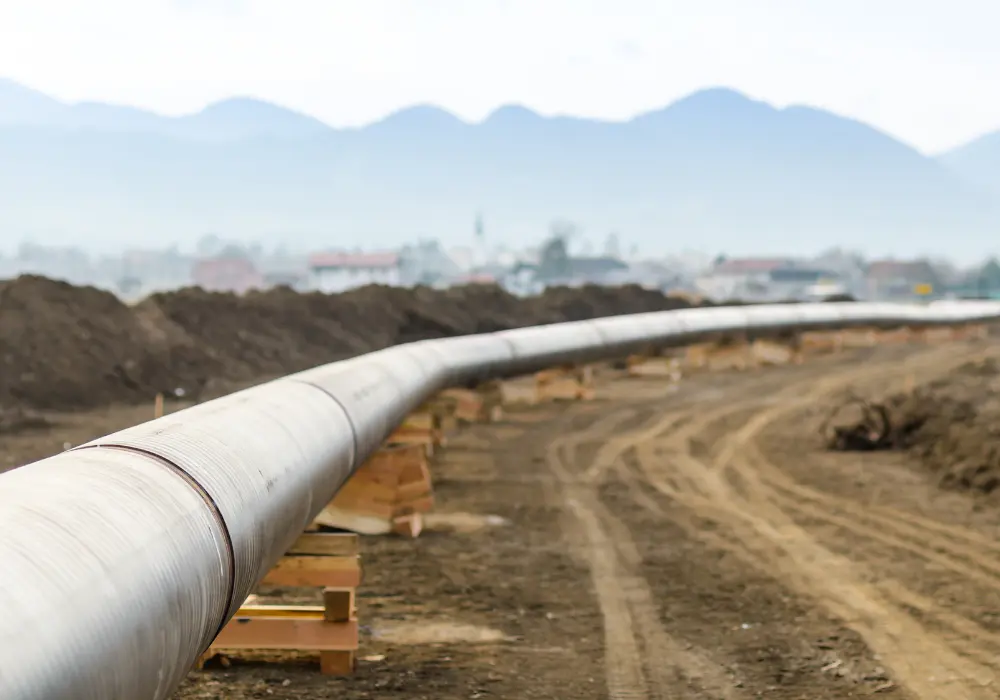
"I work globally. No one is saying, ‘I can’t wait for Canadian LNG.’ That is a myth. I approved [an LNG] project that didn’t go ahead a long time ago because of the risk associated… There is no one in their right mind who would invest in a pipeline, given the projections for fossil fuels. Mark Carney knows this. But I think a lot of folks on Bay Street… I don’t think they understand how transformative it has been [globally]."
Furthermore, she argued that new natural gas must be excluded from official green taxonomies to maintain international credibility:
"New natural gas should not be considered green in a green taxonomy. If you look globally, that’s not a thing. We won’t be taken seriously. I get that oil and gas companies would really love that. It doesn’t mean, by the way, that you can’t invest in natural gas. It just means it doesn’t fit under the category of green."
On the Trade-Offs of the EV Market and China
When questioned about how Canada should navigate trade dynamics regarding Chinese electric vehicles—particularly in light of strategies to open domestic markets to low-cost foreign models—McKenna emphasized the undeniable force of economic consumer choice:
"That’s kind of weird. I don’t want China to have a role in Canada’s energy transition. I think that we have to figure out trade, and how trade and climate can go together… The reality is that people are going to decide based on price. That’s how it works. The EVs they’re producing are just a lot cheaper. Yes, there’s been some subsidies, but they’re also producing some of the models that are really basic. If our auto manufacturers want to compete, then they should be producing EVs that are really basic, not expensive EVs."
On Women Leading on Climate
McKenna underscored the empirical evidence supporting diverse leadership in corporate and environmental governance, noting that women are statistically more likely to champion and act on climate issues:
"Women are two and a half times more likely to talk about climate change. They are two and a half times more likely to act on climate change. If you have a woman on board, it’s more likely to disclose emissions. That is a theory of change that has real evidence behind it. So we need to empower those women."
When asked directly if she plans to return to domestic electoral politics, McKenna offered a definitive, concise response: "Nope. But I will help other people."
Future Outlook: Catching Up with Climate Realism
As Canada looks toward the latter half of the decade, Catherine McKenna’s diagnostic serves as both a warning and a strategic roadmap. The global energy transition is no longer a speculative future scenario; it is an accelerating commercial and industrial reality driven by superior, cheaper technologies, rigorous international financial frameworks, and shifting consumer expectations.
For Canada to avoid economic isolation and severe infrastructural write-downs, policymakers, financial institutions, and industry leaders must confront several hard truths:
- Dismantling the LNG and Fossil-Fuel Myth: Continuing to channel national capital into long-term fossil-fuel extraction and export infrastructure risks locking the country into massive, unrecoverable stranded assets while ignoring the declining global demand curve for carbon-heavy energy sources.
- Aligning Climate Policy with Economic Relief: Political leaders must effectively communicate that electrification—ranging from residential heat pumps and efficient home retrofits to affordable electric vehicles—is the most reliable shield against volatile international fossil-fuel markets and inflationary price spikes.
- Leveraging Domestic Advantages: Canada possesses immense natural assets ideally suited for the net-zero economy, including abundant clean hydroelectric electricity, a highly skilled workforce, and critical minerals essential for battery manufacturing. However, these advantages require immediate, decisive capital deployment rather than political prevarication.
- Embracing Accountability and Governance: By empowering networks of diverse leaders, instituting mandatory climate risk disclosures across financial institutions, and holding profitable energy corporations accountable through mechanisms like windfall taxes, Canada can realign its economic engine with the standards of the global community.
Ultimately, McKenna’s perspective is clear: Donald Trump’s political influence is temporary, but the global climate imperative is permanent. Canada must decide whether it intends to lead the next economic era or be left behind by a world moving rapidly past fossil fuels.



