

Executive Overview
The intersection of personal mobility and electrical grid management is undergoing a quiet revolution in Massachusetts. Major utilities Eversource and National Grid are aggressively expanding their established virtual power plant (VPP) framework, known as ConnectedSolutions, to integrate residential vehicle-to-grid (V2G) charging. This forward-thinking initiative invites everyday electric vehicle (EV) owners to monetize their parked assets. By sending surplus electricity stored within their car batteries back to the municipal grid during moments of peak demand, drivers can earn lucrative financial incentives while simultaneously helping to stabilize the state’s energy infrastructure.
As the grid faces mounting pressures from extreme weather events, electrification, and shifting demand curves, utilities are looking beyond traditional stationary battery storage and smart thermostats. With more than 150,000 EVs currently navigating Massachusetts roads—and a rapidly expanding catalog of models equipped with bidirectional charging capabilities—state driveways represent an untapped, highly distributed energy reservoir.
Behind this technological leap is a collaborative coalition of industry leaders, including EnergyHub, Sunrun, and The Mobility House, which are providing the sophisticated software orchestration and smart-charging infrastructure necessary to make seamless V2G integration a reality. While early trials focus on defining technical compliance, eligible drivers can now look forward to concrete performance-based rewards. For National Grid customers participating in the ConnectedSolutions initiative, incentives are reaching up to $275 per average kilowatt (kW) of performance over the summer season. For many residential participants, this translates into potential seasonal earnings ranging between $1,375 and $2,750, depending heavily on charger capacity and overall grid-support performance.
Detailed Chronology of the V2G Expansion
The integration of residential V2G technology into the Massachusetts energy market did not happen overnight; it represents the culmination of years of pilot projects, regulatory shifts, and technological milestones in bidirectional energy management.
- Laying the Groundwork (Pre-2025): For years, utilities like Eversource and National Grid utilized the ConnectedSolutions program primarily for industrial and commercial demand response, alongside residential smart thermostats and stationary home batteries (such as Tesla Powerwalls). These programs proved that aggregate, consumer-owned assets could successfully shave peak electrical loads during scorching summer afternoons or freezing winter evenings.
- The Commercial and Fleet Vanguard: Before opening V2G to everyday passenger vehicles, National Grid and Eversource tested bidirectional capabilities on controlled assets. National Grid notably deployed V2G architecture for light- and medium-duty commercial fleets, spearheading programs centered on electric school buses. Eversource similarly initiated conversations with regional school districts regarding its ConnectedSolutions+ framework.
- The Residential Pivot (Late 2025 – Early 2026): As automakers rolled out an increasing number of passenger EVs featuring bidirectional charging hardware—such as the Ford F-150 Lightning and Nissan LEAF—industry stakeholders recognized that residential driveways held exponentially more aggregate storage capacity than municipal fleets. Collaborating with tech platforms like EnergyHub, Sunrun, and The Mobility House, utilities began engineering the software bridges required to safely manage thousands of trickle-in, trickle-out residential connections.
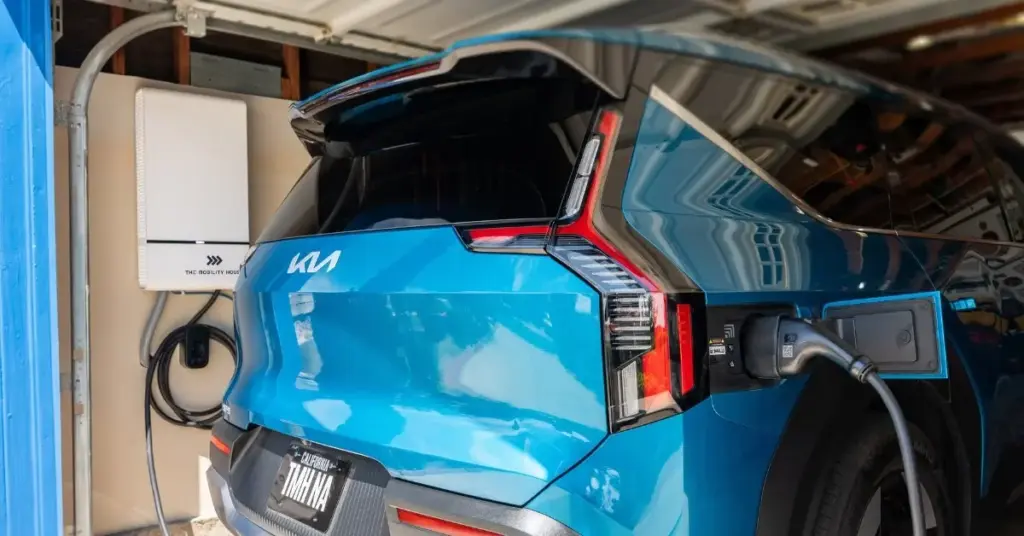
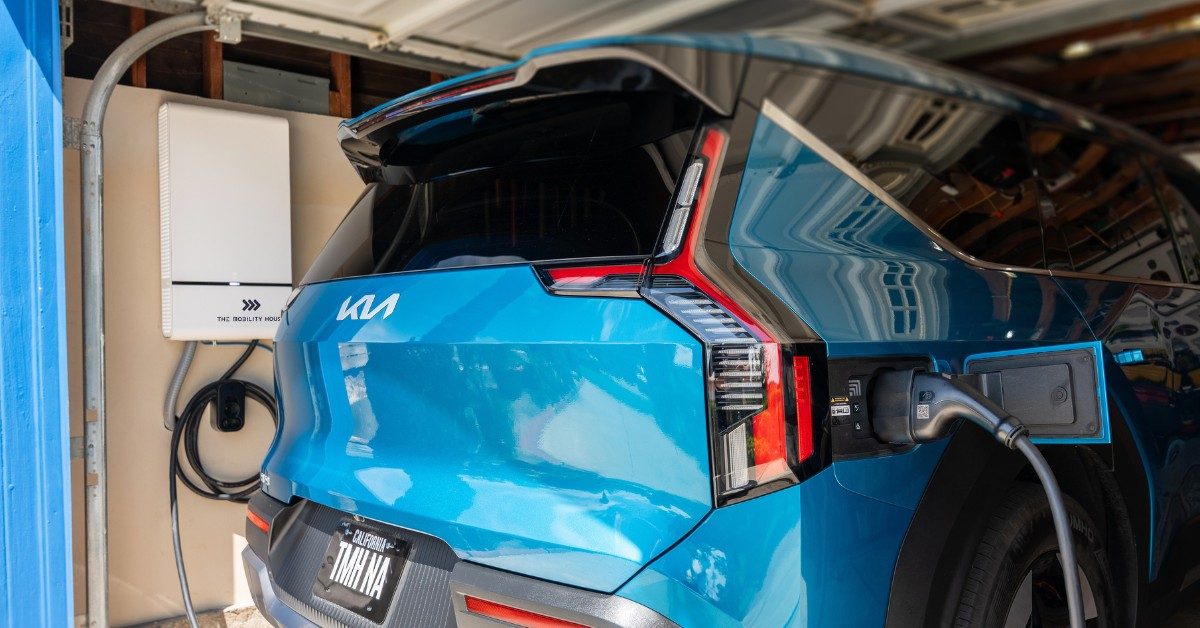
- The Official Program Rollout: Eversource and National Grid officially integrated residential V2G into ConnectedSolutions. Initially tight-lipped regarding specific vehicle compatibility and payout structures, program administrators soon released an initial slate of qualifying vehicles—including the Ford F-150 Lightning, Nissan LEAF, Kia EV9, Polestar 3, and Volvo EX90—backed by clear, performance-based compensation tiers designed to entice early adopters.
Supporting Context & Metrics: The Scale of V2G Potential
To understand the profound impact of Massachusetts’ new V2G framework, one must examine the macro-level metrics governing the state’s energy grid and the broader evolution of American infrastructure.
The Mathematics of Mobile Storage
The average modern EV battery boasts a capacity ranging from 60 kilowatt-hours (kWh) to well over 130 kWh. To put this in perspective, the average American household consumes approximately 30 kWh of electricity per day. This means a single parked, fully charged EV can theoretically power an average home for anywhere from two to four days—or supply crucial grid stability during a severe summer heatwave when air conditioning units push electrical substations to their absolute limits.
In Massachusetts, where EV adoption is accelerating rapidly past the 150,000-vehicle threshold, the collective storage capacity sitting idle in garages and driveways across the Commonwealth amounts to gigawatt-hours of decentralized energy. If even a small fraction of these vehicles enroll in ConnectedSolutions, the aggregate output rivals or exceeds traditional peaker power plants—often dirty, fossil-fuel-burning facilities that utilities spin up only during moments of extreme stress.
The Financial Incentive Structure
The economics of ConnectedSolutions are designed to make participation financially compelling for EV owners without imposing undue lifestyle friction. Under current guidelines administered by National Grid:
- Performance Benchmark: Incentives are scaled up to $275 per average kilowatt (kW) delivered back to the grid over the course of the summer season.
- Estimated Payouts: Depending on the specific output capacity of the household’s bidirectional charger and how consistently the vehicle is plugged in and available during dispatch events, typical residential participants can anticipate earning between $1,375 and $2,750 per season.
- Variable Providers: Because the program leverages third-party aggregators like Sunrun and The Mobility House, exact terms, software interfaces, and secondary rewards may vary slightly depending on the technology provider managing the user’s smart-charging hardware.
Official Statements and Industry Perspectives
The convergence of automotive engineering and utility management has drawn commentary from key stakeholders leading the charge in clean energy transition.
Chip Silverman, Sunrun’s director of grid services, underscored the broad societal and structural benefits of mobilizing car batteries:

"We are excited to bring our dispatching expertise to Massachusetts and help expand our vehicle-to-grid technology to more customers. Vehicle batteries play a critical role in stabilizing the grid, providing backup power to homes, and lowering energy costs for everyone."
Silverman’s sentiment highlights a crucial economic truth about V2G systems: the benefits extend far beyond the individual EV owner’s pocketbook. By curtailing the need to fire up expensive, carbon-intensive peaker plants during high-demand windows, wholesale electricity prices drop for all ratepayers. This deflationary pressure on regional energy markets protects consumers from volatile price spikes.
Furthermore, technical partners like EnergyHub and The Mobility House emphasize that user autonomy remains paramount. Modern V2G software platforms are designed with intuitive smartphone applications that allow drivers to set custom "floor limits"—ensuring that their vehicle always retains enough charge for their morning commute or unexpected errands, even after dispatching energy to the grid overnight.
Future Outlook: Challenges and the Road Ahead
While the rollout of residential V2G in Massachusetts represents a watershed moment for American energy infrastructure, significant hurdles remain before bidirectional charging becomes as ubiquitous as standard Level 2 home charging.
Hardware Compatibility and Standardization
One of the primary roadblocks identified by early analysts is hardware fragmentation. While the initial list of eligible vehicles—Ford F-150 Lightning, Nissan LEAF, Kia EV9, Polestar 3, and Volvo EX90—covers several major market segments, many popular EV models still lack the onboard hardware or software protocols required for bidirectional power flow (such as CCS-to-grid or NACS-to-grid integration). Additionally, residential bidirectional chargers (EVSEs) remain comparatively expensive relative to standard chargers, often requiring specialized professional installation and grid-interconnection reviews by local utilities.

Consumer Education and Trust
Convincing everyday consumers to cycle energy in and out of their multi-thousand-dollar automotive investments requires overcoming psychological barriers regarding battery degradation. While academic and industry studies consistently show that smart V2G dispatching—when managed within optimal thermal and depth-of-discharge parameters—has a negligible impact on long-term battery health, utilities and aggregators must actively build consumer trust through transparent warranties and seamless software experiences.
A National Blueprint
Despite these challenges, Massachusetts is positioning itself at the absolute vanguard of modern grid architecture. Following historic milestones such as the launch of the nation’s first residential V2G power plant utilizing Ford F-150 Lightnings, the Commonwealth’s expansion of ConnectedSolutions serves as a working laboratory for the rest of the United States.
If Eversource, National Grid, and their tech partners can prove that residential V2G can be scaled profitably, reliably, and easily, the model will undoubtedly serve as a blueprint for decarbonized, resilient electrical grids nationwide. The driveway of the future is no longer just a parking space; it is a vital node in a decentralized, clean energy superpower.



