

Executive Overview
The visual frontline of environmental activism has rarely been as stark, urgent, or globally interconnected as it is today. Across continents, ecosystems are signaling structural collapse, from the scorched peatlands of Western Europe to the suffocating marine fjords of Scandinavia and the threatened coral kingdoms of Southeast Asia. Amid this mounting ecological emergency, Greenpeace’s latest global dispatch captures a defining paradox of our era: the compounding devastation of climate change set against an unprecedented wave of cross-border, grassroots resistance.
Over the past week, visual documentation from Greenpeace operations around the globe has mapped a world pushed to its climatic limits. In Berlin and Wales, the human and physical tolls of extreme heatwaves and wildfires were thrust directly into the corridors of power. In the Black Sea and Copenhagen, activists targeted the institutional architects of fossil fuel dependency and industrial pollution. Simultaneously, in the remote islands of Raja Ampat and the urban centers of Yaoundé, Indigenous guardians and youth movements demonstrated that conservation is not merely a policy debate, but a lived, community-led practice.
This comprehensive report examines the localized struggles and global implications captured in Greenpeace’s latest visual archive. By analyzing the intersection of extreme weather events, corporate lobbying, geopolitical risk, and indigenous-led restoration, this article provides an authoritative overview of the battle lines defining the modern environmental movement.
Detailed Chronology: A Week of Global Mobilization
The breadth of Greenpeace’s recent interventions highlights a synchronized global pushback against environmental degradation. The sequence of actions unfolds across distinct geographic theaters, each addressing a unique symptom of the planetary crisis.
1. Germany: Confronting the Human Toll of Extreme Heat
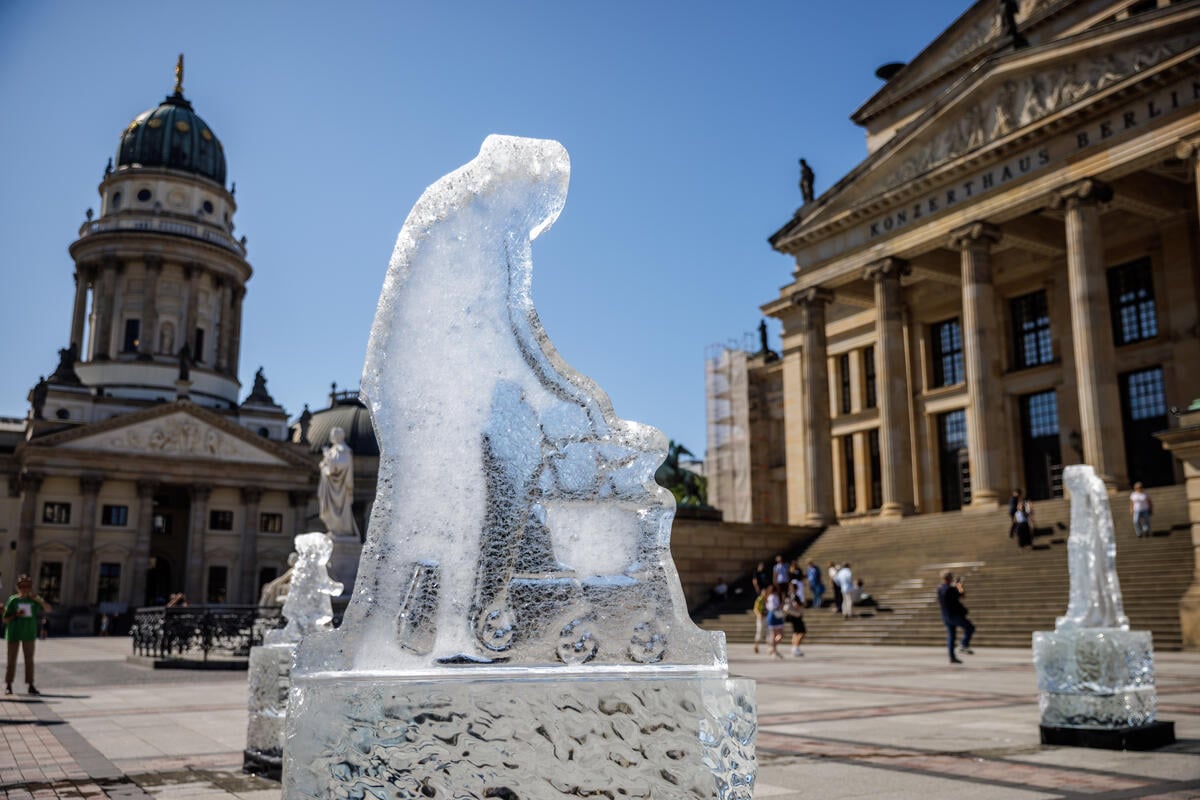
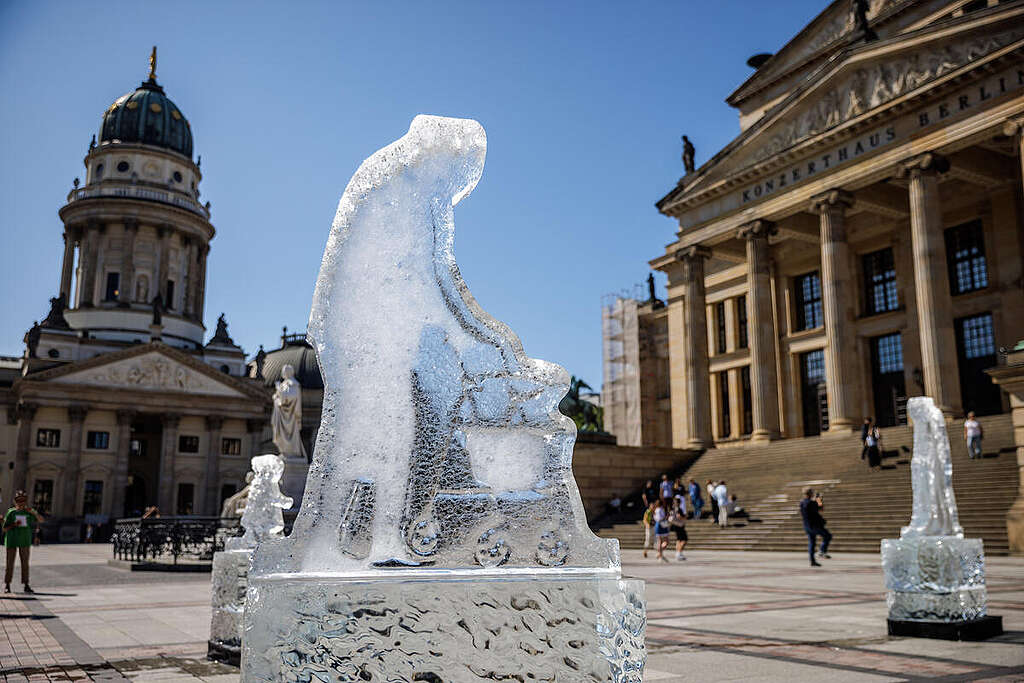
In Berlin’s treeless Gendarmenmarkt, Greenpeace Germany erected four life-size ice sculptures to memorialize the victims of the summer’s extreme weather. At the center of the melting figures, activists displayed a grim statistical update sourced from the Robert Koch Institute: 15,800 people died prematurely from heat-related causes during the summer of 2026.
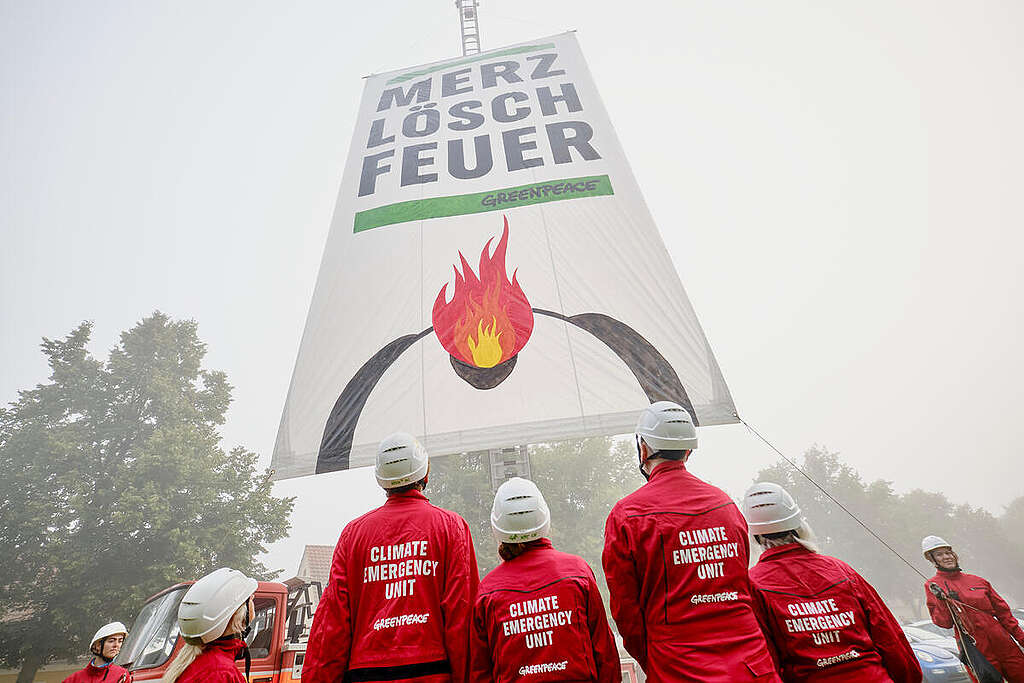
Concurrently, just outside Berlin at Neuhardenberg Castle—where the governing coalition convened to discuss economic priorities—activists deployed a fire truck and unfurled a banner bearing the direct demand: "Merz, put out the fire." The action targeted the ongoing political deadlock, specifically the conservative Union’s refusal to enshrine a joint federal mission for climate adaptation and nature conservation in the Basic Law, despite mounting mortality rates.
2. Indonesia: The Raja Ampat Indigenous Grand Assembly
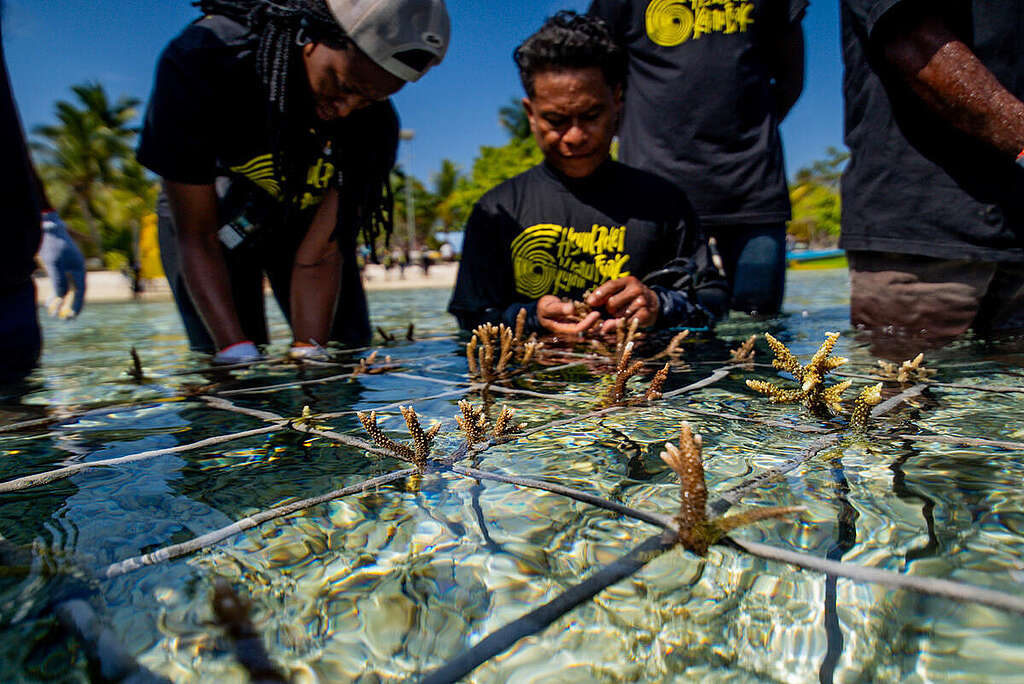
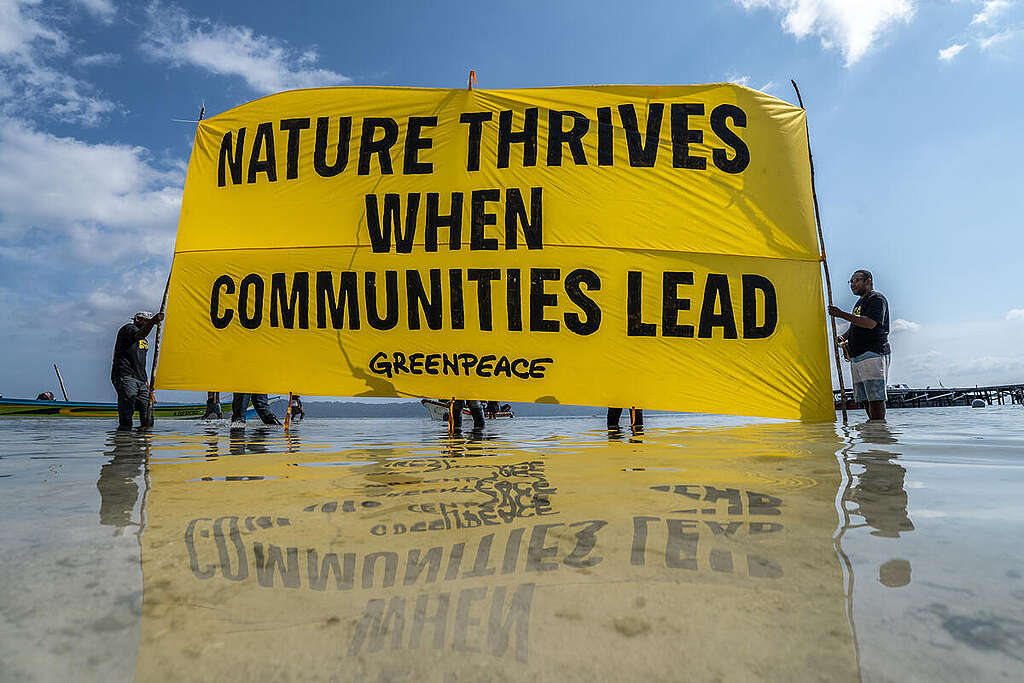
Celebrating the International Day of the World’s Indigenous Peoples, Arborek Island in Southwest Papua became the epicenter of a major international gathering. Greenpeace Indonesia, alongside the USBA Institute, the Raja Ampat Indigenous Community, and visiting representatives from the Congo Basin and the Brazilian Amazon, united for coral reef restoration and political mobilization.
The assembly served as a direct follow-up to the #SaveRajaAmpat campaign and the Indigenous Senate Assembly. Participants engaged in coral transplantation activities to repair marine biodiversity damaged by warming waters and human pressure, while cementing eight core demands ahead of the upcoming UN Biodiversity Conference (CBD COP17) in Armenia.
3. Belgium and Wales: The Scourge of Uncontrolled Wildfires
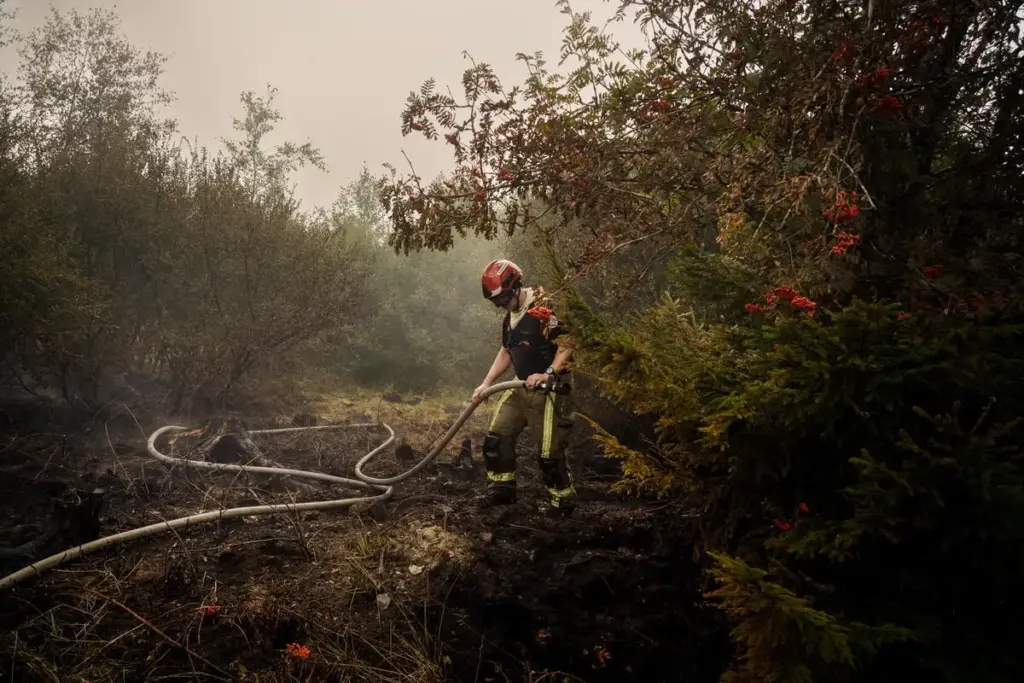
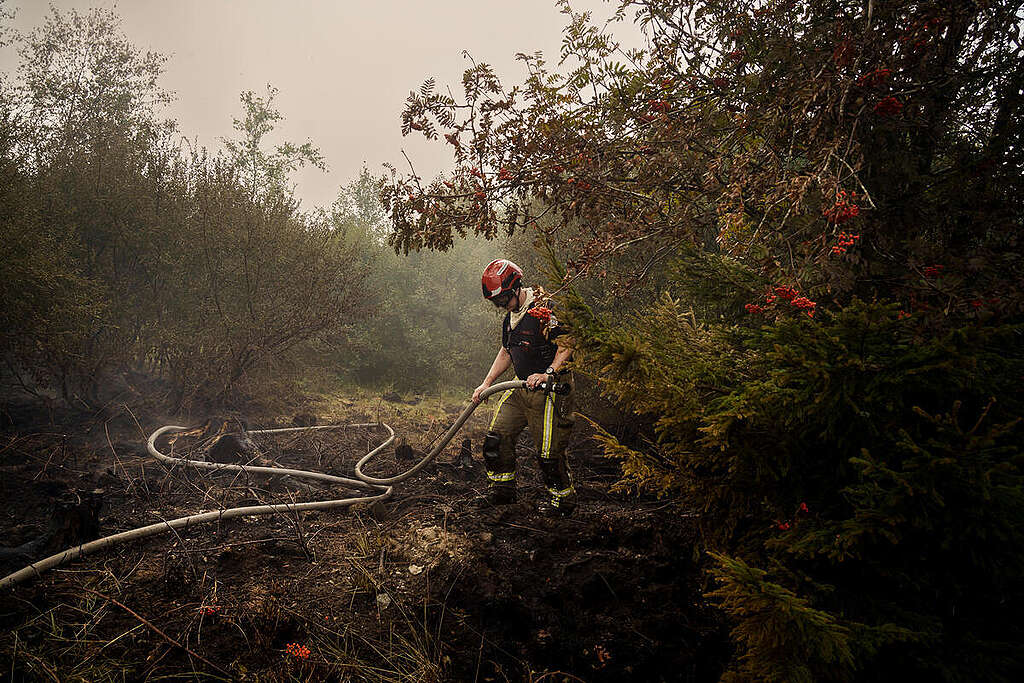
In Europe’s temperate zones, the reality of runaway climate change struck hard. On Friday, August 14, 2026, a massive peatland fire erupted in the High Fens nature reserve in eastern Belgium. Fueled by prolonged drought and dry vegetation, the blaze incinerated more than 3,000 hectares of protected ecosystems.
Meanwhile, in Conwy, Wales, Greenpeace UK utilized scorched earth as a massive canvas following devastating local wildfires. Crafting a massive land art installation visible from the mountainside—created entirely with eco-friendly, plastic-free paint—activists delivered a blunt message to Prime Minister Andy Burnham: "Our house is on fire, Andy." The artwork featured an illustrative critique of the Prime Minister, urging his administration to reject pending oil and gas licenses in the North Sea.
4. The Black Sea: Warning Against the Neptun Deep Gas Project
Aboard the Greenpeace flagship Arctic Sunrise, an international coalition of activists from Romania, Austria, Slovenia, and Slovakia entered international waters in the Black Sea. Deploying an 11-meter floating banner, the crew protested the controversial Neptun Deep offshore gas extraction project.
The action underscored a dual vulnerability: the severe ecological risks posed to marine life by deep-sea drilling, and the acute geopolitical hazard of fossil fuel infrastructure located in zones susceptible to military conflict and drone security breaches. Greenpeace called for an immediate pivot toward decentralized, secure renewable energy systems.
5. Cameroon: Youth Mobilization for the Ebo Forest
Marking International Youth Day in Yaoundé, the Youth and Volunteers Programme organized the "Sport for Ebo Forest" campaign at Parcours Vita. Bringing together dozens of young environmentalists and volunteers, the event combined fitness walks led by professional coaches with educational workshops and recreational bonding. The campaign aimed to galvanize public opposition against ongoing logging and development threats facing the ecologically vital Ebo Forest.
6. Denmark: Exposing the Lobbyists of Industrial Pollution
In Copenhagen, Greenpeace Nordic activists scaled the headquarters of the Danish Agriculture & Food Council. Raising a red warning flag and draping a banner across the facade reading "Dead fjords start here," the peaceful protest directly implicated the powerful agricultural lobby in the systemic oxygen depletion plaguing Danish marine environments. Activists accused the organization of obfuscating the agricultural sector’s massive contribution to nitrogen runoff, urging politicians to sever ties with the lobby and enforce strict regulatory limits on synthetic fertilizers and manure.
Supporting Context & Metrics
To fully understand the gravity of these visual records, one must examine the underlying data driving Greenpeace’s interventions.
- Mortality and Urban Heat Islands: The Robert Koch Institute’s estimate of 15,800 premature heat deaths in Germany highlights the lethal vulnerability of aging populations in urban centers lacking adequate climate infrastructure. Treeless public squares like Berlin’s Gendarmenmarkt act as thermal traps, exacerbating heatwave intensities.
- Nitrogen Overload in Aquatic Ecosystems: In Denmark, decades of intensive industrial farming have saturated coastal waters with nutrient runoff. Nitrogen pollution stimulates massive algal blooms, which subsequently decompose and strip the water column of oxygen, creating expanding "dead zones" where marine life cannot survive.
- Peatland Vulnerability: The High Fens fire in Belgium illustrates how vital carbon sinks are transforming into carbon bombs. Healthy peatlands are naturally waterlogged, but rising temperatures and prolonged dry spells render them highly combustible, releasing centuries of sequestered carbon into the atmosphere in a matter of hours.
- The Geopolitics of Fossil Fuels: The Black Sea Arctic Sunrise protest emphasizes that fossil fuel expansion is not only a climate threat but a security liability. Projects like Neptun Deep lock nations into volatile commodity markets while establishing high-value military targets during regional instability.
Official Statements and Institutional Responses
The wave of actions has elicited varied responses from political and corporate bodies across the globe:
- Greenpeace Germany on Heat Inaction: Commenting on the Neuhardenberg Castle protest, Greenpeace representatives emphasized that adaptation policy can no longer be sidelined in favor of short-term economic metrics. "While the cabinet debates industrial competitiveness behind closed doors, people are dying in their homes and public squares from preventable heat stress. Climate adaptation must be a constitutional priority," campaign organizers stated.
- Indigenous Coalitions on Biodiversity: During the Raja Ampat assembly, Indigenous leaders released a joint declaration stressing that global conservation targets will fail without land rights. "You cannot protect marine biodiversity or rainforests while ignoring the sovereign rights of the peoples who have maintained these ecosystems for millennia," stated a spokesperson for the Papuan and Amazonian delegations.
- Danish Agriculture & Food Council Defense: In response to the Copenhagen protest, representatives of the agricultural lobby defended their environmental record, asserting that farmers are actively transitioning toward greener practices while maintaining national food security, though they declined immediate comment on the specific regulatory demands raised by Greenpeace.
Future Outlook: The Path Ahead for Global Environmentalism
As Greenpeace marks over half a century of pioneering photo-activism, the visual archive from August 2026 serves as both a warning and a roadmap. The juxtaposition of melting ice sculptures in Berlin, burned mountainsides in Wales, and restored coral gardens in Papua New Guinea points to a stark reality: mitigation alone is no longer sufficient; society must actively adapt while aggressively dismantling the drivers of ecological collapse.
The upcoming months will test the resolve of international policy frameworks, most notably at the impending CBD COP17 biodiversity summit in Armenia, where Indigenous demands regarding land stewardship will take center stage. Simultaneously, European governments face mounting legal and civil pressure to mandate urban cooling infrastructures, protect vulnerable peatlands, and restrict industrial pollution runoff.
Through the lens of its activists and media chroniclers, Greenpeace continues to strip away corporate greenwashing and political complacency, ensuring that the human and ecological costs of environmental destruction remain in plain sight for the global public.



