

Executive Overview
The division of labor in contemporary architecture is a structural reality so deeply embedded that it is rarely questioned. Since the Renaissance—typified by Filippo Brunelleschi’s engineering marvel of the dome of Santa Maria del Fiore in Florence, completed in 1436—the act of drawing has been an instrument of absolute authority. It codified a hierarchy that permanently cleaved design from execution. Over the subsequent centuries, industrialization, hyper-specialization, and corporate consolidation compounded this divide. Today, the modern construction site functions almost entirely as a downstream space of raw execution. Those who design rarely touch a trowel, those who build are largely excluded from spatial decision-making, and the inhabitants occupy a position entirely removed from the mechanics of their own dwelling places.
While this hyper-efficient fragmentation allows for building at an unprecedented global scale, it simultaneously concentrates specialized knowledge, economic capital, and political agency into the hands of a select few. Against this backdrop of corporate consolidation, alternative models of collective construction acquire profound urgency. Mutirões (collective self-build initiatives), housing cooperatives, and self-managed building processes do not represent a romanticized, Luddite rejection of technology or planning. Instead, they position the construction site itself as an active ecosystem of pedagogy, political empowerment, and social production.
For more than three decades, the Brazilian collective USINA—Centro de Trabalhos para o Ambiente Habitado (USINA CTAH) has stood at the vanguard of this movement. Operating primarily out of São Paulo, USINA has fundamentally re-engineered how social housing and urban infrastructure can be produced. By merging rigorous technical assistance with radical self-management, USINA’s work challenges the foundational assumptions of traditional urban development, proving that architecture can be simultaneously large-scale, technically sophisticated, and socially emancipatory.
Detailed Chronology: The Evolution of USINA and Collective Self-Management
The Roots of Redemocratization (Early 1990s)
USINA emerged in São Paulo in the early 1990s, a pivotal historical juncture defined by Brazil’s return to democracy (redemocratization) and the sweeping reorganization of urban social movements. Grassroots communities, pushed to the urban peripheries by aggressive real estate speculation and systemic economic inequality, began demanding more than mere shelter; they demanded a structural voice in the city’s growth.
Recognizing this vacuum, a coalition of progressive architects, engineers, social scientists, and urban planners founded USINA CTAH. Their mission was to bridge the chronic gap between technical expertise and popular social movements. Rather than acting as top-down consultants delivering finalized blueprints, USINA’s technical teams embedded themselves directly within the daily struggles of housing cooperatives and neighborhood associations. They initiated a continuous loop of negotiation, translating complex financial, legal, and material data into accessible tools for everyday citizens.
Scaling Up: From Micro-Interventions to Macro-Developments (Late 1990s–2000s)
A common prejudice facing self-managed building sites is that they are inherently small-scale, rudimentary, and incapable of meeting the demands of urban density. USINA aggressively dismantled this myth through massive residential projects that matched or exceeded the scale of conventional commercial developers.

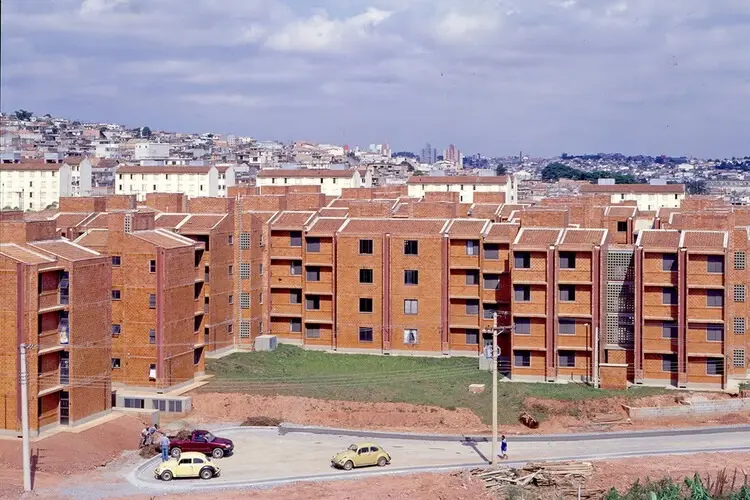
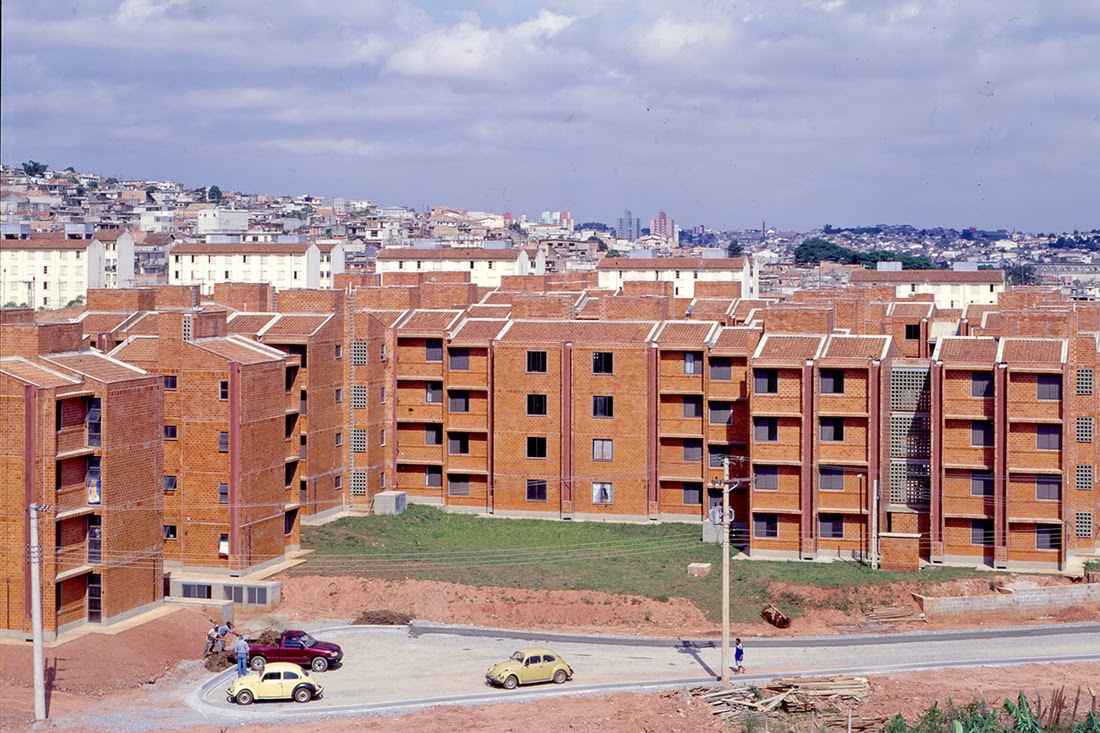
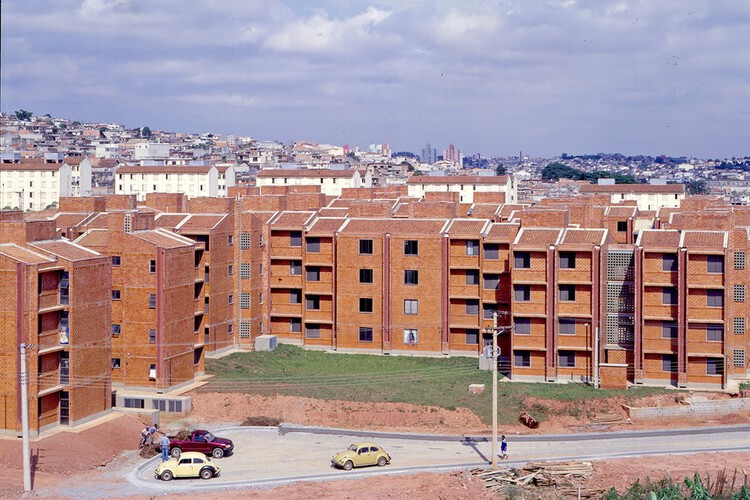
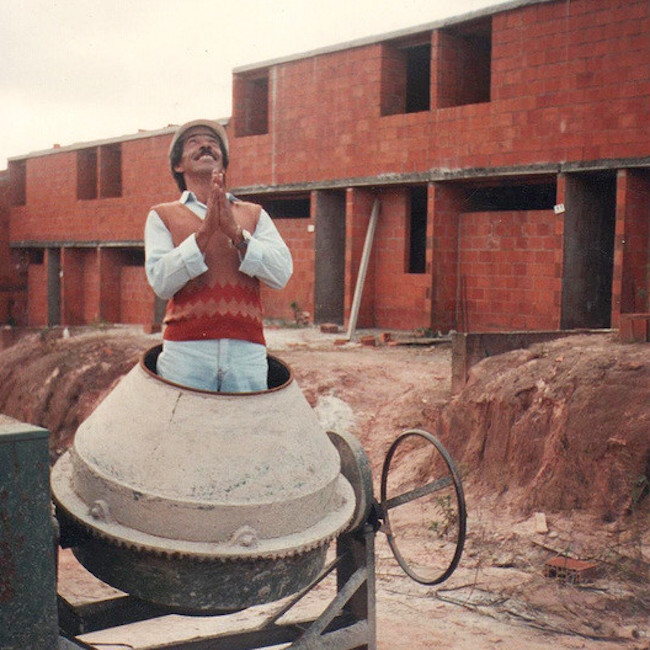
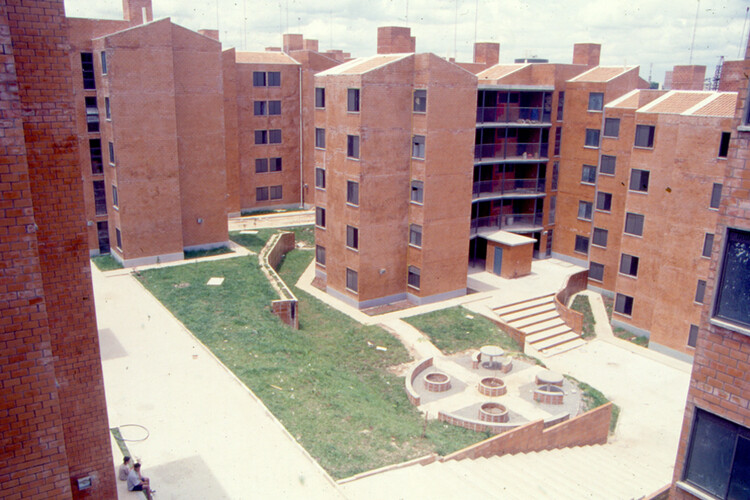
A defining milestone of this era was COPROMO in Osasco, São Paulo. Comprising 1,000 individual apartments distributed across fifty distinct buildings, COPROMO was constructed entirely through self-managed mutirões over an intensive eight-year period. To bypass the technical impossibilities of unskilled laborers managing complex structural concrete frames, USINA’s technical team designed the development using self-supporting ceramic blocks. This strategic material choice eliminated the need for vertical structural skeletons, directly enabling thousands of first-time builders with zero prior construction experience to safely erect multi-story residential blocks.
Similarly, the Mutirão Paulo Freire pushed technical boundaries by integrating multi-level steel structures—a high-cost, high-technology material normally reserved for corporate high-rises—into a self-managed framework. By demystifying advanced engineering systems, USINA ensured structural longevity and spatial flexibility while dramatically accelerating the construction timeline and safeguarding the physical well-being of the mutirantes (participants).
Institutionalizing Autonomy and Neighborhood Impact (2010s–Present)
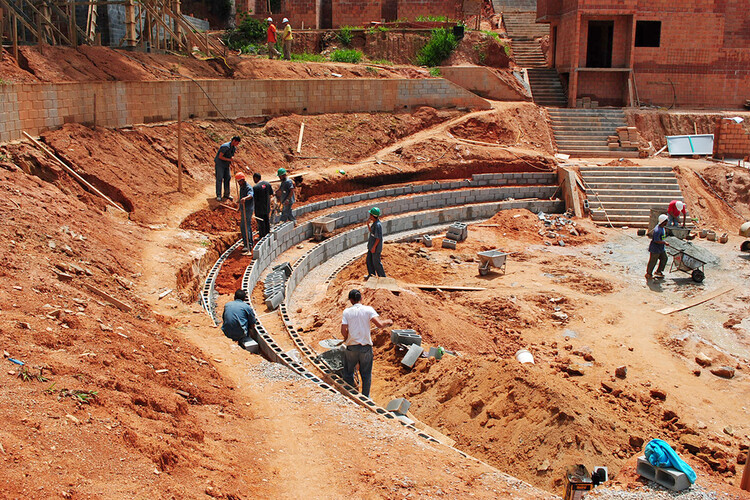
Over three decades, USINA’s methodology has expanded beyond isolated housing blocks to encompass holistic urban revitalization, public amphitheaters, daycares, community centers, and infrastructural networks. Projects such as the Mutirão União da Juta redefined the scope of collective construction by intertwining home production with broader neighborhood development.
At União da Juta, the construction site functioned simultaneously as an informal vocational school. Participants mastered specialized trades—including electrical wiring, hydraulic plumbing, and advanced metalworking—transforming the building process into a long-term engine for financial autonomy. For many mutirantes, skills acquired on the weekend building site later materialized into formal, sustainable employment in the construction sector.

Supporting Context & Metrics: Challenging the Industrial Paradigm
The Mechanics of the Mutirão
To understand USINA’s operational model, one must deconstruct the mechanics of the modern mutirão. In conventional commercial construction, labor is treated as a disposable, cost-minimized input. In a USINA project, labor is an instrument of collective consciousness and technical literacy.
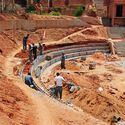
Families who maintain standard, full-time employment during the workweek dedicate their weekends and designated collective days to the site. The division of labor is fluid and democratically organized: while teams of residents rotate through masonry, mixing, and structural assembly, others manage logistics, administration, childcare, and communal kitchen operations.
This holistic division prevents the mutirão from devolving into mere "sweat equity"—a exploitative model where future residents are simply used as free labor by housing agencies to cut costs. USINA’s framework ensures that economic savings are reinvested directly into higher-grade materials, expanded public spaces, and communal infrastructure.
Scale, Output, and Technological Integration
The scale of USINA’s legacy can be measured across multiple quantitative and qualitative vectors:
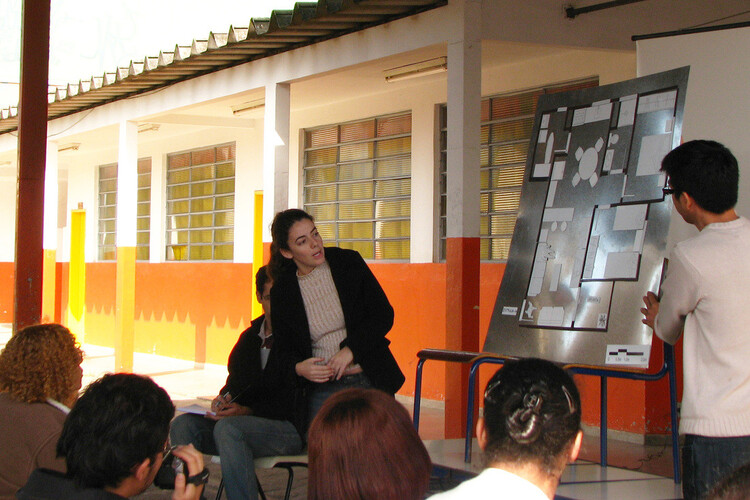
- Housing Output: Over 5,000 completed housing units across urban and rural settlements in Brazil.
- Complex Typologies: Development of large-scale cooperative complexes such as COPROMO (1,000 apartments) demonstrating that mass housing can be successfully executed via self-management.
- Material Innovation: Strategic deployment of self-supporting masonry systems, prefabricated elements, and modular steel frameworks to democratize high-performance construction techniques.
- On-Site Economies: The internal creation of specialized micro-industries, such as resident-operated metalworking shops (exemplified at COPROMO), which successfully manufactured structural metal staircases on-site, cutting out external corporate markups.
Official Statements & Theoretical Frameworks
The philosophical underpinnings of USINA’s practice draw heavily on the Brazilian tradition of critical pedagogy, most notably the theories of Paulo Freire, which view education not as a banking model of deposit, but as a dialogic process of mutual liberation.
In a statement reflecting on the structural role of the technical team, USINA representatives frequently emphasize:
"Technical knowledge cannot remain the guarded monopoly of a technocratic elite. When the architect ceases to be an authoritarian author and becomes a technical translator, the construction site transforms from a place of alienation into a classroom of sovereignty."
Architectural theorists analyzing the legacy of collective construction often point to the writings of Brazilian intellectual Sérgio Ferro, whose critiques of modern architectural labor underscore the alienation of the construction worker. USINA’s methodology directly responds to Ferro’s assertions by reuniting the conception of space with its physical execution.
Furthermore, urban researchers note that USINA’s practice reframes the metric of architectural success. Traditional development measures a project solely by speed, initial capital expenditure, and units delivered per quarter. USINA measures success by social density, institutional memory, political resilience, and the transfer of technical capital to the working class.
Future Outlook: The Global Resonance of Latin American Cooperativism
The lessons forged in the periphery of São Paulo do not exist in a vacuum; they form part of a rich, pan-American fabric of cooperative housing and mutual aid. Across the continent, models like Uruguay’s FUCVAM (Federación Uruguaya de Cooperativas de Vivienda por Ayuda Mutua), founded in 1970, have demonstrated the long-term viability of state-supported mutual aid. Encompassing over 750 affiliated cooperatives and more than 35,000 homes, FUCVAM’s internationally recognized model—awarded the prestigious World Habitat Award in 2012—proves that self-managed housing can be codified into national public policy.
As the global architectural community confronts compounding crises of housing affordability, climate displacement, and hyper-alienated labor, the legacy of USINA offers a vital roadmap. It forces the discipline to confront uncomfortable, foundational questions:
- Who truly controls the knowledge necessary to build our cities?
- Can architecture serve as a tool for political emancipation rather than real estate accumulation?
- What does a building process produce beyond the physical walls of the structure itself?
In USINA’s architectural universe, a home is never merely the final, static output of a alienated industrial supply chain. Instead, it remains permanently inscribed with the solidarity, conflicts, negotiations, and collective intelligence that brought it into existence. By restoring the building site as a space of political practice, USINA ensures that architecture returns to its most profound societal calling: housing not just bodies, but human dignity and collective self-determination.



