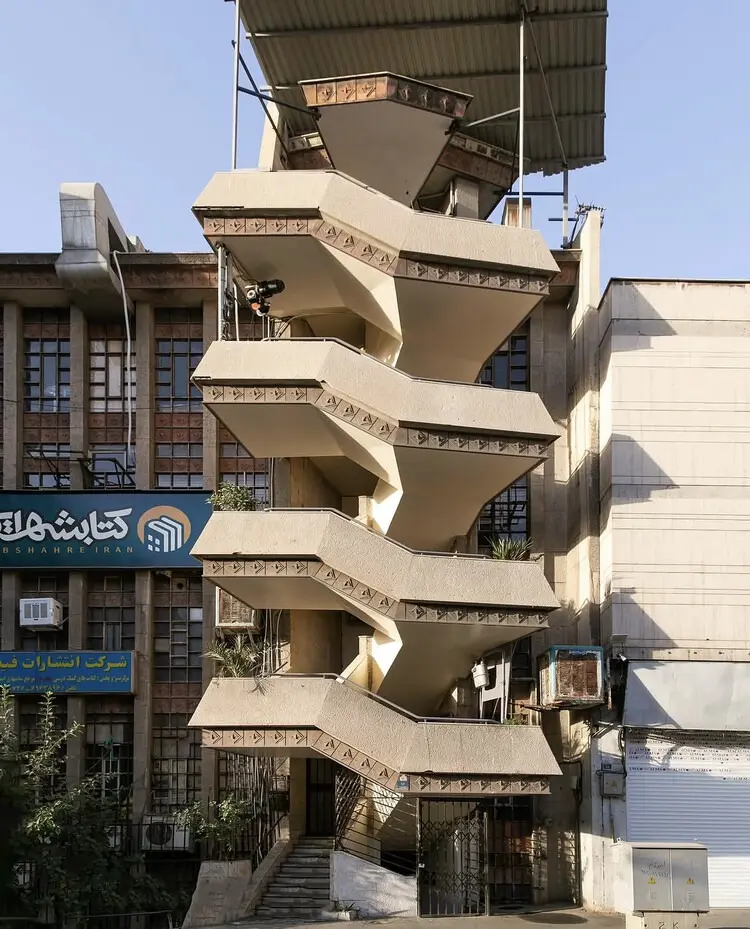
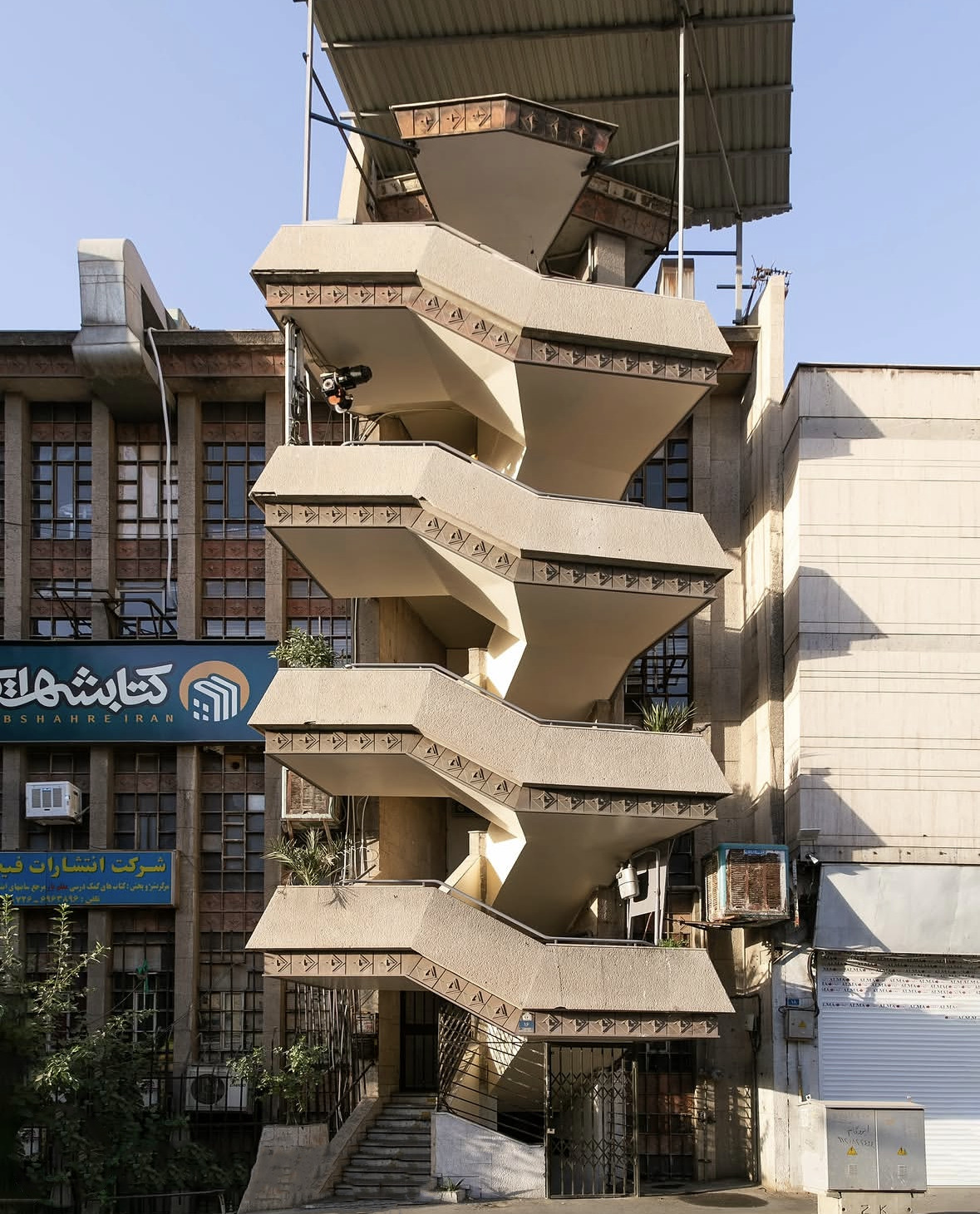
Nestled precariously at the foot of the Alborz mountain range, Tehran is a metropolis defined by geographical dichotomy and historical friction. The same monumental ridge that shelters the Iranian capital also traps atmospheric pollution, creating an urban microclimate that mirrors the city’s broader geopolitical and environmental pressures. Built upon unstable geological ground crisscrossed by active seismic faults, Tehran is a terrain of perpetual transformation. Beneath its asphalt avenues and rising high-rises lie the compressed strata of successive reconstructions, forced political reinventions, and relentless demolitions.
In this volatile context, the city’s built environment serves as a physical archive of ideological shifts. From traditional Persian masonry and Qajar-era aesthetics to European Neoclassicism and Baroque revivals, Tehran’s urban fabric is a palimpsest of global architectural influences. Yet, it is the intense wave of mid-century modernism—predominantly produced between 1930 and 1980—that forms the backbone of the city’s identity during its rapid 20th-century expansion.
Today, this crucial layer of modernist architectural heritage is facing an unprecedented wave of systemic erasure. Driven by real estate speculation, lax historic preservation laws, and economic pressures, mid-century buildings are vanishing at an alarming rate. Enter Calque Studio, a pioneering collective of architects, researchers, and preservationists racing against time to document, analyze, and advocate for these endangered structures. Through rigorous architectural mapping, photographic documentation, and critical intervention, Calque Studio is spearheading a vital movement to safeguard Tehran’s modern remnants before they are lost to history forever.
Detailed Chronology: The Evolution and Threat to Tehran’s Modern Architecture
To understand the urgency of Calque Studio’s mission, one must trace the historical trajectory that birthed Tehran’s modernist landscape and the socio-political forces currently dismantling it.
1. The Pahlavi Era and the Genesis of Modernity (1925–1979)
The transformation of Tehran from a traditional citadel into a modern capital began in earnest under Reza Shah Pahlavi and accelerated during the reign of Mohammad Reza Shah. Seeking to project a vision of a progressive, secular, and globally integrated nation, the state invited international architects while simultaneously fostering a new generation of Iranian designers educated abroad in Western institutions.
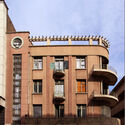
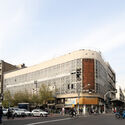
During this fifty-year window, Tehran witnessed an explosion of architectural experimentation. Architects blended international modernist principles—such as functionalism, exposed concrete, steel frames, and clean geometric lines—with local climatic and cultural sensitivities. Landmarks like the Alborz Building, Cinema Asia, and various private residential and commercial complexes designed by local masters (including figures associated with the Kamal Kamoune Architect Office) emerged across the urban grid. These buildings were not merely stylistic exercises; they represented a socio-cultural shift toward urban living, public leisure, and a re-envisioned Iranian identity.
2. Post-Revolutionary Shifts and Spatial Neglect (1979–1990s)
The 1979 Islamic Revolution fundamentally altered the trajectory of the Iranian capital. In the immediate post-revolutionary decades, architectural priorities shifted dramatically. Modernist buildings associated with the Pahlavi regime frequently suffered from ideological stigmatization, institutional neglect, or outright abandonment. While historic Qajar and Safavid monuments received state-sanctioned protection, mid-century modernism occupied an awkward gray zone: too modern to be considered ancient heritage, yet too Western-adjacent or politically charged to be celebrated by the new cultural apparatus.
3. The Real Estate Boom and the Age of Erasure (2000s–Present)
As Tehran’s population surged past eight million, the city entered a phase of intense vertical densification. Unprecedented land values turned older, low-density modernist neighborhoods into prime targets for speculative developers.
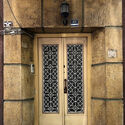
Unlike historic European cities with stringent zoning and preservation frameworks, Tehran’s municipal policies have historically favored rapid commercial redevelopment over heritage conservation. The standard economic equation in contemporary Tehran is stark: demolish a mid-century structural gem, bypass outdated zoning constraints through municipal loopholes, and replace it with a high-density, low-quality apartment block—often referred to locally as takhrib-o-sakht (demolish and build). Consequently, iconic facades, bespoke ironwork doors, brise-soleils, and pioneering structural engineering marvels are systematically pulverized into rubble daily.
Supporting Context & Metrics: The Scale of Loss and Calque Studio’s Intervention
The erasure of Tehran’s architectural heritage is not merely an aesthetic tragedy; it is a profound loss of collective memory, cultural continuity, and environmental sustainability.
The Metrics of Urban Erasure
The Vanishing Cadastre: Urban conservation groups estimate that over 60% of Tehran’s documented mid-century modernist residential and commercial buildings built between 1940 and 1970 have been significantly altered or entirely demolished over the last two decades.
Regulatory Gaps: Less than 5% of Tehran’s post-1920 architectural stock possesses formal municipal heritage status, leaving the vast majority completely vulnerable to private demolition permits.
Environmental Cost: Beyond cultural loss, the constant demolition and carbon-intensive reconstruction cycle exacerbates Tehran’s already severe ecological footprint, directly contradicting contemporary global sustainability standards.
Calque Studio: Methodology in the Face of Crisis
Founded by a dedicated team of architects and visual researchers—including key contributors such as Niloofar Abounoori and Ali Mirshafi—Calque Studio operates not as a traditional commercial architecture firm, but as an active urban research and preservation collective. Their work combines forensic documentation with public advocacy.
Archival Mapping and Photogrammetry: Calque Studio systematically scours Tehran’s municipal districts—from central avenues like Vali-e-Asr to the sloping northern neighborhoods—to identify, photograph, and measure endangered modernist structures before the wrecking ball arrives. Their visual archive captures intricate architectural details, such as custom terrazzo tiles, cantilevered balconies, and dynamic sun-shading systems unique to Tehran’s mid-century vernacular.
Adaptive Reuse Advocacy: Rather than advocating for the museumification of the city, Calque Studio champions adaptive reuse. Their case studies—such as the meticulous renovation of the Alborz Building and interventions on commercial properties like the Dowsoto Building—demonstrate that mid-century structures can be upgraded to contemporary seismic, thermal, and functional standards without erasing their historical integrity.
Public Engagement and Digital Archives: Recognizing that public awareness is the ultimate shield against erasure, Calque Studio utilizes digital media, exhibitions, and publications to foster a culture of appreciation for modern heritage among younger generations of Iranians who view these buildings as the physical backdrop of their daily lives.
Official Statements & Expert Perspectives
The battle for Tehran’s architectural soul has galvanized urbanists, historians, and local practitioners who recognize the gravity of the current trajectory.
"Tehran’s modern architecture is the physical ledger of an era when the city dared to imagine a cosmopolitan, forward-looking future. When we allow these buildings to be replaced by anonymous, speculative glass boxes, we are not just losing concrete and steel; we are erasing the chapters of our history that taught us how to build for our specific climate and social fabric."
— Representative, Calque Studio Research Collective
Urban historians emphasize that Tehran’s mid-century modernism possesses a distinct local character that sets it apart from Western iterations. Iranian architects of the mid-20th century successfully negotiated between international modernist dogmas and local environmental constraints—such as intense summer sun, cold winters, and high seismic activity.
"The buildings cataloged by Calque Studio are masterpieces of climatic adaptation. Features like deep recessed windows, vertical louvers, and courtyard integrations were vernacular responses refined through a modernist lens. Destroying them in favor of sealed glass towers that require immense energy to cool and heat is both a cultural and an ecological disaster for Tehran."
— Dr. S. K. Tehrani, Urban Heritage Historian (Tehran-based)
Furthermore, international preservation bodies have increasingly turned their gaze toward the Global South’s neglected 20th-century heritage. While organizations like Dосоmоmо International have attempted to catalog endangered modernist works worldwide, local ground-level initiatives like Calque Studio remain the absolute frontline defense, operating under severe logistical, economic, and bureaucratic constraints.
Future Outlook: Can Tehran’s Modern Remnants Be Saved?
As Tehran accelerates toward an uncertain future shaped by climate stress, economic volatility, and urban expansion, the fate of its modernist architecture hangs in the balance. The race against architectural erasure is far from won, but the paradigm is slowly beginning to shift.
1. Toward Municipal Policy Reform
For preservation efforts to move beyond reactive documentation, structural changes in Tehran’s municipal governance are essential. Urban planners argue for the introduction of transfer of development rights (TDR), tax incentives for historic preservation, and strict heritage buffer zones in historic districts. If developers can be incentivized to restore rather than demolish, the economic calculus favoring destruction can be disrupted.
2. Grassroots Preservation as a Civic Movement
Calque Studio’s work points toward a decentralized model of historic preservation. By empowering citizens, architecture students, and neighborhood associations to recognize the value of their built environment, preservation ceases to be a top-down bureaucratic hurdle and becomes a grassroots cultural movement. Documenting a doorway, mapping an office block, or publishing a photographic archive are acts of civic resistance against systemic forgetting.
3. The Legacy of the Modern Remnants
Ultimately, the buildings documented by Calque Studio—from the sleek lines of Cinema Asia to the understated elegance of the Kamal Kamoune office—are more than architectural artifacts. They are spatial testaments to Tehran’s resilience. As the city continues to negotiate the complex friction between its past and its future, these modern remnants stand as enduring reminders that a metropolis is only as rich as the layers of memory it chooses to preserve. Through the tireless work of Calque Studio and its allies, Tehran’s architectural heritage is fighting back against the erasure of time, offering a blueprint for how a city can reclaim its identity from the ground up.