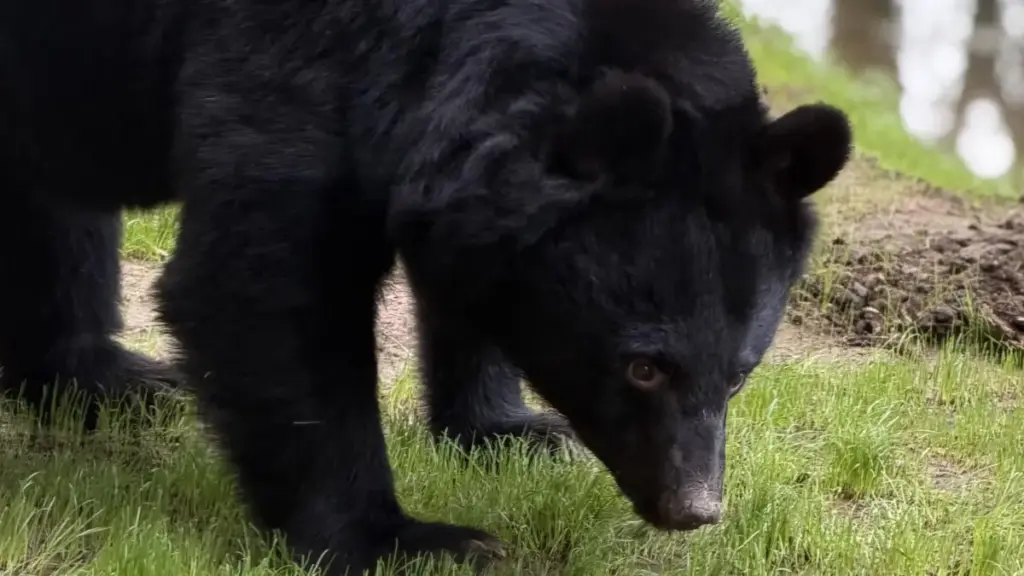
After enduring decades of unimaginable cruelty, isolation, and confinement within the bleak confines of South Korean bear bile farms, five Asiatic black bears—commonly known as moon bears—have finally touched grass, breathed fresh air, and experienced open space for the first time in their lives. Transported across an astonishing 5,500 miles (8,850 kilometers), the bears arrived on Thursday at their new permanent sanctuary at Jimmy’s Farm & Wildlife Park, located near Ipswich in Suffolk, United Kingdom.
The successful, complex international rescue operation was spearheaded by the wildlife park in collaboration with its dedicated conservation charity, Space for the Wild. The arrival of these five bears marks a monumental milestone not only for animal welfare advocates in the UK, but also for the global campaign to end the barbaric commercial exploitation of wildlife. The bears—named Bara, Rumi, Saebit, Yonggi, and Huimang—have been safely transferred into a purpose-built, highly enriched natural reserve designed specifically to cater to their rehabilitation, physical recovery, and psychological healing.
This landmark relocation comes on the heels of historic legislative shifts in South Korea, which officially criminalized the breeding, possession, and commercial exploitation of moon bears for bile extraction. For decades, these sentient creatures were subjected to cramped, rusted cages, enduring chronic pain and severe psychological trauma. Today, thanks to a combination of tireless international activism, legislative reform, and overwhelming public generosity, they have traded a lifetime of concrete and suffering for a future defined by safety, dignity, and peace.
Detailed Chronology: The Journey from Captivity to Sanctuary
The road to freedom for Bara, Rumi, Saebit, Yonggi, and Huimang was fraught with logistical complexities, emotional hurdles, and intense operational planning. Understanding the magnitude of this rescue requires tracing the timeline from their grim beginnings in South Korea to their triumphant arrival in the British countryside.
Years of Confinement in South Korea
For most of their lives, the five moon bears knew only the suffocating parameters of intensive farming cages. Kept in one of South Korea’s notorious commercial bear bile facilities, the animals were imprisoned in concrete-floored enclosures with iron-bar walls. They were denied natural light, veterinary care, adequate nutrition, and the ability to express any natural behaviors such as foraging, climbing, or swimming. Their existence was defined by the relentless extraction of bear bile—a substance utilized in traditional Asian medicine—housed in gallbladders through crude and painful methods.
The Turning Point: South Korea’s Historic Ban
The fate of these bears shifted dramatically when international pressure finally converged with domestic reform. Following years of exhaustive campaigning by animal rights organizations, conservationists, and whistleblowers, the South Korean government instituted a landmark ban making the breeding and commercial possession of moon bears illegal. Furthermore, the legislation explicitly outlawed the extraction of bile from their gallbladders.
While this legislative victory signaled the eventual twilight of the industry, it left hundreds of captive bears in legal limbo, stranded on farms where owners could no longer legally profit from them, yet lacked the infrastructure or financial means to care for them properly. Sanctuary spaces were desperately needed globally to absorb the overflow of survivors.
The 5,500-Mile Transcontinental Migration
Recognizing the urgent need to rehome survivors of the defunct farms, Jimmy’s Farm & Wildlife Park and Space for the Wild stepped forward. Formulating an ambitious rescue plan, conservationists coordinated with international transport specialists, veterinarians, and governmental agencies across two continents to arrange the complex logistics of moving five large, traumatized apex mammals over 5,500 miles.
The operation required specialized climate-controlled transport crates, round-the-clock veterinary monitoring during transit, and meticulous customs clearance to ensure the animals’ stress levels were kept to an absolute minimum. On Thursday, the transit concluded successfully as the transport convoy rolled into Suffolk, welcoming the bears to their new sanctuary.
Supporting Context & Metrics: The Plight of the Moon Bear and the Cost of Freedom
To fully appreciate the gravity of this rescue, it is essential to examine the biological profile of the Asiatic black bear, the economics of the bear bile industry, and the financial metrics driving the sanctuary project in Suffolk.
Understanding the Moon Bear (Ursus thibetanus)
Recognized instantly by the striking, crescent-shaped patch of white or yellowish fur emblazoned across their chests against a coat of sleek black fur, moon bears are native to forests across Asia, including the Himalayas, northeastern China, the Korean Peninsula, and parts of Japan. Primarily arboreal compared to other bear species, they spend a significant portion of their lives high in the forest canopy, utilizing their powerful claws and limbs to forage for nuts, fruits, insects, and vegetation.
In captivity, denying these intelligent, highly adaptable animals the opportunity to climb, forage, and roam leads to catastrophic psychological distress. Many captive bears develop stereotypies—repetitive, aimless behaviors such as pacing, head-bobbing, and bar-biting—born from chronic boredom and severe confinement psychosis.
The Bear Bile Industry
For decades, the bear bile industry operated as a multi-million-dollar commercial enterprise. Extracted via permanent, unhygienic catheters or crude abdominal fistulas, the bile (containing ursodeoxycholic acid) was marketed as a cure-all remedy for various ailments, ranging from liver conditions to fevers. Despite the widespread availability of synthetic and herbal alternatives that are both cheaper and more humane, commercial farming persisted due to entrenched cultural traditions and profit-driven markets.
South Korea’s decision to phase out and ultimately ban the industry serves as a beacon of progress in Asia, though thousands of bears still languish in similar facilities across neighboring nations, highlighting the ongoing necessity for international rescue efforts.
Financial Investment and Public Generosity
Rescuing, transporting, and housing five adult moon bears is an extraordinarily resource-intensive undertaking. Jimmy’s Farm & Wildlife Park launched an ambitious public fundraising campaign to cover the immense costs associated with their transit, specialized medical rehabilitation, and the construction of their bespoke habitat.
Fundraising Target: £200,000
Current Funds Raised: Over £90,000 (and climbing rapidly following the announcement of their safe arrival)
Distance Traveled: 5,500 miles (8,850 kilometers) from South Korea to Suffolk
Number of Bears Rescued: 5 individuals (Bara, Rumi, Saebit, Yonggi, and Huimang)
Official Statements: Voices from the Frontline of Conservation
The emotional weight of the rescue has resonated deeply with the individuals who planned, funded, and executed the operation.
Jimmy Doherty, founder of Jimmy’s Farm & Wildlife Park, shared a visceral and moving account of his initial encounter with the animals prior to their extraction from South Korea:
"I will never forget meeting the bears for the first time. It was truly hell on earth. You cannot unsee these things. It made us all the more determined and focused on our mission—to get these bears safe, protected, and living a profoundly better life. The work, dedication, and public support of so many have made this a reality. I couldn’t be more grateful to all involved."
Doherty emphasized that seeing the bears transition from the sterile, rusted cages of the farming facility to the lush, tree-lined pastures of Suffolk stands as one of the most significant achievements in the park’s history. Conservationists working alongside Doherty noted that while physical wounds heal with time, the invisible psychological scars left by decades of sensory deprivation require patience, specialized behavioral enrichment, and a tranquil environment—elements that the newly built Suffolk reserve provides in abundance.
Future Outlook: Rehabilitation, Habitat Integration, and Advocacy
The arrival of Bara, Rumi, Saebit, Yonggi, and Huimang in Suffolk is not the end of the story, but rather the beginning of a long, compassionate process of rehabilitation.
The New Habitat
The newly constructed reserve at Jimmy’s Farm & Wildlife Park has been meticulously engineered to replicate the natural woodland habitat of an Asiatic black bear. The enclosure features:
Advanced Climbing Structures: Tall timber frameworks and natural trees that encourage the bears to reclaim their arboreal instincts.
Swimming Pools: Water features designed for cooling off, playing, and foraging.
Substrates of Earth and Grass: Soft ground replacing cold concrete, allowing the bears to dig, nest, and feel the natural earth beneath their paws.
Quiet Zones: Secluded areas where the bears can retreat to process their newfound freedom away from public view as they adjust to their environment.
Veterinary and Behavioral Care
Over the coming weeks and months, a dedicated team of specialist wildlife veterinarians, keepers, and behaviorists will monitor the bears closely. Their diets will be carefully managed to transition them from the poor-quality feed of the bile farms to a nutrient-rich, varied diet that promotes muscle mass and healthy weight gain. Furthermore, behavioral enrichment programs—such as hidden food puzzles and scent trails—will be introduced to stimulate their cognitive faculties and encourage natural foraging behaviors that were suppressed for decades.
A Beacon for Global Change
Beyond providing a permanent sanctuary for these five survivors, Jimmy’s Farm & Wildlife Park and Space for the Wild intend to use the bears’ stories as an educational platform. By sharing the realities of the illegal wildlife trade and the bear bile industry with thousands of annual visitors, the sanctuary aims to foster a deeper global awareness of animal welfare issues.
As Bara, Rumi, Saebit, Yonggi, and Huimang take their first tentative steps across the Suffolk grass—climbing trees, splashing in water, and basking in the open sky—they stand as resilient ambassadors for a changing world: one where the dark legacy of commercial wildlife farming is steadily giving way to compassion, protection, and true sanctuary.