

Executive Overview
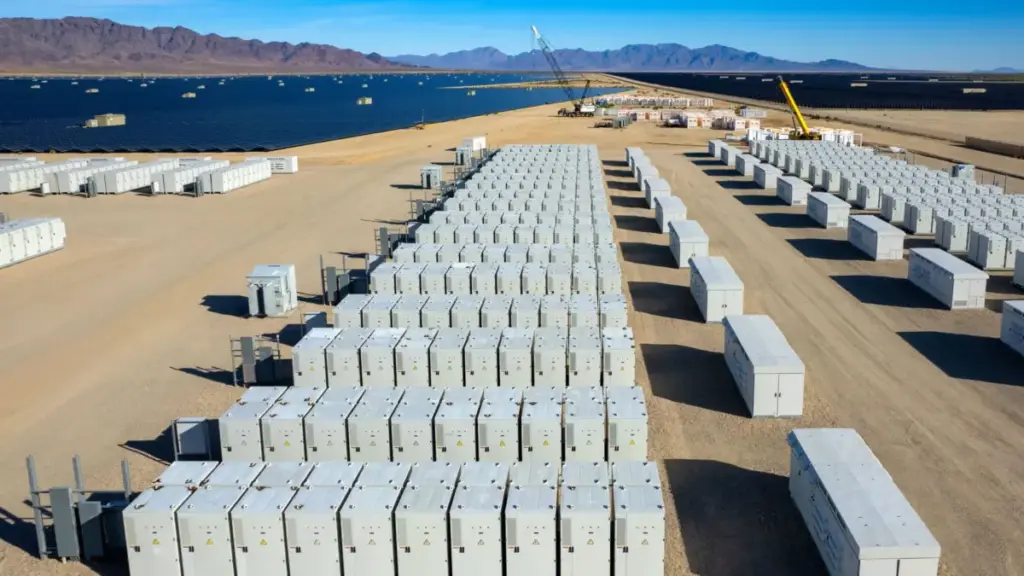
The United States energy storage sector reached a historic milestone in the second quarter of 2026, recording its most prolific deployment period to date. According to a landmark industry report published jointly by Benchmark Mineral Intelligence and the Solar Energy Industries Association (SEIA), the US grid absorbed an unprecedented 20.2 gigawatt-hours (GWh) of new battery storage capacity between April and June. This single-quarter achievement underscores an accelerating nationwide transition toward a decarbonized, highly resilient electrical grid.
To contextualize the scale of this expansion, 20.2 GWh of electrical storage is sufficient to supply the total daily electricity consumption of approximately 700,000 American homes. This massive injection of grid-level flexibility is keeping the country firmly on track to deploy an aggregate 71 GWh of new battery capacity by the close of 2026—representing a robust 20% year-over-year increase compared to 2025.
This unprecedented growth is catalyzed by a powerful convergence of market dynamics. Most notably, the capital expenditures required for battery infrastructure have continued their downward trajectory, making large-scale storage economically viable for utilities and independent power producers alike. Concurrently, an urgent, operational imperative has emerged: as tens of gigawatts of intermittent renewable generation—predominantly utility-scale solar photovoltaics and onshore wind farms—flood the power grid, operators desperately require advanced storage assets to capture surplus energy during peak generation hours and discharge it during high-demand windows.
However, beneath the headline-grabbing metrics lies a complex, bifurcated market. While massive, utility-scale projects and industrial data centers are driving record-breaking deployment numbers, the residential sector is experiencing a temporary contraction. The expiration of federal consumer-facing tax incentives at the end of 2025 has dampened residential adoption. Meanwhile, a looming regulatory and geopolitical shift toward domestic manufacturing—spurred by aggressive new tariffs and domestic content requirements attached to federal clean energy tax credits—threatens to reshape the supply chain. As the industry navigates the transition away from its heavy reliance on Chinese battery cells, stakeholders are balancing short-term cost pressures against the long-term imperative of securing domestic energy independence.
Detailed Chronology: Q2 2026 and the Evolution of the Storage Boom
The trajectory leading to the record-shattering second quarter of 2026 has been years in the making, defined by rapid technological maturation and escalating grid demands.
The Path to the Second Quarter Surge
Throughout 2024 and 2025, the US energy storage market demonstrated steady, incremental growth, hampered occasionally by global supply chain bottlenecks and interconnection queue delays. However, as 2026 unfolded, a confluence of regulatory deadlines, maturing project pipelines, and rapidly falling component costs created a perfect storm for deployment.
In the first quarter of 2026, developers laid the groundwork by rushing to complete projects before various administrative milestones took effect. By the time Q2 arrived, these efforts culminated in a massive wave of grid synchronizations. The quarter was distinguished not merely by a high volume of small-to-medium installations, but by the unprecedented concentration of mega-scale projects coming online simultaneously.
The Rise of the Gigascale Project
The defining characteristic of the Q2 2026 data is the dominance of utility-scale infrastructure. During this three-month window alone, seven distinct "gigascale" battery installations—defined as projects boasting an individual storage capacity exceeding one gigawatt-hour—were successfully energized and integrated into regional transmission organizations (RTOs) and independent system operators (ISOs) across the country.
These monumental installations fundamentally shifted the quarterly totals. Rather than a distributed spread of minor grid updates, the storage landscape was reshaped by concentrated, multi-hundred-megawatt assets capable of reshaping regional load curves. This concentration highlights a maturing project delivery ecosystem, where engineering, procurement, and construction (EPC) firms are successfully executing complex, capital-intensive logistical maneuvers to bring massive electrochemical assets online on schedule.
The Divergence of Behind-the-Meter Markets
While utility-scale projects dominated the capacity metrics, the behind-the-meter (BTM) segment—comprising both commercial-and-industrial (C&I) and residential applications—told a more nuanced story of regulatory impact and sectoral divergence.
Within the C&I space, digital infrastructure emerged as the primary catalyst. Commercial data centers, facing skyrocketing power demands driven by artificial intelligence workloads and cloud computing expansion, accounted for approximately three-quarters of all new commercial battery deployments in Q2. These facilities are increasingly deploying on-site energy storage not just for emergency backup, but for load-shaving, peak demand management, and participation in lucrative grid services markets.
Conversely, the residential BTM sector faced significant headwinds. Homeowners typically install battery systems—often paired with rooftop solar arrays—to ensure continuity of service during increasingly frequent extreme weather events and grid failures. However, Q2 2026 data revealed a sharp slowdown in this segment, with home installations projected to drop by a striking 16% over the course of the year compared to 2025 levels. This contraction illustrates the profound sensitivity of consumer adoption rates to macroeconomic policy and direct financial incentives.
Supporting Context & Metrics
A rigorous examination of the SEIA and Benchmark Mineral Intelligence report reveals critical quantitative benchmarks that define the current state of the US energy storage landscape.
Key Performance Indicators (Q2 2026)
- Total Quarterly Capacity Added: 20.2 gigawatt-hours (GWh).
- Equivalency: Sufficient to power approximately 700,000 American homes for a full 24-hour cycle.
- Projected Full-Year 2026 Installations: 71 GWh aggregate capacity.
- Year-Over-Year Growth Rate: 20% increase projected over 2025 totals.
- Gigascale Additions: 7 individual projects exceeding 1 GWh capacity each came online in Q2.
- Data Center Contribution: Comprised roughly 75% of new commercial-sector installations.
- Residential Segment Projection: Estimated 16% decline in home installations for full-year 2026 relative to 2025.
Macroeconomic and Supply Chain Metrics
The economics of energy storage have undergone a structural transformation over the past decade. Lithium-ion cell manufacturing efficiencies, economies of scale, and optimized chemistry formulations (such as the widespread adoption of Lithium Iron Phosphate, or LFP, chemistries) have driven down the levelized cost of storage. These financial tailwinds have allowed utilities to treat battery installations not as experimental pilots, but as baseline components of modern resource planning.
However, the supply chain underpinning these metrics remains heavily globalized and vulnerable to geopolitical friction. To date, nearly all electrochemical storage systems deployed in the United States utilize cells manufactured overseas, predominantly in China. While a significant portion of these imported cells undergo final assembly, integration, and containerization within domestic facilities, the foundational manufacturing of the battery cells themselves remains an import-dependent enterprise.
This dynamic is undergoing forced evolution. Beginning in 2026, updated federal tax credit frameworks—specifically regarding the clean energy provisions of the Inflation Reduction Act (IRA)—have introduced stringent domestic content requirements. Projects must actively limit their reliance on imported components from foreign entities of concern, including China, to qualify for maximum financial incentives. This regulatory pressure, compounded by pre-existing and newly enacted tariffs, is actively redirecting capital investment toward domestic battery manufacturing infrastructure.
Industry analysts project a multi-year gap, however. While massive domestic cell and pack manufacturing facilities are currently under construction across the United States, experts estimate that domestic production capacity will likely not match national deployment demand until approximately 2030. Consequently, as the industry navigates this transitional phase, short-term component pricing could experience upward tick pressures due to compliance costs and supply chain reconfiguration.
Official Statements and Industry Analysis
To fully capture the sentiment driving the Q2 2026 results, industry leaders and market analysts have offered deep insights into the underlying mechanics of the boom and the challenges ahead.
Shan Tomouk, energy storage and energy lead for Benchmark Mineral Intelligence, emphasized the structural concentration of the quarter’s achievements during a discussion on the report’s findings:
"It really came down to a handful of big projects."
Tomouk’s observation underscores the reality that while the US storage market is broad, its quarterly volume is heavily weighted toward mega-developments. Addressing the contraction observed in the residential market, Tomouk pointed directly to legislative catalysts:
"That drop happened largely because a tax credit that helped subsidize home battery systems ended in 2025."
Despite this temporary setback for homeowners, Tomouk remains bullish on the long-term outlook for distributed storage, predicting that home installations are poised to recover and resume growth by the end of the decade. Crucially, he noted that nonresidential tax credits—vital for commercial and utility-scale entities—have largely survived legislative adjustments, preserving the core financial architecture driving the broader market.
Echoing this sentiment of strength and resilience, Isshu Kikuma, an energy storage analyst at energy consultancy BloombergNEF, highlighted the sector’s outperformance relative to other energy verticals:
"This is one of the strong sectors in the US."
Kikuma’s assessment reflects the growing consensus within energy finance circles: energy storage has transitioned from an auxiliary asset class to the indispensable backbone of the modern electrical grid. Without rapid storage deployment, the aggressive buildout of solar and wind generation risks severe curtailment, market destabilization, and grid congestion.
Future Outlook: Challenges and Horizons Through 2030
As the United States looks beyond the record-breaking metrics of mid-2026, the energy storage sector stands at a critical crossroads. The path forward is defined by three primary vectors: grid integration mandates, manufacturing sovereignty, and technological evolution.
The Grid Integration Imperative
The sheer volume of renewable energy scheduled for interconnection over the next four years guarantees that demand for storage will remain exceptionally high. As coal-fired power plants continue their retirement trajectory and aging nuclear assets face mixed futures, regional grid operators are relying on battery storage to provide essential ancillary services, including frequency regulation, spinning reserves, and black-start capabilities. The 71 GWh projected for 2026 is merely a stepping stone toward the hundreds of gigawatt-hours cumulative storage capacity that the US Energy Information Administration (EIA) estimates will be required by 2030 to maintain grid reliability.
The Onshoring Race and Price Pressures
The most pressing structural challenge facing developers is the dual squeeze of domestic content regulations and trade tariffs. The transition away from Chinese-manufactured battery cells is an explicit policy goal designed to insulate US critical infrastructure from geopolitical vulnerabilities. However, building a resilient domestic battery supply chain from the mine to the pack requires massive capital expenditure, environmental permitting navigation, and workforce development.
Until domestic gigafactories achieve full operational scale around 2030, developers will navigate a delicate balancing act. They must secure compliant components without triggering prohibitive cost overruns that could slow down utility-scale project execution. Navigating this pricing landscape will test the agility of procurement teams across the energy sector.
Beyond Lithium-Ion: Technological Horizons
Looking toward the end of the decade, the industry is also beginning to diversify its technological toolkit. While lithium-ion chemistries currently dominate utility-scale and behind-the-meter deployments, the long-duration energy storage (LDES) market is attracting serious R&D capital. Technologies capable of discharging power over 10, 24, or even 100 hours—such as iron-air batteries, flow batteries, compressed air energy storage, and advanced thermal storage systems—are moving from pilot stages toward commercial viability. These systems will be essential for addressing multi-day renewable generation lulls, ensuring that the grid of the 2030s achieves true decarbonization resilience.
Conclusion
The second quarter of 2026 will be remembered as a watershed moment for the United States energy storage industry. By deploying 20.2 GWh of capacity in a single quarter and cementing a trajectory toward 71 GWh annually, the sector has proven its ability to scale at the pace required by the clean energy transition. While short-term residential headwinds and complex supply chain onshoring efforts present legitimate hurdles, the fundamental economics, operational necessities, and strategic priorities of the nation point toward a future firmly anchored by advanced energy storage.



