For two decades, the Biodiversity Heritage Library (BHL) has served as the world’s most comprehensive open-access digital repository for literature in the natural sciences. As the global scientific community celebrates the 20th anniversary of BHL—highlighting remarkable milestones through the commemorative series BHL at 20: Treasures from the Biodiversity Heritage Library—archivists and librarians are increasingly turning their attention not just to rare species descriptions and historical taxon classifications, but to the human stories hidden within the margins of archival manuscripts.
A prime example of this archival reclamation is unfolding at the Academy of Natural Sciences of Drexel University (ANSP) in Philadelphia, Pennsylvania. Briana Giasullo, the Academy’s Cataloging and Digital Resources Librarian, recently spearheaded a project to digitize, transcribe, and integrate 83 historical scientists’ handwritten notebooks and field journals into the BHL network. Among these priceless primary sources was a deceptively modest artifact: a bound ledger cataloged neutrally as A notebook containing an entomological essay by Carrie Aaron.
For decades, historical records flattened Aaron’s identity, reducing her simply to “Mrs. Aaron” in finding aids and erasing her individual academic footprint. Thanks to a collaborative intervention by Academy Archivist Jessica Lydon, student digitization assistants, and modern linked-data platforms like Wikidata, Carrie Baily Aaron has been rescued from historical obscurity. Her meticulously handwritten essays, correspondence with prominent entomologist Henry Skinner, and candid critiques of gender equity within 19th- and early 20th-century scientific societies are now accessible to the global public. This project underscores a broader, transformative shift in digital librarianship: how modern archival digitization is breaking down the barriers of gender bias in historical science and inspiring a new wave of biographical discovery.
Detailed Chronology: From Forgotten Ledger to Global Digital Access
The rediscovery of Carrie Aaron is not merely a story of finding an old book on a dusty shelf; it is a meticulously documented chronology spanning over a century of scientific evolution, institutional record-keeping, and modern digital rescue.
1889–1901: The Genesis of an Entomological Voice
Carrie Baily Aaron was active during an era when amateur and professional naturalists alike were grappling with practical ecological challenges. Between the late 1880s and the dawn of the 20th century, Aaron compiled detailed research, field notes, and analytical essays concerning dipterous insects—most notably, mosquitoes.
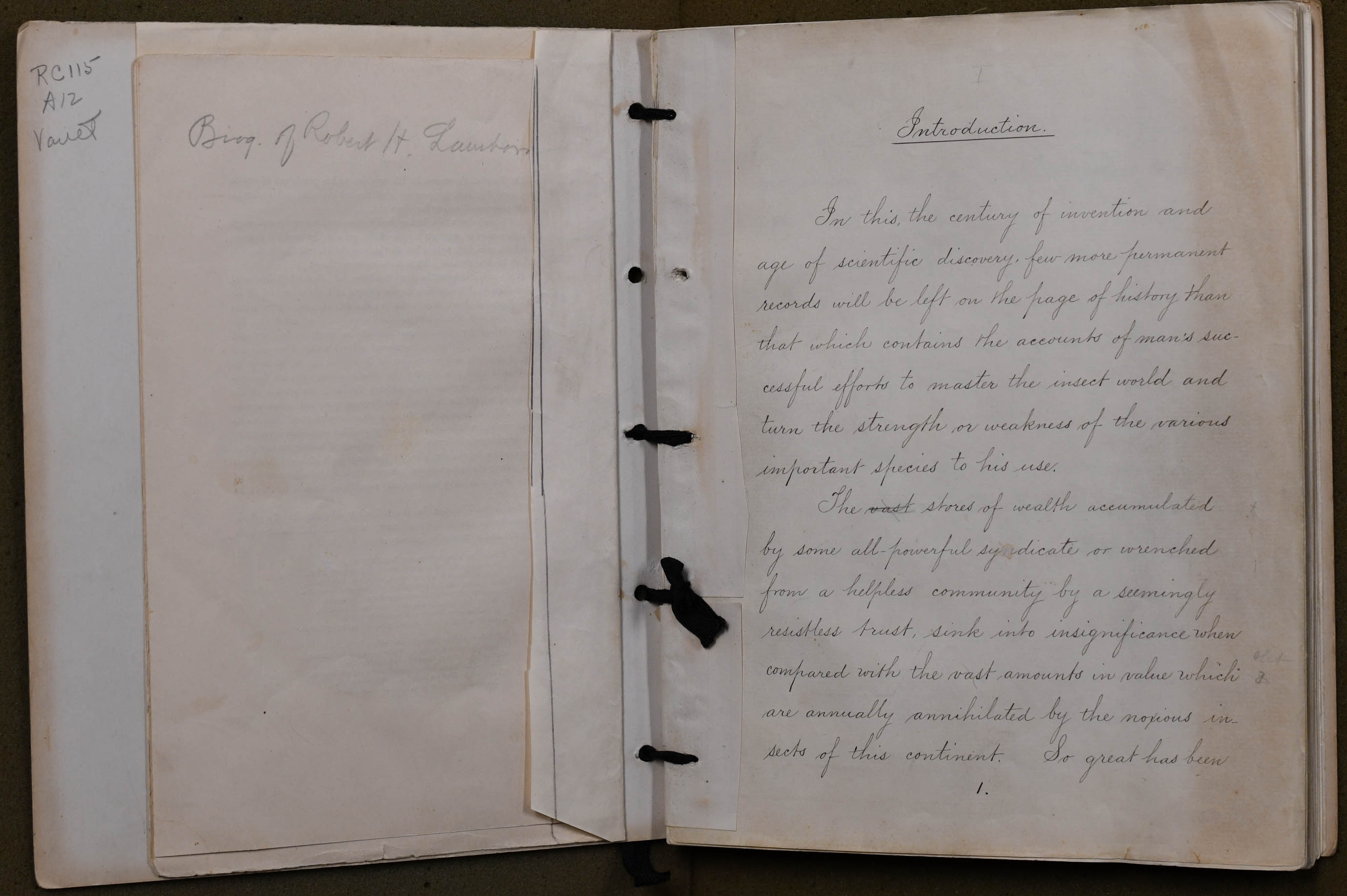
Her intellectual output during this period was galvanized by a curious historical catalyst: Robert Henry Lamborn. As Aaron noted in her biographical records of the contest-holder, Dr. Lamborn suffered intensely from mosquito attacks while overseeing the construction of the Lake Superior Railroad. Traumatized and driven by these grueling encounters, Lamborn subsequently offered substantial financial prizes for the three best essays exploring methods to eradicate the insect pest.
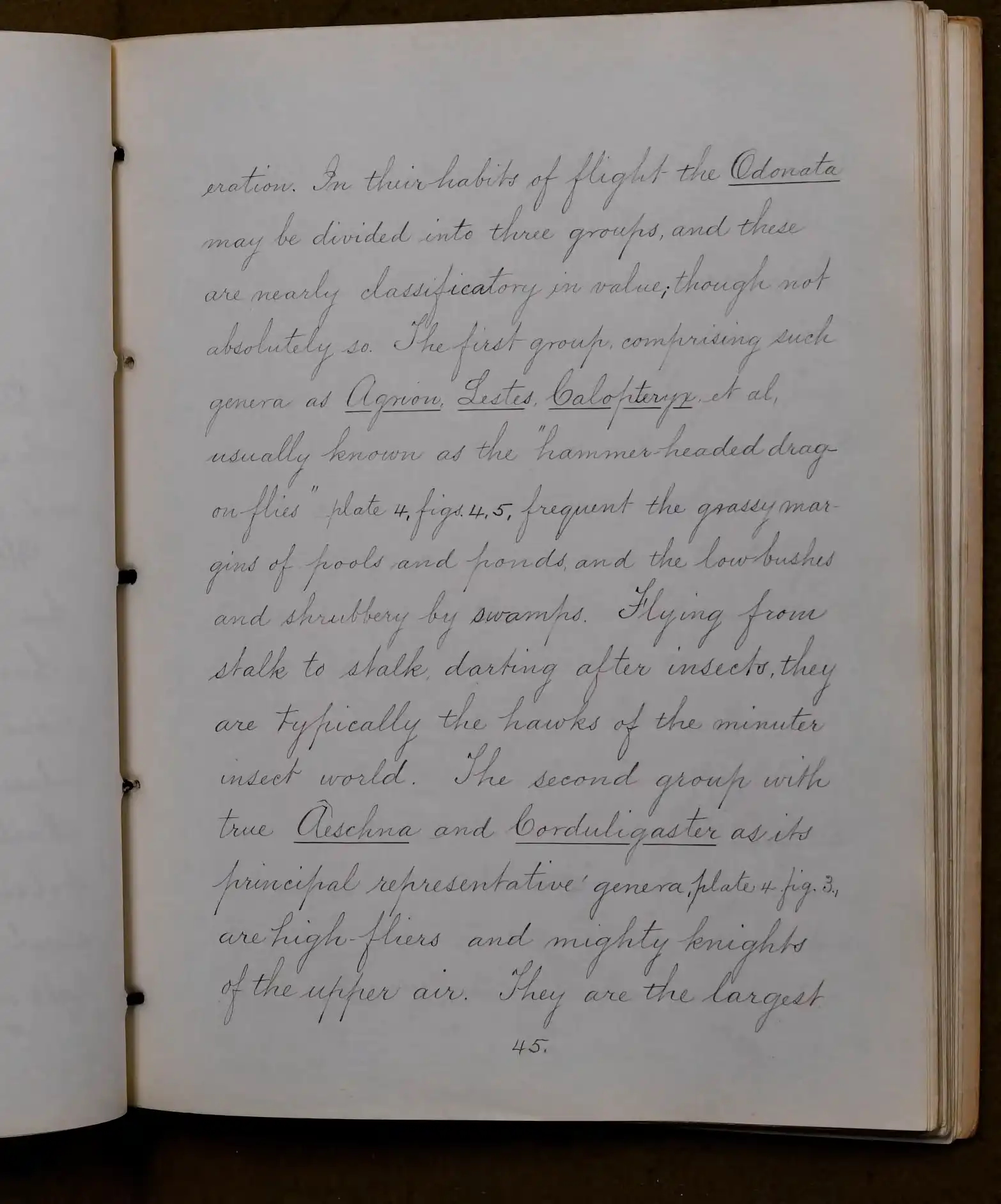
Aaron rose to the challenge, penning an exhaustive entomological treatise that analyzed various population-control mechanisms. Demonstrating a keen ecological eye, she evaluated the predatory habits of dragonflies, memorably dubbing them “the hawks of the minuter insect world.” Her research ambition even extended to direct physical experimentation; alongside contemporary researchers, Aaron attempted to inoculate herself with what was then described as poisonous droplets from mosquitoes. Though this experimental self-administration proved “not successful, owing probably to the inferiority of the needle as an injector, compared with the delicate hypopharynx,” it revealed a rigorous, hands-on empirical methodology.
Aaron’s essay was eventually selected and published alongside other submissions in the landmark volume Dragon Flies vs. Mosquitoes: Can the Mosquito Pest be Mitigated? under the title “The Dipterous Enemies of Man.”
January 11, 1900: Resignation and Reform
Despite her validated expertise—cemented by a congratulatory letter from renowned entomologist Henry Skinner confirming that her reputation was “now well established”—Aaron experienced firsthand the structural alienation faced by women in elite scientific spaces.
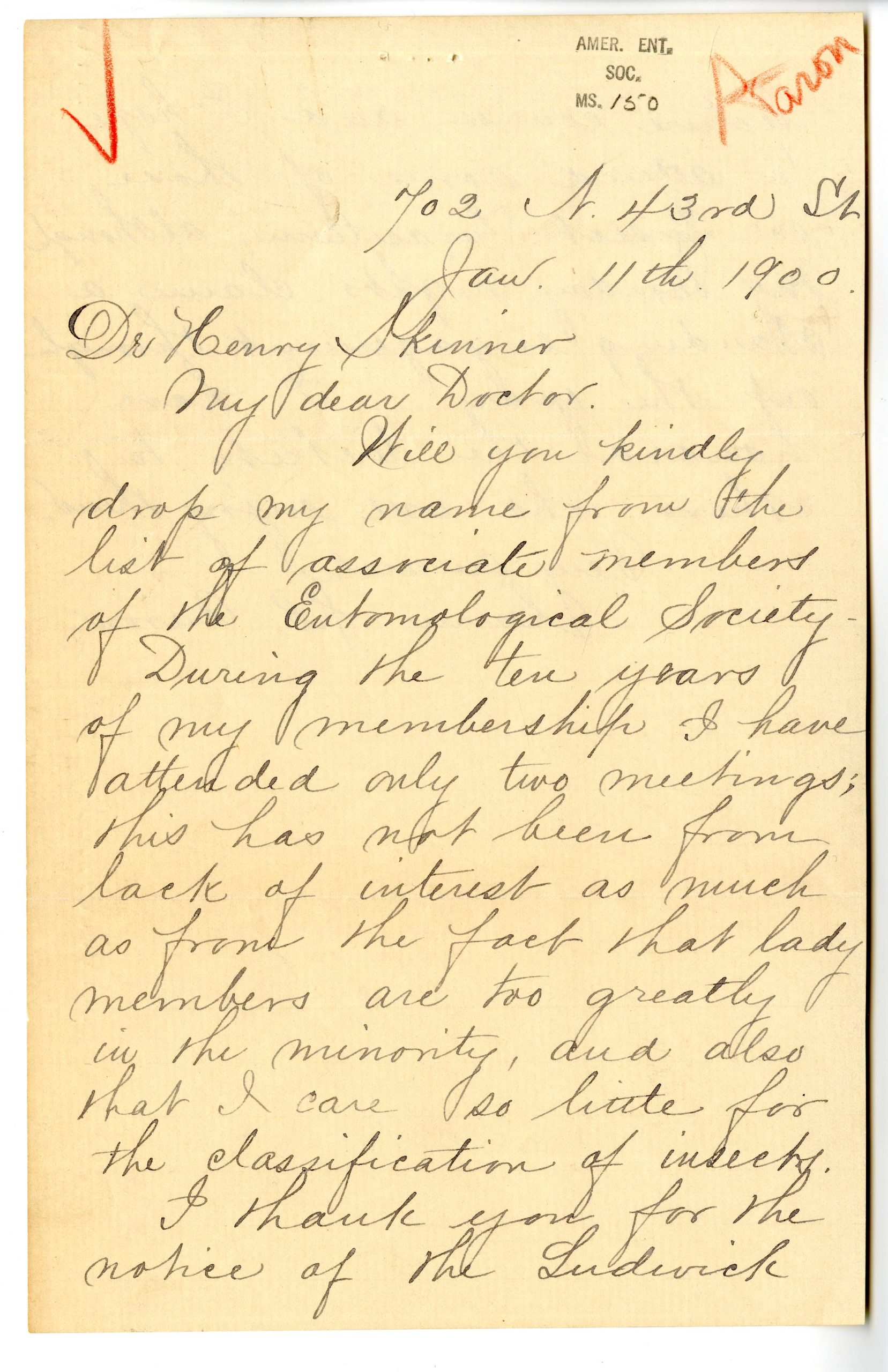
On January 11, 1900, Aaron penned a formal letter to Skinner requesting that her name be permanently removed from the roster of associate members of the American Entomological Society (AES). Her rationale was cuttingly frank:
“During the ten years of my membership I have attended only two meetings; this has not been from lack of interest as much as from the fact that lady members are too greatly in the minority, and also that I care so little for the classification of insects.”
This document, preserved within the Academy’s American Entomological Society correspondence collection (ANSP-Coll-0150), captures a pivotal moment of institutional critique. Aaron’s withdrawal was not an abandonment of science, but a rejection of an exclusionary boys’ club that failed to foster an inclusive community for women researchers. Yet, this professional distancing did not sever her personal bonds; Aaron maintained a warm, supportive correspondence with Skinner for over three decades, culminating in a reflective letter of gratitude sent in 1923.
March 8, 1926: Travels, Museums, and Feminist Encounters
Decades after her formal split from the AES, Aaron’s letters continued to sparkle with intellectual curiosity and keen observations of the natural world. During a trip to Southern California—a landscape she rhapsodically described in letters as “the land of perpetual bloom and uninterrupted sounds of birds and insects”—she visited local museums and encountered pioneering figures in public science.
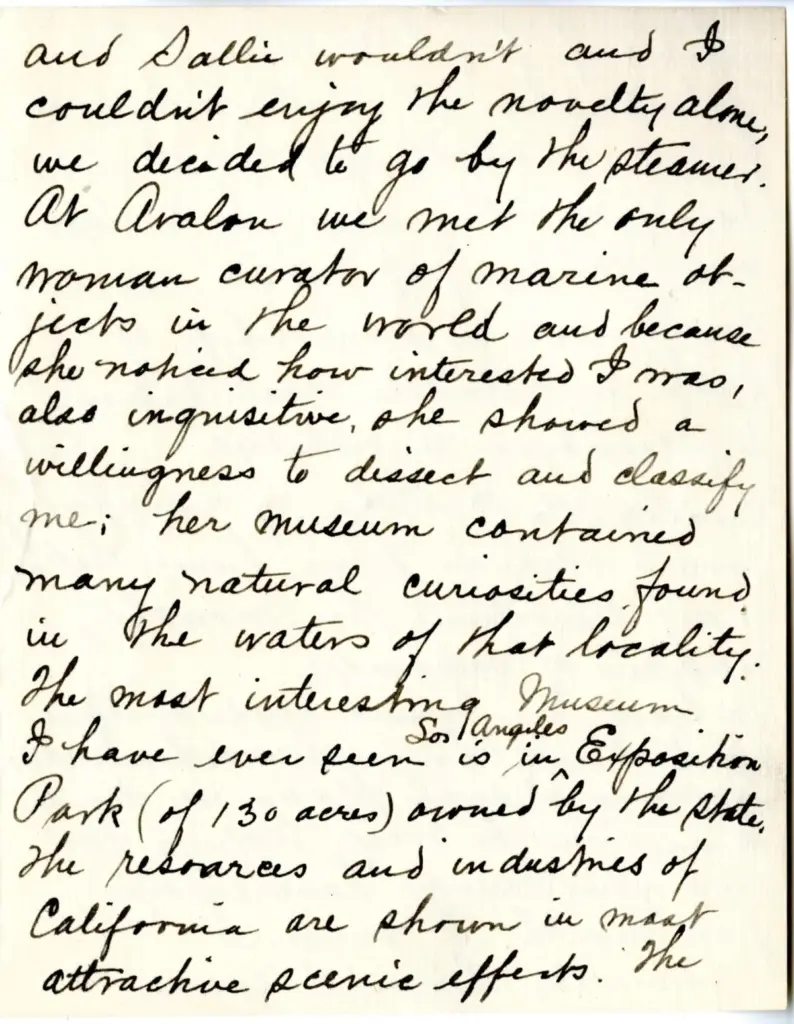
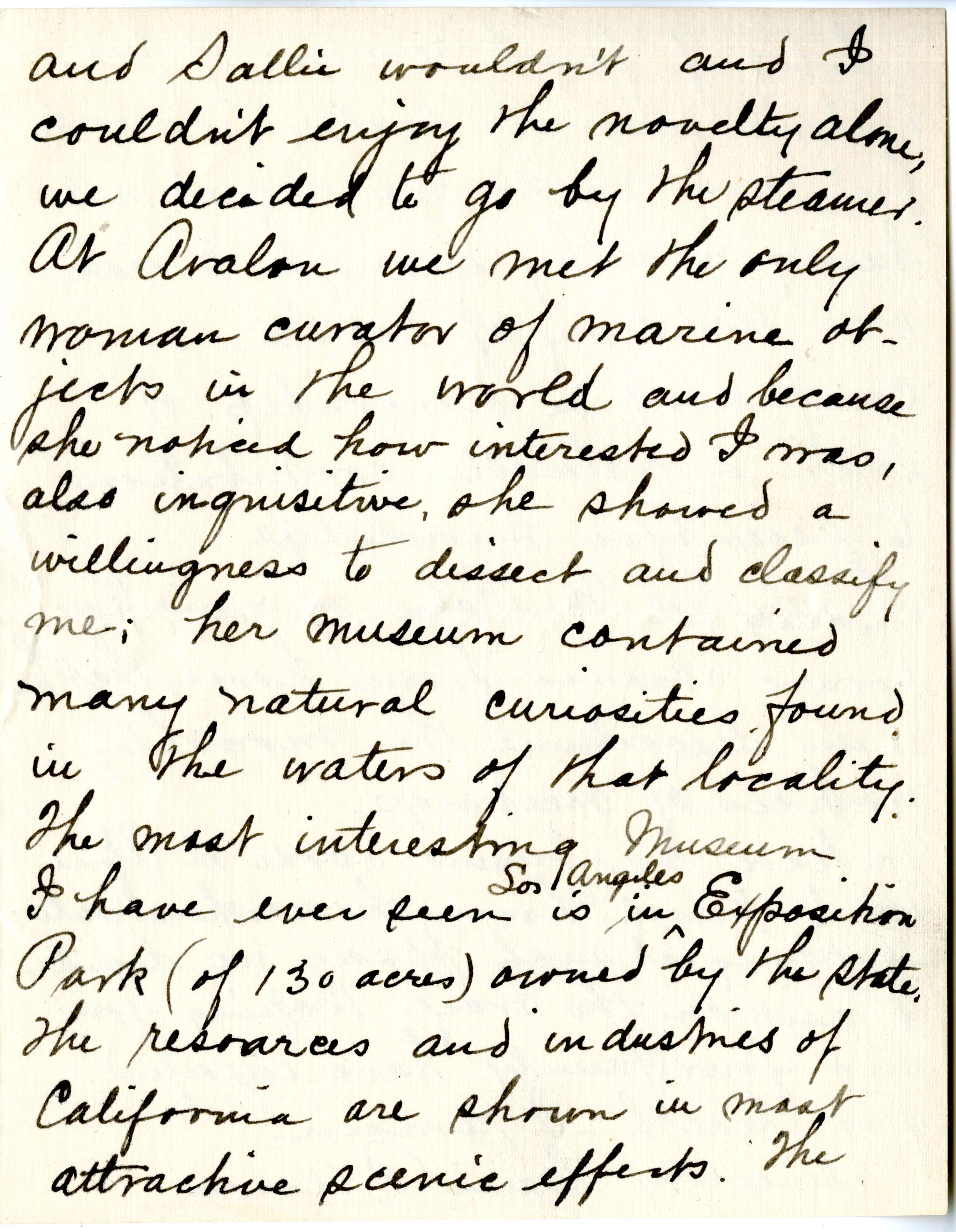
In a March 8, 1926 letter to Skinner, Aaron recounted a visit to Avalon on Santa Catalina Island:
“At Avalon we met the only woman curator of marine objects in the world and because she noticed how interested I was, also inquisitive, she shared a willingness to dissect and classify me; her museum contained many natural curiosities found in the waters of that locality.”
Later in the same missive, she marveled at the expansive exhibits at Exposition Park in Los Angeles, expressing a bittersweet regret that chronic health issues prevented her from securing similar prehistoric fossil treasures for the Academy of Natural Sciences back in Philadelphia.
Modern Era: The Digital Reclamation Project
For decades following her death, Aaron’s papers remained preserved but largely unindexed in the archives of the Academy of Natural Sciences. Her identity was obscured by the patriarchal cataloging conventions of the 20th century, which routinely reduced married female researchers to anonymized titles like “Mrs. Aaron.”
The turning point arrived in the 2020s as part of the preparations for BHL’s 20th-anniversary celebration. Briana Giasullo, working alongside Academy Archivist Jessica Lydon and Drexel University student digitization intern Will Le, undertook a comprehensive project funded by Dr. William Day and the American Entomological Society.
Will Le meticulously digitized the entire AES correspondence collection—including Aaron’s letters—making them accessible on PA Photos and Documents. Simultaneously, Giasullo processed 83 historical notebooks for the BHL platform (Field Journal Fixup project). When Lydon flagged the inadequate metadata of “Mrs. Aaron,” Giasullo updated the cataloging records, minted a dedicated BHL Creator ID for Carrie Aaron, and cross-referenced her identity with a newly established Wikidata identifier (Q125503946).
Supporting Context & Metrics: Unlocking Hidden Biases in Archives
The archiving and cataloging hurdles overcome in the Carrie Aaron case are emblematic of systemic issues across global library science and digital heritage preservation.
The Metadata Blind Spot
Historical finding aids frequently relied on household or patriarchal naming conventions—such as "Mrs. [Husband’s Last Name]"—when cataloging papers belonging to historical women. This practice severed female scientists, artists, and authors from their independent biographical contexts, making them nearly invisible to digital search algorithms, academic researchers, and automated citation networks.
By building explicit linkages between local archival finding aids, the Biodiversity Heritage Library, and structured data repositories like Wikidata, institutions like the Academy of Natural Sciences are reversing this erasure. A BHL Creator ID does more than organize files; it asserts digital personhood, enabling global scholars to aggregate a historical figure’s essays, letters, institutional memberships, and collaborative networks under one verified identity.
Scale of the BHL Digitization Effort
The metrics behind the current wave of digital archiving underscore the massive scope of work required to transform physical archives into accessible digital knowledge:
20 Years: The milestone anniversary of the Biodiversity Heritage Library, marking two decades of open-access literature sharing.
83 Notebooks: The specific cohort of handwritten scientists’ notebooks and field journals digitized and transcribed from the Academy of Natural Sciences for the BHL collection.
100+ Years: The span of time between Aaron’s active research years (late 19th/early 20th century) and the modern linked-data remediation that established her digital presence.
130 Acres: The size of Exposition Park in Los Angeles, whose fossil and industrial exhibits so deeply impressed Aaron during her 1926 California travels.
Official Statements and Institutional Perspectives
The intersection of archival stewardship, student involvement, and institutional collaboration has drawn praise from leaders across the Academy of Natural Sciences and the broader BHL community.
Reflecting on the unexpected joy of historical research sparked by digital tools, Briana Giasullo, Cataloging and Digital Resources Librarian at the Academy of Natural Sciences, noted:
"After working with archival notebooks and reading Carrie Aaron’s letters, I’m thrilled to see how digitization and public access to collections spur research into lesser-known individuals and uncover more potential research subjects! I don’t consider myself a historian, but it’s difficult to resist historical research when presented with easily accessible primary sources and when given the tools to link subjects across different platforms."
Giasullo also emphasized the collaborative team effort required to bring the project to fruition, offering public praise for Academy Archivist Jessica Lydon, student digitization intern Will Le, entomology collection manager Greg Cowper, and the ongoing financial and logistical support of the American Entomological Society and Dr. William Day.
Speaking on the broader mission of the repository during its milestone anniversary, representatives for the Biodiversity Heritage Library released an official statement underscoring the vital role of public engagement:
"For 20 years, BHL has helped uncover the people and stories hidden within biodiversity literature and archives, making them freely available for new generations to discover. Your support helps us continue digitizing, connecting, and sharing collections like Carrie Aaron’s notebook—and ensures that more overlooked voices and histories can be found."
Future Outlook: Unresolved Mysteries and Next Steps in Digital Research
The digital publication of Carrie Aaron’s notebooks and correspondence has not only closed an era of historical neglect; it has opened exciting new avenues for ongoing investigation.
The Quest for the "Only Woman Curator"
Giasullo’s deep dive into Aaron’s 1926 letters from Santa Catalina Island has birthed a brand-new historical research inquiry. In her correspondence with Henry Skinner, Aaron expressed intense admiration for an unnamed woman she met in Avalon—described as “the only woman curator of marine objects in the world”—who enthusiastically welcomed Aaron’s inquisitive nature and shared specimens from local waters.
Identifying this mysterious marine curator represents the immediate next phase of research for Academy archivists. Pinpointing her identity will add yet another vital thread to the tapestry of early 20th-century women working in marine biology and museum science.
The Future of Open-Access Biodiversity Archives
As the Biodiversity Heritage Library looks toward its next decade, projects like the digitization of the American Entomological Society correspondence and the Field Journal Fixup initiative serve as blueprints for inclusive archiving. By combining high-resolution imaging, crowdsourced and student-assisted transcription, and semantic web linkages (such as Wikidata integration), cultural heritage institutions are transforming static repositories into dynamic, interconnected knowledge webs.
For Carrie Aaron—once filed away simply as an anonymous “Mrs.”—her meticulous prose, bold self-experimentation, and uncompromising critiques of scientific elitism are finally secure. Through the power of digital preservation and open-access networks, her voice has returned to the scientific conversation, inspiring modern librarians, historians, and researchers to continue digging into the margins of the past.