

Executive Overview
As the global scientific community races to understand and mitigate the compounding crises of climate change and accelerating biodiversity loss, researchers are increasingly looking backward to move forward. Historical baselines—detailed, localized, and meticulously recorded observations of the natural world from decades or even centuries ago—are crucial for measuring modern environmental degradation. Yet, vast quantities of this priceless historical data remain locked inside fragile manuscript pages, handwritten field journals, and fading field notebooks stored deep within institutional archives.
For the past two decades, the Biodiversity Heritage Library (BHL) has stood at the forefront of digital preservation, evolving into the world’s largest open-access digital library for biodiversity literature and archives. Boasting a staggering corpus of over 64 million pages, the BHL acts as an indispensable digital ark for ecological and zoological knowledge. However, transforming thousands of pages of bound publications into searchable text is only half the battle. The true frontier lies in extracting historical biodiversity data from handwritten manuscripts, making it machine-readable, and integrating it into global databases like the Global Biodiversity Information Facility (GBIF).
A monumental milestone in this ongoing archival crusade recently took place at Harvard University’s Ernst Mayr Library (EML) of the Museum of Comparative Zoology (MCZ). Through a pioneering initiative combining institutional digitization programs, advanced artificial intelligence, and dedicated academic fellowship, the ornithological field journals, notebooks, and bird lists of 19th-century zoologist Walter Faxon have been successfully digitized, transcribed, and integrated into the BHL infrastructure.
This article explores the journey of Walter Faxon’s historical records—from dusty library archives to cutting-edge AI pipelines and global biodiversity networks. It highlights the technological challenges of applying modern language models to archaic handwriting, the indispensable role of human oversight in computational science, and what this breakthrough means for the future of global conservation.
Detailed Chronology
To fully appreciate the significance of Walter Faxon’s resurrected field notes, one must trace a timeline spanning nearly a century and a half—from the Victorian era of field biology to the cutting edge of 21st-century artificial intelligence.
1848–1920: The Life and Legacy of Walter Faxon
Born on February 4, 1848, in Massachusetts, Walter Faxon established himself as a towering figure in American zoology. Serving as an Assistant Professor of Zoology at Harvard University from 1872 to 1886, Faxon dedicated the vast majority of his professional life to the study of invertebrates. For an astonishing 46 years (1874–1920), he acted as the Curator of the Invertebrate Department at Harvard’s Museum of Comparative Zoology, focusing his taxonomic expertise primarily on Crustacea and Mollusca.
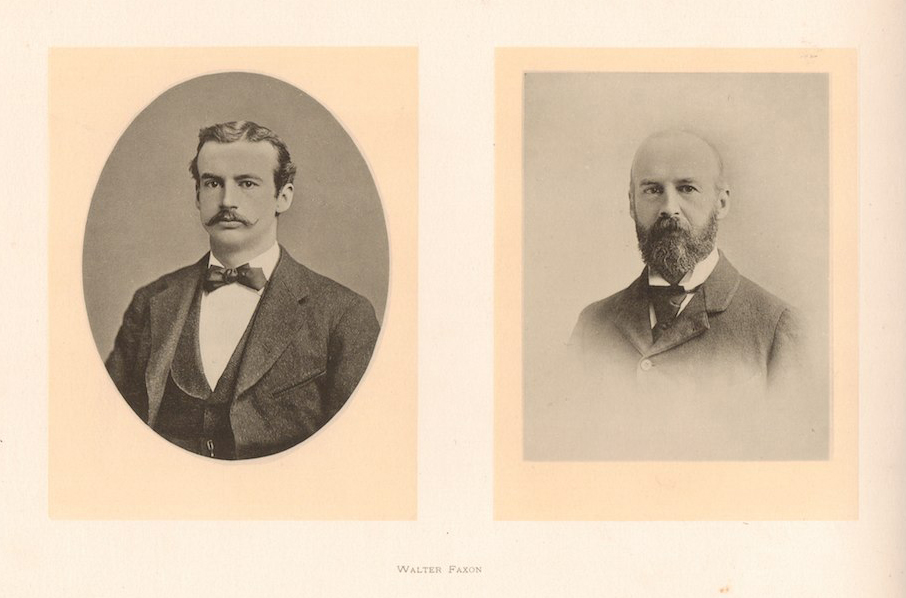
Though his official career centered on marine and freshwater invertebrates, Faxon maintained a lifelong passion for ornithology. He pursued bird study with the exact scrupulousness and precision that defined his museum curatorial work. A Fellow of the American Ornithologists’ Union from 1901 to 1904, Faxon spent nearly six decades in the field. Peers frequently noted his extraordinary alertness of eye, ear, and mind, combined with an obsessive caution to avoid observational error. His reputation for accuracy was so profound that an avian identification by Faxon was rarely, if ever, questioned. This historical reliability ensures that the bird observations he recorded between 1886 and 1919 represent exceptionally high-fidelity ecological data.
2006–2026: The Evolution of the Biodiversity Heritage Library
In 2006—the same year Joe deVeer, co-author of these archival developments, began his tenure as Digital Projects Manager at the Ernst Mayr Library—the Biodiversity Heritage Library was founded as a collaborative consortium to digitize and make accessible the world’s natural history literature. Over the subsequent 20 years, BHL expanded internationally, incorporating millions of pages of legacy texts.
2025–2026: The Digitization and AI Transcription Initiative
The modern effort to liberate Faxon’s ornithological manuscripts began in earnest in 2025, when the collection was prioritized for digitization with the financial and logistical support of the Harvard Library Collections Digitization Program, specifically under its targeted theme of Climate Change.
Building upon this digital foundation, the Ernst Mayr Library was selected in 2026 to host a prestigious Pforzheimer Fellowship. The library welcomed Mohit Mandal, a Harvard PhD candidate in Anthropology, to spearhead the ambitious project of transcribing Faxon’s complex field manuscripts using state-of-the-art AI tools.
Mandal’s fellowship ran intensely from June 1 to August 31, 2026. During these three months, Mandal evaluated leading large language models, executed multi-model transcriptions, navigated the stubborn formatting quirks of Victorian cursive and interlinear notation, and successfully brought nearly 2,000 pages of historical text into the BHL book viewer—just weeks before the fellowship concluded.
Supporting Context & Metrics
The Walter Faxon collection housed within Harvard’s Ernst Mayr Library is physically modest, yet informationally dense. Understanding its composition sheds light on why targeted technological interventions were required to unlock its contents.
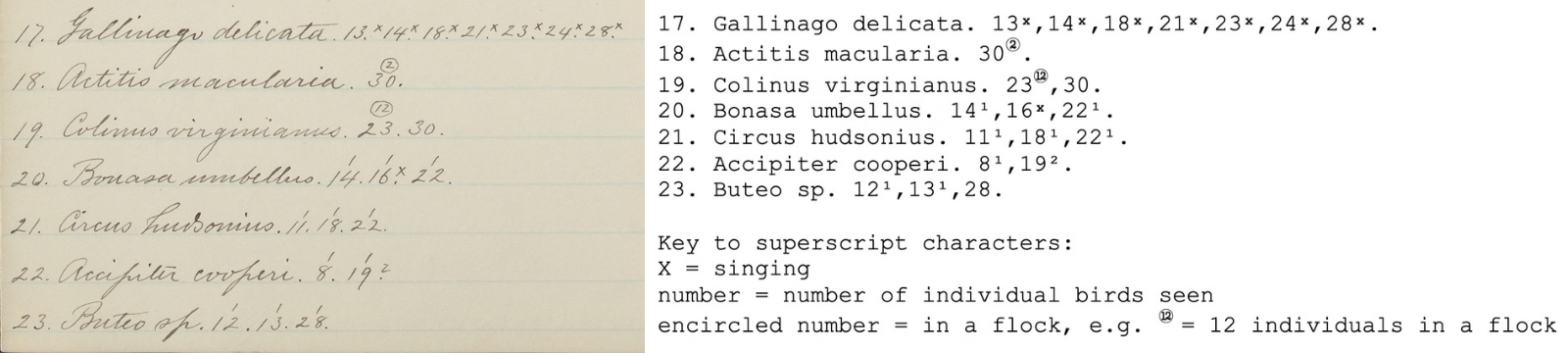
The Collection’s Scope and Contents
- Total Manuscript Volume: Just over 2,200 pages.
- Core Ecological Records: 1,640 pages dedicated specifically to manuscript field journals, field notebooks, and comprehensive bird lists compiled across a 33-year span (1886–1919).
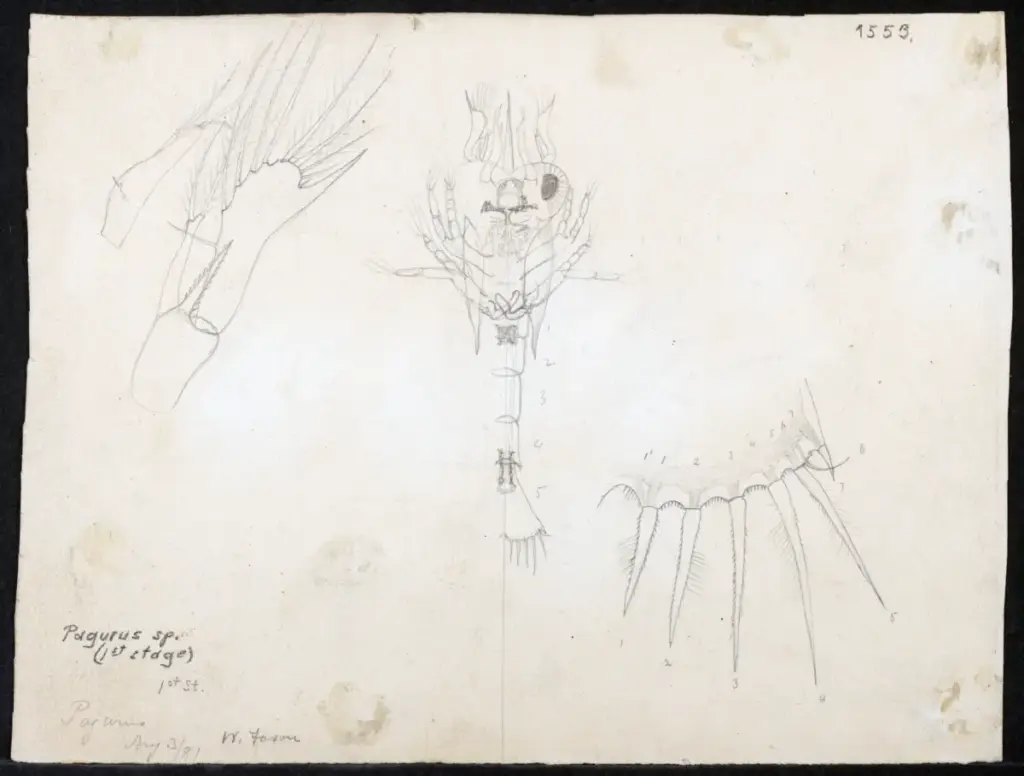
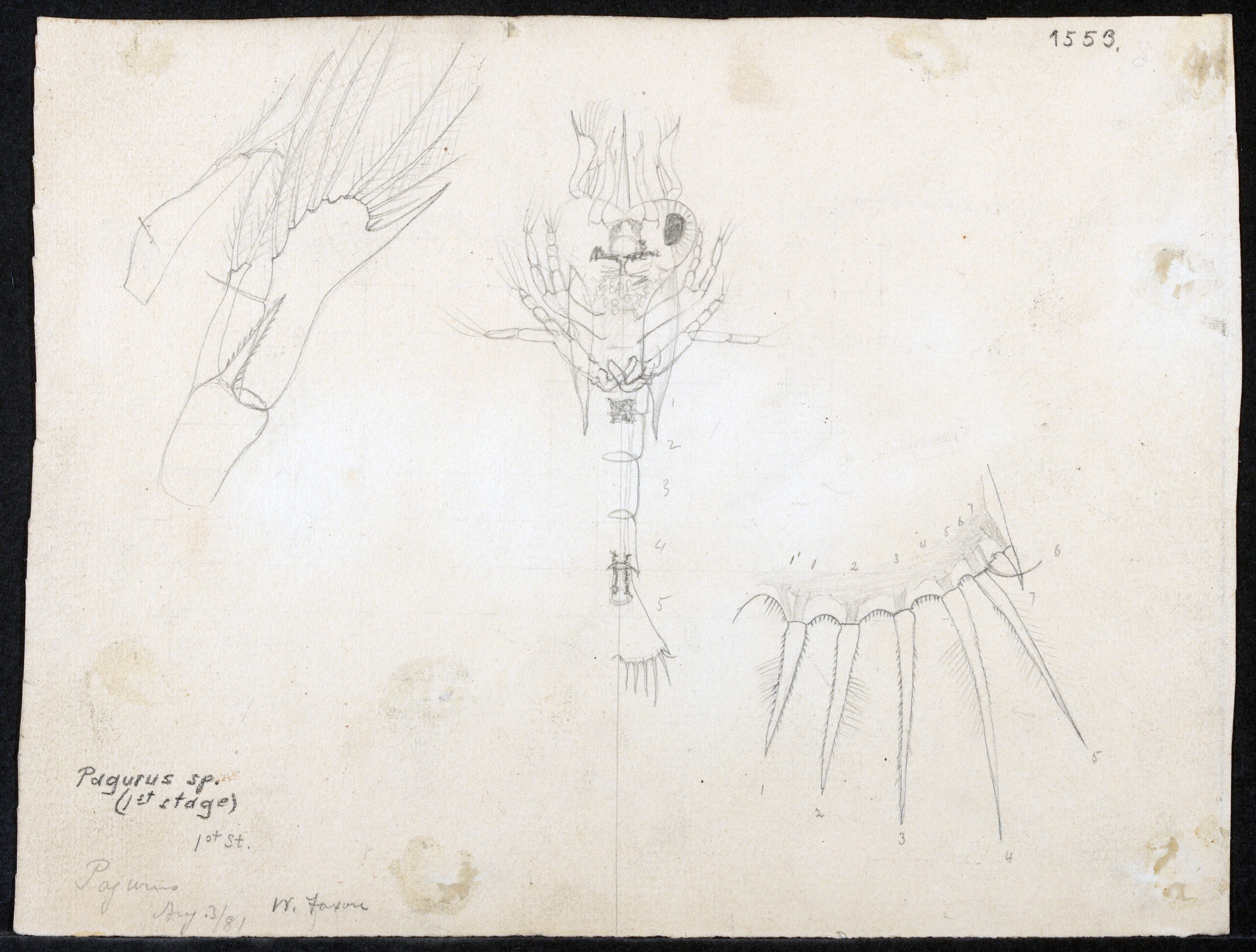
- Ancillary Materials: Correspondence (including 145 historical letters exchanged with fellow ornithologist William Brewster, whose papers are also housed in the EML), miscellaneous notes, and eight detailed pencil drawings of Arthropoda and Crustacea drawn by Faxon’s own hand (such as a remarkable 1881 sketch of a hermit crab’s first zoeal stage).
- Data Points Captured: Thousands of individual bird observations detailing precise species names, calendar dates, geographical localities, headcount counts, and qualitative metadata such as sex, developmental life stage, and vocalization notes.
The Technological Stack: Testing AI Models
When Mandal commenced his fellowship, his first major task was benchmarking leading artificial intelligence systems—specifically OpenAI’s ChatGPT and Google Gemini—to determine their viability for processing historical, handwritten scientific manuscripts.
- Google Gemini: Evaluated as having a slight edge in raw visual-to-text transcription accuracy. However, Gemini presented significant operational hurdles: it suffered from rigid file upload limits and lacked user-friendly integration outside of native Google Workspace tools (prohibiting support for standard formats like Microsoft Word).
- OpenAI’s ChatGPT: While scoring marginally behind Gemini in initial raw transcription fidelity on certain complex layouts, ChatGPT proved vastly superior in flexibility. It allowed for iterative follow-up prompting, enabling Mandal to train and condition the model according to rigorous orthographic and structural specifications.
- Anthropic’s Claude: Utilized as a secondary verification engine. To maximize overall accuracy and cross-validate output, the initial transcriptions generated by ChatGPT were subsequently audited using Claude, effectively leveraging the complementary strengths of two competing frontier AI architectures.
Obstacles in AI-Powered Paleography
Despite the immense sophistication of modern language models, transcribing 19th-century handwritten scientific journals exposed distinct technological bottlenecks:
- Faded Media and Physical Damage: Pencil notes prone to smudging over 140 years frequently degraded optical character recognition (OCR) and visual tokenization.
- Unconventional Layouts: Marginalia written vertically or at sharp diagonal angles were frequently misread, scrambled, or entirely ignored by the AI models.
- The Interlinear Challenge: Perhaps the most complex hurdle involved Faxon’s habit of recording dense quantitative metrics—such as flock sizes, singing behavior, and exact specimen counts—as tiny numbers and symbols wedged between the primary lines of text. Standard word processors (like Microsoft Word and Google Docs) enforcing strict line-spacing rules initially swallowed these notations. Mandal ultimately resolved this by training the model to recognize and format these insertions as superscript text.
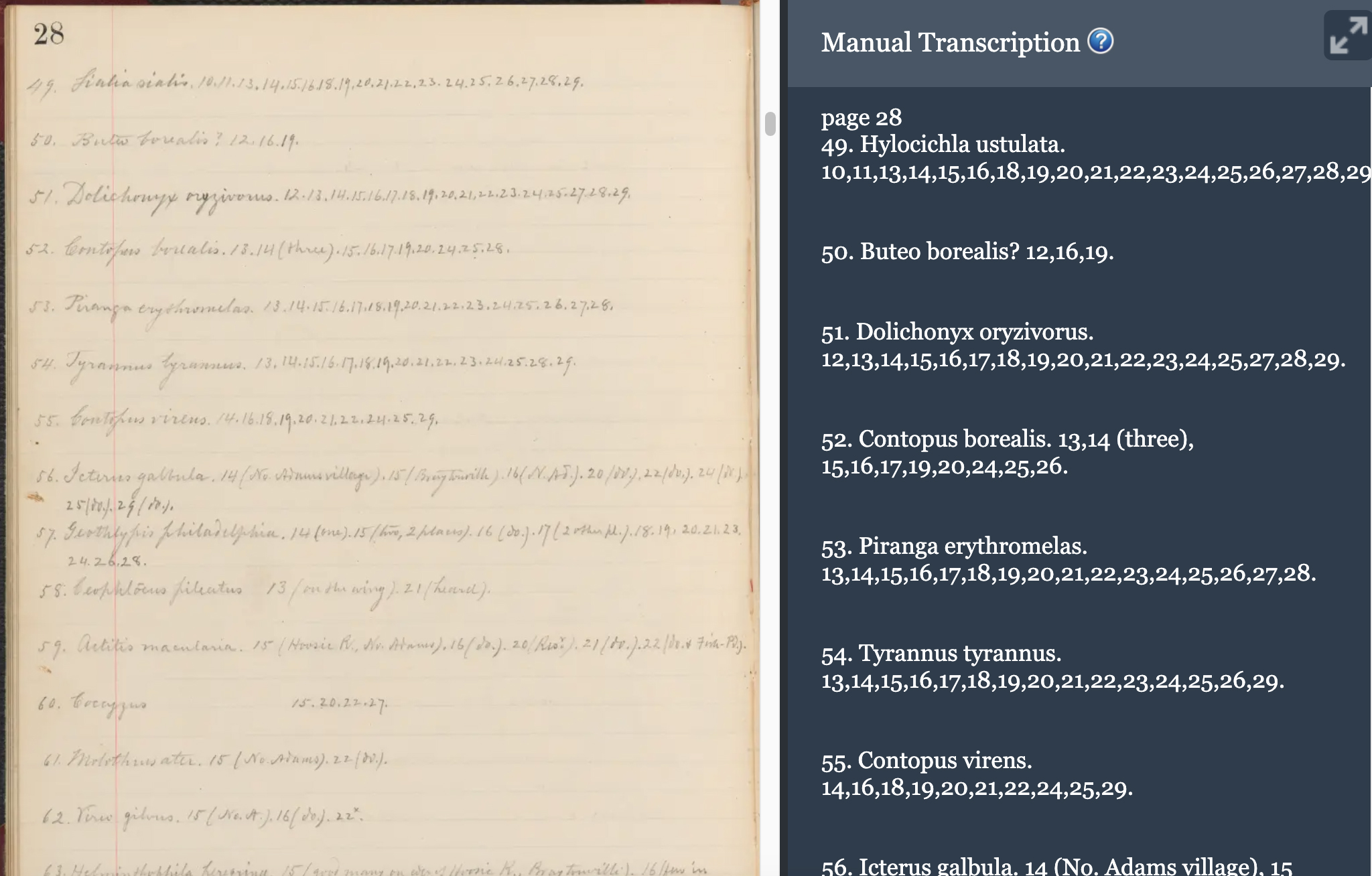
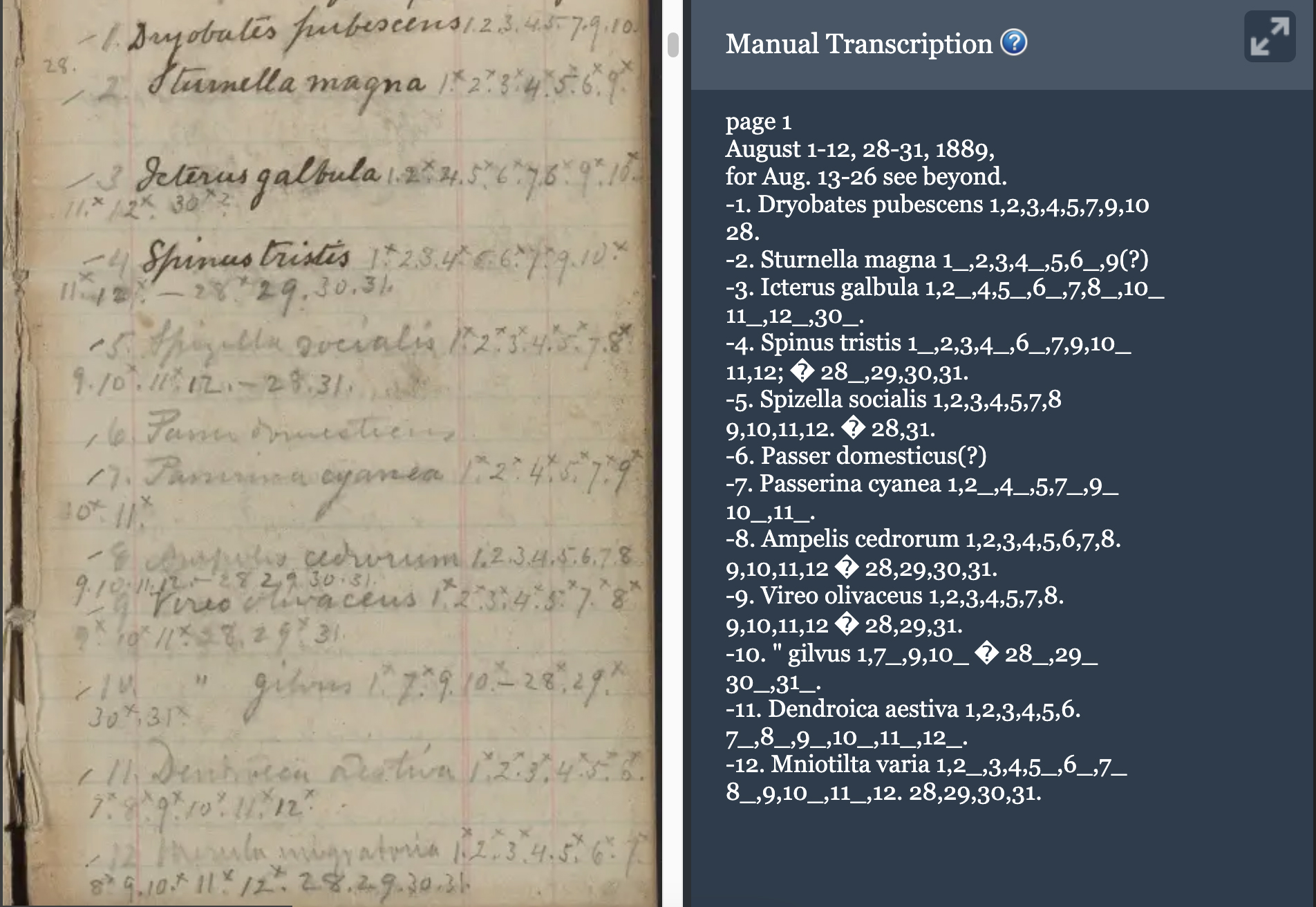
- AI Hallucinations: Nuanced taxonomic misreadings occasionally occurred. For example, in Faxon’s 1889–1891 field notes, the bluebird species Sialia sialis was occasionally mis-transcribed by ChatGPT-5.5 Pro as Hylocichla ustulata (the Swainson’s thrush), while Merula migratoria (the American robin) was mis-transcribed as Mniotilta varia (the black-and-white warbler). These errors underscore why fully automated "zero-human-in-the-loop" transcription remains unviable for rigorous historical science.
Official Statements & Expert Perspectives
Reflecting on the completion of the fellowship and the broader implications for the global scientific community, project leaders and institutional stakeholders emphasized the delicate balance between technological automation and human oversight.
Joe deVeer, Digital Projects Manager at the Ernst Mayr Library and Co-Secretary of the BHL Executive Committee, emphasized the institutional pride in reaching the 20-year milestone while continuing to push boundaries:
"For 20 years, BHL has made biodiversity knowledge freely accessible to the world. Your support helps us preserve treasures like Walter Faxon’s field journals and unlock the valuable biodiversity data they contain."
Reflecting on the realities of integrating generative artificial intelligence into archival workflows, Pforzheimer Fellow Mohit Mandal articulated the central philosophical and practical takeaway of the 2026 project:
"The human element remains central to guide the goals and direction of the project, without which A.I. tools—at least at this stage of their development—often falter in accuracy, especially when handling complex page layouts and difficult handwriting."
Future Outlook: From Archives to GBIF
The successful transcription of Walter Faxon’s field notebooks is far more than an isolated archival triumph; it represents a scalable blueprint for global conservation science.
Historically, biodiversity data locked in handwritten manuscripts has remained invisible to macro-ecological research. While published monographs in the BHL have long been fully searchable by scientific name, archival field notes—often containing the most granular, localized time-series data on species migration, population density, and local extinction—required tedious, manual transcription by armies of citizen scientists or professional paleographers.
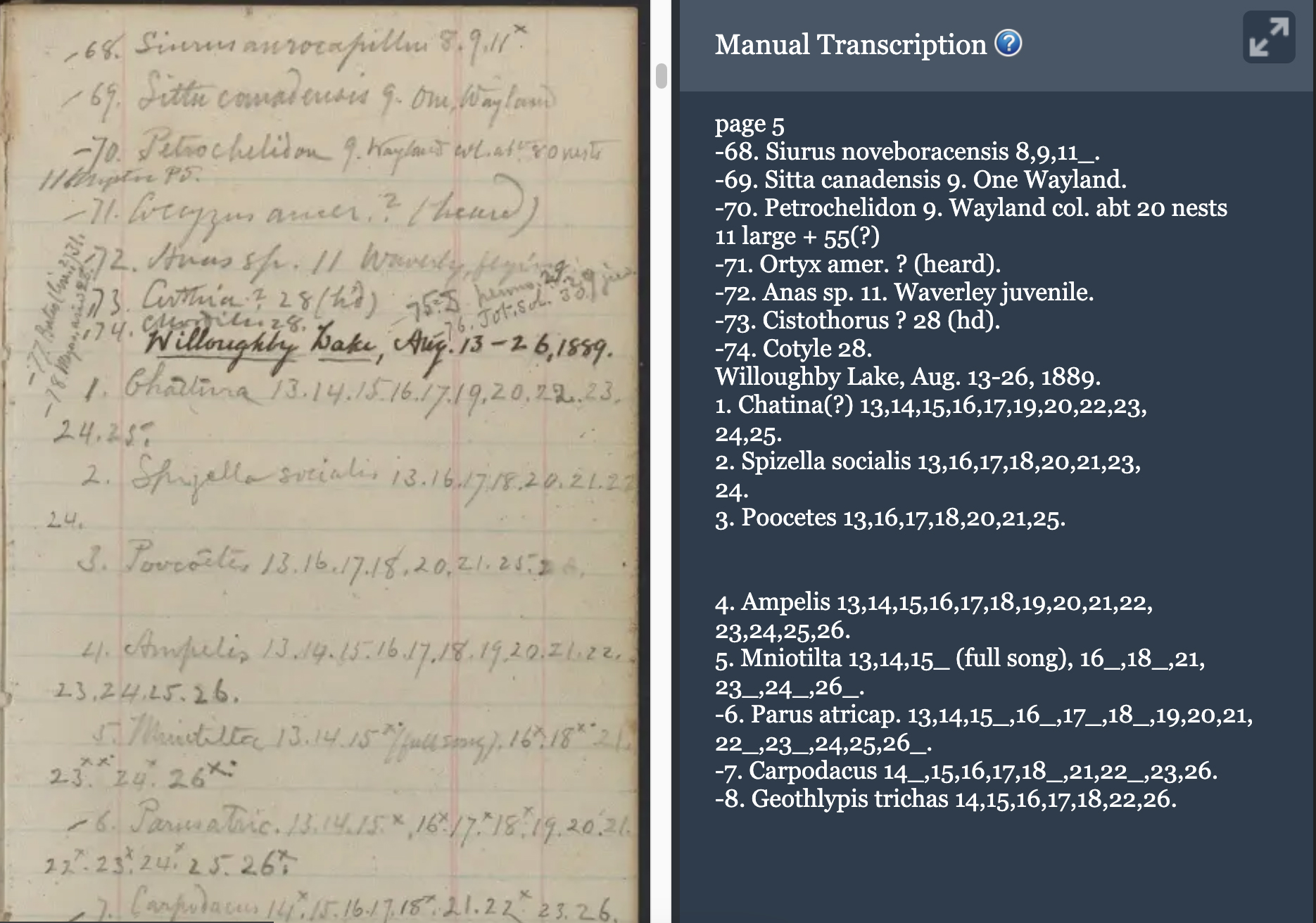
By proving that advanced AI models (when carefully prompted, cross-validated with secondary tools, and guided by expert human historians) can rapidly process thousands of pages of difficult Victorian handwriting, the Ernst Mayr Library and the BHL have opened a vital pipeline.
The next phase of this initiative involves feeding these newly generated, verified transcripts into BHL’s export pipelines directed toward the Global Biodiversity Information Facility (GBIF). Once integrated into GBIF, Faxon’s 19th-century Massachusetts bird observations will merge with millions of contemporary data points.
Ecologists and climate scientists will then be able to model shifts in avian migration timing, arrival dates, and regional abundance across a temporal span of nearly 150 years. By understanding how New England’s bird populations responded to environmental pressures, land-use changes, and early industrial climate shifts in the late 1800s, modern researchers gain vital context for protecting vulnerable species today.

As the Biodiversity Heritage Library prepares for the modernization of its digital platform, and as AI technology continues its rapid evolution, projects like the Walter Faxon transcription initiative signal a promising new era. By fusing historical archives with modern computation, the scientific community is ensuring that the whispered observations of 19th-century naturalists will continue to speak loudly in the defense of Earth’s future biodiversity.



