

Executive Overview
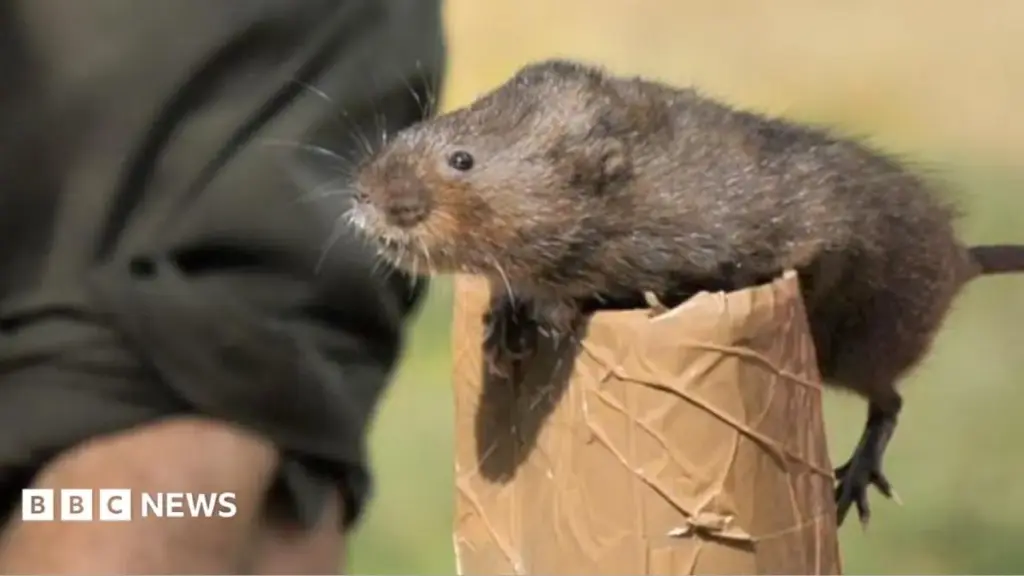
In a landmark victory for British wildlife conservation, the beloved and embattled water vole (Arvicola amphibius) has officially returned to the River Wey catchment after an absence spanning several decades. A collaborative coalition comprising the National Trust, the River Wey Trust, and the South East Rivers Trust has successfully orchestrated the release of these native aquatic rodents onto the 16-hectare expanse of the Thundry Meadows nature reserve in Surrey.
This meticulously planned reintroduction represents far more than the simple return of a single species; it marks a pivotal turning point in the ecological rehabilitation of a critical southern English watershed. Once a ubiquitous and bustling presence along British waterways—immortalized in popular culture most famously as "Ratty" in Kenneth Grahame’s literary classic The Wind in the Willows—the water vole has suffered one of the most catastrophic declines of any mammal in modern British history. Driven to the brink of local extinction by a lethal combination of relentless habitat degradation, intensive agricultural runoff, and the unchecked predation of the highly invasive American mink (Neovison vison), the species vanished entirely from large swathes of its historical range.
The successful release at Thundry Meadows is the crown jewel of a broader, highly strategic conservation blueprint designed to heal the fragmented aquatic ecosystems of the Wey catchment. Environmental scientists, hydrologists, and conservation rangers have spent years preparing the landscape, restoring wetland hydrology, and suppressing invasive predator populations to ensure that the newly introduced voles can not only survive but thrive.
According to project stakeholders, the re-establishment of these foundational ecosystem engineers will trigger a cascading positive impact across the local food web. Water voles play a vital, active role in shaping riparian landscapes through their foraging habits and burrowing behaviors, which can promote structural diversity in marginal vegetation. Their presence is expected to immediately benefit a diverse array of wetland-dependent wildlife, ranging from apex avian predators and majestic herons to rare amphibians and specialized macroinvertebrates.
As climate change accelerates and biodiversity loss continues to threaten global ecosystems, this collaborative triumph in Surrey serves as a powerful testament to the efficacy of targeted, landscape-scale conservation. It demonstrates that when dedicated environmental organizations pool their resources, scientific expertise, and passion, the tide of ecological decline can indeed be reversed, restoring the missing pieces to Britain’s complex natural jigsaw puzzle.
Detailed Chronology of the Reintroduction Initiative
The journey toward restoring the water vole to the River Wey catchment was neither quick nor straightforward. It represents the culmination of years of quiet, painstaking preparatory work, strategic partnerships, and rigorous scientific monitoring designed to guarantee the long-term viability of the project.
Phase 1: Landscape Diagnostics and Habitat Remediation (2018–2021)
Long before any conversation about releasing live animals could take place, conservationists had to confront the harsh reality of why the water voles had disappeared in the first place. Decades of drainage for agriculture, canalization of riverbanks, and industrial pollution had left the River Wey and its surrounding floodplains deeply scarred.
Starting in the late 2010s, the National Trust and its partners initiated a comprehensive diagnostic survey of the Wey catchment. Thundry Meadows—a sprawling 16-hectare mosaic of wet grassland, fen, and meandering watercourses—was quickly identified as the prime candidate for a flagship release site. However, the habitat was far from ready. Decades of neglect had allowed scrub to choke vital water channels, and livestock grazing regimes had degraded the crucial marginal vegetation that water voles rely upon for both cover and sustenance.
Conservation teams embarked on an intensive habitat restoration program. This involved reprofiling riverbanks to create gentle, sloping margins ideal for burrow construction, excavating shallow scrapes and backwaters to retain water during dry summer months, and planting vast swaths of native emergent macrophytes such as reeds, sedges, and yellow iris.
Phase 2: Predator Control and Biosecurity Measures (2021–2023)
Perhaps the greatest obstacle to any water vole reintroduction in the United Kingdom is the presence of the American mink. Introduced to Britain for fur farming in the 1920s, subsequent escapes and deliberate releases established robust feral populations. Unlike native predators, which co-evolved with water voles, the American mink is an exceptionally lethal, semi-aquatic predator capable of wiping out an entire colony of voles in a matter of weeks by systematically hunting them inside their burrows.
Recognizing that releasing water voles without prior mink eradication would be ecologically futile, the South East Rivers Trust and the National Trust established a rigorous, catchment-wide trapping and monitoring network. Utilizing state-of-the-art floating mink rafts equipped with clay footprint pads, rangers and volunteers mapped predator movements and systematically removed mink from the target zones. This ongoing biosecurity cordon remains one of the most critical operational components of the project, requiring eternal vigilance from field staff.
Phase 3: Sourcing, Quarantine, and the Thundry Meadows Release (Late 2023–2024)
With the habitat successfully engineered and predator pressure suppressed to manageable levels, the logistical wheels for the reintroduction were finally set in motion. The source populations for the project were carefully selected from robust, genetically diverse wild populations elsewhere in the UK, adhering strictly to the International Union for Conservation of Nature (IUCN) guidelines for reintroductions.
Upon capture, the foundation animals underwent rigorous veterinary health screenings to ensure they were free from parasites and infectious diseases. They were then transported under specialized, low-stress conditions to Thundry Meadows.
In a series of coordinated, soft-release operations managed by National Trust rangers, the water voles were introduced into specially constructed pre-release penning systems along the watercourses. These temporary enclosures allowed the animals to acclimate to the ambient sights, sounds, and smells of their new home while protected from immediate predation. Once settled, the pen doors were opened, allowing the voles to disperse freely into the wider 16-hectare reserve and begin the historic task of colonizing the top of the Wey catchment.
Supporting Context & Environmental Metrics
To fully appreciate the significance of the water vole’s return to Thundry Meadows, one must examine the broader ecological metrics defining the health of Britain’s freshwater ecosystems and the specific biological profile of the species itself.
The Ecological Profile of Arvicola amphibius
Often misidentified as a common rat due to its superficial rodent appearance, the water vole is a distinct and specialized species. Weighing between 150 and 350 grams, with a blunt snout, small furry ears, and a tail covered in fine hair, the water vole is brilliantly adapted to a semi-aquatic existence.
Herbivorous by nature, they consume up to 80 percent of their body weight daily in lush riparian vegetation, including grasses, reeds, roots, and bulbs. Their energetic foraging creates localized clearings in dense riverbank vegetation, which paradoxically enhances botanical diversity by allowing sunlight to reach smaller, less dominant plant species. Furthermore, their extensive burrow systems—excavated into earthen banks with characteristic above- and below-water entrances—provide vital subterranean micro-habitats utilized by a host of other organisms, including amphibians, small mammals, and invertebrates.
The National Picture: A Statistical Tragedy
The trajectory of the water vole in the UK serves as one of the most sobering case studies in modern conservation biology. Historical data compiled by wildlife trusts and government agencies reveals a catastrophic trajectory:
- Pre-1970s Population: Estimated in the tens of millions, water voles were a common sight along virtually every slow-flowing river, stream, dyke, and canal in mainland Britain.
- Late 20th Century Decline: Between 1989 and 1998 alone, national monitoring surveys revealed an astonishing population collapse of nearly 90 percent, driven primarily by the rapid expansion of feral American mink populations combined with widespread agricultural intensification.
- The 21st Century Status: By the early 2000s, the water vole had vanished from an estimated 94 percent of the sites where it was historically recorded. It is now legally protected under Schedule 5 of the Wildlife and Countryside Act 1981, making it an offense to intentionally kill, injure, or take water voles, or to damage or obstruct their structured burrows.
Catchment-Level Metrics for the River Wey
The restoration of Thundry Meadows is part of a wider, multi-million-pound investment in catchment health across Southeast England. Key environmental parameters targeted by the National Trust, River Wey Trust, and South East Rivers Trust include:
- River Corridor Length: The overarching recovery strategy aims to eventually reconnect and protect over 100 kilometers of primary and secondary watercourses within the Wey basin.
- Wetland Acreage: Thundry Meadows alone provides 16 hectares of prime, interconnected wetland habitat, acting as a secure nursery ground from which dispersing voles can populate adjacent tributaries.
- Water Quality Indices: Continuous monitoring stations deployed across the Wey catchment track nutrient loads, dissolved oxygen levels, and turbidity to ensure that the aquatic environment remains capable of supporting sensitive herbivorous mammals and the broader aquatic food web.
Official Statements and Stakeholder Perspectives
The successful return of the water voles has elicited a wave of enthusiasm from conservation leaders, field rangers, and environmental advocates across the region.
David Elliott, National Trust Lead Ranger for South Downs West, emphasized the collaborative philosophy driving the initiative:
"Nature wins when we work together. It’s so encouraging to see the water voles returning after all this time; they have been locally extinct for decades. The return of this enchanting species adds a missing piece to this jigsaw."
Elliott’s sentiments underscore a fundamental paradigm shift in modern conservation: the realization that fragmented, isolated efforts by single landowners are no longer sufficient to combat landscape-scale biodiversity loss. Only through cross-agency collaboration—melding the land-management authority of the National Trust with the hydrological expertise of the River Wey Trust and South East Rivers Trust—can complex restoration projects achieve enduring success.
Representatives from the partner trusts have echoed these optimistic themes, pointing out that public engagement is just as crucial as scientific intervention. Local communities and visitors to Thundry Meadows are being encouraged to act as citizen scientists, reporting sightings of water voles or signs of their activity (such as neat cylindrical droppings deposited in latrines) to help rangers monitor post-release dispersal and population stability.
Future Outlook: Sustainability, Expansion, and Landscape Connectivity
While the initial release at Thundry Meadows represents a monumental milestone, conservationists are quick to emphasize that the project is a marathon, not a sprint. The coming months and years will test the resilience of the newly established colonies as they face their first seasonal cycles in the wild.
Monitoring and Adaptive Management
Over the next twelve to twenty-four months, field teams will employ a range of non-invasive monitoring techniques—including camera trapping, visual transect surveys, and the mapping of active burrows and latrine sites—to assess survival rates, reproductive success, and dispersal patterns. If monitoring indicates that populations are establishing successfully, the conservation coalition plans to orchestrate subsequent releases at strategically selected upriver and downriver sites.
The ultimate vision is to create an unbroken ecological corridor of healthy, populated wetland habitats stretching across the entire top of the Wey catchment. This connectivity is vital for preventing inbreeding depression and ensuring long-term genetic resilience among the vole populations.
Broader Ecosystem Benefits
As the water vole populations take root, their presence will act as an ecological catalyst for the wider landscape. By modifying riverbank vegetation and creating micro-habitats, they will indirectly support:
- Avian Predators: Barn owls, kestrels, and herons, which rely on small mammals as a primary food source.
- Aquatic Biodiversity: Fish and amphibians that utilize the structural niches created by burrowing and foraging activities.
- Plant Communities: Enhanced botanical diversity along the riparian zone resulting from controlled grazing and light disturbance.
A Beacon of Hope for British Conservation
In an era dominated by disheartening news regarding global ecological degradation, the return of the water vole to Surrey’s River Wey stands as a radiant beacon of hope. It proves that damaged ecosystems can heal, that extinct local populations can be restored, and that humanity possesses the tools and the will to repair the fragile tapestries of the natural world. As "Ratty" reclaims his rightful place among the tranquil reeds of Thundry Meadows, he carries with him the renewed promise of a wilder, healthier, and more vibrant British countryside for generations to come.



