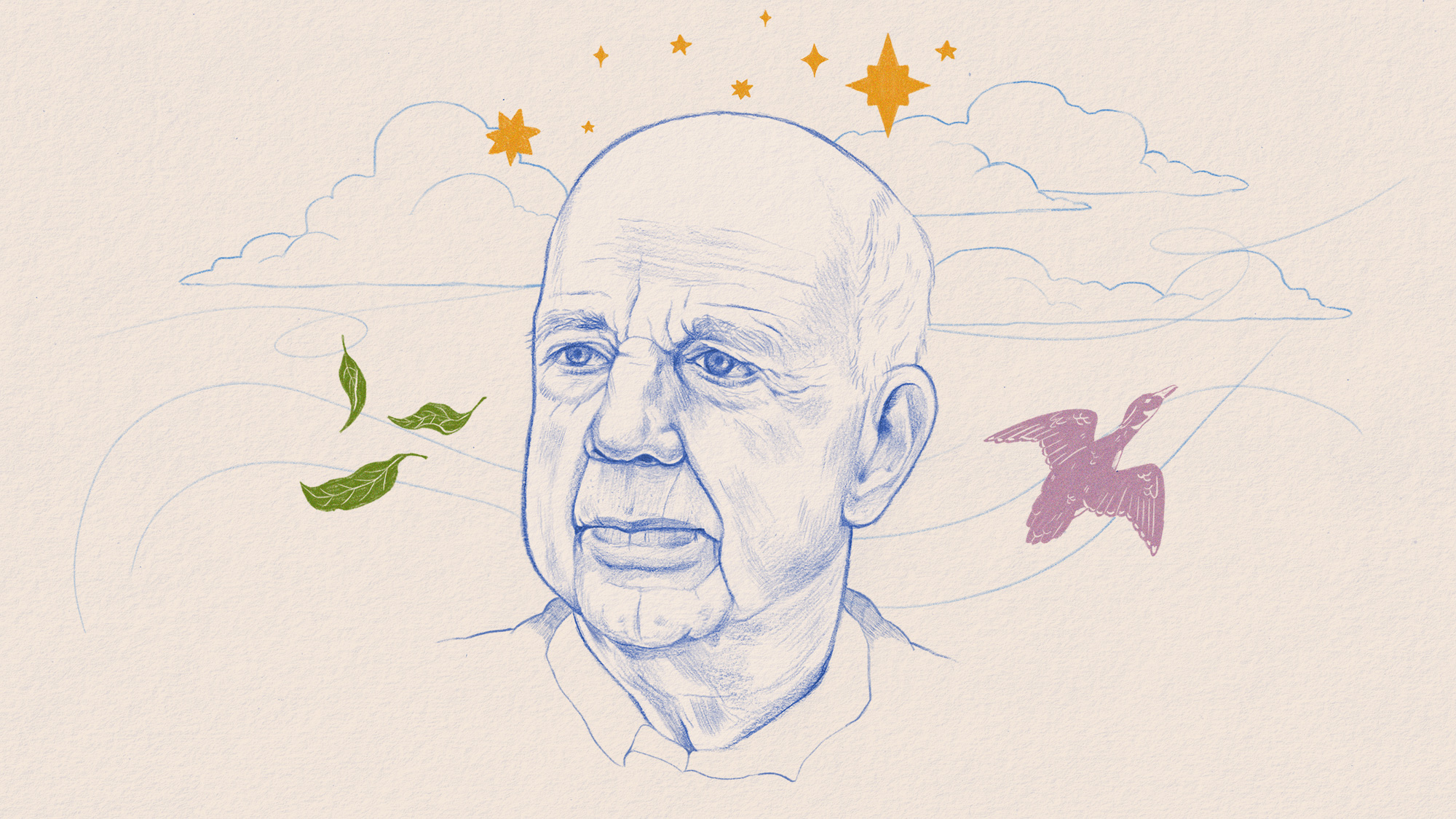
Wendell Berry—farmer, philosopher, poet, essayist, and uncompromising environmental activist—passed away last week at the age of 92. For more than half a century, Berry operated as a singular moral and intellectual compass from his farmhouse in Henry County, Kentucky. Eschewing computers, smartphones, and the accelerating speed of the digital age, he authored over 50 books of poetry, fiction, and nonfiction, primarily using a simple pencil and paper. His life’s work was an extended meditation on humanity’s relationship with the natural world, the ethics of agriculture, and the imperative of local stewardship.
Berry’s philosophy resisted neat categorization within modern political frameworks. He was simultaneously embraced and critiqued across the political spectrum, earning a reputation as a defender of traditional agrarian communities, a radical environmentalist, and a staunch anti-industrialist. Where modern activism often fixated on national policy debates and institutional lobbying, Berry urged a return to the soil. To Berry, public crises could not be separated from private choices. His legacy endures not merely in his vast literary output, but in the generations of writers, farmers, conservationists, and citizens he inspired to rethink how humanity inhabits the Earth.
Detailed Chronology: A Life Rooted in the Soil
Formative Years and the Return to Kentucky
Born in 1934 in Henry County, Kentucky, Berry grew up deeply embedded in the rural traditions of the Ohio River Valley. After completing his undergraduate and graduate studies at the University of Kentucky—where he later taught—and spending time as a Stegner Fellow at Stanford University, Berry traveled and taught in various academic settings, including a stint in New York.
However, the gravitational pull of his native landscape proved irresistible. In 1964, Berry made the definitive choice to return to Kentucky, purchasing a hillside farm in Henry County. This move marked the beginning of his lifelong commitment to agrarian life, local community building, and small-scale farming. It was from this homestead that he would produce the vast majority of his extensive bibliography.
The Rise of the "Mad Farmer" and Environmental Activism
While Berry was primarily known as a man of letters, his convictions repeatedly spilled over into direct, physical action. He did not confine his environmentalism to the page; he put his liberty on the line when he believed industrial forces were ravaging the land.
1979: Berry was arrested during a protest against a nuclear power plant in Indiana, signaling his early and broad opposition to high-risk, centralized energy technologies.
1987: He published his seminal essay in Harper’s Magazine, “Why I am not Going to Buy a Computer,” firmly establishing his critique of industrial technology and its tendency to alienate human beings from their labor and immediate environment.
2011: At age 77, Berry was arrested once again, this time during a sit-in inside the Kentucky state government offices to protest the destructive practice of mountaintop removal coal mining.
The 2010s: Berry remained a visible and vocal opponent of the fossil fuel industry. He participated in demonstrations blocking the gates of a coal-fired power plant in Washington, D.C., and made national headlines by pulling his personal papers from the University of Kentucky archives in protest of the institution accepting a $7 million donation from Alliance Coal.
Later Years and Legacy
Into his late eighties and nineties, Berry maintained a disciplined routine of writing, reading, and tending to his land. Even as modern technology transformed nearly every aspect of global society, his refusal to adopt digital tools remained steadfast. When he passed away at 92, he left behind a landscape scarred by the very industrial forces he spent a lifetime resisting, yet deeply enriched by the intellectual and ethical framework he provided for its defense.
Supporting Context & Metrics: The Philosophy of the Local
To understand Berry’s contribution to American thought, one must examine his critique of industrial capitalism and technological acceleration. His worldview was built on several foundational pillars:
The Critique of Technology and the "Luddite" Misconception
When Berry rejected the computer in 1987, critics frequently labeled him a Luddite or a curmudgeon. Yet, as scholars and historians have increasingly recognized, Berry’s stance mirrored the true spirit of the early 19th-century Luddite movement: textile workers who smashed industrial machinery not out of blind hatred for progress, but to protect the dignity, autonomy, and quality of their labor against exploitative systems. Berry argued that labor-saving devices often resulted in labor-displacing economic models that severed communities from their means of survival.
"Think Little" and the Rejection of Globalized Abstraction
Published in 1972 at the dawn of the modern environmental movement, Berry’s essay “Think Little” captured his skepticism toward mass movements that sought salvation through macro-level political maneuvering while ignoring micro-level complicity.
"There is no public crisis that is not also private," Berry wrote.
He contended that systemic ecological collapse was driven by cumulative, everyday choices made by disconnected individuals. Reversing this damage required a fundamental shift in daily living habits—eating locally, working cooperatively, and treating the earth with local reverence rather than global abstraction.
A Politics Beyond Categories
Berry’s political identity frequently confounded observers. While he fiercely defended traditional marriage, family, and community structures, he rejected the notion that the state possessed the moral authority to legislate human relationships. Deeply religious, he described himself as a "bad weather church-goer," preferring to spend quiet Sunday mornings walking through the woods rather than sitting in a pew. He despised dualisms—the false separations between humanity and nature, body and soul, or rigid political factions. This holistic perspective granted him a rare, cross-ideological appeal, attracting everyone from traditional conservatives disillusioned by corporate capitalism to radical ecologists seeking an actionable land ethic.
Official Statements and Academic Perspectives
The literary and academic communities have responded to Berry’s passing with deep reflections on his enduring relevance.
Jeffrey Bilbro, an English professor at Grove City College and the author of several critical studies on Berry, noted that the writer’s uncompromising stance was matched by a profound pragmatism regarding human limitation:
"For an uncompromising person or a person of convictions, I think he recognized the need in a fallen world," Bilbro observed. "Our hands are all dirty, and we’re making these compromises, and it’s better to be honest about the necessity to do so and try to do what we can to live right, even if we can’t attain the purity that we might wish."
Environmental organizations, academic institutions, and cultural commentators have similarly praised Berry for forcing society to confront the hidden ecological costs of convenience. His publisher and various literary societies have emphasized that Berry’s warnings regarding soil depletion, climate disruption, and cultural fragmentation have only grown more urgent in the decades since they were first articulated.
Future Outlook: The Indelible Blueprint of Wendell Berry
As contemporary society grapples with escalating climate change, biodiversity loss, and the isolating impacts of hyper-digitalization, Wendell Berry’s work offers a clear, albeit demanding, roadmap for the future.
Berry never promised quick fixes. In poems like “A Discipline,” he confronted the reality of looming ecological crises head-on, writing of an apocalypse that "approaches on every side, there is no other place to turn." Yet, his philosophy refused fatalism. Instead, he argued that "it is the time’s discipline to think of the death of all living, and yet live."
The future of environmentalism, according to Berry’s enduring framework, will not be won solely in legislative chambers or corporate boardrooms, but in the patient, generational work of tending the soil. Whether it is planting sequoias whose shade we will never sit under, or restoring a strip-mined mountaintop with the understanding that a lush forest may not return until long after we are gone, Berry taught that hope is an active, physical verb.
In an era defined by transience and digital distraction, Wendell Berry’s life stands as a monumental reminder: to change the world, one must first be willing to know, love, and protect the small piece of earth beneath one’s feet.