

Executive Overview
Earth’s climate system has entered a turbulent, highly volatile phase as a historically unprecedented El Niño event shatters long-standing temperature records months ahead of its anticipated peak. Described by meteorologists and climate scientists in terms ranging from "jaw-dropping" to "Godzilla-level," the current warming phenomenon in the equatorial Pacific Ocean has eclipsed previous benchmarks established during modern observational history.
This thermal anomaly is not occurring in a vacuum. Unfolding against a backdrop of rapidly accelerating, human-induced global heating, the phenomenon represents a dangerous convergence of natural climate cycles and fossil-fuel-driven greenhouse gas accumulation. Climate models project that the event will continue to intensify, potentially driving global temperatures to unprecedented highs by 2027 and threatening to destabilize global food security, critical trade infrastructure, and human health on a mass scale.
As extreme weather patterns ripple across continents—manifesting as catastrophic wildfires in Southeast Asia, debilitating droughts in Central America, and shifting monsoons in South Asia—the international community faces an urgent reckoning. The United Nations and leading scientific bodies have mobilized emergency responses, warning that the compounding impacts of this "supersized" El Niño could trigger economic losses dwarfing past financial crises and push tens of millions of people into acute hunger.
Detailed Chronology and Temperature Metrics
The escalation of the current El Niño has alarmed the global meteorological community due to both the velocity of its rise and the absolute magnitude of its thermal output.
Recent data compiled by NOAA (the US National Oceanic and Atmospheric Administration) and analyzed through platforms like Climate Reanalyzer reveals that temperature anomalies at the heart of the El Niño region (Nino3.4 in the Pacific Ocean) have reached 3.05°C. This figure is measured against the standard baseline average of 1991–2020. By comparison, the previous high-water mark in 150 years of modern instrumental records was set at 3.02°C in late November 2015.
Crucially, the current event has breached this threshold several months ahead of its projected winter peak. Meteorologists often prefer a secondary metric: the Oceanic Niño Index (ONI), which employs a 30-year rolling average to account for the broader, long-term trajectory of human-caused global heating. According to climate data trackers at The Climate Brink, the ONI metric is currently hovering just one-hundredth of a degree below the historic 2015 record and is widely expected to surpass it imminently.
Projections synthesized by climate scientist Zeke Hausfather from an ensemble of 14 separate global climate models indicate that the phenomenon could peak at an astonishing 4.0°C above baseline averages between November and December. To put this into perspective, any temperature rise exceeding 0.5°C is formally classified as an El Niño, while readings above 2.0°C are designated as "very strong" or "super" El Niños. The trajectory of the current event suggests it will far outstrip the benchmark super El Niños of 1997/1998 and 2015/2016.
Paleoclimate reconstructions analyzing coral samples, tree rings, and historical documents suggest that an El Niño of this magnitude has likely not occurred in at least 1,000 years. This historical context underscores the extraordinary nature of an event that researchers argue is being directly supercharged by the accumulation of atmospheric greenhouse gases.
Supporting Context & Global Impacts: A Cascading Crisis
The collision between a record-breaking El Niño and an already overheated planet is triggering a domino effect of extreme weather anomalies across every inhabited continent. While El Niño cycles historically follow predictable teleconnections—altering jet streams and atmospheric pressure systems—the compounding multiplier of global heating is rendering traditional predictive models increasingly precarious.

Asia and the Pacific
In Southeast Asia, prolonged hot and dry conditions have fostered record-breaking wildfires, particularly across regions of Indonesia. The resulting toxic smoke haze has exposed millions of residents to fatal levels of air pollution, placing an immense burden on regional healthcare infrastructure. Meanwhile, in South Asia, vital monsoon rains have been significantly curtailed or disrupted, threatening agricultural output in nations heavily dependent on seasonal precipitation for food production.
The Americas and Global Trade
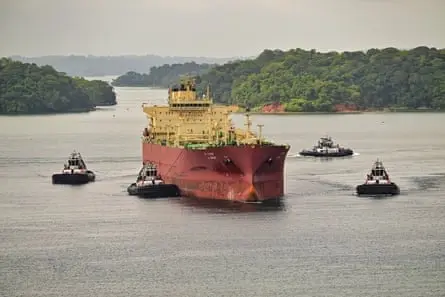
Central America and the Caribbean are currently enduring severe drought conditions that have severely impacted crop yields and led to water deficits. Most notably, declining water levels in Gatun Lake have forced local authorities to restrict vessel traffic through the Panama Canal. As a vital artery for global commerce, the reduction in canal capacity has created maritime bottlenecks, driving up shipping costs and causing delays in international supply chains.
Further south, nations such as Peru and Chile are experiencing intense rains and catastrophic flooding typical of strong El Niño phases, disrupting regional infrastructure and isolating historic tourism sites like Machu Picchu. In North America, the southern tier of the United States braces for a wet and stormy winter, while the Atlantic hurricane season has experienced an unusual suppression, recording zero named storms to date—a stark counterpoint to the heightened typhoon activity expected in the Pacific basin.
Food Security and Economic Toll
The socio-economic ramifications of this climatic upheaval are profound. In August, the United Nations World Food Programme issued stark warnings that the compounding impacts of the super El Niño could push approximately 50 million people into acute hunger over the coming year, driven by soaring staple food prices and agricultural failures.
Economists are drawing alarming parallels between the physical devastation of the weather patterns and global macroeconomic stability. Prof. Bill McGuire noted that while the 2008 global financial crisis reduced global GDP by roughly $2 trillion, the 1997–98 super El Niño resulted in an estimated $5.7 trillion in global damages. Given the scale and intensity of the current event, financial analysts fear the economic fallout could exceed all historical precedents.
Official Statements and Scientific Consensus
The scientific consensus surrounding the event is characterized by deep concern over the unprecedented nature of the observations.
Prof. Friederike Otto of Imperial College London emphasized the systemic nature of the threat:
"This event is a huge redistribution of energy in the climate system and is dangerous because it is unfolding on top of a much warmer, human-influenced climate system. So, in many places around the world we will see never-before-experienced heat extremes, with all their consequences on health, food security and water stress. El Niño comes and goes, but as long as we continue to burn fossil fuels it occurs on an increasingly hotter baseline, making it much more difficult for communities to deal with the consequences."
United Nations Secretary-General António Guterres issued a stark warning regarding the planetary implications:

"El Niño is being supersized before our eyes. The science leaves no room for doubt: the planet is in uncharted waters and the world is in the danger zone of extreme weather. The race now is between rising risks and our commitment to take climate action and protect people."
Echoing these concerns, Prof. Kevin Trenberth of the US National Center for Atmospheric Research highlighted the interconnected feedback loops driving the crisis:
"All effects from El Niño are magnified by global climate change. The northern summer of excess heat and wildfires in Europe, North America and Asia are but a sample of what is to come."
In response to the escalating threats, the UN World Meteorological Organization (WMO) has initiated its largest mobilization effort in 50 years. This initiative is designed to bolster national meteorological services, particularly in developing nations, ensuring that communities receive accurate, life-saving early warnings ahead of extreme weather events.
Future Outlook: Navigating the Danger Zone
Looking ahead, the meteorological outlook remains fraught with danger. As the El Niño event approaches its peak intensity in the closing months of the year, its atmospheric influence will persist well into subsequent years.
Climate modelers project that the combined thermal energy released by the Pacific Ocean anomaly, stacked on top of ongoing anthropogenic warming, will virtually guarantee that upcoming years—particularly 2027—will shatter historical global temperature records. The southern hemisphere summer is anticipated to bring severe droughts and elevated wildfire risks to Australia and southern Africa, posing compounding threats to biodiversity, water security, and rural economies.
The intersection of a millennial-scale natural climate cycle with the relentless acceleration of fossil fuel emissions has forced humanity into an unprecedented era of weather volatility. As communities from the agrarian plains of Asia to the urban centers of the Americas confront the reality of a "Godzilla" El Niño, the imperative for aggressive, coordinated global climate action has never been more urgent. The margin for error has vanished, and the trajectory of human resilience now depends on how rapidly societies can adapt to an environment where historical precedent no longer applies.



