


Executive Overview
An exhaustive investigation into emergency response records has revealed that the record-breaking heatwave in June forced all ten NHS ambulance trusts in England into uncharted operational territory, with call volumes and life-threatening emergencies reaching levels that surpassed traditional winter peaks and even the heights of the COVID-19 pandemic.
Data obtained through Freedom of Information (FOI) requests by Carbon Brief exposes a systemic crisis triggered by extreme thermal stress. As mercury levels climbed past 37°C (98.6°F) in parts of the country, triggering only the second "Red" extreme heat health alert in British history, emergency infrastructure was stretched to the brink of collapse. Four out of England’s ten regional ambulance trusts—including the London Ambulance Service—handled unprecedented numbers of Category 1 calls, the most urgent classification reserved for immediately life-threatening emergencies such as cardiac arrests and severe respiratory distress, on at least one day between June 23 and June 27.
       SUMMARY OF HEATWAVE EMERGENCY SURGE (JUNE 23–27)
+-------------------------------------------------------------------+
| Baseline Summer Daily Cat-1 Emergencies:  ~2,500 incidents        |
| Peak Single-Day Cat-1 Emergencies (June 26): 4,084 incidents (+63%)|
| Total Excess UK Summer Heat Deaths:       ~3,000 estimated        |
| Elective NHS Operations Cancelled:        >1,000 procedures       |
+-------------------------------------------------------------------+
Two major regional services—the East of England and South Western ambulance trusts—recorded their highest single-day 999 call volumes in history. Across every single ambulance trust in England, at least two days during the late-June thermal wave ranked within their top 20 busiest days ever recorded. Combined with estimates indicating nearly 3,000 heat-related excess deaths nationwide and more than 1,000 cancelled NHS surgical procedures, the findings signal a profound shift in public health dynamics: climate-driven extreme heat has formally joined winter freezes as a primary operational threat to the United Kingdom’s emergency healthcare system.
Detailed Chronology of the Crisis: June 23–27
The crisis unfolded rapidly across late June as an oppressive high-pressure system trapped hot air over the British Isles, escalating ambient temperatures far beyond seasonal norms and triggering severe public health interventions.
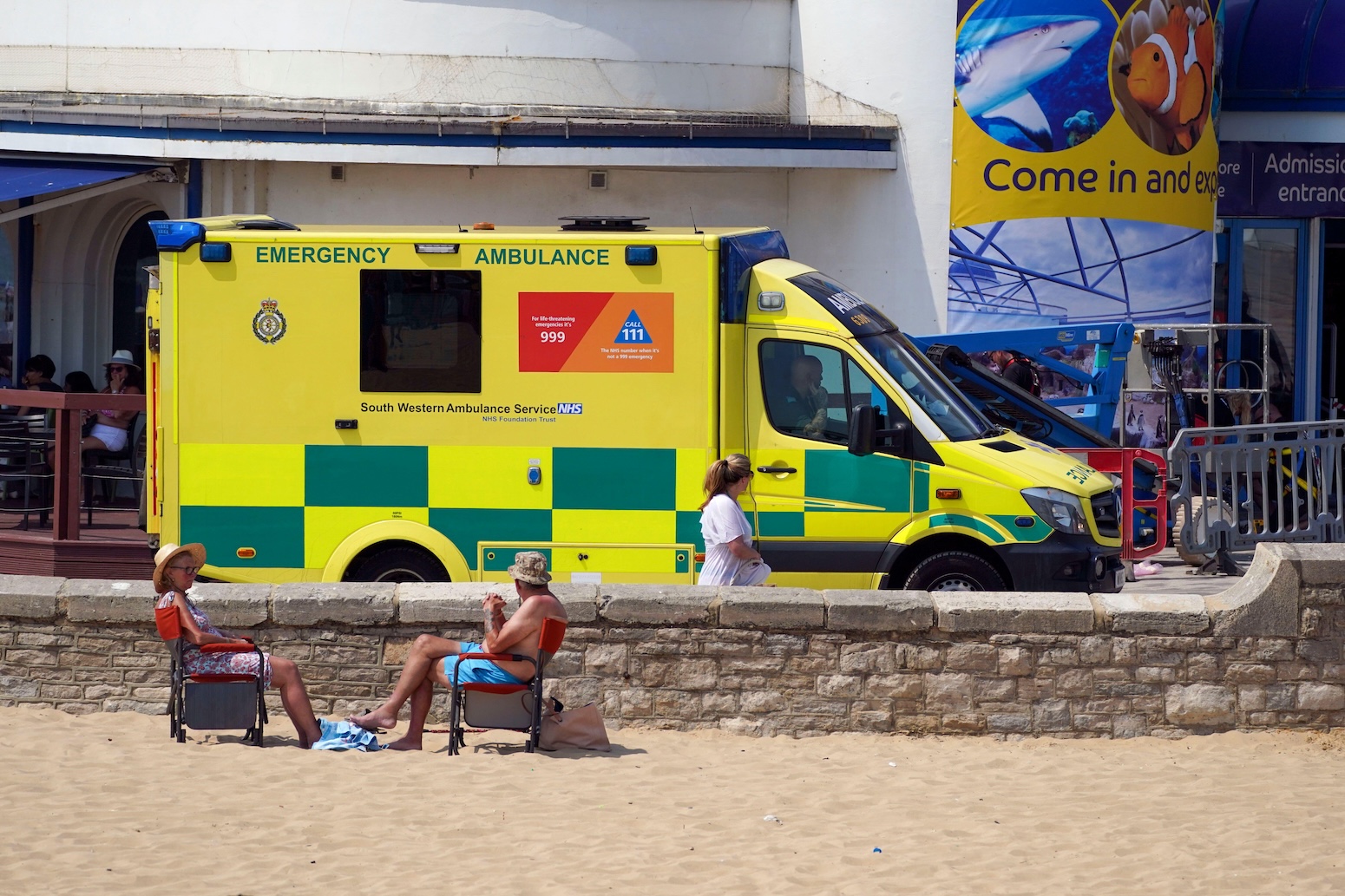
           CHRONOLOGY OF THE HEATWAVE EMERGENCY (JUNE 23-27)

  JUNE 23                    JUNE 24-25                  JUNE 26                    JUNE 27
  [Amber Alert Active]       [Red Alert Issued]          [Thermal Climax]           [Systemic Lag]
  • Temperatures rise        • Temperatures hit 36°C+    • Norfolk hits record June • Extreme heat lingers
  • 999 calls climb          • Red Heat Health Alert       temp (37°C+)               • LAS & SE Coast stay
  • Pre-hospital load          active across Midlands    • National Cat-1 calls      at peak response
    begins surging             & South                     hit 4,084                  • 5-day heat strain
                             • Multi-day call overload   • Record 999 volumes in      culminates in massive
                               in SE Coast/South Central   East & South West          hospital backlogs
June 23: The Initial Escalation
As ambient temperatures crossed early warning thresholds, the UK Health Security Agency (UKHSA) and the Met Office elevated regional heat-health warnings. Ambulance trusts recorded an immediate, sharp uptick in 999 transmissions. Call centers began receiving a dual surge of routine heat-exhaustion cases alongside sudden acute decompensations in patients with existing chronic health conditions. Every regional trust saw June 23 enter its historical top 20 busiest days for incoming calls.
June 24–25: Activation of the Red Extreme Heat Warning
By June 24, forecasters confirmed that localized temperatures would breach 36°C across central and southern England. Authorities issued a Level 4 "Red" Extreme Heat Health Alert covering the entire Midlands and Southern England—signifying a direct threat to life not only for vulnerable demographics but for the healthy population as well.
During these 48 hours, the South East Coast Ambulance Service and South Central Ambulance Service—which collectively cover a vast geographic corridor extending from Oxfordshire to the Kent coast—entered a critical state. Both services recorded historic high callouts for Category 1 life-threatening incidents on June 25, setting off three consecutive days of unprecedented emergency responses.
June 26: The Thermal Peak and Record Call Volumes
June 26 represented the apex of the atmospheric crisis. In Norfolk, temperatures reached the highest June level ever recorded in the United Kingdom, surpassing 37°C. Simultaneously, pre-hospital healthcare services encountered staggering operational loads:
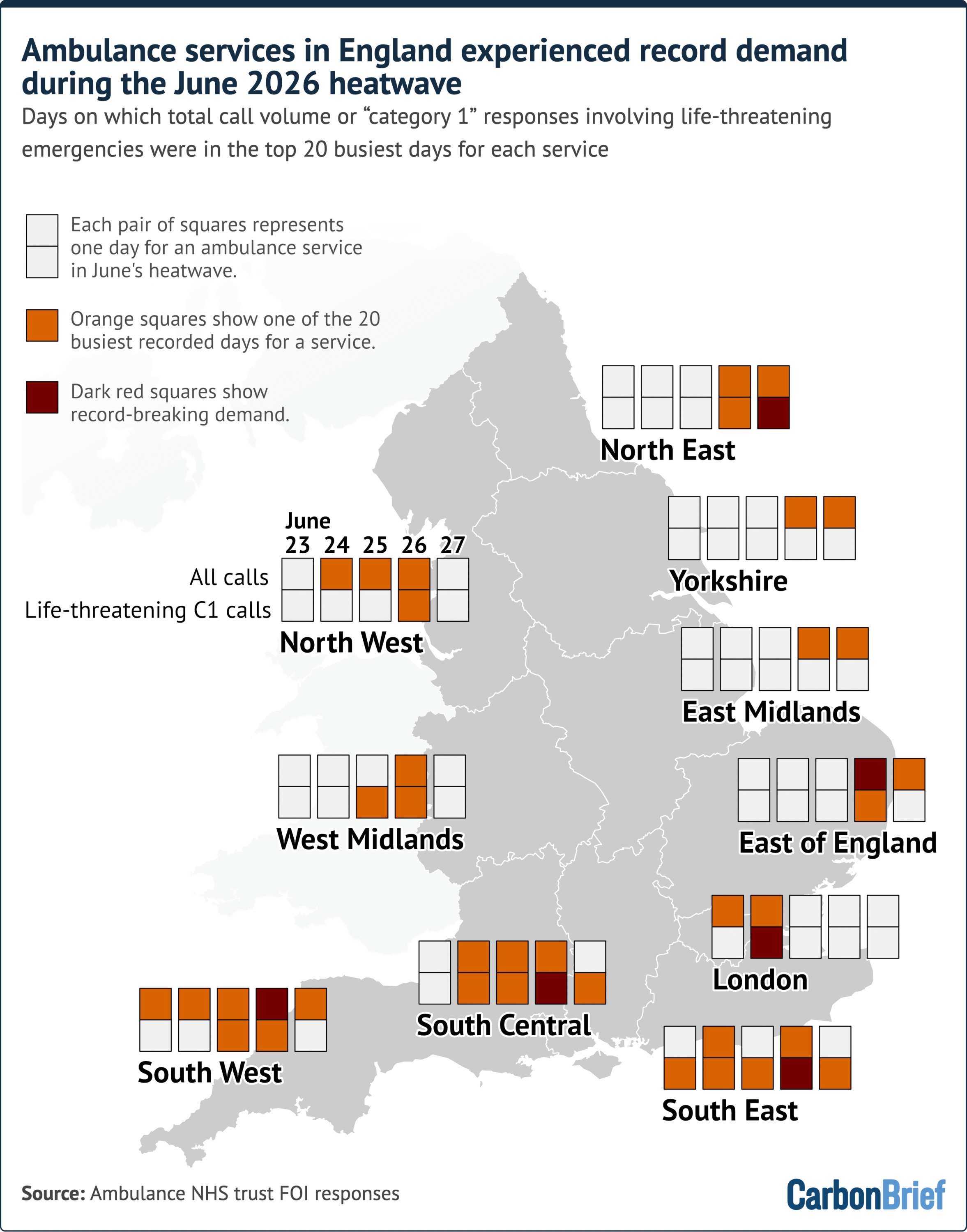
- National Impact: NHS ambulances across England responded to 4,084 Category 1 emergencies in a single 24-hour period. In a standard summer period, daily Category 1 responses average approximately 2,500—marking a single-day spike of over 63% above baseline.
- Regional Extremes: The East of England Ambulance Service and the South Western Ambulance Service both handled their highest total volume of 999 calls since records began.
June 27: Sustained Heat and Operational Backlog
Though temperatures began a slow modification late on June 27, cumulative thermal exposure maintained pressure on emergency services. The London Ambulance Service (LAS) and North East Ambulance Service reported sustained historical peak activity. The five-day sequence ended with emergency departments across England facing severe gridlock, compounded by delayed ambulance turnarounds and heat-induced hospital ward capacity constraints.
Supporting Context & Metrics: Analyzing the Systemic Strain
To evaluate the magnitude of the disruption, Carbon Brief issued standardized Freedom of Information requests to all ten NHS ambulance trusts in England, analyzing historical daily call volumes and response metrics extending back through the 2010s.
       REGIONAL AMBULANCE TRUST PERFORMANCE & IMPACT SUMMARY
+-------------------------+-------------------------------+-----------------------------------+
| Trust Region            | Peak Historical Event Recorded | Operational Highlights            |
+-------------------------+-------------------------------+-----------------------------------+
| London                  | Record Category 1 Calls       | Highest life-threatening volume   |
| South East Coast        | Record Category 1 (June 25-27)| 3 consecutive days of peak Cat-1  |
| South Central           | Record Category 1 (June 25-27)| Historic severe incident spike    |
| North East              | Record Category 1 Calls       | Northern region hit by extreme load|
| East of England         | Highest Total 999 Volume      | Record call volume on June 26     |
| South Western           | Highest Total 999 Volume      | High tourism + extreme heat surge |
+-------------------------+-------------------------------+-----------------------------------+
Categorization of Emergency Demand
NHS ambulance trusts categorize incoming incidents into four primary response levels based on clinical triage:
- Category 1: Immediately life-threatening injuries and illnesses (e.g., cardiac arrest, respiratory failure, severe anaphylaxis). Target response time: 7 minutes.
- Category 2: Serious, non-immediately life-threatening conditions (e.g., stroke, chest pain).
- Category 3: Urgent conditions requiring treatment and transport (e.g., uncomplicated fractures).
- Category 4: Non-urgent conditions requiring clinical evaluation or transport.
The FOI disclosures reveal that the June heatwave did not merely elevate minor or non-urgent queries; it drove an extraordinary spike in high-acuity Category 1 emergencies.

               DAILY CATEGORY 1 EMERGENCY RESPONSES (ENGLAND)

  5,000 |
        |                                       [June 26 Peak]
  4,000 |                                          4,084
        |                                         +-----+
  3,000 |                                         |     |
        |  [Typical Summer Average]               |     |
  2,000 |       ~2,500                            |     |
        |      +-------+                          |     |
  1,000 |      |       |                          |     |
        |      |       |                          |     |
      0 +------+-------+--------------------------+-----+------+
                Standard Summer Baseline           June 26 Heatwave Peak
Summer Heat vs. Winter Spikes and COVID-19 Peaks
Historically, the NHS operational model relies on seasonal resource shifting: summer months typically allow services to recover operational reserves, build capacity, and perform maintenance in preparation for the severe demand surges of winter, driven by flu, icy conditions, and cold-induced cardiovascular strain.
The June data demonstrates that extreme heat has dismantled this traditional cycle:
- Winter Comparison: Daily demand during the five days of the heatwave regularly matched or exceeded peak days from severe winter freezes over the past decade.
- Pandemic Comparison: For multiple trusts, daily Category 1 response numbers during late June were higher than those recorded at the height of the COVID-19 pandemic in 2020 and 2021.
- Structural Baseline Growth: Underlying baseline demand for ambulance services has grown consistently over recent years. Driven by an ageing population, increased prevalence of multi-morbidity (complex chronic illnesses), and rising mental health crises, pre-hospital care operates near capacity year-round. Consequently, extreme weather events now hit a system with virtually zero structural margin for error.
       HISTORICAL DEMAND COMPARISON (CATEGORY 1 EMERGENCIES)
+------------------------------------+------------------------------------+
| Baseline Summer Daily Average      | ~2,500 callouts                    |
+------------------------------------+------------------------------------+
| COVID-19 Pandemic Peak Days (2020) | ~3,200 - 3,600 callouts            |
+------------------------------------+------------------------------------+
| Typical Severe Winter Peak Day     | ~3,700 - 3,900 callouts            |
+------------------------------------+------------------------------------+
| Heatwave Peak (June 26)            |  4,084 callouts                    |
+------------------------------------+------------------------------------+
Official Statements & Frontline Realities
The statistical surge translated into severe physiological and operational pressures on the ground, affecting patients, pre-hospital clinicians, and broader NHS hospital networks.
Physiological Impact on Patients
The physiological strain exerted by ambient heat above 35°C is immediate and complex. Extreme heat forces the human cardiovascular system to work significantly harder to cool the body through peripheral vasodilation and sweating, leading to dehydration, electrolyte imbalances, hemoconcentration, and heightened risk of thrombosis.

Stu Holliday, Head of Emergency Preparedness, Resilience, and Response (EPRR) at the North East Ambulance Service, detailed the clinical realities during the event:
"During periods of hot weather, we typically see an increase in calls from people affected by dehydration, heat exhaustion, and heatstroke, as well as those whose existing health conditions, particularly heart and respiratory illnesses, can be made worse by prolonged high temperatures. Older people, young children, and pregnant people can be especially vulnerable."
The broader clinical toll was profound. Epidemiological models calculated nearly 3,000 excess deaths across the UK during the summer heat periods, largely concentrated among elderly populations and individuals with underlying ischemic heart disease or chronic obstructive pulmonary disease (COPD).
                      HEATWAVE SYSTEMIC CASCADE

  [37°C+ Ambient Heat] ──► [Physiological Stress] ──► [4,084 Daily Cat-1 Calls]
                                                             │
  [1,000+ Operations]  ◄── [A&E Gridlock & Vehicle]  ◄───────┘
     Cancelled               Delays at Hospitals
Frontline Working Conditions
Ambulance crews faced extreme physical environments. UNISON, the trade union representing public sector healthcare workers, documented widespread operational distress across trusts during the surge:

- Cabin Overheating: Paramedics reported responding to urgent calls in vehicles suffering from failed or underpowered air conditioning units, with patient compartments reaching dangerously high internal temperatures.
- Relentless Call-Stacking: The sheer volume of 999 transmissions eliminated downtime between incidents, resulting in back-to-back high-acuity callouts over 12-hour shifts.
- PPE and Thermal Stress: Responders donning mandatory personal protective equipment experienced severe physical fatigue and heat exhaustion themselves, directly threatening workforce sustainability.
Secondary Healthcare Disruption
The pressure on pre-hospital services rapidly cascaded through the broader healthcare continuum. As ambulances flooded hospital emergency departments:
- A&E Handovers: Handover times escalated dramatically. Dozens of ambulances were routinely stacked outside major hospitals, effectively acting as makeshift thermal isolation wards while waiting to offload patients into overcrowded emergency rooms.
- Cancelled Elective Operations: More than 1,000 elective surgical procedures were cancelled nationwide during the heatwave period. These cancellations resulted from a combination of clinical re-prioritization—reallocating surgical beds and intensive care units to incoming heat-stroke and cardiac patients—and ambient temperature failures within aging hospital facilities whose infrastructure could not maintain required climate controls in operating theaters.
Future Outlook & Policy Implications
The findings from the Carbon Brief FOI investigation underscore a clear reality: the National Health Service can no longer treat extreme heat as a rare, black-swan anomaly. Climate projections indicate that summer heatwaves of this intensity and duration will become standard features of the UK climate by mid-century.
                  PARADIGM SHIFT IN NHS PREPAREDNESS

  TRADITIONAL MODEL                        EMERGING REALITY
  • Winter = High Emergency Surge          • Winter = Severe Emergency Surge
  • Summer = Operational Recovery          • Summer = Extreme Thermal Surge
  • Focus: Cold-Weather Illnesses          • Focus: Year-Round Capacity Crisis
Operational Paradigm Shifts
Healthcare leaders and policy analysts are calling for a fundamental restructuring of NHS emergency planning:
- Re-Evaluating Seasonal Capacity: The NHS must pivot from a winter-centric resilience model to an all-hazards, year-round crisis management framework. Staff leave, vehicle maintenance, and elective surgery schedules must be engineered around expected summer thermal surges.
- Fleet and Infrastructure Adaptation: Standardizing high-capacity, heavy-duty climate control systems across the entire national ambulance fleet is an immediate priority. Similarly, hospital estates require capital investment to retrofit aging wards with passive cooling and modern HVAC systems to prevent internal overheat risks.
- Targeted Public Health Alerts: While the UKHSA Heat Health Alert system succeeded in signaling risk, public messaging must evolve to clearly communicate the acute cardiovascular risks of extreme heat, emphasizing that thermal stress presents an immediate, physical threat to life akin to acute severe weather.
Without structural adaptation, resource allocation reform, and climate-resilient infrastructure investments, England’s pre-hospital response system risks compounding failure during future, inevitable thermal shocks—leaving frontline crews overwhelmed and vulnerable populations exposed to preventable mortality.



