

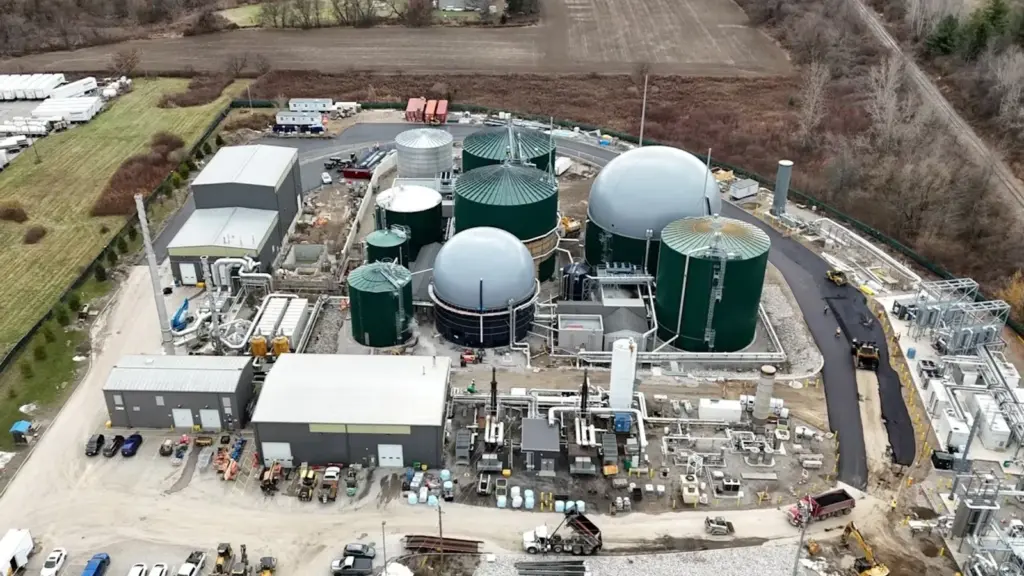
Executive Overview
In a transformative move that underscores the rapid consolidation and industrialization of the North American resource recovery sector, Vanguard Renewables has executed a major strategic acquisition of assets from Generate Upcycle. This milestone transaction significantly broadens Vanguard’s operational footprint, pushing its reach beyond the United States and directly into the lucrative Canadian clean energy market.
Backed by institutional powerhouse BlackRock—which manages Vanguard through its prestigious Global Infrastructure Partners portfolio—Vanguard is aggressively scaling up to meet surging demand for commercial food waste diversion and renewable natural gas (RNG). The deal encompasses robust infrastructure assets, strategic depackaging capabilities, and integration into Canada’s stringent Clean Fuel Regulations market.
For Vanguard, this is the third major acquisition in just 12 months, following targeted regional purchases in Florida and Minnesota. Under the leadership of CEO Mike O’Laughlin, the company is positioning itself as the definitive market leader in organic waste processing, blending municipal and industrial scale with long-term offtake agreements for major corporations like AstraZeneca. Meanwhile, the divestment allows Generate Capital, the parent entity of Generate Upcycle, to redirect capital toward pressing grid infrastructure and reliable power delivery challenges.
This in-depth report explores the mechanics of the transaction, the shifting dynamics of the organic waste sector, executive perspectives, and the future outlook for North American anaerobic digestion and RNG markets.
1. The Strategic Blueprint: Expansion, Integration, and Cross-Border Reach
Vanguard Renewables’ journey from a regional, farm-based anaerobic digester developer in 2014 to a multi-national organics recycling titan has entered a hyper-growth phase. The latest transaction with Generate Upcycle is not merely an addition of physical plant assets; it represents a calculated maneuver to capture structural dominance in the North American circular economy.
Venturing North of the Border
A critical component of this transaction is Vanguard’s entry into the Canadian clean energy ecosystem. By acquiring assets tied to Generate Upcycle, Vanguard secures a foothold in Canada’s Clean Fuel Regulations (CFR) market. This regulatory framework provides strong financial incentives for low-carbon fuels, driving demand for RNG derived from organic waste.
Generate Upcycle’s footprint in Canada includes advanced infrastructure, notably highlighted by its facility in London, Ontario. This specific site recently secured financial backing through a targeted loan under Canadian federal programs aimed at tripling local RNG production. By stepping into this ecosystem, Vanguard inherits advanced processing capacity backed by favorable regulatory tailwinds, setting the stage for cross-border synergies between its existing U.S. network and Canadian operations.
Scaling the Integrated Model
Modern organics recycling is no longer just about operating individual digesters; it requires an end-to-end supply chain. Vanguard has progressively evolved its business model to span three core pillars:
- Comprehensive Collection: Sourcing commercial and industrial food waste directly from major food manufacturers, grocery chains, and institutional generators.
- Advanced Depackaging: Utilizing specialized facilities in multiple states to separate packaged food waste from plastic, metal, and glass containers, transforming contaminated organic streams into clean feedstock for anaerobic digestion.
- RNG Offtake and Monetization: Converting organic slurries into pipeline-quality biomethane and securing multi-year offtake agreements with corporate heavyweights seeking to decarbonize their thermal energy portfolios.
As industry dynamics shift toward centralized processing, Vanguard’s strategy of scale and integration has proven essential for long-term viability, insulating the company against localized feedstock volatility and regulatory hurdles.
2. Detailed Chronology: The Evolution of Vanguard and Generate Upcycle
To understand the weight of this latest transaction, it is necessary to examine the parallel evolution of both Vanguard Renewables and Generate Capital over the past several years.
Vanguard’s Post-Acquisition Acceleration
Vanguard’s trajectory shifted permanently in July 2022 when it was acquired by asset management giant BlackRock in a landmark deal valued at approximately $700 million. Operating today within BlackRock’s Global Infrastructure Partners portfolio, Vanguard gained access to institutional-grade capital capable of funding capital-intensive infrastructure projects across North America.
This financial backing ignited a rapid expansion cycle:
- 2023: Vanguard signed a landmark RNG offtake agreement with pharmaceutical giant AstraZeneca, widely considered the largest open-market deal of its kind in the sector.
- 2024: Following internal restructuring and executive leadership shifts, the company appointed Mike O’Laughlin as Chief Executive Officer to steer its next phase of industrial expansion.
- Late 2023 to 2024: Vanguard executed a series of targeted regional acquisitions, buying up local collection and depackaging operations in Florida and Minnesota to secure proprietary feedstock channels.
- Summer 2024: The company broke ground on a massive, state-of-the-art anaerobic digester in Litchfield, Minnesota, designed to process 300 tons of organic waste per day.
Generate Upcycle’s Strategic Pivot
Conversely, Generate Capital launched Generate Upcycle in May 2022 through the high-profile acquisition of StormFisher Environmental Services Ltd.—the very entity that developed the London, Ontario anaerobic digester. Generate Upcycle was built as an integrated circular economy platform spanning three countries.
However, operating biological waste infrastructure presents distinct operational and regulatory challenges. Over the subsequent years, Generate Capital actively refined its portfolio:
- It acquired compost and organics processor Atlas Organics in 2022, only to divest it later to Circular Services in a portfolio realignment.
- It faced state-level permitting and oversight challenges, notably leading to the closure of an anaerobic digester facility in Michigan.
- It optimized its Canadian assets, securing federal backing for the London, Ontario facility expansion.
With this latest transaction, Generate Capital is executing a strategic capital rotation. By shedding these specific organics assets, Generate can redeploy capital into other infrastructure verticals—particularly addressing grid constraints and power delivery for high-demand energy users.
3. Supporting Context, Metrics, and Market Dynamics
The organics recycling landscape is undergoing a structural transformation driven by corporate net-zero commitments, municipal landfill bans on organic waste, and federal clean fuel standards.
Current Operational Footprint
Prior to this latest transaction, Vanguard’s established portfolio included utility-grade anaerobic digesters strategically located across Massachusetts, Vermont, Virginia, and Wisconsin. These facilities are supported by standalone depackaging operations across four states, ensuring a steady stream of pre-processed food waste.
With the addition of Generate Upcycle’s assets, Vanguard’s geographic footprint broadens significantly. The integration adds new operational nodes in strategic growth corridors across the Northeast United States and Canada.
Pipeline and Development Metrics
Despite facing localized community resistance and development hurdles—such as Vanguard’s decision earlier this year to withdraw from a proposed anaerobic digestion project in Murray County, Georgia—the company’s overall development pipeline remains robust.
According to Vanguard’s Director of Communications, Javier Vargas, the company currently maintains 10 new facility sites in its active development pipeline. These projects range from early-stage permitting to active construction, such as the Litchfield, Minnesota facility.
The following table summarizes key comparative aspects of the transaction and market positioning:
| Metric / Dimension | Vanguard Renewables | Generate Upcycle Assets Involved |
|---|---|---|
| Primary Backer | BlackRock (Global Infrastructure Partners) | Generate Capital |
| Core Focus | End-to-end food waste recycling & RNG production | Scaled organic waste platform development |
| Geographic Reach | United States (Expanding into Canada) | North America (U.S., Canada, international footprint) |
| Recent Deal Velocity | 3 acquisitions in 12 months (FL, MN, Generate Assets) | Portfolio optimization and capital reallocation |
| Regulatory Market | U.S. Renewable Identification Numbers (RINs), state LCFS | Canadian Clean Fuel Regulations (CFR) |
4. Official Statements and Industry Perspectives
The transaction has drawn widespread commentary from top executives across the clean energy and infrastructure sectors, highlighting the strategic rationale driving the deal.
Highlighting the urgency of scaling operations, Vanguard CEO Mike O’Laughlin emphasized the critical role of integration in the modern waste recovery market:
"Landfill diversion represents one of the largest opportunities in the resource recovery market, and scale and integration have become essential to realizing its full potential," said O’Laughlin. "We’re creating more recovery pathways for customers, expanding our presence across strategic growth markets in the Northeast and Canada, and providing more reliable, long-term solutions for organic material diversion."
O’Laughlin’s commentary speaks directly to the commercial realities facing major food manufacturers and grocery retailers. These enterprises face mounting regulatory penalties for landfilling organic waste and require reliable, single-source partners capable of managing nationwide food waste streams with zero compliance risk.
On the other side of the transaction, Generate Capital CEO David Crane addressed the macro-economic drivers compelling his firm to divest its organics platform:
"We have spent the past decade building Upcycle into a scaled organic waste platform with strong businesses across three countries," Crane noted. "The transactions allow us to recycle capital toward our strategy of delivering reliable power to large energy users in an increasingly constrained grid."
Crane’s perspective illustrates a broader trend within institutional infrastructure investing: capital is fluidly moving toward sectors experiencing unprecedented demand surges—such as data center power requirements and electrical grid modernization—while mature waste assets are consolidated by specialized sector leaders like Vanguard.
5. Future Outlook: The Next Frontier for Renewable Natural Gas
As Vanguard Renewables absorbs the Generate Upcycle assets and integrates them into its BlackRock-backed operating framework, the North American organics recycling sector is poised for continued consolidation.
Key Trends to Watch:
- Stricter Landfill Bans: Municipalities and states across the U.S. and provinces in Canada continue to enact outright bans on organic waste in landfills. This regulatory pressure will force food waste generators to seek out large-scale, contracted processing partners like Vanguard.
- Corporate Decarbonization Mandates: Scope 3 emissions accounting requires Fortune 500 companies to actively manage supply chain waste and transition their thermal energy use to low-carbon alternatives. Long-term RNG offtake agreements will remain the gold standard for corporate sustainability targets.
- Cross-Border Regulatory Arbitrage: By operating in both the U.S. and Canadian markets, Vanguard can capitalize on varying carbon credit pricing schemes, optimizing the financial returns of its biomethane production facilities.
- Project Execution and Community Relations: As seen in Vanguard’s withdrawal from its Georgia project, navigating local zoning, permitting, and community engagement remains the primary hurdle for greenfield digester development. Companies that successfully acquire existing, operational facilities—such as those gained from Generate Upcycle—effectively bypass years of development and permitting friction.
Conclusion
Vanguard Renewables’ acquisition of Generate Upcycle assets represents a maturing of the North American renewable natural gas industry. By combining institutional capital, advanced depackaging logistics, and cross-border regulatory compliance, Vanguard has cemented its position as the premier architect of the circular economy for organic waste. As the energy transition accelerates, the ability to turn food waste into pipeline-grade fuel at industrial scale will remain one of the most critical infrastructure plays of the decade.



