

Executive Overview
A groundbreaking investigative report by the Brazilian journalism organization Repórter Brasil, with collaborative insights from environmental groups such as Greenpeace Brasil, has exposed a sprawling transnational pipeline connecting illegal mining in the pristine Yanomami Indigenous Territory to the heart of the United States military-industrial complex. At the center of this controversy is White Solder, a major Brazilian tin-producing conglomerate that proudly markets itself as a global leader in its sector.
According to trade data, court filings, and investigative analyses, White Solder has allegedly funneled hundreds of metric tons of tin—derived from minerals illegally extracted from protected indigenous lands in the Amazon rainforest—into the supply chains of prominent U.S. defense contractors. This metal has ultimately found its way into critical military hardware, including precision-guided missiles and advanced radar systems manufactured by defense giant Raytheon.
The revelations lay bare a profound vulnerability in global mineral supply chains, demonstrating how illicitly harvested commodities can easily bypass corporate compliance mechanisms and end up underpinning the strategic defense capabilities of a superpower. Furthermore, the scandal complicates Washington’s domestic priorities. Even as the U.S. Department of Defense pours millions of dollars into domestic smelting and refining projects to reduce its reliance on Chinese monopolies, these very same initiatives have inadvertently intersected with corporate networks implicated in environmental devastation, human rights abuses against indigenous populations, and large-scale money laundering in South America.
Detailed Chronology of an Illicit Pipeline
The exposure of White Solder’s supply network is the culmination of years of investigative tracking, culminating in legal actions taken by Brazilian authorities in late 2026. The pipeline’s mechanics rely on complex corporate layers, falsified environmental documentation, and cooperative networks designed to obscure the true origins of raw cassiterite—the heavy, dark-brown mineral oxide from which metallic tin is extracted.
The Yanomami Territory and Coopertin (2021–2022)
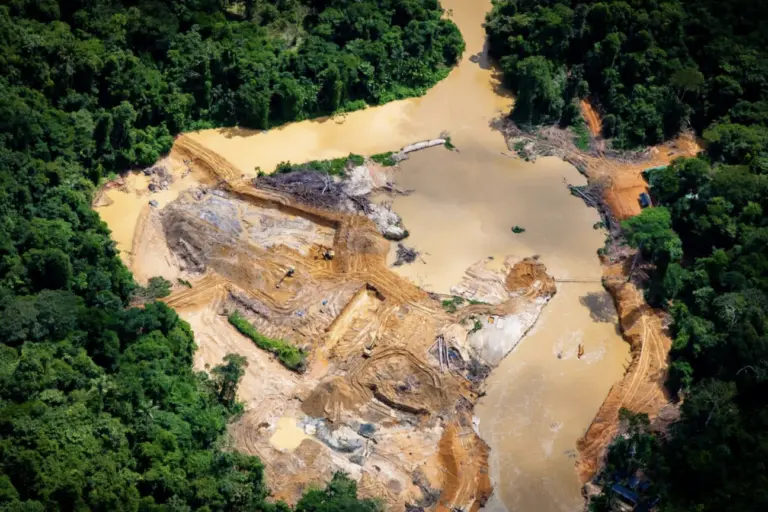
Between 2021 and 2022, illegal wildcat mining (garimpo) ran rampant across the Yanomami Indigenous Territory in the Brazilian Amazon, causing severe ecological degradation, contaminating local water sources with mercury, and sparking a humanitarian crisis for the indigenous inhabitants.
During this period, federal prosecutors allege that White Solder funneled approximately 166 million Brazilian reais (roughly $32.5 million USD) to Coopertin, a tin-producing cooperative. Prosecutors state that Coopertin acted as a laundering front, systematically disguising the true origin of more than 525 metric tons of cassiterite extracted unlawfully from Yanomami lands. By passing the minerals through Coopertin, the illicit ore was given a veneer of legitimacy before entering White Solder’s industrial refining cycle.
The "Ghost Mine" Operations (2020–2025)
Beyond its direct dealings with cooperatives tied to indigenous territories, White Solder engaged in systemic document laundering via authorized fronts. Repórter Brasil uncovered records indicating that White Solder claimed to have purchased more than 2,300 metric tons of cassiterite between 2020 and 2025 from two supposedly authorized mining areas located in the Brazilian state of Rondônia.
However, a multi-faceted investigation involving satellite imagery analysis, aerial surveys, and extensive field checks revealed a startling truth: no mining activity whatsoever was occurring at these registered locations. Greenpeace Brasil, which collaborated on the investigation, aptly dubbed these sites "ghost mines." These non-existent operations served a singular, fraudulent purpose—to act as paper facades that could absorb and legalize massive quantities of minerals illegally extracted from protected or unauthorized zones elsewhere in the Amazon.
Legal Reckoning in Brazil (August 2026)
The web of deceit finally unraveled in the courts. In August 2026, a Brazilian federal court officially accepted sweeping charges of money laundering and illegal mining filed against White Solder by the Federal Public Prosecutor’s Office. The indictment marked a milestone in Brazil’s efforts to crack down on the financial networks that incentivize environmental crimes in the Amazon, placing multinational off-takers directly in the judicial crosshairs.
Supporting Context & Metrics: From the Amazon to the Pentagon
The journey of the tin does not end at the factory gates in Brazil. Through a chain of international intermediaries, the disputed metal crossed oceans to be refined, alloyed, and integrated into technologies utilized by the United States armed forces.
The Indium Corporation and Raytheon Pipeline
Trade data analyzed by Repórter Brasil highlights the direct commercial ties linking Brazilian supply lines to American defense manufacturing. Between May 2023 and August 2025, White Solder supplied at least 525 metric tons of tin to the Indium Corporation, a U.S.-based manufacturer of materials used in electronics and thermal management.

Indium Corporation subsequently processed and supplied solder materials to Raytheon, one of the largest defense contractors in the United States. Raytheon relies heavily on these solders to assemble complex microelectronics, precision-guided munitions, and advanced radar frameworks deployed across various branches of the U.S. military.
Nathan Trotter and the Department of Defense Funding
The integration of White Solder into the U.S. industrial base extends even deeper. Between 2021 and 2025, White Solder supplied at least 2,400 metric tons of tin to Nathan Trotter, a prominent U.S. manufacturer specializing in tin and solder alloys.
In a twist that underscores the irony and risk inherent in global military supply chains, the U.S. Department of Defense awarded Nathan Trotter a lucrative $19 million contract in 2024. The stated objective of the federal grant was to establish a comprehensive domestic tin smelting, refining, and recycling facility in Pennsylvania. According to official Department of Defense press releases, this capital injection was explicitly designed to counter "Chinese efforts to monopolize the global supply, as well as mitigate smelting supply chain vulnerabilities."
Yet, while Washington sought to decouple its critical mineral supply from geopolitical rivals like Beijing, its domestic industrial partners remained deeply entwined with South American suppliers facing criminal indictments for environmental destruction and human rights violations.
Official Statements and Industry Accountability
The revelations have forced a defensive posture among corporate beneficiaries and reignited debates regarding the efficacy of international mineral certification frameworks.
The Illusion of Compliance: Indium Corporation’s Response
When questioned by journalists regarding the provenance of the metals, Indium Corporation defended its sourcing practices by stating that White Solder fully met the criteria of the Responsible Minerals Initiative (RMI) during the period it supplied the company. The RMI is widely used by corporations to verify that minerals do not finance armed conflict or human rights abuses.
However, Indium Corporation noticeably declined to clarify whether White Solder remains an active supplier in the wake of the 2026 federal indictment in Brazil. Critics point to this reticence as evidence of a systemic failure within voluntary auditing bodies, which often rely on paper trails and self-reported data rather than rigorous, on-the-ground forensic tracing.
Silence from Key Stakeholders
As the investigative findings rippled across international media outlets, several key entities maintained a strategic silence. White Solder, Nathan Trotter, Coopertin, Raytheon, and the U.S. Department of Defense all declined or failed to respond to multiple inquiries sent by Repórter Brasil regarding their supply chain due diligence and awareness of the illegal mining allegations.
Future Outlook: The Geopolitical Dilemma of Critical Minerals
The exposure of White Solder’s operations serves as an urgent warning for Western governments racing to secure the raw materials necessary for national security and technological dominance. As Emily Iona Stewart, head of policy and advocacy at the U.K.-based NGO Global Witness, observed:
"The U.S.’s expanding need for raw materials to underpin its military will lead to further harms associated with mining, both illegal and legal, unless safeguards and due diligence are put in place and followed."
Policy Implications and the Road Ahead
- Stricter Traceability Standards: Western governments can no longer rely on voluntary corporate social responsibility (CSR) frameworks or third-party certifications that can be easily manipulated by paper-trail laundering and "ghost mines." Traceability must incorporate advanced satellite tracking, isotopic fingerprinting, and forensic metallurgy.
- Accountability for Defense Contractors: The integration of illicitly sourced minerals into military supply chains exposes defense contractors and federal agencies to severe reputational, legal, and operational risks. Future procurement contracts are likely to face tighter legislative scrutiny regarding ESG (Environmental, Social, and Governance) compliance.
- The Paradox of Decoupling: Efforts to reduce reliance on adversarial states like China must not come at the expense of ignoring environmental crimes and human rights violations in partner nations. True supply chain security requires absolute transparency, ensuring that the defense of a nation does not rely upon the devastation of indigenous homelands like the Yanomami Territory.
Ultimately, the White Solder scandal illustrates that the frontline of environmental protection in the Amazon is intimately linked to the boardrooms of defense contractors in Pennsylvania and Massachusetts. Unless robust, legally binding due diligence mechanisms are enforced across all tiers of government procurement, the pursuit of national security will continue to extract a devastating toll on the global environment.



