Executive Overview
For decades, the standard narrative of American long-distance travel has been synonymous with the open highway, congested commuter arteries, and the seemingly inevitable delays of aging public infrastructure. Yet, as travelers navigate the picturesque Pacific Northwest corridors between Seattle, Portland, and Vancouver, British Columbia, a quiet transformation is unfolding. While motorists inch along the asphalt ribbon of Interstate 5, passengers aboard Amtrak’s regional services glide past snow-capped peaks, coastal vistas, and gridlocked traffic—a stark reminder of the enduring, untapped potential of passenger rail.
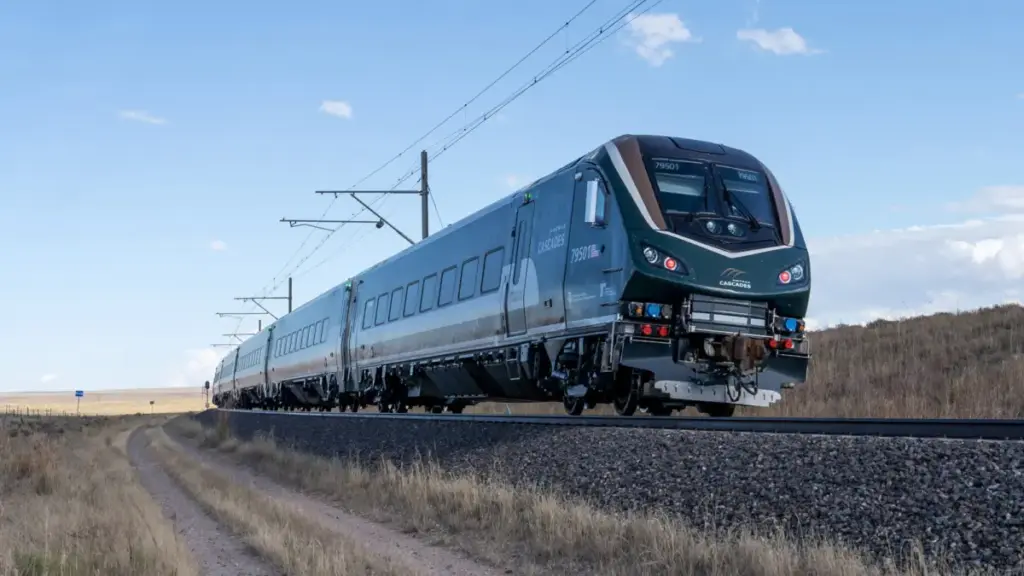
This autumn marks a critical turning point for American transit. Amtrak is set to launch the first phase of its ambitious $8 billion modernization initiative, introducing a fleet of 83 brand-new trainsets dubbed "Airo." Rolling out first along the Pacific Northwest’s Cascades route, the Airo trains represent a long-overdue generational leap forward for a national carrier that has relied on rolling stock dating back to the 1970s.
Designed to reach speeds of up to 125 mph, the Airo fleet promises to slash travel times, enhance schedule reliability, boost passenger capacity, and deliver a dramatically elevated travel experience. More importantly, these trains arrive at a pivotal legislative and political juncture. Backed by historic federal investments through the Bipartisan Infrastructure Law, Amtrak is pushing forward with its fleet modernization even as shifting political winds threaten federal subsidies. This report examines the mechanics, environmental ramifications, operational efficiencies, and political hurdles shaping the dawn of next-generation American rail.
Detailed Chronology: From Legacy Fleet to Next-Gen Expansion
The introduction of the Airo trainsets is the culmination of years of strategic planning, legislative maneuvering, and manufacturing milestones. Understanding the trajectory of this national rail overhaul requires looking at the step-by-step timeline that has brought Amtrak to this threshold.
1. The Legacy Era and Infrastructure Foundations
For the better part of fifty years, Amtrak’s intercity network—particularly outside the heavily electrified Northeast Corridor—has relied on aging diesel and electric locomotives. While maintained meticulously, these legacy trains have suffered from frequent mechanical failures, outdated interior amenities, and operational bottlenecks.
The turning point for modern investment arrived with the passage of the Infrastructure Investment and Jobs Act under the Biden administration, which injected a historic $66 billion into passenger and freight rail. This financial springboard enabled Amtrak to pursue massive, long-term capital improvement projects, setting the stage for comprehensive fleet-wide replacements.
2. The NextGen Acela Milestone (Summer 2025)
Before the broader rollout of the Airo fleet, Amtrak made history in the summer of 2025 by launching its next-generation Acela service on the Northeast Corridor. These high-speed trainsets served as a technological precursor, proving that modern, high-capacity, high-speed equipment could successfully integrate into America’s crowded legacy rail corridors and meet surging public demand.
3. Funding Tensions and Federal Grants (August 2025 – April 2026)
Despite setting back-to-back ridership records over consecutive years—demonstrating a ravenous public appetite for rail travel—Amtrak has navigated a turbulent political landscape. In early 2026, the incoming Trump administration proposed severe cuts to federal public transit funding, creating sudden uncertainty regarding the long-term fiscal runway for capital projects.
However, the federal framework proved resilient. In August 2025 and subsequently reinforced through US Department of Transportation (USDOT) announcements in mid-2026, Amtrak was awarded nearly $3 billion in grants, including $2 billion specifically earmarked for the procurement of new trainsets and nationwide service enhancements.
4. The Fall 2026 Cascades Launch
Beginning this fall, the transformation becomes tangible for everyday travelers. Amtrak will initiate the rollout of the 83 Airo trainsets, starting with an initial deployment of eight trains dedicated to the Pacific Northwest Cascades route. Manufactured domestically in the United States by industrial giant Siemens, these trainsets are engineered to transition seamlessly from regional lines to heavy commuter routes, setting a new baseline for comfort and efficiency across more than a dozen national corridors.
Supporting Context & Metrics: Efficiency, Emissions, and Economics
To fully appreciate the significance of the Airo rollout, one must examine the macroeconomic and environmental metrics that validate rail transit as an indispensable pillar of modern sustainable infrastructure.
The Environmental Advantage
Globally, rail transport accounts for approximately 8 percent of all passenger movement, yet it consumes a meager 2 percent of the global transportation sector’s energy demand. This massive disparity highlights the inherent thermodynamic and spatial efficiency of steel wheels on steel rails.
The introduction of the Siemens-built Airo trainsets amplifies this green advantage. Meeting the Environmental Protection Agency’s (EPA) stringent Tier 4 emissions standards—the most rigorous rules ever applied to locomotive engines in the United States—the new fleet drastically curtails harmful particulate matter (PM) and nitrogen oxide ($NO_x$) emissions.
+-----------------------------------------------------------------+
|              TRANSPORT ENERGY EFFICIENCY COMPARISON             |
+-----------------------------------------------------------------+
|  Rail Transport   : [████████████] (High Efficiency / Low Energy) |
|  Individual Autos : [██]          (Low Efficiency / High Energy)  |
+-----------------------------------------------------------------+
Dr. Alex Scott, a professor of supply chain management at the University of Tennessee-Knoxville, emphasizes that rail’s efficiency is fundamentally tied to high-density passenger utilization:
"If you can get a fully well-utilized rail car, be it humans or products, those are still more efficient than everybody going in different cars, even if they’re electric cars."
Navigating the Dual-Propulsion Challenge
A persistent hurdle for American rail networks is the fragmented nature of electrification. While European and Asian rail networks are largely electrified, large swaths of the American passenger rail network rely on diesel-electric propulsion.
The Airo trainsets address this technological divide through a versatile hybrid propulsion architecture. They are built to operate with high-efficiency diesel and electric configurations. Dr. Scott notes that even when operating on unelected routes, modern diesel locomotives represent a massive leap forward:
"The locomotives they make now, even if they’re not electric, are a heck of a lot cleaner than the old ones, and so upgrading equipment, be it electric or not, is a good answer."
Furthermore, this dual-capability unlocks operational game-changers in regions like the mid-Atlantic. For instance, riders traveling on the Northeast Regional route between Virginia and Boston historically faced delays of up to an hour at Union Station in Washington, D.C., solely because Amtrak crews had to physically swap the southbound diesel engine for a northbound electric locomotive. The Airo trains possess the internal engineering to transition rapidly between power modes without stopping to change out locomotives, shaving critical minutes off intercity transit times.
Official Statements & Regional Perspectives
The ripple effects of the Airo deployment extend far beyond corporate boardrooms in Washington, D.C. Regional transit authorities, advocacy groups, and municipal leaders view the new hardware as the missing puzzle piece needed to transform local transit networks.
The Pacific Northwest Vision
For rail advocates like Charlie Hamilton, who leads the regional organization All Aboard Washington, the arrival of the Cascades Airo trainsets is the fulfillment of a long-held strategy. Hamilton frequently commutes between Seattle, Portland, and Vancouver, noting that modern rail can match highway driving times while offering an exponentially more relaxing environment.
The new Cascades trainsets will carry 317 passengers per train—a significant capacity increase over the current Cascades rolling stock—while dramatically boosting reliability and interior comfort. Hamilton points out that this hardware upgrade is the direct key to achieving high-frequency transit models:
"Having trains once an hour would be very helpful, and the Airo trainsets would make it possible to do that."
Virginia’s Multibillion-Dollar Rail Transformation
Further south, regional authorities are leveraging state funds and federal partnerships to prepare for the new trains. The state of Virginia has committed an extraordinary $6 billion to its Transforming Rail in Virginia initiative, recognizing that infrastructure investments are only as effective as the rolling stock utilizing them.
Karina Romero, a spokesperson for the Virginia Passenger Rail Authority, highlights the symbiotic relationship between track upgrades and modern equipment:
"You can put down fabulous infrastructure and great tracks, but you’ve definitely got to have the equipment to roll on. It’s a win for the environment, it’s a win for the people that are sitting in traffic. We definitely want more trains in Virginia."
Passengers along the Northeast Regional and Virginia corridors are scheduled to board the Airo trains beginning in 2027, promising a seamless extension of the capacity gains initiated in the Pacific Northwest.
Future Outlook: The Road Ahead for American Rail
As Amtrak prepares to deploy the Airo fleet across more than a dozen key routes—stretching from New England and Pennsylvania to the mid-Atlantic and the Pacific Northwest—the national carrier stands at a historic crossroads.
The convergence of multi-billion-dollar federal funding packages, state-level matching initiatives (such as Virginia’s $6 billion program), and domestic manufacturing contracts with Siemens demonstrates a concerted, long-term commitment to modernizing mobility. However, realizing the full potential of these investments requires navigating a shifting political landscape. While federal grants secured in late 2025 and 2026 provide vital momentum, ongoing budgetary debates underscore the necessity of proving tangible economic and environmental returns to the American public.
+-----------------------------------------------------------------+
|                    AIRO ROLLOUT TIMELINE                        |
+-----------------------------------------------------------------+
|  Fall 2026  : Launch on Pacific Northwest Cascades Route        |
|  2027       : Deployment on Northeast Regional & Virginia       |
|  Future     : Expansion across 12+ National Corridors           |
+-----------------------------------------------------------------+
If consecutive years of record-breaking ridership numbers are any indication, the demand for fast, reliable, and environmentally sustainable passenger rail has never been higher. By replacing aging 1970s equipment with state-of-the-art, high-capacity, Tier 4-compliant trainsets capable of reaching 125 mph, Amtrak is not merely updating its fleet—it is redefining the standard of intercity travel.
For the millions of commuters currently trapped in endless highway congestion, the message from the tracks is becoming increasingly clear: the future of American travel is fast, clean, and arriving this fall.