

Executive Overview
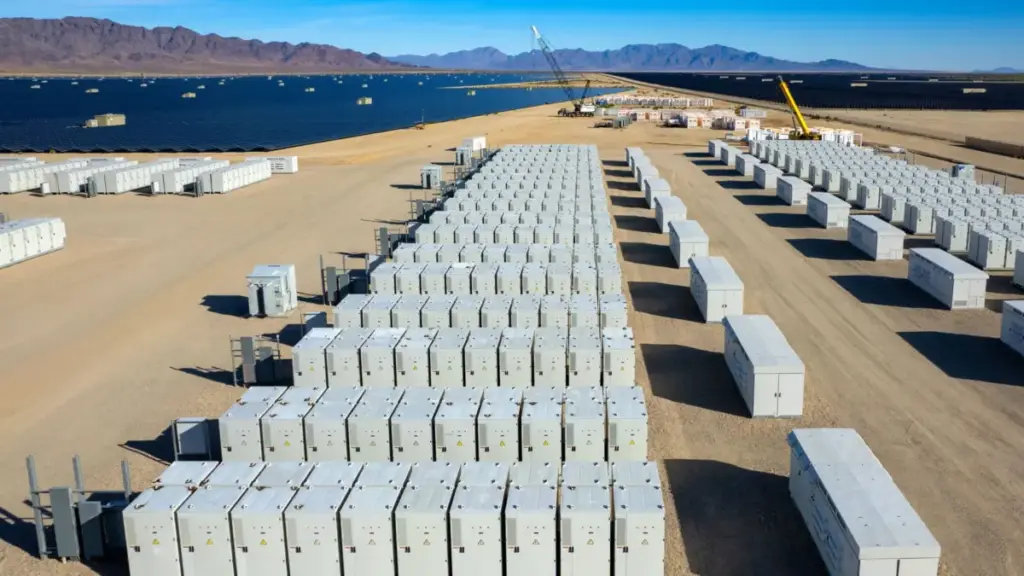
The United States energy storage sector achieved an unprecedented milestone in the second quarter of 2026, redefining the nation’s electrical grid capabilities. According to a landmark industry report published jointly by Benchmark Mineral Intelligence and the Solar Energy Industries Association (SEIA), the US brought an astounding 20.2 gigawatt-hours (GWh) of new battery storage capacity online during a single three-month window. This massive influx of clean energy buffering is equivalent to powering approximately 700,000 American homes for an entire day, shattering historic deployment records and signaling a structural transformation in how electricity is stored, managed, and distributed nationwide.
This extraordinary quarterly surge places the United States firmly on track to deploy an aggregate 71 GWh of new battery storage capacity by the close of 2026. Such a trajectory represents a robust 20-percent year-over-year increase compared to 2025. This accelerating growth curve is propelled by a confluence of favorable macroeconomic and operational factors: declining global battery manufacturing costs, technological maturation, and an escalating, critical grid necessity. As renewable energy sources—specifically utility-scale solar photovoltaics and onshore wind farms—continue to flood interconnections across the country, operators desperately require dependable, rapid-response storage solutions to mitigate intermittency issues and stabilize frequency fluctuations.
However, beneath the headline-grabbing aggregate numbers lies a complex, bifurcated market dynamic. While massive, utility-scale mega-projects are scaling at an exponential rate, and commercial and industrial entities (most notably energy-hungry data centers) are aggressively investing in behind-the-meter infrastructure, the residential solar-plus-storage sector is experiencing a notable contraction. Driven primarily by the legislative expiration of key federal residential incentives at the end of 2025, home battery deployments have slumped.
At the same time, the broader industry faces a complex geopolitical and regulatory transition. Fueled by newly enacted tariff structures and strict statutory mandates tied to energy tax credits, the supply chain is undergoing a wrenching pivot toward domestic manufacturing. While almost all battery cells currently deployed in the US originate in China—even when assembled domestically into finished modular systems—regulatory pressures are forcing a rapid buildup of domestic gigafactories. As analysts warn of potential short-term price volatility while US manufacturing scales to meet demand, the second quarter of 2026 will likely be remembered as the moment energy storage officially transitioned from a nascent alternative technology to the absolute bedrock of modern American energy infrastructure.
Detailed Chronology and Growth Trajectory
To fully comprehend the magnitude of the Q2 2026 storage boom, it is necessary to examine the rapid evolution of the market over the preceding years. For decades, the Achilles’ heel of renewable energy integration was the inability to store surplus electricity generated during peak generation hours—such as a cloudless, windy afternoon—for deployment during high-demand evening peaks. While pumped-storage hydropower historically dominated large-scale storage, it was geographically restricted and environmentally contentious.
By the early 2020s, falling lithium-ion battery prices, largely subsidized by massive overproduction in Asian manufacturing hubs, created an opening for electrochemical storage. Utility companies and independent power producers (IPPs) began pairing storage systems directly with solar arrays (known as "solar-plus-storage" hybrids). Year after year, deployment records fell. Yet, the leap observed in the second quarter of 2026 outpaced even the most bullish forecasts generated by institutional energy analysts.
The engine driving this record-breaking quarter was an unprecedented clustering of utility-scale mega-projects. According to the Benchmark Mineral Intelligence and SEIA report, seven distinct "gigascale" battery installations—each boasting a standalone capacity exceeding one gigawatt-hour—were successfully energized and synchronized with the grid during this single three-month period.
"It really came down to a handful of big projects," explains Shan Tomouk, energy storage and energy lead for Benchmark Mineral Intelligence. These monumental engineering feats, often interconnected in major grid transmission congestion zones across the Western Interconnection and the Electric Reliability Council of Texas (ERCOT) footprint, absorbed massive amounts of intermittent renewable energy that would have otherwise been curtailed.
As these mega-facilities came online, they compensated for localized grid bottlenecks and provided critical ancillary services, cementing the viability of multi-gigawatt-hour storage hubs. This concentration of massive deployments in Q2 effectively shifted the narrative of energy storage from localized trials to nationwide industrial-scale deployment.
Supporting Context, Metrics, and Market Bifurcation
While utility-scale installations monopolized the headlines, a granular analysis of the Q2 2026 data reveals a deeply bifurcated market. The energy storage sector is broadly divided into front-of-the-meter (utility-scale) and behind-the-meter (BTM) applications. The latter encompasses both commercial-and-industrial (C&I) installations and residential systems.
+-------------------------------------------------------------------------+
|                  US ENERGY STORAGE MARKET DYNAMICS (Q2 2026)            |
+-------------------------------------------------------------------------+
|                                                                         |
|  [UTILITY-SCALE / FRONT-OF-THE-METER]                                   |
|   ├── Driven by: 7 new gigascale installations (>1 GWh each)            |
|   └── Status: Dominating the market, capturing the vast majority of Q2  |
|                                                                         |
|  [BEHIND-THE-METER (BTM): COMMERCIAL & INDUSTRIAL]                      |
|   ├── Driven by: Massive demand from data centers (~75% of C&I segment) |
|   └── Status: Highly robust growth, offsetting residential slowdown   |
|                                                                         |
|  [BEHIND-THE-METER (BTM): RESIDENTIAL]                                  |
|   ├── Impacted by: Expiration of federal residential tax credits in 2025|
|   └── Status: Projected 16% annual drop in 2026; recovery expected post-2028|
|                                                                         |
+-------------------------------------------------------------------------+
The C&I Surge and the Data Center Phenomenon
Within the behind-the-meter category, the commercial and industrial sector posted encouraging resilience, heavily anchored by a single, voracious consumer of power: the digital infrastructure industry. Data centers—spurred by the exponential computational demands of artificial intelligence, cloud computing, and automated enterprise infrastructure—led the commercial battery procurement market.
Accounting for approximately three-quarters of all new commercial battery deployments in Q2 2026, data center operators are increasingly installing dedicated on-site battery storage and microgrids. This strategy ensures uninterrupted uptime, insulates facilities from volatile spot-market electricity pricing, and satisfies corporate sustainability mandates by pairing digital workloads directly with local renewable energy generation.
The Residential Slump
Conversely, the residential battery storage market painted a starkly different picture. Systems installed by individual homeowners—typically deployed in conjunction with rooftop solar arrays to protect against grid outages or time-of-use rate hikes—suffered a sharp contraction. The report projects that total residential installations for the entirety of 2026 will drop by roughly 16% compared to the previous year.
This contraction did not occur in a vacuum. As energy storage analyst Shan Tomouk points out, the primary catalyst for this drop was the expiration of a critical federal residential tax credit program at the close of 2025. Without these federal subsidies to soften the upfront capital expenditure of a residential battery system—which easily runs into five figures—many homeowners delayed or canceled their storage investments.
Interestingly, while residential credits vanished, tax incentives targeting nonresidential (commercial and utility-scale) battery storage largely survived legislative revisions. This regulatory divergence explains why the broader storage market soared while the residential sub-sector suffered a temporary hangover. Industry analysts project that the residential market will require several years to organically recover price parity, with meaningful volume growth expected to resume closer to the end of the decade as hardware costs continue their downward secular trend.
Official Statements and Industry Perspectives
The resilience and dynamic evolution of the energy storage landscape have drawn intense scrutiny from top financial and industrial analysts worldwide, who view the Q2 2026 data as a litmus test for the global energy transition.
"This is one of the strong sectors in the US right now," notes Isshu Kikuma, an energy storage analyst at BloombergNEF, a premier energy consultancy tracking market fundamentals. Kikuma emphasizes that while other traditional infrastructure sectors face headwinds related to supply chain bottlenecks, permitting delays, and high interest rates, battery storage has demonstrated a unique capacity to attract institutional capital and execute on massive deployment pipelines.
The urgency underpinning these deployments is similarly underscored by developers and grid operators. As thermal power plants—coal and older natural gas turbines—are systematically retired to meet decarbonization targets, grid operators face dwindling inertia and reserve margins. Batteries have stepped into this reliability vacuum, offering millisecond-response capabilities that surpass legacy fossil-fuel generation assets.
Industry associations have been quick to champion these metrics. Representatives from the Solar Energy Industries Association have continually stressed that energy storage is no longer an optional accessory to renewable energy projects; it is the fundamental glue holding the modern grid together. Without the 20.2 GWh of capacity added in Q2 2026, wholesale power markets would have experienced catastrophic curtailments on sunny afternoons, stranding capital and stifling the further expansion of utility-scale solar farms.
Future Outlook: The Domestic Manufacturing Imperative and Supply Chain Shifts
As the US battery storage market steams toward its projected 71 GWh annual total for 2026, the horizon is dominated by a monumental industrial policy challenge: the complete overhaul of the battery supply chain.
At present, the American energy storage market exists in a state of deep operational dichotomy. While projects are physically installed, engineered, and operated on US soil, the vital beating heart of these systems—the electrochemical cells themselves—almost universally originate overseas. Nearly all energy storage systems coming online in the US utilize battery cells manufactured in China, even in cases where final module assembly and systems integration occur domestically.
This heavy reliance on Chinese manufacturing has placed the US energy storage sector squarely in the crosshairs of geopolitical trade policy. Long before 2026, escalating tariffs were systematically applied to imported lithium-ion hardware. However, the regulatory landscape shifted dramatically this year when newly enacted provisions tied to energy storage tax credits mandated that developers actively limit their reliance on foreign-sourced components, specifically targeting batteries imported from China.
These compliance requirements have triggered a massive wave of capital investment aimed at establishing a domestic gigafactory footprint. Billions of dollars are currently being poured into battery cell manufacturing facilities across states like Georgia, Tennessee, Michigan, and Nevada.
Yet, building an advanced manufacturing ecosystem from the ground up is an inherently time-consuming endeavor fraught with engineering, chemical supply, and workforce training challenges. According to Benchmark Mineral Intelligence’s Shan Tomouk, while domestic manufacturing capacity is expanding rapidly, these nascent US factories will likely not reach sufficient scale to fully satisfy domestic demand until approximately 2030.
This transitional window introduces a notable risk of market friction. As developers scramble to comply with domestic content rules while waiting for local gigafactories to ramp up production, short-term component shortages could temporarily tick up prices, potentially creating cost pressures for utility-scale developers. Nevertheless, industry leaders view this short-term turbulence as a necessary growing pain on the path toward long-term energy independence and supply chain security.
Conclusion
The second quarter of 2026 will be recorded in economic and energy annals as a definitive turning point for the United States. By bringing 20.2 GWh of storage online in a single quarter, the nation proved that its grid can absorb, store, and intelligently deploy massive quantities of intermittent renewable energy at an industrial scale.
While the market navigates the near-term contraction of residential batteries due to expired tax credits, and while it undertakes the monumental task of decoupling its supply chains from overseas manufacturers, the underlying momentum remains undeniable. Energy storage has evolved from an experimental tech niche into the indispensable operational backbone of the American electrical grid—paving a resilient, electrified pathway toward the future.



