


Executive Overview
From the snow-draped peaks of the Himalayas and the wind-swept steppes of Canada to the dense, breathing expanse of the Amazon basin, Indigenous lands are on the front lines of a changing planet. Catastrophic storms, unprecedented wildfires, and swelling floods no longer arrive as isolated, manageable anomalies. Instead, they strike in rapid, compounding succession—overwhelming emergency response systems and threatening the ecological integrity of vital global ecosystems.
Yet, beneath the narrative of mounting devastation lies a vital counter-narrative: Indigenous peoples are not merely passive victims of a warming world. They are active, highly effective architects of climate adaptation.
A landmark report released by the global Indigenous self-determination non-profit Land Is Life reveals that Indigenous communities across six distinct ecosystems—forests, mountains, drylands, freshwater systems, grasslands, and coastal zones—are already implementing successful, time-tested solutions. However, while mainstream scientists and policymakers increasingly acknowledge the value of Indigenous ecological knowledge, they continue to overlook the critical engine that powers it: Indigenous governance.
According to the report, supporting Indigenous self-determination through comprehensive legal recognition, direct and flexible financing, and respectful partnerships is the single most effective strategy to mitigate climate disaster risk worldwide. As global systems strain under compounding crises and geopolitical shifts, the world can no longer afford to ignore the blueprints forged by those who have lived in reciprocity with the Earth for millennia.
Detailed Chronology: The Escalating Convergence of Crises and Community-Led Responses
To understand the urgency of the Land Is Life report, one must examine the lived reality of Indigenous communities who experience climate change not as a future projection, but as a relentless, multi-pronged present.
The report, built upon rigorous case studies and over 200 detailed survey responses spanning 46 countries, highlights a sobering empirical truth: climate disasters are no longer singular events. More than 80 percent of survey respondents reported facing two or more catastrophic environmental crises simultaneously, while over 90 percent noted a sharp, accelerating increase in their frequency.
The Kichwa People of Sarayaku: A Case Study in Resilience
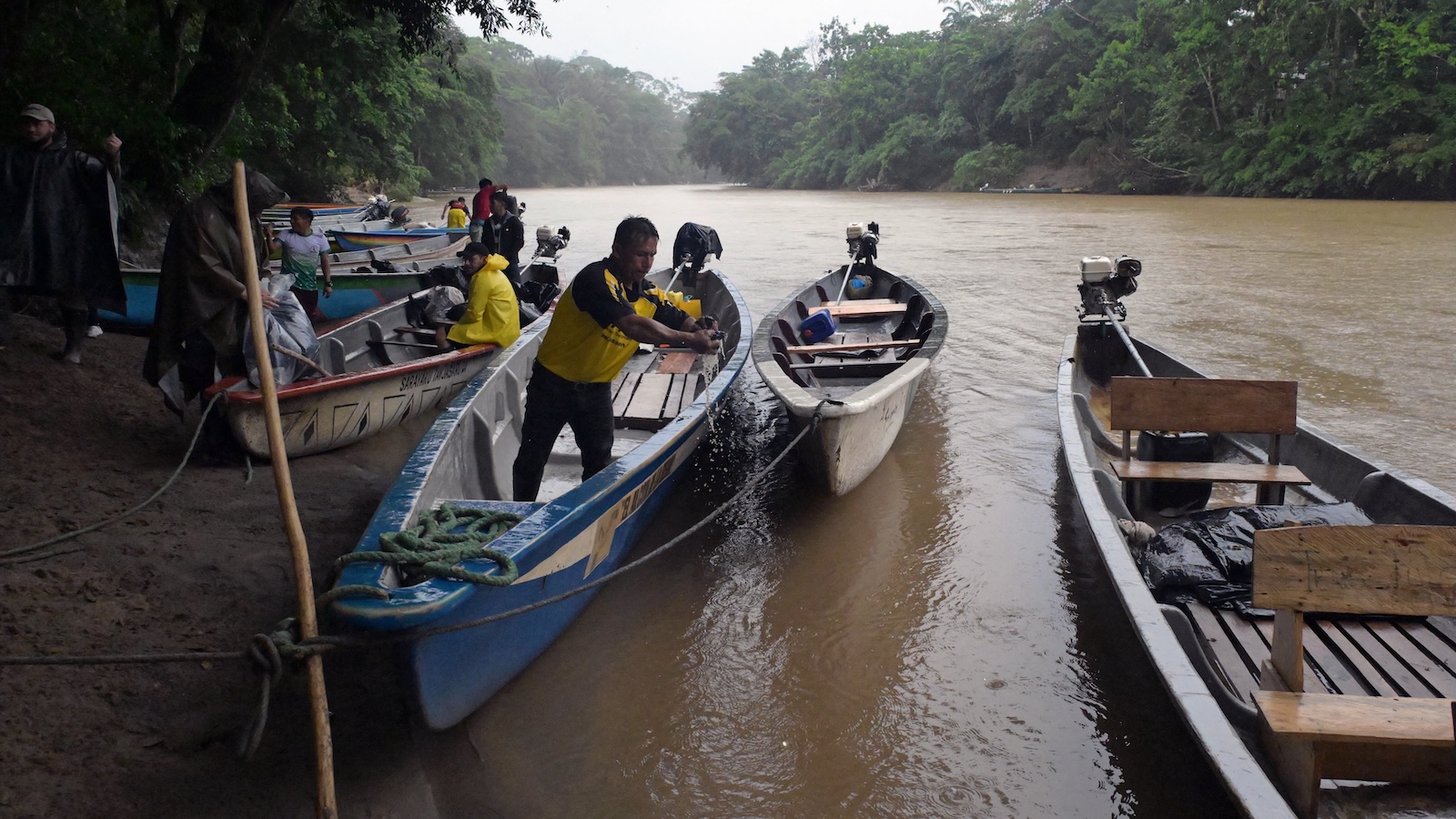
A clear illustration of this compounding pressure unfolded in 2019 along the Bobonaza River in the Ecuadorian Amazon. The Kichwa People of Sarayaku—a community of roughly 1,600 inhabitants stewarding over 500 square miles of territory—faced a devastating combination of severe, unseasonal floods that wiped out crops, washed away homes, and cut off vital supply lines.
Yet, the community did not wait for distant federal agencies or international NGOs to coordinate a rescue. Drawing upon robust internal governance structures that were already firmly in place, the Sarayaku mobilized immediately.
This rapid response was anchored by minga, a traditional Kichwa concept emphasizing collective responsibility and solidarity. Long before the floodwaters crested, community elders observed subtle shifts in rain and lightning patterns at the river’s headwaters—environmental indicators that signaled impending danger. Acting on this ancestral knowledge, elders issued early warnings, allowing the community to activate pre-established decision-making processes. They quickly addressed urgent needs, built emergency housing for displaced families, and deployed designated community representatives to manage external communications and resource distribution.
As Daniel Santi, president of the Sarayaku community, notes, it is this synthesis of deep ecological knowledge and self-determined governance that makes such survival strategies possible. "This organization makes it possible to confront any problem and any threat," Santi asserts.
Global Snapshots: From Kenya to Brazil
The Sarayaku are far from an anomaly. Across the globe, Indigenous networks are demonstrating how localized governance drives large-scale climate adaptation:
- Kenya’s Drylands: Facing years of unprecedented, prolonged drought, Indigenous Endorois and Tugen women took matters into their own hands. Utilizing traditional seed-saving practices, they cultivated resilient, drought-resistant varieties of sorghum, millet, and other staple crops. These resilient harvests provided some of the region’s only viable food sources during the worst of the dry spells.
- The Brazilian Amazon: The Coordination of Indigenous Organizations of the Brazilian Amazon (COIAB)—the nation’s largest regional Indigenous network—operates a massive logistical framework for fire management. Beyond advocating for policy protections, COIAB organizes local response teams, provides specialized training, and mobilizes emergency resources across vast, remote tracts of rainforest where state support rarely reaches.
Supporting Context & Metrics: The Structural Barriers to Success
Despite the proven efficacy of these community-led initiatives, structural roadblocks systematically undermine Indigenous climate leadership. The Land Is Life report sheds light on the deep disconnect between international climate rhetoric and on-the-ground realities.
The Funding Gap and the Paradox of "Indigenous Projects"
Billions of dollars are pledged annually at global summits like the United Nations Climate Change Conferences (COPs) under the banner of climate finance. Yet, very little of that capital ever reaches Indigenous communities. Even when funds are nominally earmarked for Indigenous-led initiatives, bureaucratic red tape and institutional gatekeeping frequently redirect the money elsewhere.
"It’s also so frustrating, right?" observes Anisha Buda, a program officer at the Nepal-based Indigenous Women Forum and a member of the Kaike Magar community. "Because there are so many projects that are supposed to be for Indigenous peoples, but they are implemented by non-Indigenous organizations and non-Indigenous peoples."
This dynamic creates a cruel paradox: while Indigenous lands safeguard 80 percent of the planet’s remaining biodiversity and store massive amounts of carbon, the people managing those lands receive a fraction of a percent of dedicated global climate funding. As Anisha Buda emphasizes, "It’s always the lack of resources and the lack of access to funding that makes it so difficult for us to work, especially when climate change makes us the most vulnerable."
Legal Erasure and Institutional Barriers
Beyond financial starvation, many national governments actively undermine Indigenous sovereignty through hostile legal frameworks. Common structural impediments include:
- Failure of Legal Recognition: Refusing to formally title Indigenous lands, leaving communities vulnerable to land grabs by extractive industries, logging conglomerates, and agro-businesses.
- Communication Silos: Refusing to broadcast emergency alerts in Indigenous languages, cutting vulnerable populations off from vital early warning systems during fast-moving climate disasters.
- Criminalization of Culture: Imposing external legal authorities that criminalize traditional land-use practices, such as controlled burning or traditional foraging, which are vital for ecosystem health.
Furthermore, the report identifies critical shortcomings in mainstream climate mitigation strategies. Many international adaptation projects rely on short-term horizons, reject Indigenous self-governance in favor of top-down bureaucratic control, or extract Indigenous wisdom while sidelining the actual communities who generate and protect that knowledge.
Official Statements: Voices from the Front Lines
The release of the Land Is Life report during New York Climate Week served as an urgent clarion call to policymakers, philanthropists, and global powers. The message from Indigenous leaders and researchers is unanimous: stop trying to invent new adaptation frameworks when successful models already exist.
"We show that it’s not that they are only the most impacted, but they are already implementing effective solutions," said Luisa Castañeda Quintana, executive director of Land Is Life. "When it comes to adaptation, we don’t really need to create new structures or systems. We just need to see what is working."
Castañeda Quintana underscores that a truly global perspective is essential because ecological and climatic disasters do not respect national borders. Responses must be equally expansive, transcending geopolitical divisions by empowering those who read the Earth’s signals best.
Gisela Hurtado, the primary author of the report, points out that amidst shrinking global resources—with major economies pulling back from international climate commitments and geopolitical conflicts straining public budgets—smart allocation is more critical than ever.
"We are in a moment where resources are scarce," Hurtado explains. "Where can we put the little money that we have? Where can we put it to make it much more effective? And for me, for the report, the idea is put it into what already is working."
Partnerships rooted in mutual respect offer a proven pathway forward. In Peru’s Ausangate Regional Conservation Area, local Quechua communities forged a collaborative alliance with a formal conservation organization. By combining traditional ecological observations with Western scientific research, they successfully documented environmental indicators, optimized community-based monitoring, and enhanced regional resilience against shifting weather patterns.
Future Outlook: A Blueprint for Global Survival
As greenhouse gas concentrations continue to rise and the frequency of compounding climate disasters accelerates, the global community faces a stark choice: continue with top-down, underfunded bureaucratic initiatives that yield diminishing returns, or pivot toward community-led self-determination.
Indigenous leaders maintain that the path forward requires structural reforms across three key pillars:
- Legal Security and Land Rights: Governments must formally recognize Indigenous land titles and sovereign governance systems, removing the legal vulnerabilities that expose territories to predatory industrial extraction.
- Direct, Flexible Financing: Philanthropists and international bodies must bypass cumbersome intermediaries and channel financial resources directly to Indigenous organizations, allowing communities to deploy funds according to their own self-determined priorities.
- Equitable Partnerships: Scientific, political, and environmental institutions must engage Indigenous communities as equal partners rather than tokenized subjects, respecting their languages, epistemologies, and leadership structures.
Daniel Santi and other Indigenous leaders remain hopeful, but their optimism is tempered by an urgent plea for solidarity. They argue that the wisdom embedded in Indigenous governance models holds the key not just to their own survival, but to the resilience of the entire planet.
As Gisela Hurtado reflects on the insights gathered from across the globe, the ultimate takeaway is clear and prophetic: "What they are seeing in the territories, we’re going to see it also in the future. They are the ones that are much more connected with the Earth to know what is going to happen in the future."
If global powers are wise, they will listen before the horizon narrows any further.



