

Executive Overview
In what marks one of the most dramatic strategic realignments in automotive history, Volkswagen Group’s supervisory board has unanimously approved its sweeping Future Plan 2030. Faced with relentless margin pressure, shifting consumer demand, and a rapidly accelerating threat from hyper-competitive Chinese electric vehicle (EV) manufacturers, the German automotive titan is orchestrating a radical restructuring.
The strategy includes downsizing its global workforce by an astonishing 100,000 positions—roughly 15% of its entire 650,000-strong global headcount—and potentially halting vehicle production at four critical domestic manufacturing facilities. Furthermore, VW intends to slash its complex global model lineup by half and strip away roughly 75% of equipment options and variants.
With €135 billion ($157 billion) earmarked for capital investments and research and development between 2027 and 2031, Volkswagen is betting its survival on streamlined operations, a heavily consolidated software and platform architecture, and extreme cost discipline. Yet, as Europe’s largest automaker grapples with structural overcapacity exceeding 500,000 vehicles annually across the continent, the human and industrial cost of this turnaround remains a subject of intense global scrutiny.
Detailed Chronology and Structural Overhaul
The genesis of Volkswagen’s current crisis did not happen overnight. Years of sluggish software development, ballooning bureaucracy, and a slow-footed transition to software-defined electric vehicles left the Wolfsburg-based conglomerate vulnerable. While domestic and regional rivals pivoted swiftly to meet evolving consumer expectations, Volkswagen found itself bogged down by legacy manufacturing models and high European cost structures.
The turning point materialized on Thursday, when VW’s supervisory board gave its definitive green light to Future Plan 2030. This blueprint is not merely a cost-cutting exercise; it is an existential re-engineering of the automotive giant.
The Staggered Threat to German Plants
Under the newly minted plan, four prominent German manufacturing facilities face an increasingly precarious future:
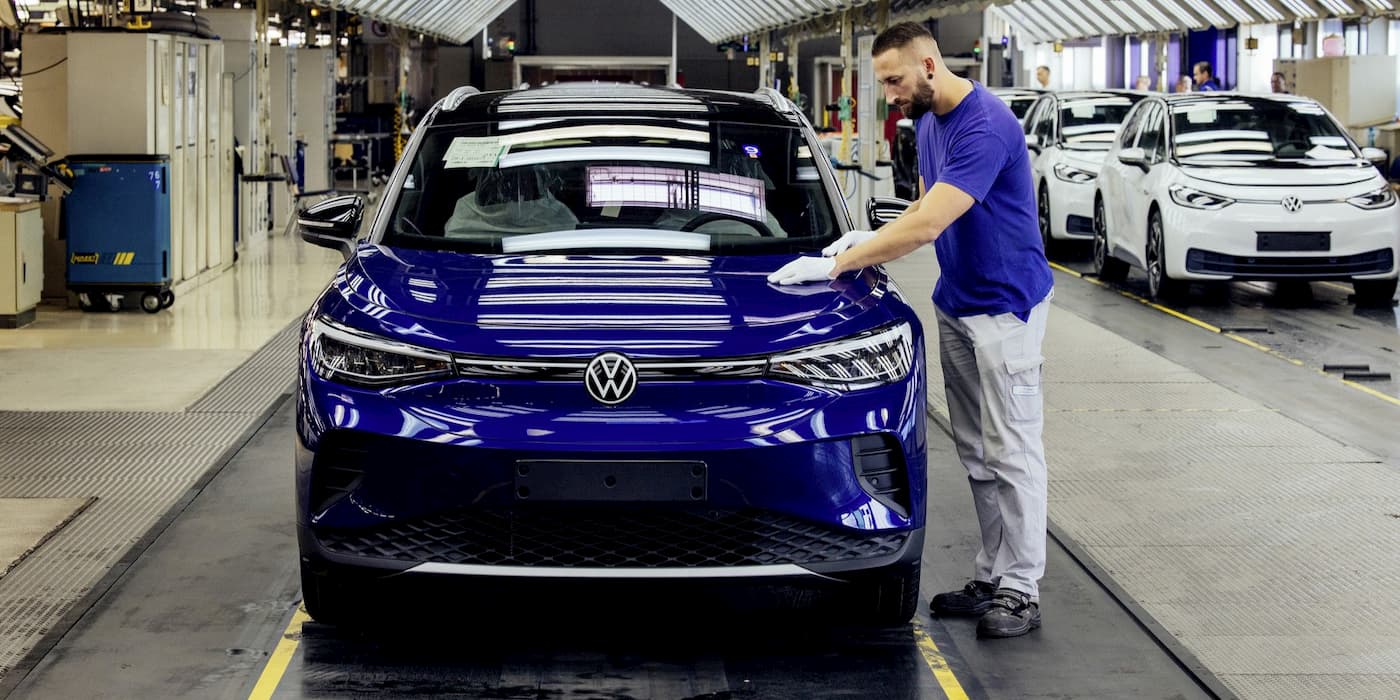
- Emden: Currently responsible for building key volume EVs like the ID.4 and ID.7.
- Zwickau: Historically significant as VW’s very first large-scale plant to completely transition away from internal combustion engine (ICE) production to focus exclusively on EVs.
- Hanover: The spiritual and industrial home of the iconic ID. Buzz and ID. Buzz Cargo.
- Neckarsulm (Audi): A high-end facility manufacturing the high-performance Audi e-tron GT alongside select combustion and plug-in hybrid models.
Volkswagen executives have conceded that the company cannot currently secure "competitive future production" for these four sites once their existing vehicle allocations conclude at staggered intervals between 2031 and 2034. Crucially, this does not represent an immediate, final closure announcement. Instead, management has opened a multi-year window to evaluate alternative industrial uses for the spaces. However, the sobering reality remains: vehicle production lines at all four locations could permanently go dark.
Streamlining the Portfolio: Half the Models, Fewer Options
Compounding the manufacturing contraction is a radical pruning of Volkswagen’s product catalogue. By 2035, the company plans to shrink its global model lineup by roughly 50%.
Simultaneously, the labyrinth of equipment choices, optional packages, and configuration variants will be slashed by approximately 75%. For decades, German automakers built their brands on endless customization—allowing buyers to tailor nearly every square inch of their vehicles. Volkswagen’s retreat from this model signifies a fundamental paradigm shift toward standardized, high-volume production designed to mimic the manufacturing efficiency of modern tech-driven EV competitors.
Supporting Context & Metrics: The Anatomy of a 100,000-Job Cut
To understand the scale of Volkswagen’s workforce reduction, one must examine the raw numbers. The company currently employs approximately 650,000 individuals worldwide across its sprawling portfolio of volume, luxury, and performance brands.
A Dual-Wave Workforce Reduction
The Future Plan 2030 introduces a fresh wave of 50,000 job cuts globally, explicitly targeting management overhead, redundant administrative layers, and structural inefficiencies.
This new wave arrives on top of approximately 50,000 job reductions already previously planned or underway across core brands such as Volkswagen passenger cars, Audi, Porsche, and the group’s beleaguered software arm, Cariad. Combined, these cuts will eliminate roughly 100,000 positions, accounting for 15% of the total workforce.

The European Capacity Crisis
Volkswagen explicitly acknowledged that its European manufacturing footprint suffers from severe structural overcapacity. Current European factories are capable of churning out more than 500,000 vehicles annually beyond what actual consumers are purchasing.
To resolve this imbalance, management has pledged to formulate a comprehensive, long-term European production strategy by the end of June 2027. This timeline gives factory operators, local unions, and regional governments a narrow window to negotiate alternatives before hard decisions on facility reallocations or closures are finalized.
Financial Targets and R&D Commitments
Despite the drastic contraction, Volkswagen is not starving its future of capital. Between 2027 and 2031, the company plans to deploy a staggering €135 billion ($157 billion) toward capital investments, research, and development.
The financial objectives tied to this heavy capital expenditure are equally aggressive. By 2030, Volkswagen is targeting:
- Annual Global Sales: 9 million vehicles.
- Operating Margin: 9%.
- Operating Profit: Approximately €31 billion ($36 billion).
Achieving these metrics will require simplifying underlying vehicle platforms, standardizing software stacks, unifying electronic architectures, and streamlining advanced driver-assistance systems (ADAS) across all group brands. Furthermore, Volkswagen intends to shrink its broader portfolio of non-core businesses and equity investments by roughly one-third, selling off or reorganizing extraneous operations to refocus purely on core automotive profitability.
Official Statements and Labor Stakeholder Perspectives
Restructuring a multi-national corporate titan of Volkswagen’s magnitude invariably invites fierce friction between corporate leadership and labor representatives—particularly in Germany, where codetermination laws grant powerful worker councils significant leverage over corporate strategy.

The Voice of Labor: Daniela Cavallo
Daniela Cavallo, Volkswagen’s chief employee representative, had initially mounted a fierce, uncompromising defense against any talk of factory closures or mandatory layoffs. However, following intensive negotiations, Cavallo ultimately backed the Future Plan 2030 framework, albeit with explicit caveats designed to protect the workforce from absorbing the entirety of the corporate turnaround’s financial brunt.
"The Future Plan is a necessity to lead our Group successfully into the next decade — without placing the burden of that transformation solely on employees," Cavallo stated following the supervisory board’s vote.
"In doing so, Volkswagen once again affirms that job security and economic viability carry equal weight as shared corporate goals."
Cavallo’s endorsement reflects a pragmatic realization among labor leaders: resisting structural change entirely could drive the entire company toward insolvency against the backdrop of aggressive foreign competition. By securing a seat at the table, worker representatives intend to steer the management of the upcoming plant evaluations and job transitions toward early retirements, voluntary buyouts, and retraining programs rather than catastrophic mass layoffs.
Corporate Realpolitik
Management, meanwhile, has framed the Future Plan 2030 through an unvarnished lens of global economic survival. Faced with margin compression, rapidly evolving technological benchmarks, and structural cost disadvantages in Western Europe, executives argue that standing still is far more dangerous than drastic surgery.
The company has explicitly pointed to the unstoppable ascent of Chinese EV manufacturers—who benefit from deeply integrated domestic supply chains, lower labor and operational costs, and lightning-fast software development cycles—as the primary catalyst forcing European legacy automakers to shed historical weight.

Future Outlook: Can Volkswagen Outrun the Tides of Disruption?
As Volkswagen embarks on this high-stakes, multi-year transformation, the automotive world will be watching closely to see if a legacy titan can successfully reinvent itself without breaking its industrial spine.
The challenges ahead are immense. Dismantling or re-tooling foundational manufacturing facilities like Zwickau, Emden, Hanover, and Neckarsulm carries deep political, economic, and social ramifications across Lower Saxony and Baden-Württemberg. At the same time, executing a 50% reduction in vehicle models while drastically simplifying software and hardware architectures will require surgical precision. If VW moves too slowly, Chinese competitors will continue capturing global EV market share. If it moves too recklessly, it risks destabilizing its core customer base and alienating its workforce.
By mid-2027—the self-imposed deadline for Volkswagen’s new European production strategy—the contours of the "new" Volkswagen will begin to emerge. Whether Future Plan 2030 succeeds in restoring the company to its former financial glory while preserving its industrial heritage remains one of the defining questions of the modern automotive era.



