

By Investigative Staff
Original reporting by Inside Climate News, edited for Corporate Knights.
Executive Overview
As the global energy transition accelerates, China stands undisputed at the vanguard of renewable-energy expansion. Billions of dollars are poured annually into vast arrays of solar panels, sprawling wind farms, and ultra-high-voltage transmission lines designed to weave a green future across the world’s second-largest economy. Yet, hidden beneath the shiny surface of this modern electrical infrastructure lies a profound paradox—and a dirty secret.
China’s electric grid is the world’s largest emitter of sulfur hexafluoride ($textSF_6$), the most potent greenhouse gas known to science.
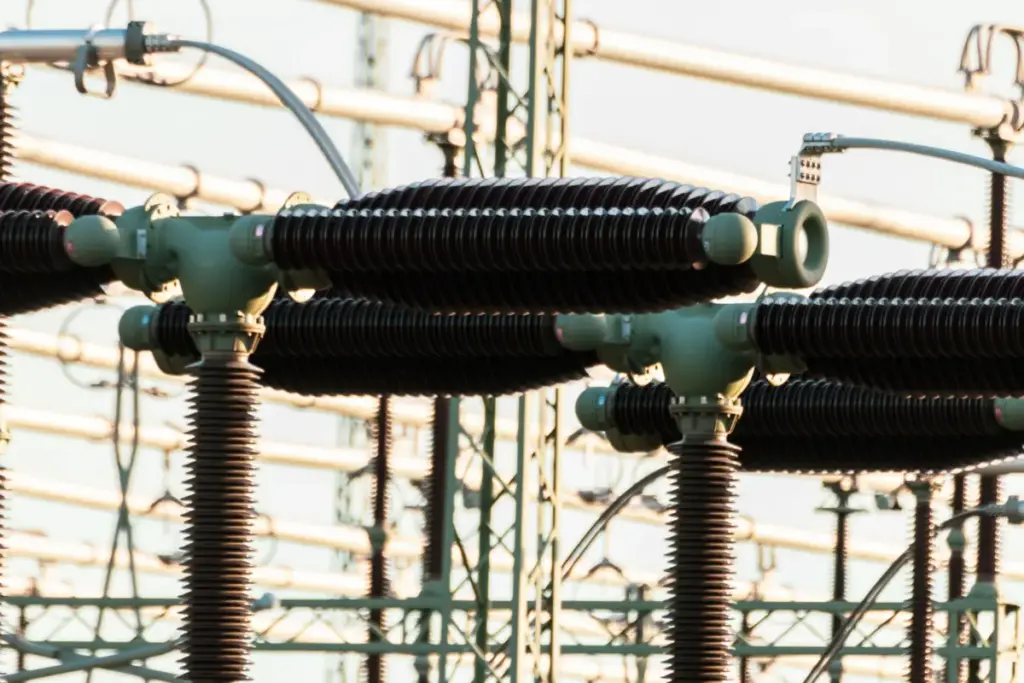
While carbon dioxide dominates global climate headlines, $textSF_6$ operates in the shadows. It is an odorless, invisible, non-toxic, and non-flammable synthetic gas that plays a mission-critical role as an electrical insulator in high-voltage equipment. Without it, modern electrical grids would struggle to safely manage surging power loads and prevent catastrophic electrical arcing. However, pound for pound, $textSF_6$ is 24,300 times more effective at trapping heat in the atmosphere than carbon dioxide. Once released, it remains virtually indestructible, persisting in the atmosphere for an astonishing 1,000 years.
More than half of all global $textSF_6$ emissions originate in China, where releases nearly doubled between 2011 and 2021. While industrialized nations in the West successfully curbed their emissions decades ago through proactive recycling and containment policies, China’s emissions have continued to surge, driving global atmospheric concentrations to record highs.
Despite government warnings dating back to 2014 that $textSF_6$ poses a "significant potential threat to the global environment," the pollutant remains largely unregulated within the country. However, a growing body of evidence, combined with recent policy shifts and international initiatives, suggests that the world’s largest polluter may finally be waking up to this atmospheric threat. Experts argue that bridging the gap between current practices and basic containment is not only technically feasible but also represents some of the lowest-hanging fruit in the global fight against climate change.
Detailed Chronology: From Industrial Discovery to Global Crisis
The history of sulfur hexafluoride is a classic tale of industrial utility outpacing environmental foresight. Synthesized in the early 20th century, $textSF_6$ eventually found its true calling in the electrical sector during the post-war industrial boom. Its unique chemical stability and dielectric properties made it the ultimate safeguard for circuit breakers, gas-insulated switchgear, and high-voltage substations, ensuring that electricity flows reliably across national grids.
The Western Reckoning (Late 1980s – 2015)
The environmental awakening surrounding $textSF_6$ began in the late 1980s at a chemical plant in West Germany. Workers realized that the sulfur hexafluoride they were manufacturing had an outsized impact on the global greenhouse effect. Worse still, their primary customers—electric utility companies—were routinely venting the gas directly into the atmosphere during routine maintenance and at the end of equipment life cycles.
Recognizing that regulators would eventually crack down, Belgian chemical giant Solvay—which operated a plant in Bad Wimpfen, Germany—partnered with European utilities to pioneer an industrial recycling framework. Hermann Kraehling, a former environmental assessment team leader at Solvay during the 1990s, noted that the program’s success hinged on unprecedented cross-industry collaboration.
"It was not just Solvay," Kraehling recalled. "Equipment manufacturers, power suppliers, regulators, and even environmental advocacy organizations helped shape the recycling effort."
In 1997, the German Ministry for the Environment honored Solvay with the European Recycling Award. By the early 2000s, these best practices were shared globally at industry conferences hosted by the U.S. Environmental Protection Agency (EPA). Consequently, by 2015, emissions from electrical equipment in Germany and the United States plummeted by two-thirds or more.
China’s Delayed Response and Escalation (2007 – Present)
While the West locked down its $textSF_6$ leakage, China’s rapid industrialization sparked an unprecedented buildout of its power grid. State Grid Corporation of China, the world’s largest electric utility, launched small-scale recycling pilot projects in three provinces as early as 2007. More than a decade ago, a book published by China’s Ministry of Environmental Protection concluded that $textSF_6$ recycling technology was mature, cost-effective, and urgently needed to curb power sector emissions.
Yet, policy implementation stalled. As documented in a 2024 study published in Nature Communications, China’s emissions of the super-pollutant nearly doubled from 2011 to 2021. By 2021—the most recent year with complete data—China released an astounding 5,100 metric tons of $textSF_6$, a volume of warming potential equivalent to the annual greenhouse gas emissions of 29 million gas-powered automobiles.
Compounding the problem, recent atmospheric studies revealed that Europe is not entirely immune to ongoing challenges. In 2025, a study highlighted unexpected emissions of roughly 30 metric tons per year originating from Solvay’s German facility, leading to criminal complaints from environmental groups and subsequent agreements with German authorities to tighten oversight. Nevertheless, Europe’s leaks pale in comparison to the massive, systemic venting occurring across China’s sprawling transmission networks.
Supporting Context & Metrics: The Economics of Low-Hanging Fruit
To understand why China’s grid continues to bleed $textSF_6$, one must examine the chasm between official claims and operational realities on the ground.
The Recycling Gap
China’s Ministry of Ecology and Environment (MEE) has maintained that domestic electric utilities recycle, or have the capability to recycle, 90% of their waste $textSF_6$ gas. However, independent investigations by Inside Climate News, drawing on hundreds of pages of government documents, utility annual reports, and academic literature, reveal that the actual recycling rate sits stubbornly around 30%.
A study published in Environmental Science & Technology underscored this deficit, noting that as of 2020, China’s power sector possessed the capacity to handle only 727 metric tons out of an estimated 2,518 tons of waste $textSF_6$ generated annually. Furthermore, public reports from State Grid and China Southern Power Grid indicated that less than 300 metric tons were actually processed in 2020. Though combined reported recycling rose to 635 metric tons by 2024, the total volume of aging equipment and waste gas expanded proportionally, leaving a vast reservoir of the gas venting into the open air.
Exceptional Cost-Effectiveness
Experts emphasize that ramping up $textSF_6$ containment is arguably the most cost-effective decarbonization intervention available to the energy sector.
An assessment by Inside Climate News calculated that China’s state-owned utilities could safely capture and reuse an additional 1,400 metric tons of $textSF_6$ per year. Doing so would slash the nation’s total emissions of the pollutant by nearly one-third. The price tag for this massive environmental win? An estimated $6 million annually—a minuscule fraction of the roughly $70 billion invested every year into China’s electrical grid.
A 2025 analysis by the U.S. EPA evaluated the marginal cost of greenhouse gas abatement across various global industries. It estimated that recovering $textSF_6$ from China’s power sector costs roughly 18 cents per metric ton of $textCO_2$ equivalent ($textCO_2texte$). By comparison, reducing emissions by constructing new wind farms costs roughly $11 per metric ton of $textCO_2texte$, while solar installations run even higher at around $31 per metric ton.
"You’re certainly getting bang for your buck if you reduce your $textSF_6$," noted Sally Rand, a former EPA program manager who led voluntary industry partnerships. Deborah Ottinger, another former EPA fluorinated gas analyst, called the ongoing venting "a three-alarm fire" that could be extinguished immediately with basic political will and administrative enforcement.
Official Statements and Institutional Silence
Faced with mounting scrutiny from international researchers and environmental journalists, key institutional players have largely maintained a defensive silence.
The Ministry of Ecology and Environment (MEE), the Chinese Embassy in Washington, D.C., and the nation’s two dominant power monopolies—State Grid Corporation of China and China Southern Power Grid—all declined to comment on the findings of recent investigative reports.
Despite this official reticence, domestic policy frameworks are beginning to shift. In late 2024, the China Electricity Council published non-binding guidance urging utilities to prioritize on-site gas recycling. Crucially, in December of that year, the MEE took a significant regulatory leap forward. It introduced a carbon crediting mechanism that allows utilities to generate and sell carbon offsets, but only if they achieve and surpass a 90% recycling threshold for waste $textSF_6$.
Jin Yana, an assistant professor of environmental economics at Peking University, praised the design of the credit system. She noted that rewarding only "exceptional, above-and-beyond efforts rather than standard industry practices" represents smart, market-based policymaking. However, independent analysts caution that voluntary incentives must be paired with mandatory compliance and rigorous enforcement to prevent widespread non-compliance.
Future Outlook: A Turning Point for China’s Grid?
As China looks toward its mid-century climate targets, addressing non-$textCO_2$ super-pollutants is shifting from an overlooked afterthought to an absolute necessity.
Policy and Technological Horizons
In July, Chinese authorities released the national Climate Change Response Plan—formulated jointly by the MEE and 18 other government departments—which explicitly calls for projects capable of cutting cumulative non-$textCO_2$ greenhouse gas emissions (including $textSF_6$, nitrous oxide, and hydrofluorocarbons) by 30 million metric tons of $textCO_2texte$ by 2030. Ma Yue, an assistant analyst at the Beijing-based Institute for Global Decarbonization Progress, noted that this marks the first time Beijing has formally integrated an $textSF_6$ management plan into high-level policy, sending a vital signal to the power sector.
Technological alternatives are also on the horizon. State Grid and China Southern have begun experimenting with climate-friendly insulator alternatives, such as $textSF_6$ mixed with nitrogen gas, for low-to-medium-voltage equipment. However, industry assessments indicate that viable, scalable alternatives for high-voltage transmission equipment will require another 10 to 20 years of research and testing to fully mature.
Until drop-in substitutes are commercially viable at scale, containment and rigorous on-site recycling remain the only immediate line of defense. Experts like Professor Hu Jianxin of Peking University argue that a phased geographic approach—banning $textSF_6$ use in non-essential regions and milder climates where alternatives already exist—can drastically curtail future exposure.
International Cooperation
Global coalitions are also mobilizing to assist. The German government, through its international development agency GIZ under the International Climate Initiative, has launched a dedicated project aimed at forging a "coalition of the willing" among emerging economies to phase out and manage $textSF_6$ emissions. Philippe Lempp, who oversees the initiative, hosted workshops in Beijing to align international expertise with Chinese industry executives.
Ultimately, veterans of the 1990s battles against industrial fluorinated gases believe China can replicate the West’s historic success if it fosters broad-based cooperation.
"If you are able to bring together all these stakeholders," Hermann Kraehling reflected, "you not only have a good chance for success, but you also have a good chance for acceptance."
For a planet hurtling past critical climate thresholds, reining in the grid’s invisible heat trap is no longer optional—it is an urgent operational imperative.



