

By Climate & Policy Investigative Unit
Published: September 1, 2026
Executive Overview
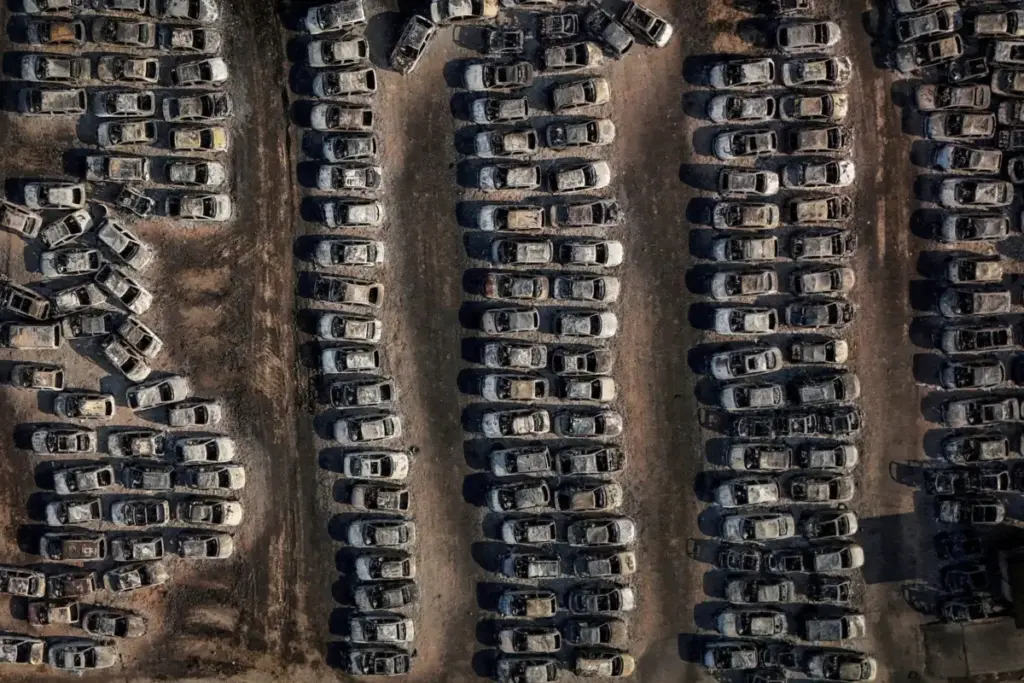
As the northern hemisphere emerges from another summer defined by record-breaking heatwaves and runaway blazes, the global response to catastrophic wildfires faces a critical reckoning. From the parched interior of the Iberian Peninsula to the forests of North America and Southern Europe, emergency responders have spent months fighting historic infernos. Yet despite record expenditures on aerial water bombers, specialized firefighters, and real-time satellite tracking, the damages continue to mount exponentially.
In Europe alone, preliminary estimates indicate that wildfires have caused upwards of €19 billion ($21.2 billion) in direct infrastructure damage, business interruption, and agricultural losses during the 2026 fire season. Beyond the immediate destruction lies an escalating public health crisis driven by fine particulate pollution, compounding insurance market volatility, and severe ecosystem degradation.
A growing coalition of climate scientists, land-use economists, and policy leaders—led by figures such as Gill Einhorn, Head of the Forest Future Alliance, and Natalie Çilem, Community Lead of the Global Wildfire Leadership Network—argues that the current framework is fundamentally flawed. Governments around the globe remain locked in a reactive trap: spending billions to extinguish fires while devoting a fraction of that capital to the upstream policies that prevent catastrophic ignitions in the first place.
Building long-term resilience requires a fundamental shift in public policy. By redirecting public capital toward proactive forest thinning, prescribed burning, rural land management, and wildland-urban interface (WUI) regulation, policymakers can break the cycle of disaster response and significantly reduce systemic risk.
Detailed Chronology: From Seasonal Outliers to Structural Crisis
The trajectory of the global wildfire threat has shifted from isolated seasonal anomalies to an entrenched, year-round structural crisis over the past decade. A review of major policy milestones and escalating fire seasons highlights how reactive suppression strategies have struggled to keep pace with changing environmental conditions:
+-----------------------------------------------------------------------------------+
| CHRONOLOGY OF THE GLOBAL WILDFIRE POLICY CRISIS                                   |
+-----------------------------------------------------------------------------------+
| 2017: Pedrógão Grande (Portugal) Fires                                            |
|       • 66 fatalities spark Europe's first major re-evaluation of rural forestry. |
|       • National mandates introduced for land clearing, but enforcement lags.      |
+-----------------------------------------------------------------------------------+
| 2021–2023: Mediterranean & North American Mega-Fires                              |
|       • Record-breaking burning across Greece, Canada, Hawaii (Lahaina), & Western US.|
|       • Suppression budgets balloon; global emergency response limits tested.     |
+-----------------------------------------------------------------------------------+
| 2024–2025: Structural Shift in European & Global Fire Regimes                    |
|       • August 2025: Massive blazes scorch central Portugal (e.g., Trancoso).     |
|       • Extreme fire weather extends into non-traditional months (Spring/Autumn).  |
+-----------------------------------------------------------------------------------+
| Summer 2026: Economic Losses Reach Threshold Peak                                 |
|       • European wildfire damages cross €19 Billion in single season.             |
|       • Policy leaders demand budget reallocation from response to upstream risk  |
|         mitigation.                                                               |
+-----------------------------------------------------------------------------------+
The 2017 Turning Point
The deadly Pedrógão Grande fires in Portugal claimed 66 lives, shocking European leadership into recognizing that traditional suppression capabilities were insufficient against high-intensity weather events. Governments launched reviews into rural land abandonment and eucalyptus monocultures, but systemic implementation remained fragmented.
The Megafire Era (2021–2023)
Unprecedented dry lightning storms and prolonged heat domes created extreme fuel conditions across North America and Europe. In Canada’s historic 2023 season, over 18 million hectares burned, generating smoke plumes that choked major cities along the US Eastern Seaboard. In Greece, the Evros fire became the largest single wildfire recorded in EU history. Emergency suppression budgets expanded across NATO nations, but preventative forest restoration received negligible funding increases.
Escalation and the 2025–2026 Crisis
By mid-2025, severe droughts plagued the Mediterranean basin. Blazes ripped through Trancoso and surrounding municipalities in Portugal, alongside massive outbreaks in Spain, France, and Greece. By late summer 2026, cumulative economic damages across Europe reached €19 billion. The compounding financial toll convinced international multilateral bodies that physical fire suppression alone could no longer insulate economies from climate-driven land degradation.
Supporting Context & Metrics: The Asymmetry of Wildfire Economics
The economics of modern wildfire management reveal a stark allocation asymmetry. Globally, approximately 90% of public funds targeting wildfires are directed toward emergency suppression, suppression technology, and post-disaster relief. Less than 10% is allocated to proactive risk reduction, landscape management, and upstream community readiness.
                  CURRENT GLOBAL ALLOCATION vs. OPTIMAL ALLOCATION

  Current Public Spending:
  [================================================= 90% =================================================] [=== 10% ===]
                             Emergency Suppression & Disaster Relief                                     Prevention & Risk Reduction

  Proposed Upstream Framework:
  [==================== 40% ====================] [================================== 60% ==================================]
                 Emergency Suppression & Relief                                  Proactive Risk Reduction & Land Restoration
Economic Loss Breakdown (2026 European Season)
The €19 billion economic loss estimate compiled by risk modeling agencies reflects direct physical impacts as well as broader macroeconomic friction:
- Direct Infrastructure & Property Destruction: €6.8 billion
Losses in residential real estate, power grids, transportation corridors, and agricultural equipment. - Agricultural and Timber Resource Depletion: €4.2 billion
Destruction of mature forestry plantations, olive groves, vineyards, and topsoil degradation leading to long-term yield loss. - Business Interruption and Tourism Decline: €5.1 billion
Cancellations in major travel destinations, regional supply chain bottlenecks, and lost productivity. - Healthcare Costs and Air Quality Burden: €2.9 billion
Hospitalizations and lost working hours driven by fine particulate matter ($PM_2.5$) exposure across metropolitan centers distant from fire zones.
                       2026 EUROPEAN WILDFIRE DAMAGE BREAKDOWN

  Infrastructure & Property [#################################] €6.8B
  Business & Tourism        [########################] €5.1B
  Agriculture & Timber      [####################] €4.2B
  Healthcare & Productivity [##############] €2.9B
The Land Management and Fuel Accumulation Trap
A central contributor to escalating fire intensity is the "suppression paradox." Decades of aggressive fire exclusion policies have prevented natural, low-intensity burn cycles from clearing understory brush. Combined with rural depopulation in countries like Portugal, Spain, and Italy, vast tracts of agricultural land have been abandoned.
Unmanaged scrubland and dense monoculture tree plantations (such as fast-growing eucalyptus) now cover former agricultural mosaics. When extreme fire weather strikes, accumulated fuel loads transform manageable ignitions into uncontrollable, high-intensity megafires that bypass conventional suppression defenses.
       TRADITIONAL LANDSCAPE                      ABANDONED/MONOCULTURE LANDSCAPE

   [Forest]  (Crop Fields)  [Forest]              [Dense Unmanaged Biomass Accumulation]
      |            |           |                                    |
      +---- Natural Firebreak -+                          Extreme High-Intensity Megafire
Official Statements and Expert Perspectives
Experts urge governments to rethink wildfire response as a policy and financial challenge rather than purely an operational emergency.
"Wildfires have devastated communities across the world this summer, claiming lives, displacing thousands of people and leaving billions in economic damage in their wake," noted Gill Einhorn, Head of the Forest Future Alliance. "They are an economic, financial and public health challenge that is growing faster than many governments and markets are prepared for—and exposing the real costs of poor land management."
Einhorn stresses that public capital must shift from reactive deployment to proactive stewardship:
"Continuing to pour resources almost exclusively into suppression while neglecting the condition of our forests and land systems is fiscally unsustainable. Public policy must shift investment upstream to build resilience and cut risks at the source."
Natalie Çilem, Community Lead of the Global Wildfire Leadership Network, highlighted the operational and social realities facing frontline communities:
"Emergency responders are consistently pushed past their operational limits because we are asking them to control fuel loads that have been allowed to accumulate for decades. Firefighters cannot solve a land-management crisis on the fireground. We need structural policy reforms that incentivize land clearing, support prescribed burning regimes, and empower local communities to manage their surrounding landscapes before ignitions occur."
Multilateral institutions are echoing these warnings. Analysts at the World Bank and European Civil Protection and Humanitarian Aid Operations (ECHO) have observed that escalating wildfire damages threaten national decarbonization targets. Uncontrolled fires turn carbon sinks into major emissions sources, releasing millions of metric tons of $CO_2$ back into the atmosphere in a matter of days.
Future Outlook: Upstream Policy Pathways for Systemic Resilience
To disrupt the cycle of disaster, economic planners and climate policy leaders advocate for four primary upstream policy interventions designed to redirect capital, update regulatory frameworks, and reduce landscape risk.
                       UPSTREAM WILDFIRE RESILIENCE FRAMEWORK

 +------------------------+  +------------------------+  +------------------------+
 |   LAND-USE REFORM      |  |  FINANCIAL INCENTIVES  |  |  REGULATORY MANDATES   |
 | • Buffer zones         |  | • Resilient forestry   |  | • Building codes       |
 | • Species diversity    |  |   subsidies            |  | • Landowner clearance  |
 | • Prescribed burning   |  | • Resilience bonds     |  |   enforcement          |
 +-----------+------------+  +-----------+------------+  +-----------+------------+
             |                           |                           |
             +---------------------------+---------------------------+
                                         |
                                         v
                         [ Upstream Risk Mitigation ]
                                         |
                                         v
                       [ Decreased Megafire Vulnerability ]
1. Landscape Heterogeneity and Forest Restoration
Public policies must mandate and incentivize the creation of "mosaic landscapes." Breaking up vast stretches of contiguous forest with agricultural buffer zones, grazing lands, and native broadleaf tree species creates natural firebreaks. Replacing hyper-flammable eucalyptus and pine plantations with resilient native species reduces overall fuel energy, lowering fire intensity and allowing ground crews to achieve suppression.
2. Legalization and Expansion of Prescribed Burning
Regulatory hurdles and liability fears currently restrict the deployment of prescribed burns during cooler months. Modernizing national policy frameworks to streamline permissions for certified forestry experts and indigenous land management stewards allows controlled burns to remove understory biomass safely, significantly reducing extreme summer fire potential.
3. WUI Building Codes and Landowner Accountability
Enforcement of defensible space regulations around the Wildland-Urban Interface (WUI) remains inconsistent across many vulnerable regions. Policy reforms must require home and business owners in high-risk zones to maintain clear vegetation buffers. Strengthening building standards to require fire-resistant roofing, ember-proof venting, and toughened glass drastically reduces structural loss during wildfire passes.
4. Innovating Climate and Insurance Financing
Governments and private financial institutions are exploring blended finance models and catastrophe bonds linked to preventative action. Insurance providers are beginning to condition coverage availability on verified upstream risk mitigation. By offering lower premiums to communities that implement proactive forest thinning and firebreak construction, market dynamics can align with public resilience goals.
Re-Engineering Public Policy for an Era of Extreme Weather
The €19 billion in damages recorded across Europe in 2026 offers a warning of the economic consequences of reactive climate governance. Emergency suppression infrastructure will always remain a vital backstop, but using fire engines and water aircraft as the primary defense against systemic land mismanagement is a strategy yielding diminishing returns.
Transitioning from reactive disaster management to upstream risk reduction requires long-term commitment, political willpower, and restructured financial models. By investing in resilient forest landscapes, modernizing land-use regulations, and supporting local land stewardship, public policy can help mitigate the threat of catastrophic fires, protect national treasuries, and safeguard communities in an warming world.



