

Executive Overview
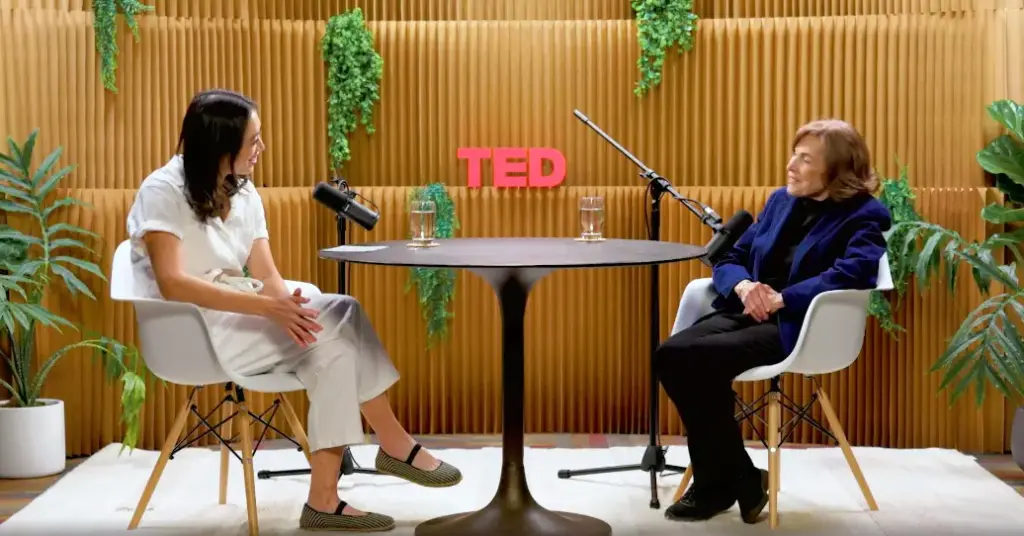
Following her landmark address at TED2026, legendary oceanographer, marine biologist, and Mission Blue founder Dr. Sylvia A. Earle sat down with Elise Hu, host of the acclaimed TED Talks Daily podcast, for an expansive and urgent discussion on the wonder, vulnerability, and ecological indispensability of the deep sea. The conversation bridges the gap between Dr. Earle’s historic, boundary-pushing expeditions to the darkest abysses of the planet and her modern, global crusade to restore collapsing marine habitats.
At the core of Dr. Earle’s message is a profound yet simple thesis: humanity’s ultimate survival is inextricably bound to the health of the global ocean. Despite covering over 70 percent of the Earth’s surface and generating the majority of the oxygen we breathe, the deep sea remains largely misunderstood, severely underprotected, and increasingly threatened by industrial exploitation, deep-sea mining, overfishing, and climate change.
Dr. Earle’s central premise—her "bet" to humanity—posits that if every person on Earth could witness firsthand the ethereal magic, intricate biodiversity, and fragile splendor of the deep ocean, an immediate, global paradigm shift would occur, compelling society to unite in its defense. This comprehensive report explores the depths of Dr. Earle’s latest advocacy, dissecting the chronicled history of her pioneering dives, the critical metrics defining the current state of our marine ecosystems, official insights from her recent dialogues, and the strategic outlook for ocean conservation in the latter half of the 2020s.
Detailed Chronology: A Lifetime Dedicated to the Abyssal Zone
To understand the weight of Dr. Sylvia Earle’s warnings and inspirations at TED2026, one must examine a lifetime spent descending into Earth’s final frontier. Known widely as "Her Deepness," Earle’s career spans more than seven decades of oceanic exploration, shattering glass ceilings in a male-dominated scientific community and redefining what is technologically and humanly possible beneath the waves.
The Formative Years and Early Expeditions (1950s–1970s)
Dr. Earle’s fascination with the sea began during her childhood on a New Jersey farm and later along the Gulf Coast of Florida. By the time she earned her Ph.D. from Duke University in 1966, she had already logged hundreds of hours underwater.
- 1970 (Tektite II Project): Dr. Earle led the first all-female team of aquanauts in the Tektite II program, living and working fifty feet beneath the surface of the Caribbean Sea for two weeks. This milestone proved that mixed-gender saturation diving protocols were unnecessary for sustained underwater habitation, paving the way for advanced marine biology research.
- 1979 (The Atmospheric Dive Suit Record): Earle achieved one of the most iconic feats in exploration history. Wearing a JIM suit—a heavily articulated, one-atmosphere atmospheric diving system—she stepped out of a submersible off the coast of Oahu, Hawaii, and free-walked untethered along the seafloor at a depth of 1,250 feet (381 meters). To this day, the dive remains a record-setting benchmark for solo, un-tethered deep-sea pedestrian exploration.
Technological Advancements and Corporate Leadership (1980s–1990s)
Recognizing that human presence in the deep sea was constrained by heavy, cumbersome equipment, Dr. Earle turned her engineering mindset toward innovation.
- Deep Ocean Engineering and Deep Ocean Exploration Research (DOER): In the 1980s, alongside engineer Graham Hawkes, she co-founded companies dedicated to designing and building advanced submersibles and robotic systems capable of operating at extreme depths. These tools allowed scientists to witness living organisms in the bathypelagic and abyssopelagic zones without disturbing their delicate habitats.
- Chief Scientist of NOAA (1990–1992): Breaking another barrier, Dr. Earle served as the first female Chief Scientist of the National Oceanic and Atmospheric Administration (NOAA). During her tenure, she was a vocal advocate for marine sanctuaries and spoke out forcefully against the ecological devastation caused by the 1991 Gulf War oil spills.
The Birth of Mission Blue and Modern Advocacy (2009–Present)
In 2009, armed with the prestigious TED Prize, Dr. Earle launched Mission Blue, an initiative designed to ignite public support for a global network of marine protected areas—dubbed "Hope Spots."
- The Hope Spot Initiative: Mission Blue identifies and campaigns for areas of the ocean that are scientifically identified as critical to the health of the planet. These sites range from coral reefs in the Coral Triangle to deep-sea trenches off the Pacific coast.
- TED2026 and the Elise Hu Interview: Returning to the TED stage in 2026, Dr. Earle synthesized decades of field research into a clarion call. Her dialogue with Elise Hu on TED Talks Daily represents the culmination of her life’s work, translating complex oceanographic realities into an urgent, emotionally resonant message for the digital age.
Supporting Context & Metrics: The State of the Global Ocean in 2026
The urgency behind Dr. Earle’s TED2026 presentation is underscored by alarming empirical data regarding the health of the world’s oceans. While public attention often fixates on terrestrial climate indicators—such as atmospheric carbon parts-per-million and deforestation rates—the ocean absorbs the vast majority of the planet’s excess heat and carbon emissions, shouldering an ecological burden that is rapidly reaching a breaking point.
Key Oceanographic Metrics and Indicators
- Heat Absorption: According to recent assessments by the Intergovernmental Panel on Climate Change (IPCC) and NOAA, the global ocean has absorbed more than 90% of the excess heat generated by anthropogenic greenhouse gas emissions since the 1970s. Ocean heat content reached record highs in 2024, 2025, and into 2026, driving unprecedented marine heatwaves.
- The Carbon Sink and Acidification: Oceans absorb approximately 25% of all human-generated carbon dioxide emissions annually. This massive influx of $textCO_2$ has lowered the average pH of surface ocean waters by approximately 0.1 units since the Industrial Revolution—a 30% increase in acidity—severely compromising the ability of calcifying organisms like corals, oysters, and certain phytoplankton to build their shells and skeletons.
- Marine Biodiversity Loss: The Living Blue Planet Report and related ecological indices indicate that global marine vertebrate populations experienced a staggering decline of over 50% between 1970 and the early 2020s, driven by overfishing, destructive trawling, pollution, and coastal development.
- Protected Area Deficits: While international frameworks (such as the UN Kunming-Montreal Global Biodiversity Framework) established the ambitious goal of protecting 30% of the planet’s land and ocean by 2030 (the "30×30" initiative), legally binding, fully or highly protected marine areas currently cover only a fraction of the open ocean, leaving high seas vulnerable to unregulated industrial exploitation.
The Threat of Deep-Sea Mining
As terrestrial reserves of rare earth metals—such as cobalt, nickel, copper, and lithium—deplete, corporate and geopolitical entities have increasingly trained their sights on the deep seafloor. The abyssal plains are home to vast fields of polymetallic nodules, as well as hydrothermal vents hosting unique extremophile lifeforms.
Dr. Earle and the global scientific community have repeatedly warned that commercial deep-sea mining operations would create massive sediment plumes, generate disruptive noise pollution that disorients marine mammals, and permanently destroy fragile, slow-growing ecosystems that have existed largely undisturbed for millions of years.
Official Statements and Insights: Dr. Sylvia A. Earle and Elise Hu on the Deep Sea
The conversation between Dr. Sylvia A. Earle and Elise Hu on TED Talks Daily yielded profound philosophical and scientific insights regarding humanity’s relationship with the ocean. Below are thematic syntheses and direct interpretations of their discourse.
On the Wonder of the Abyssal Zone
Reflecting on her decades of submersions, Dr. Earle emphasized that the deep sea is not a barren, dark wasteland, but rather the most dynamic biological theater on Earth.
"When you cross the threshold into the deep ocean, you are entering a realm of living light. The majority of creatures down there produce their own bioluminescence—flashes of blue, green, and gold that communicate danger, attract mates, or confuse predators. It is an orchestra of life, largely composed of organisms we have yet to name, let alone understand." — Dr. Sylvia A. Earle
Elise Hu noted the psychological barrier that keeps humans detached from this reality, pointing out that because land-dwellers live on the surface of a water-dominated planet, we suffer from "out of sight, out of mind" syndrome. Dr. Earle countered this by framing the ocean as our life support system:
"We treat the ocean as an inexhaustible pantry and a convenient dumping ground. We fail to realize that every breath we take, every drop of water we drink, is regulated by what happens in the sea. If the ocean dies, we die. It is that simple."
The "Magic" Hypothesis: A Call for Empathy
At the heart of the TED2026 discourse is Dr. Earle’s central bet: that policy changes and economic incentives, while necessary, will ultimately fail unless accompanied by a fundamental shift in human empathy.
"If everyone could experience the magic of the deep sea—if they could look into the eye of an octopus, watch the silent migration of a deep-diving whale, or witness the intricate architecture of a deep-sea coral forest—we wouldn’t need laws to force protection. People naturally protect what they love. Our challenge is making the invisible visible." — Dr. Sylvia A. Earle
Hu and Earle discussed how modern immersive technologies, deep-sea documentaries, and virtual reality initiatives are beginning to democratize access to the abyss, allowing citizens thousands of miles inland to connect emotionally with marine ecosystems.
Future Outlook: Charting a Course for Ocean Conservation Through 2030 and Beyond
As the global community approaches the pivotal 2030 deadline for international biodiversity and climate targets, the roadmap laid out by Dr. Sylvia A. Earle and organizations like Mission Blue offers both a warning and a strategic blueprint.
1. Scaling the Hope Spot Network
Mission Blue’s primary objective for the latter half of the decade is to scale the Hope Spot network to cover at least 30% of the ocean by 2030. Achieving this requires grassroots mobilization, indigenous-led conservation efforts, and robust partnerships with governments willing to legally designate high-protection zones that ban industrial fishing, drilling, and mining.
2. Moratoriums on Deep-Sea Mining
Scientific advocacy, spearheaded by figures like Earle, is putting intense pressure on the International Seabed Authority (ISA) and member nations to enact a global moratorium—or a total ban—on commercial deep-sea mining. As major global brands commit to mineral-sourcing policies that exclude deep-sea extracted metals, economic disincentives are beginning to align with ecological warnings.
3. Integrating Ocean Literacy into Global Education
A cornerstone of the future outlook is the democratization of ocean literacy. Dr. Earle stresses that marine science must no longer be siloed within academic institutions. By integrating ocean education into primary and secondary school curricula worldwide, future generations can grow up understanding that Earth is fundamentally an ocean planet.
4. Technological Innovation and Non-Destructive Exploration
The future of marine research lies in non-invasive, autonomous monitoring systems. Advanced environmental DNA (eDNA) sampling, AI-driven underwater drone surveillance, and ultra-high-definition remote-operated vehicles (ROVs) will allow scientists to map biodiversity without disturbing the delicate habitats of the deep.
Conclusion
Dr. Sylvia A. Earle’s appearance at TED2026 and her subsequent conversation with Elise Hu on TED Talks Daily serve as a vital wake-up call for an era defined by ecological uncertainty. By bridging the awe-inspiring wonder of her historic descents with the hard, empirical realities of 2026 ocean metrics, Earle reminds humanity of what is at stake.
The deep sea is not a distant, alien realm divorced from daily human existence; it is the beating heart of our biosphere. Whether humanity will rise to the occasion—embracing Dr. Earle’s bet by falling in love with the ocean and fighting fiercely for its preservation—remains the defining question of our time.
To experience the full conversation and hear Dr. Sylvia A. Earle’s insights firsthand, watch the featured dialogue online through the official TED platform.



