

Executive Overview
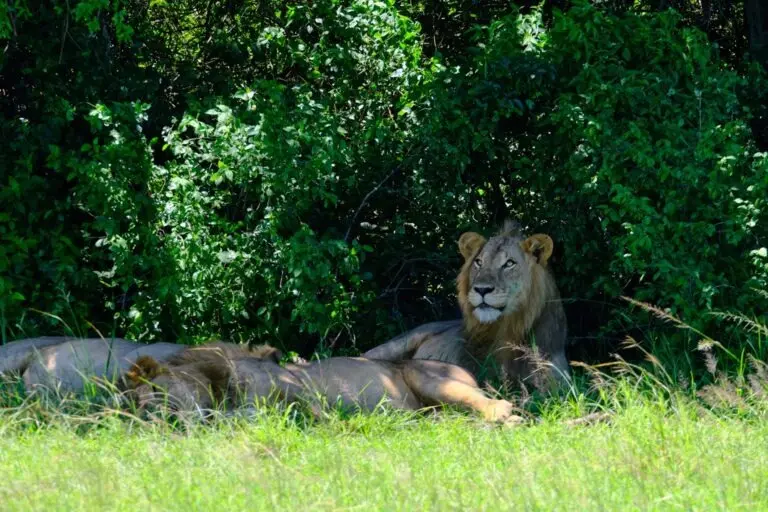
In a decisive move to halt an ecological catastrophe, the Uganda Wildlife Authority (UWA) and the Wildlife Conservation Society (WCS) have officially entered into a landmark 10-year conservation management partnership. This strategic alliance targets the vulnerable Ishasha Sector, a 500-square-kilometer (193-square-mile) jewel tucked away in the southern expanse of Uganda’s globally renowned Queen Elizabeth National Park. Globally celebrated for its iconic tree-climbing lions, the Ishasha Sector has transitioned into the epicentre of a conservation crisis, with local lion populations teetering on the absolute brink of local extinction.
Under the terms of the new agreement, the daily stewardship of the Ishasha Sector will be dynamically shared. WCS will assume operational leadership over critical pillars of park management, including comprehensive biodiversity tracking, community outreach, and sustainable tourism enterprise development. Meanwhile, the UWA will retain its sovereign mandate over statutory law enforcement and specialized wildlife protection.
This accord mirrors a rapidly expanding continental trend: African governments leveraging public-private partnerships (PPPs) to inject private-sector efficiency, specialized funding, and community-centric models into the management of state-protected areas. Yet, the stakes in Queen Elizabeth National Park could scarcely be higher. Once home to hundreds of lions, the landscape now harbors fewer than five individuals in its Ishasha sector. Without immediate intervention, intense human-wildlife conflict, systemic habitat degradation, and persistent poaching threaten to erase one of Africa’s most unique wildlife spectacles forever.
Detailed Chronology of a Crisis
To understand the urgent necessity of the UWA-WCS partnership, one must examine the cascading timeline of ecological and social pressures that brought Queen Elizabeth National Park’s lion population to its knees.
The Historical Baseline and Rapid Collapse
For decades, the sprawling savannas and fig trees of Queen Elizabeth National Park operated as a thriving stronghold for large African carnivores. In the late 1970s, aerial and ground censuses recorded approximately 400 lions roaming the ecosystem. These lions developed the unique, culturally and biologically significant behavioral trait of scaling sycamore fig trees—a habit widely believed to be an evolutionary adaptation to escape biting insects and catch the cooling breezes of the Rift Valley plains.
However, subsequent decades saw an unmitigated slide toward extinction. By 2022, UWA figures revealed a staggering collapse of over 90%, with the park-wide lion population plunging to a mere 39 individuals.
The Escalation of Poisoning Events (2018–2025)
The downward spiral accelerated significantly over the last decade, driven largely by targeted retaliatory killings from local pastoralist communities.
- 2018–2020: A series of isolated livestock attacks prompted local herders to resort to chemical pesticides and poisons, laying down toxic baits within park boundaries.
- March 2021: In one of the worst single conservation disasters in recent Ugandan history, a poisoned animal carcass left inside the park wiped out an entire pride. At least six lions died in agonizing fashion, sparking international outcry and triggering emergency UWA investigations.
- Late 2025: History repeated itself when another three lions were discovered dead under eerily similar circumstances—victims of illegal poisoning linked to escalating human-wildlife friction along the park’s porous borders.
These recurring catastrophes reduced the Ishasha population to a razor-thin margin. According to WCS Uganda Country Director Simon Nampindo, fewer than five lions remain in Ishasha today. Conservation biologists agree that this sub-population has crossed the threshold where natural recovery is mathematically impossible; without artificial intervention—specifically, the translocation of lions from more stable populations—the tree-climbing lions of Ishasha will vanish within our lifetimes.
Supporting Context & Metrics
The crisis facing Queen Elizabeth National Park cannot be viewed in an ecological vacuum. It is deeply entwined with socio-economic pressures, historical land-use tensions, and operational challenges within park enforcement.
The Pastoralist-Park Divide
Mongabay’s investigative reporting within the region has consistently highlighted a tense, volatile relationship between local pastoralist communities and the Uganda Wildlife Authority. The root cause is systemic: as human populations surge around the park perimeter, traditional grazing lands shrink, pushing cattle herders closer to—and frequently across—park boundaries in search of pasture.
When lions cross these invisible borders to prey on domestic cattle, the economic blow to impoverished herders is devastating. Strict UWA grazing regulations, while designed to protect the fragile ecosystem, have historically fed long-standing grievances. Lacking adequate state compensation mechanisms for lost livestock, some desperate community members have taken matters into their own hands, utilizing cheap and lethal agricultural chemicals to poison predators.

Metrics of Decline and Recovery
- Park Area: Queen Elizabeth National Park spans 1,978 square kilometers (764 square miles).
- Ishasha Sector: Covers approximately 500 square kilometers (193 square miles) in the park’s deep south.
- Population Freefall: Dropped from ~400 lions (late 1970s) to 39 lions (2022 survey), down to fewer than 5 remaining individuals in the Ishasha sector today.
- Mortality Events: Nine lions confirmed dead from deliberate poisoning incidents between 2021 and late 2025 alone.
Navigating Human Rights and Law Enforcement
Compounding these biological and social hurdles is the sensitive issue of park enforcement. A landmark 2024 Mongabay investigation uncovered credible allegations of extrajudicial violence and human rights abuses committed by wildlife rangers against suspected poachers in and around Queen Elizabeth National Park.
For an international conservation heavyweight like WCS, entering into a co-management agreement with a state agency dogged by such allegations requires robust safeguards. Recognizing this, the new partnership incorporates strict human rights protections. These include a formal grievance mechanism, transparent accountability structures, and a binding code of conduct designed to bridge the historical gap between local communities and law enforcement entities.
Official Statements and Strategic Commitments
The operational framework of the 10-year partnership relies heavily on a cooperative ethos, balancing state authority with private conservation expertise.
"Across all pillars, WCS and UWA will work closely in the co-development and implementation of all activity workplans and budgets," noted Simon Nampindo, WCS Uganda Country Director, in an interview with Mongabay.
Addressing the human rights concerns raised by the 2024 investigations, Nampindo emphasized that WCS proactively confronted the issue during negotiations with UWA leadership:
"WCS is aware of the allegations and has discussed them directly with [UWA], with both organizations agreeing to a series of concrete measures to strengthen human rights protections, accountability, and community engagement."
To tackle the existential threat of human-wildlife conflict head-on, WCS has outlined a comprehensive community-engagement blueprint for its initial operational phase. Rather than relying solely on punitive measures against poaching and trespassing, the strategy pivots toward incentivized stewardship.
- Lion Guardians and Scouts: WCS plans to recruit and deploy local community members from towns surrounding the Ishasha Sector to serve as environmental ambassadors, early-warning monitors, and "lion guardians."
- Infrastructure Fortification: To protect livestock—the primary flashpoint for retaliatory poisonings—WCS has already financed the construction of predator-proof bomas (enclosures) and strategic water boreholes for pastoralist herds.
- Extensive Consultations: "Human-wildlife conflict measures will be further strengthened under the collaborative management partnership and launched through a series of extensive community consultations in the first six months," Nampindo affirmed.
Future Outlook: Can the Tree-Climbing Lions Be Saved?
The signing of the 10-year UWA-WCS agreement marks the dawn of a critical chapter for southern Queen Elizabeth National Park, but the road ahead is fraught with challenges.
The Path to Translocation
Before any discussion of re-stocking the Ishasha Sector can move forward, foundational threats must be permanently neutralized. Translocating lions from other robust protected areas—such as Murchison Falls or Kidepo Valley—into Ishasha would be an exercise in futility if ongoing snare-trapping, habitat degradation, and malicious poisoning are left unaddressed. WCS’s immediate priority must be securing the landscape: dismantling poachers’ snares, securing buy-in from local herders through tangible economic support, and establishing ironclad community trust.
A Blueprint for Modern Conservation
If successful, the UWA-WCS partnership in Ishasha could serve as a vital blueprint for protected area management across East Africa. It demonstrates an evolving recognition that modern conservation cannot succeed through fences and firearms alone. By wedding state-sanctioned wildlife protection with targeted socio-economic investment, rights-based accountability, and grassroots community engagement, the partnership offers a fighting chance for a dying demographic.
For now, the world watches and waits. The famous tree-climbing lions of Ishasha—once a dominant symbol of Uganda’s rich wilderness—stand at the precipice of oblivion. Whether this ambitious public-private pact can pull them back from the edge remains one of the most closely watched conservation experiments of the decade.



