By Jasper Inventor, Deputy International Program Director, Greenpeace International Reporting from Nadi, Fiji
Executive Overview
As the delegations gathered in Nadi, Fiji, for the opening of the Pre-COP31 climate summit, the atmospheric pressure in the room extended far beyond meteorological forecasts. The message echoing through the convention halls, traditional meeting spaces, and coastal villages of the Pacific was absolute and unyielding: the Pacific Islands are not a scenic backdrop for global climate diplomacy, nor are they an experimental laboratory for adaptation strategies. Instead, they represent the absolute crucible where the credibility of international climate governance will ultimately be tested, judged, and verified.
The Pre-COP serves as a vital, high-stakes milestone on the long and fraught road toward COP31 in Türkiye, where Australia—in an unprecedented joint bid alongside its Pacific neighbors—is slated to assume the reins of the global climate negotiations. Yet, this prospective leadership role is colliding head-on with a profound geopolitical and moral contradiction. While Australian officials speak the language of climate urgency, solidarity, and elevation of indigenous voices, the Australian domestic apparatus continues to approve, subsidize, and expand the extraction of fossil fuels.
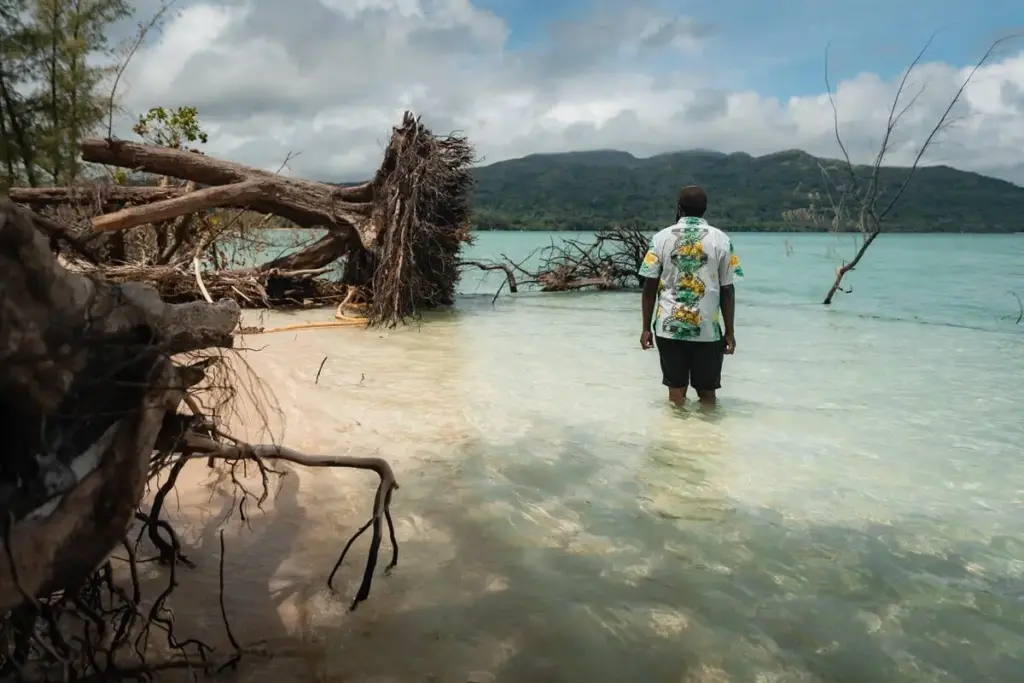
For the nations of the Blue Pacific, climate change is not an abstract, technocratic curve on a graph or a distant target for 2050. It is an immediate, existential threat multiplier. The demands rising from the island nations are clear, unified, and non-negotiable: keep global temperature increases strictly within the 1.5°C threshold, make climate finance radically accessible to frontline communities who need it most, and place the health of the global ocean at the very center of the international climate agenda.
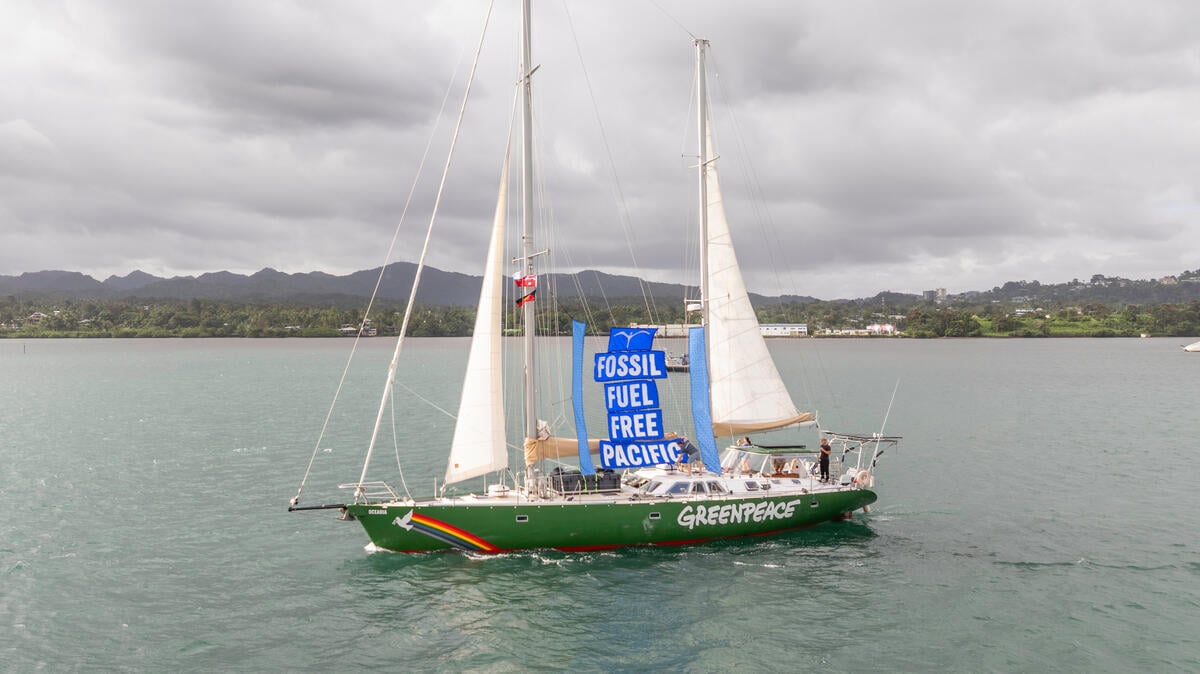
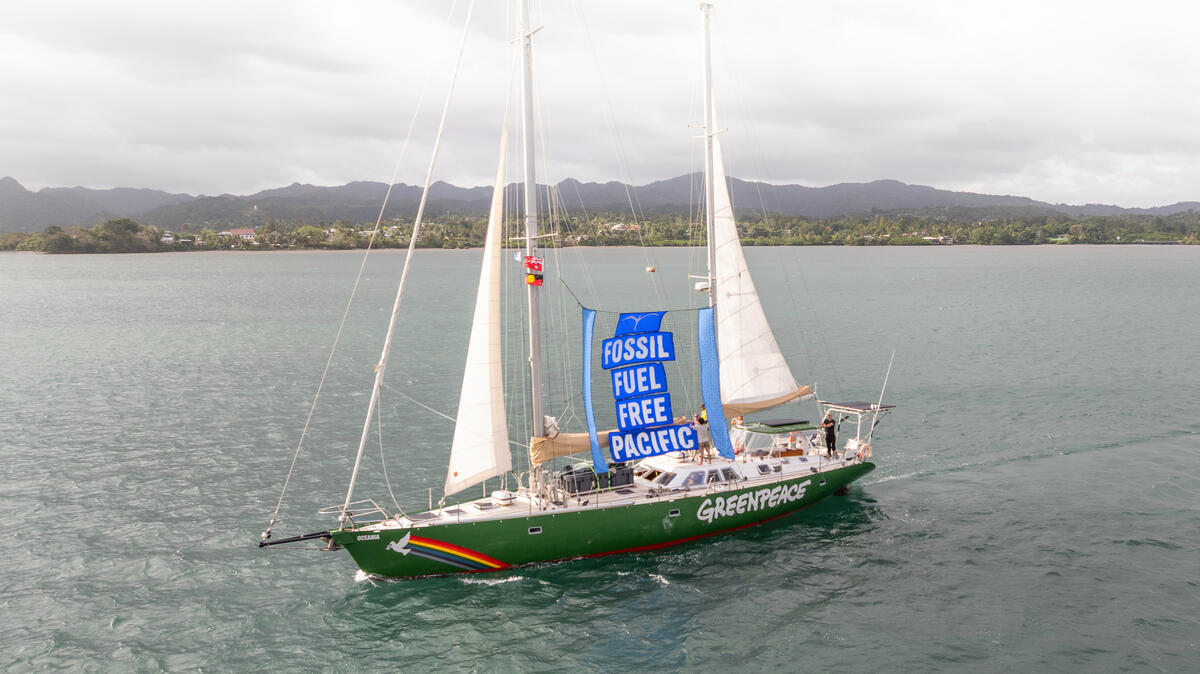
As Greenpeace’s flagship campaigning vessel, the Oceania, docked in Suva to a moving traditional welcome, the stark contrast between grassroots resilience and systemic governmental delay became glaringly apparent. The coming months leading up to COP31 will determine whether global leaders possess the political courage to match the moral clarity of the Pacific, or whether diplomacy will remain subservient to the profit margins of the coal, oil, and gas industries.
Detailed Chronology: The Journey to Pre-COP31 and the Oceania’s Voyage
The path to Nadi and the broader architecture of COP31 has been marked by a deliberate mobilization of civil society, indigenous networks, and scientific coalitions determined to keep the realities of the climate crisis at the forefront of international negotiations.
The Voyage of the Oceania
Weeks prior to the opening of the Pre-COP meetings, the Greenpeace campaigning vessel SV Oceania set sail on a historic trans-oceanic voyage, departing from Australian shores and cutting across the vast expanse of the South Pacific. The mission of the journey was multifaceted: to bridge geographical divides, gather grassroots testimonies from remote island communities, and serve as an active floating platform for climate justice campaigning.
Upon arrival in Suva, Fiji, the Oceania and its multinational crew were greeted with profound warmth by local Fijian communities, traditional leaders, and schools. This arrival transcended symbolic maritime diplomacy. It catalyzed a series of community-led gatherings, educational workshops with local school children, and high-level strategy sessions with regional journalists, environmental allies, and political leaders. These interactions were meticulously designed to harvest the lived experiences of those standing on the frontlines of sea-level rise and coastal erosion, transforming local stories into an undeniable mandate to be delivered directly to the negotiating tables of Pre-COP31.
Direct Action on the Home Front: The Newcastle Blockade
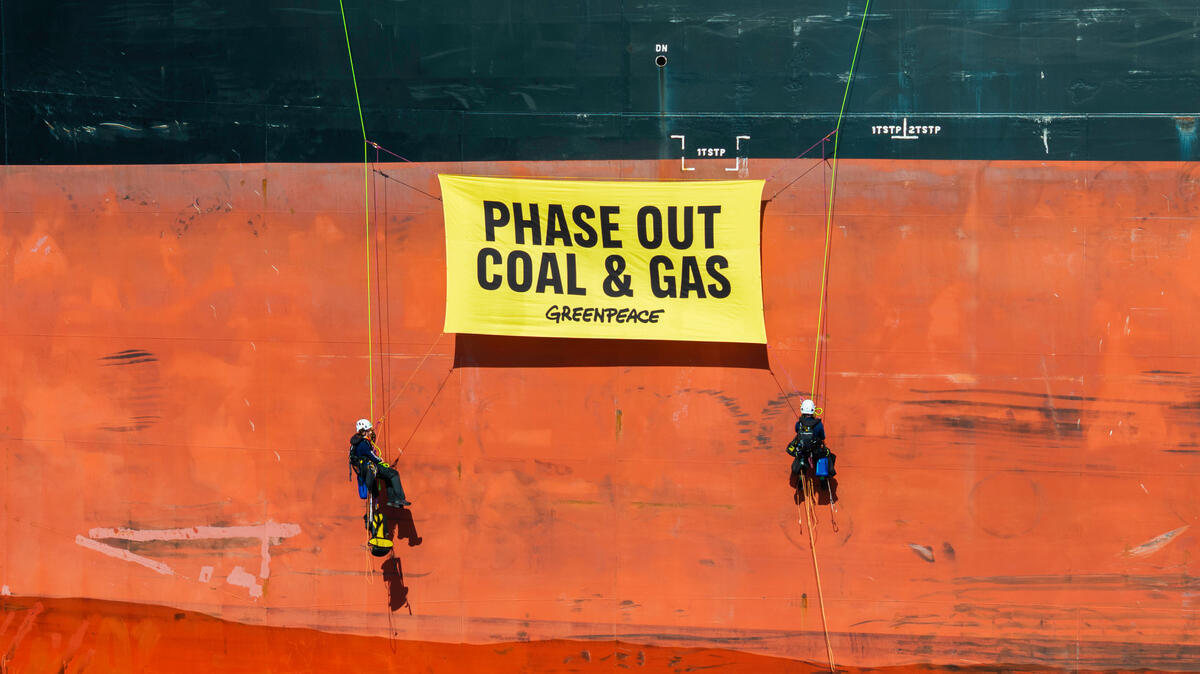
Simultaneously, thousands of miles away at the industrial heart of Australia’s fossil fuel export economy, the tension between state-sanctioned extraction and climate reality erupted into direct action. During the high-profile Rising Tide People’s Blockade at the Port of Newcastle—the world’s largest coal export terminal—Greenpeace Australia Pacific activists scaled and successfully blockaded the coal carrier Yangze 16.
Deploying massive banners reading "Phase Out Coal and Gas," the activists cast a glaring spotlight on the deep hypocrisy embedded within Australian climate policy. While Australian diplomats in tailored suits traverse the Pacific offering solidarity pledges and visiting vulnerable atolls like Tuvalu, the apparatus of the Australian state continues to facilitate the unhindered maritime transit of millions of tons of thermal and metallurgical coal to international markets. This duality has become the defining friction point of the COP31 presidency preparations.
Supporting Context & Metrics: The Mathematics of Survival
To understand why the Pacific rejects current international emission trajectories, one must examine the hard metrics of climate vulnerability and the catastrophic nature of policy failure.
The Myth of "Overshoot"
In modern climate economic modeling, the concept of "overshoot"—temporarily allowing global average temperatures to exceed the 1.5°C threshold before supposedly dragging them back down through unproven or nascent carbon dioxide removal (CDR) technologies—is frequently treated as a manageable, technical scenario. For the Pacific, this hypothesis is nothing short of a death sentence.
Every Fraction of a Degree: Science confirms that every incremental fraction of a degree past 1.5°C exponentially increases the intensity of marine heatwaves, coral bleaching events, and catastrophic tropical cyclones.
Irreversible Loss and Damage: Sea-level rise is not a reversible metric for low-lying atoll nations like Tuvalu, Kiribati, and the Marshall Islands. Higher water levels permanently submerge arable land, salinize freshwater lenses, and destroy ancestral burial grounds, rendering entire cultures and sovereign identities homeless.
The Injustice of Tolerance: Asking frontline island states to accept an overshoot scenario is, in effect, asking them to willingly absorb permanent societal destruction so that major industrialized polluters can maintain business-as-usual fossil fuel extraction schedules for another decade.
Economic Disparity vs. Historical Responsibility
The Pacific Island Forum (PIF) nations are responsible for a negligible fraction of historical global greenhouse gas emissions—accounting for significantly less than 0.5% of the global total. Yet, they shoulder a disproportionate share of the economic and humanitarian burden.
+-------------------------------------------------------------------------+
|                  THE CLIMATE INEQUITY EQUATION                          |
+------------------------------+------------------------------------------+
| Historical Emissions         | < 0.5% (Total Pacific Island Region)     |
+------------------------------+------------------------------------------+
| Climate Vulnerability Index  | Among Highest Globally (IPCC AR6)        |
+------------------------------+------------------------------------------+
| Access to Climate Finance    | Hindered by Complex Bureaucracy          |
+------------------------------+------------------------------------------+
| Fossil Fuel Subsidies        | Billions Diverted Annually (Global North)|
+------------------------------+------------------------------------------+
Furthermore, accessing existing international climate finance remains an administrative nightmare for small island developing states (SIDS). Funding mechanisms are frequently bogged down by rigid bureaucratic criteria, high transaction costs, and loan-based frameworks that exacerbate national debt burdens rather than providing the rapid, grant-based relief required for climate adaptation and loss mitigation.
Official Statements and the Rhetoric-Reality Gap
The political discourse surrounding the COP31 presidency has laid bare a profound philosophical and operational schism between Canberra and Suva, Majuro, and Funafuti.
The Australian Position: Words vs. Actions
During the lead-up discussions, Australian Climate Change and Energy Minister Chris Bowen articulated a vision centered on elevating Pacific voices, accelerating regional implementation, and demonstrating tangible leadership. In a notable gesture, Australian and international leaders organized visits to Tuvalu to witness firsthand the precarious realities of sea-level rise and coastal erosion.
While these gestures of visibility are rhetorically powerful, they have also exposed a widening credibility chasm. Greenpeace International and regional civil society organizations have been unambiguous in their critique:
"Australia cannot call itself a trusted member of the Pacific family while simultaneously greenlighting new or expanded coal and gas extraction projects that actively intensify the very existential crisis threatening that family. Using Tuvalu’s profound vulnerability as a political backdrop for international optics while defending fossil-fuel expansion at home is indefensible."
The Pacific Mandate
In stark contrast, Pacific leaders, youth advocates, and civil society representatives have used the Nadi Pre-COP to lay down uncompromising parameters for the upcoming COP31 presidency:
Absolute Defense of 1.5°C: Reaffirming that 1.5°C is a rigid, non-negotiable survival threshold, not a flexible negotiation ceiling.
Direct Climate Finance: Demanding direct, accessible, grant-based climate finance for loss and damage, bypassing cumbersome multilateral filters that delay emergency funding.
The Ocean-Climate Nexus: Formalizing the integration of ocean health—including marine biodiversity, fisheries protection, and deep-sea mining moratoriums—into the core decision-making architecture of the UN Framework Convention on Climate Change (UNFCCC).
Future Outlook: What COP31 Must Deliver
As the international community looks ahead to the formal convening of COP31 in Türkiye—under the joint operational umbrella of the Australian-Pacific partnership—the stakes could not possibly be higher.
The presidency’s recent proposals regarding global renewable electrification targets are a welcome step forward, but they remain dangerously incomplete. Electrification alone cannot solve the climate emergency if the foundational engine of the global economy continues to pump out fossil fuels. An electrification target unaccompanied by a binding, time-bound mandate to phase out coal, oil, and gas extraction is little more than greenwashing on a global scale.
The Road Map to Credibility
For COP31 to avoid becoming yet another hollow talk shop characterized by high-flown rhetoric and delayed implementation, it must achieve three foundational outcomes:
A Credible Fossil Fuel Phase-Out Pathway: The conference must establish an explicit, equitable roadmap for the managed decline of global coal, oil, and gas production, aligned strictly with 1.5°C pathways.
A Just Transition Framework: Ensuring that the transition away from fossil fuels protects vulnerable workers, marginalized communities, and developing economies through targeted international support and technology transfer.
Rejection of False Solutions: Closing the door on carbon offsetting loopholes, unproven geoengineering, and accounting tricks that allow major emitters to continue polluting under the guise of future mitigation.
The Pacific has demonstrated extraordinary moral leadership, offering profound traditional knowledge, scientific clarity, and steadfast resilience to the global community. What the region requires now is not patronizing sympathy, strategic branding, or empty diplomatic symbolism. It demands genuine, uncompromised solidarity manifested through immediate and ambitious climate action.
The voices of the Pacific are clear, unified, and resonant. The defining question of COP31 is no longer what the Pacific has to say—it is whether Australia and the wider international community possess the integrity to finally listen, and to act accordingly.