

This coverage is made possible through a partnership between Grist and The Salt Lake Tribune, a nonprofit newsroom in Utah.
Executive Overview
For generations, Carbon County, Utah, has lived and breathed the boom-and-bust cycles of heavy industry. Its residents know intimately what it means to power the nation, often at the direct expense of their own health and environment. From the coal-dusted tunnels of central Utah to the smoke rising above industrial railways, the local economy has long been inextricably linked to fossil fuels. But as the coal industry quietly breathes its last breath—with zero pounds of coal mined in the county since 2023—a new, highly controversial era of energy production is taking root.
Today, this rural landscape is bracing for a massive industrial pivot. Driven by the explosive global demand for artificial intelligence, cloud computing, and sprawling server infrastructure, a wave of high-tech developers is descending upon the region. Two massive proposals—Valar Atomics’ nuclear micro-reactor mega-complex and Altigen Energy’s massive natural gas-powered "Jurassic Spark" project—are promising to reshape the geography, economy, and environment of Carbon County.
While state leaders, local commissioners, and tech advocates hail these multi-billion-dollar initiatives as vital financial lifelines for a community recovering from economic abandonment, a vocal and deeply anxious faction of local residents is pushing back. Haunted by historical scars from fossil fuel extraction and regional nuclear testing, these citizens argue that they are being forced to accept dangerous, untested technologies disguised as progress. As the first small modular nuclear reactors in the United States loom on the horizon, Carbon County stands as a bellwether for the complex, high-stakes collision between the tech sector’s insatiable hunger for power and rural America’s fight for self-determination.
Detailed Chronology: From Coal Dust to Digital Data
To understand the profound anxiety gripping Carbon County today, one must look backward at its complex industrial history before examining the hyper-accelerated timeline of its current technological transformation.
The Coal Era and Its Collateral Damage
For decades, Carbon County was a cornerstone of the American West’s energy infrastructure. At its peak in 2006, local mines produced nearly 10 million tons of coal. Families built their livelihoods around the mines, despite the steep physical toll.
"We’ve had the coal. We’ve dealt, the whole community, with black lung," recalls local resident Cindy O’Neil, whose husband spent years working in the county’s namesake mines. "The explosions, the fires, and all the things that came along with it."
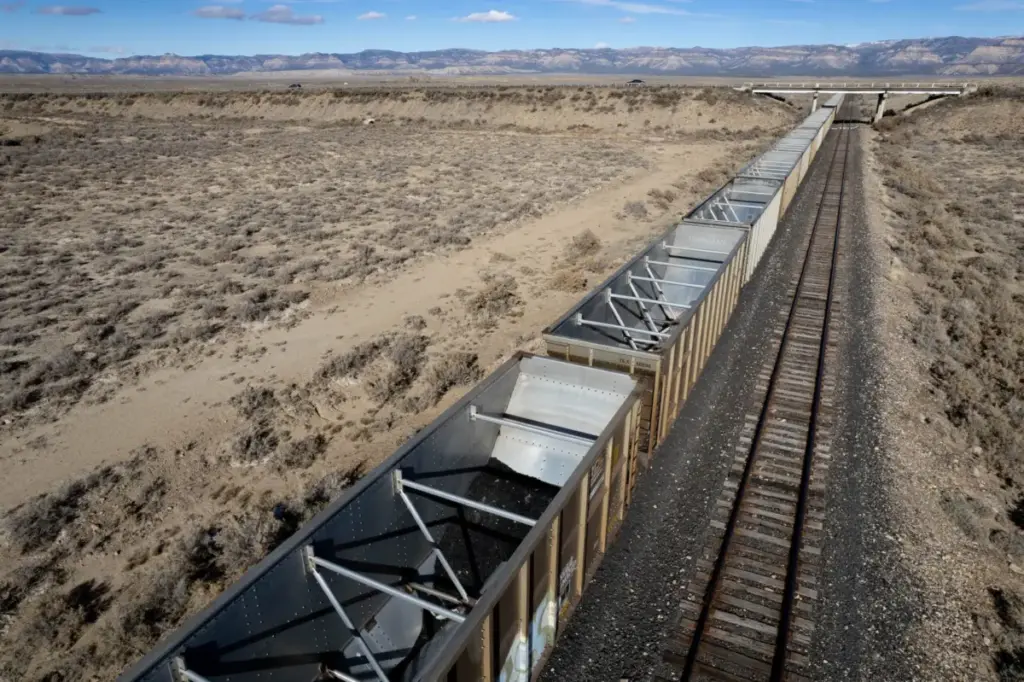
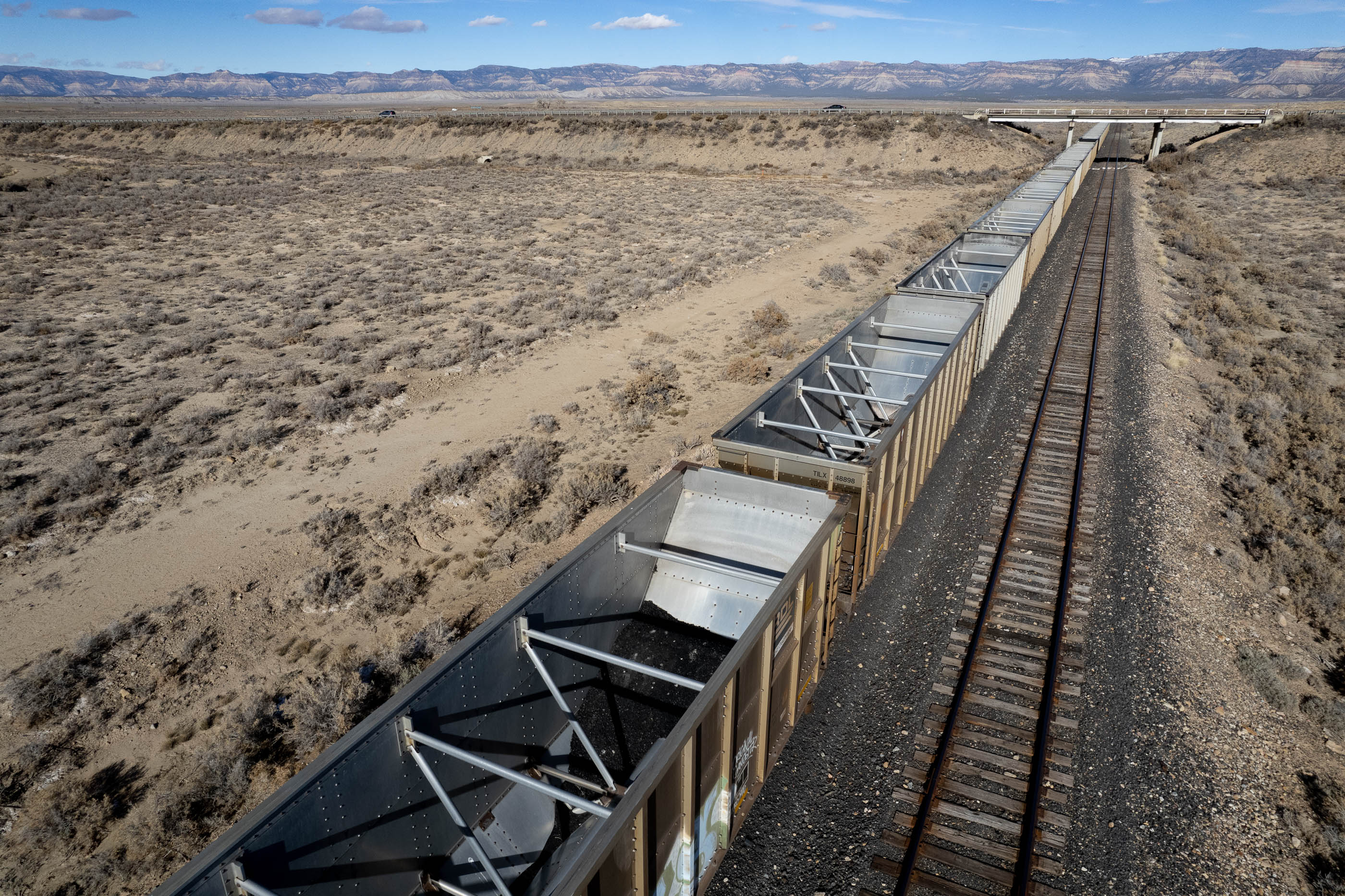
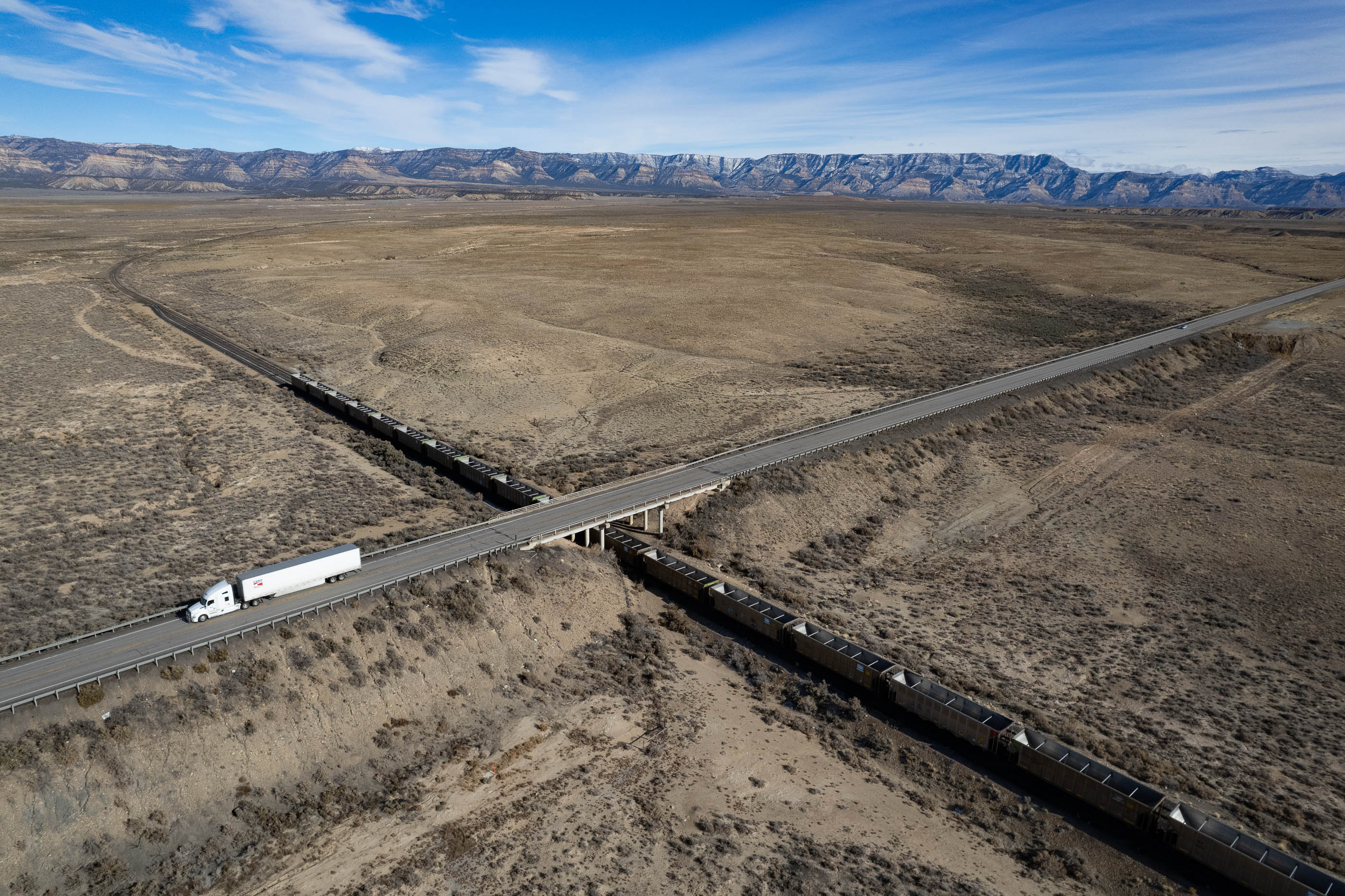
However, the economic engine sputtered rapidly in the late 2000s and 2010s. Cheaper, cleaner energy sources—such as renewables and natural gas—combined with rapidly depleting coal seams, devastated the local market. By 2023, the region’s coal production hit absolute zero. Empty coal cars began sitting idle against a desolate landscape along U.S. Highway 6, leaving a massive hole in local property tax rolls and shifting a disproportionate financial burden onto everyday homeowners.
The Rush for Digital Infrastructure
As traditional industries faded, the national explosion of artificial intelligence created an unprecedented demand for data centers. Because major public utilities across the West have struggled to supply the immense, continuous electricity required by AI servers, tech developers began looking directly at remote rural areas with abundant land and loose regulatory hurdles.
Last year, the Utah Legislature passed Senate Bill 132, a critical legislative catalyst. The bill allows private companies with energy demands of 100 megawatts or more to construct their own self-contained generating stations. The goal was to spur business development without straining the public electrical grid. The result was an immediate gold rush of energy and tech developers scrambling to stake claims in rural Utah.
Valar Atomics and "Project Beehive"
Enter Valar Atomics, an aggressive nuclear startup. The company unveiled plans to construct a mega-complex consisting of 456 small modular reactors (SMRs) on vast Bureau of Land Management (BLM) tracts in Carbon County. Dubbed "Project Beehive," the initiative also secured a lease on a square mile of state-owned trust lands.
The timeline accelerated sharply in early 2026. Governor Spencer Cox, U.S. Senator John Curtis, and other high-ranking Utah officials publicly welcomed Valar to the state, allowing the company to test its "Ward250" microreactor at the San Rafael Energy Lab in neighboring Emery County. By June 2026, Valar announced it had achieved "self-sustaining criticality"—a nuclear milestone where atoms split and maintain a steady fission chain reaction without external neutron feeds. The startup now plans to power a 30-megawatt nuclear-powered AI data center in Emery County in partnership with computer-chip giant Nvidia.
"Jurassic Spark" and Natural Gas Expansion
Before the nuclear proposal even had time to settle into public consciousness, rumors began swirling about a second massive data center campus. Altigen Energy selected a 1,200-acre site east of Wellington for its "Jurassic Spark" project—nearly double the footprint of the Valar campus. Initial plans call for a 250-megawatt natural gas plant to power the complex, with eventual capacity scaling up to a staggering 3 gigawatts of electricity. For context, the entire state of Utah currently consumes roughly 4 gigawatts.
Supporting Context & Metrics: The Scale of the Transformation
The sheer physical and economic metrics associated with these incoming developments underscore just how drastically Carbon County’s landscape is poised to change.
- Land Footprint: Altigen’s "Jurassic Spark" covers 1,200 acres east of Wellington, while Valar Atomics’ complex utilizes vast BLM tracts alongside a square mile of state-owned trust land leased for up to 100 years.
- Energy Capacity: Altigen’s initial natural gas plant is rated at 250 megawatts, with a projected ceiling of 3 gigawatts. To put this in perspective, the entire state of Utah operates on roughly 4 gigawatts of total electricity.
- Financial Valuation: The Valar Atomics site lease is expected to generate $35 million in lease rents over a 50-year period. These revenues directly benefit Utah public schools through the Trust Lands Administration.
- Technological Novelty: Small modular reactors (SMRs) have not yet been deployed for commercial use anywhere in the United States. Valar’s microreactor approach remains largely untested at this commercial scale.
Environmental Realities: Heat Islands, Methane, and Water
The environmental implications of clustering massive data centers, gas-fired plants, and nuclear microreactors in a remote rural area are raising alarms among scientists and residents alike.
Natural gas is composed primarily of methane, a potent greenhouse gas that traps heat far more effectively than carbon dioxide in the short term. Meanwhile, power generation of any kind produces immense quantities of waste heat. According to Robert Davies, a physics professor at Utah State University, nuclear plants actually produce more waste heat than natural gas plants because they operate at lower thermodynamic efficiencies.
"If you’re in a contained valley, it concentrates the problem," Davies explained.
Geographically, the Wellington area sits within a distinct valley, hemmed in tightly by the Wasatch Range to the west and the Book Cliffs to the north and east.
"The heat island that the data centers produce, that concerns me," says Aspen Westenskow, a lifelong resident of Carbon and Emery counties. "They go clear all this land, the brush, the trees. What helps cool the planet down? Not flat dirt."
Water scarcity remains an equally critical flashpoint. Every drop of water in the arid region is already fully allocated. While developers like Valar insist they will utilize closed-loop helium cooling systems requiring minimal water, skeptical locals remain unconvinced that industrial-scale cooling can occur without draining local aquifers.
Official Statements and Local Polarization
The debate over Carbon County’s industrial future has deeply fractured the community, creating a widening chasm between local government officials and grassroots residents.
County Commissioners Defend the Pivot
Facing a severe tax shortfall following the collapse of the coal industry, Carbon County commissioners have thrown their full support behind the data center and energy projects. They argue that the influx of corporate investment is essential to rescue local public services and relieve homeowners of crushing property tax burdens.
"We realize that this topic is a hot button now, along with data centers," said County Commissioner Larry Jensen during a public hearing. "It’s important that you understand that the Carbon County commissioners are committed to allowing these things to move forward. Even with the pushback—we realize that there are a few in our community who will push back—but the silent majority are the ones that we really represent."
The Utah Trust Lands Administration board echoed these sentiments. During a September board meeting, officials praised the financial windfall the Valar lease would bring to public schools. However, board chair Mike Nelson candidly admitted to the unprecedented nature of the agreement: "We weren’t always sure what to ask about, and probably still aren’t sure of everything to ask about because this is a first, right?"
Grassroots Outrage and Transparency Concerns
On the other side of the divide, residents report a profound sense of exclusion and corporate secrecy. Rumors, closed-door meetings, and non-disclosure agreements (NDAs) have fueled deep distrust.
Cheryl Lupo, a longtime county resident running for a seat on the county commission, gathered 300 signatures to land on the ballot as an unaffiliated candidate. She stated that the public sentiment she encountered during her campaign was overwhelmingly hostile to the projects.
"People are up in arms," Lupo said. "Torches and pitchforks. Because they’re not being heard."
O’Neil echoed this frustration regarding the heavy veil of secrecy surrounding incoming projects. "You shouldn’t be hiding what you and the company are going to bring to a community," O’Neil said, "and not tell the community until it’s too late and a done deal."
For Lupo, the opposition to nuclear energy is also intensely personal. Her family carries generational trauma from America’s mid-century nuclear testing era. Her mother died at age 38—an early death Lupo attributes to radioactive fallout drifting downwind from nuclear weapons testing in neighboring Nevada during the 1950s, when her family lived in Carbon County. She believes the same fallout contributed to her grandfather’s death.
"I will never, ever be a proponent of nuclear," Lupo stated flatly.
Future Outlook: A Precarious Crossroads
As Carbon County navigates the twilight of its fossil-fuel era and steps blindly into an experimental technological frontier, the stakes could not be higher.
On one hand, local leaders see these multi-billion-dollar energy and data center initiatives as the only viable parachute preventing total municipal bankruptcy. Without the tax revenues generated by AI infrastructure and next-generation power plants, remaining residents face mounting fiscal pressures.
On the other hand, citizens like Cindy O’Neil and Cheryl Lupo are fighting to ensure their home does not become an experimental sacrifice zone for corporate tech giants. They refuse to accept industrial "table scraps" tied to unproven nuclear tech, massive methane footprints, and opaque backroom deals.
Whether "Project Beehive" and "Jurassic Spark" successfully launch Utah into a prosperous high-tech future—or inflict irreversible environmental and social scars on a weary rural community—remains one of the most significant energy battles in the American West today. One thing is certain: Carbon County’s relationship with industrial power is entering its most volatile chapter yet.



