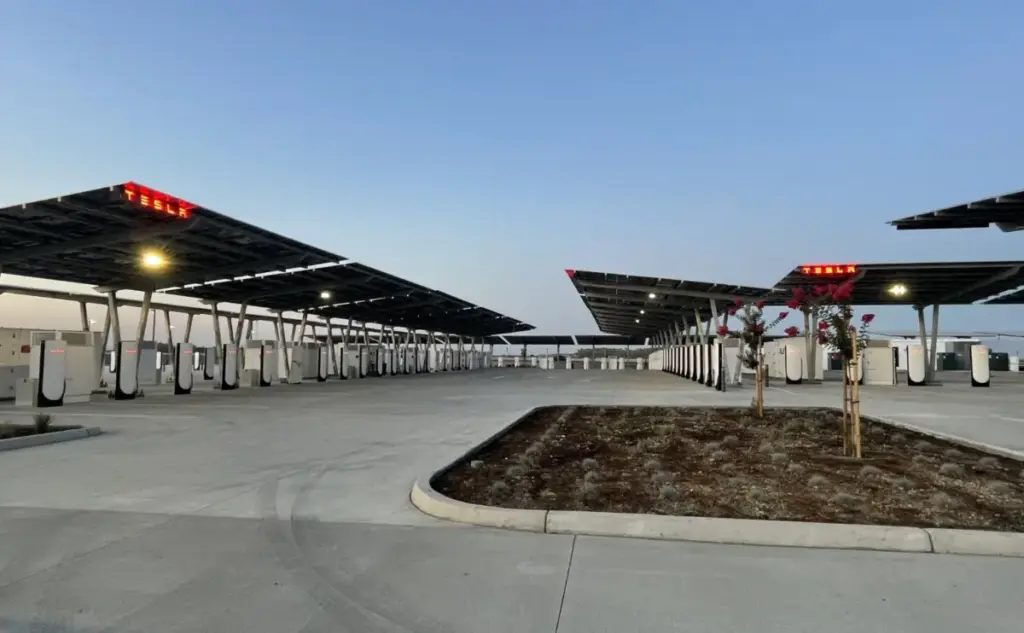
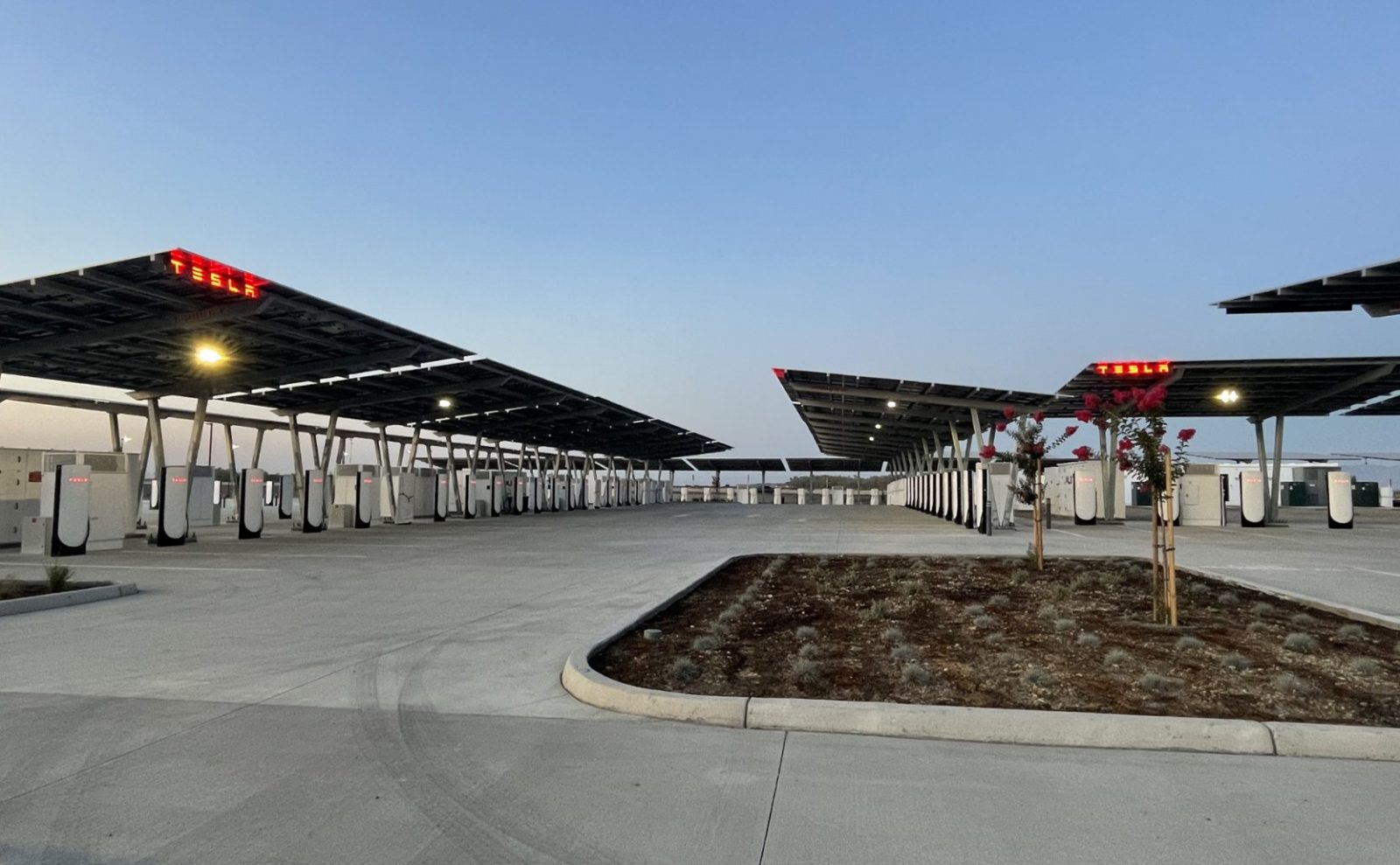
California continues to cement its position as the undisputed vanguard of the American electric vehicle (EV) revolution. In its latest aggressive policy push, the state has launched a fresh funding wave of at least $28 million dedicated entirely to the deployment of public, high-speed EV chargers. Operated through the state’s pioneering California Electric Vehicle Infrastructure Project (CALeVIP)—specifically via the Fast Charge California Project—this initiative offers property owners, businesses, nonprofits, and tribal entities an unprecedented financial lifeline: up to 100% coverage of eligible installation costs.
With per-port incentives reaching as high as $100,000, the program is engineered to tear down the traditional financial and bureaucratic barriers that slow down commercial EV infrastructure development. Administered by the Center for Sustainable Energy (CSE) on behalf of the California Energy Commission (CEC), the initiative requires that participating chargers be fully open to the public.
Crucially, this funding round pivots decisively toward "ready-to-build" projects. By prioritizing sites that have already navigated the labyrinthine processes of local permitting and electrical utility coordination, California is shifting away from theoretical planning and focusing squarely on immediate, boots-on-the-ground deployment. As the state moves closer to its ambitious clean transportation targets, this latest injection of capital promises to drastically expand public charging access, with an explicit emphasis on prioritizing historically underserved, low-income, and disadvantaged communities.
Detailed Chronology and Application Parameters
The Fast Charge California Project officially opened its application portal, marking another critical milestone in the state’s multi-year blueprint to build out a robust, reliable, and equitable charging grid.
The application window sets a clear operational timeline for interested stakeholders. Entities including local businesses, nonprofit organizations, public agencies, and federally recognized California Native American tribes can submit applications until January 14, 2027. Once this initial window closes, applications will be processed on a rolling, first-come, first-served basis, though qualifying projects situated within disadvantaged, low-income, and tribal communities will be granted elevated priority status.
For prospective applicants looking further down the horizon, the state has already mapped out subsequent opportunities. Another major application window is officially scheduled to run from February 24 through May 27, 2027, though incentives during that subsequent phase will scale to a maximum of $55,000 per port.
Financial Tiers and Cost-Coverage Mechanics
The scale of the financial backing provided by the state is determined by the raw power output delivered by each individual charging port:
High-Output Ports (150 kW to <275 kW): Eligible for incentives of up to $55,000 per port.
Ultra-Fast Ports (275 kW and above): Eligible for maximum incentives of up to $100,000 per port.
Significantly, these funds can cover up to 100% of approved total project costs. This comprehensive financial umbrella extends beyond the physical hardware of the chargers themselves to encompass end-to-end engineering, strategic site planning, and heavy-duty electrical installation. However, developers must mind the strict per-port caps; if a project’s total expenditures exceed the maximum threshold, the developer remains responsible for the remaining balance.
The "Ready-to-Build" Mandate
To prevent capital from sitting idle in bureaucratic limbo, the California Energy Commission has instituted a stringent prerequisite: applicants must present projects that are fundamentally ready for construction.
This means that before a single dollar is awarded, applicants must possess a finalized utility service design—or an official letter from their local electrical utility confirming that no new or upgraded electrical service is required—alongside all necessary local building and environmental permits already secured.
This policy represents a learned evolution in state-level infrastructure funding. By filtering out speculative proposals, CALeVIP ensures that public money immediately converts into active, functioning construction sites.
Supporting Context, Metrics, and Strategic Evolution
To fully grasp the significance of this $28 million injection, one must examine the broader historical framework of CALeVIP and its ongoing evolution within California’s aggressive decarbonization landscape.
A Proven Track Record Since 2017
Since its inception in 2017, CALeVIP has served as the foundational engine driving statewide commercial and public EV charging growth. Backed financially by the CEC’s Clean Transportation Program and California’s Greenhouse Gas Reduction Fund, the program has successfully catalyzed the installation of approximately 10,200 individual charging ports across the state. The Center for Sustainable Energy, which manages the day-to-day operations of CALeVIP, has consistently refined its approach to maximize ROI for taxpayers and EV drivers alike.
Building on Spring 2026 Success
This current initiative does not exist in a vacuum; it directly builds upon the massive momentum generated earlier in the decade. In the spring of 2026, CALeVIP awarded a staggering $56.9 million to fund more than 1,266 ready-to-build Direct Current (DC) fast-charging ports. These projects spanned all 58 of California’s diverse counties, weaving a dense web of high-speed energy corridors from major metropolitan centers to remote rural outposts.
Notably, environmental equity remains a non-negotiable cornerstone of these programs. More than 67% of the DC fast chargers funded during the spring 2026 cycle were deliberately targeted for installation within disadvantaged, low-income, and tribal communities—a demographic focus that will continue to dictate priority scoring in the current $28 million round.
Navigating Eligibility Rules and Technical Mandates
Property owners eager to cash in on the up-to-$100,000 incentive must carefully review the evolving structural guidelines. Program documentation notes that traditional site types such as standard business districts, hotels, and general charging hubs may no longer qualify under this specific round, forcing developers to look toward alternative, high-utility locations.
Furthermore, interoperability is heavily enforced. To ensure that drivers of non-Tesla electric vehicles are not left stranded in a proprietary ecosystem, at least 50% of all connectors installed at every funded site must utilize the Combined Charging System (CCS) standard, ensuring broad accessibility across diverse EV makes and models.
To assist property owners in identifying lucrative, high-demand locations, CALeVIP provides a specialized digital tool known as the EV Charging Opportunity Finder. This advanced interactive mapping platform aggregates existing charging infrastructure data, localized EV registration trends, and demographic metrics, giving developers empirical insights into where public fast-charging is most urgently needed.
Official Statements and Industry Perspective
The transition toward a fully electrified transportation sector requires seamless public-private coordination, a reality emphasized by the program’s architects.
Reflecting on the critical importance of the "ready-to-build" requirement, Scott Shepard, Senior Director of Transportation Programs at the Center for Sustainable Energy, offered clear insight into the administrative philosophy driving CALeVIP:
"We’ve learned through CALeVIP that the fastest way to get chargers in the ground is to fund projects that are truly ready to build. When permitting and utility coordination are already underway, incentive dollars can turn into working chargers much faster."
Industry analysts point out that this pragmatic approach directly addresses the historical bottleneck of utility interconnection delays. By forcing developers to clear regulatory hurdles before applying for state cash, California has effectively eliminated the phenomenon of "phantom chargers"—infrastructure that is announced with great fanfare but delayed for years due to pending transformer upgrades or municipal red tape.
Future Outlook and the Horizon of High-Power Charging
As California marches unwaveringly toward its mandate to phase out the sale of new internal combustion engine passenger vehicles, the demand for ultra-fast, reliable public charging will scale exponentially.
The infusion of $28 million into the Fast Charge California Project is a vital tactical maneuver, but it is merely one piece of a much larger, rapidly evolving technological ecosystem. The hardware being deployed today is already preparing for the demands of tomorrow. With power thresholds scaling past 275 kW per port under this new funding round, the state is future-proofing its grid for next-generation passenger EVs and medium-duty commercial fleets capable of absorbing massive electrical loads.
Looking even further ahead, the charging landscape is poised for another seismic shift. Cutting-edge developments—such as the emergence of ultra-high-capacity charging systems reaching up to 750 kW, slated for commercial rollout by major charging networks like EVgo as early as 2027—signal that the definition of "fast charging" will continue to accelerate.
By strategically underwriting the foundational real estate, engineering, and hardware costs today, California is ensuring that its commercial property owners are not left behind. Through programs like CALeVIP, the state is building a resilient, equitable, and lightning-fast energy highway capable of sustaining the zero-emission future for decades to come.