

Executive Overview
As the global community confronts the compounding and unprecedented crises of climate change and rapid biodiversity loss, scientists, historians, and conservationists are looking backward to move forward. Historical archives—long considered static monuments to the past—are increasingly recognized as dynamic, untapped reservoirs of ecological baselines. For two decades, the Biodiversity Heritage Library (BHL) has stood at the vanguard of this movement. Celebrating its 20th anniversary, the BHL has grown into the world’s largest open-access digital library for biodiversity literature and archives, boasting a colossal corpus of over 64 million pages.
However, millions of these pages exist not as printed text, but as fragile, handwritten manuscripts—field journals, notebooks, and species lists penned by naturalists of the 19th and early 20th centuries. These documents contain invaluable, granular data detailing species distributions, migratory patterns, abundances, and behavioral observations across decades of environmental stability prior to heavy industrialization.
To bridge the gap between historical preservation and modern climate science, a pioneering pilot project at Harvard University’s Ernst Mayr Library (EML)—in collaboration with the BHL and powered by cutting-edge artificial intelligence—has successfully digitized, transcribed, and integrated the ornithological field notes of eminent zoologist Walter Faxon. This initiative not only rescues vital historical data from obscurity but also establishes a scalable blueprint for transforming archival manuscripts into machine-readable, globally shared datasets destined for platforms like the Global Biodiversity Information Facility (GBIF). This article explores the convergence of historical ecology, artificial intelligence, and digital librarianship, examining how a 19th-century naturalist’s field notes are helping humanity understand twenty-first-century environmental crises.
Detailed Chronology: From Harvard Halls to the Digital Frontier
The journey of Walter Faxon’s notebooks from physical preservation in a Harvard archive to global accessibility via the BHL spans over 150 years, defined by meticulous field observation, modern digital workflows, and cutting-edge generative AI integration.
1848–1920: The Life and Legacy of Walter Faxon
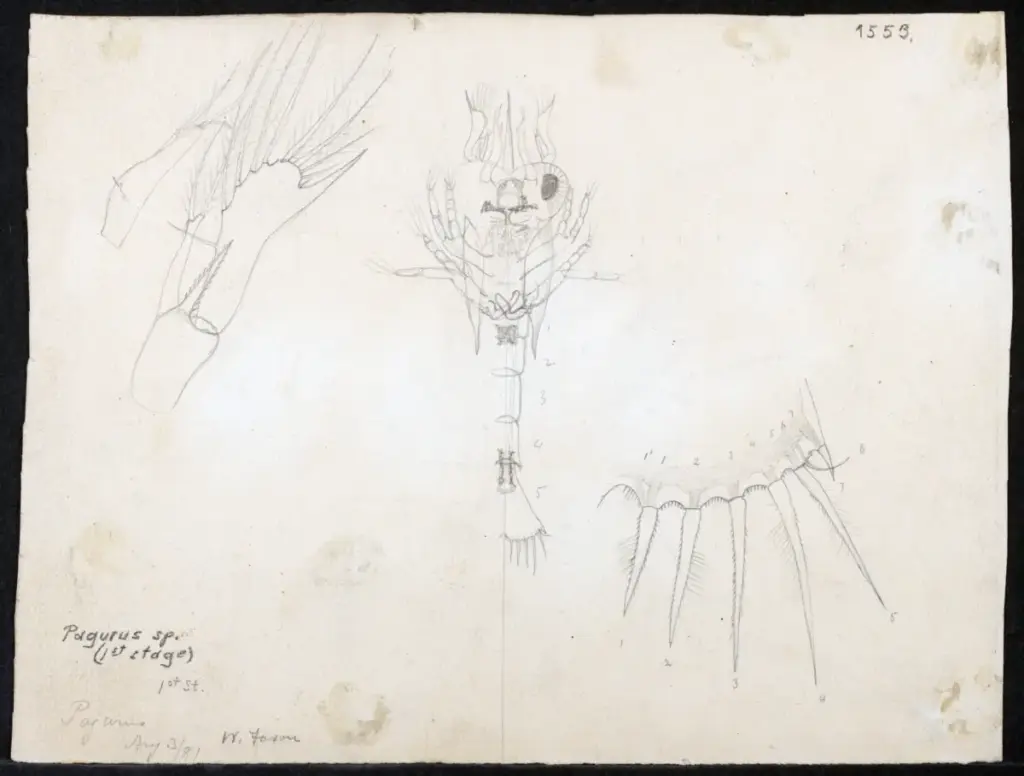
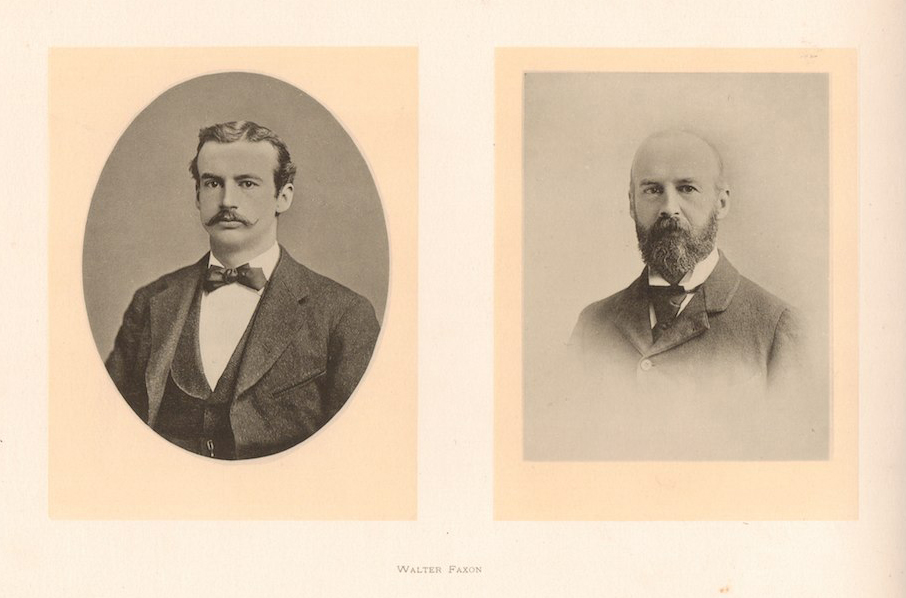
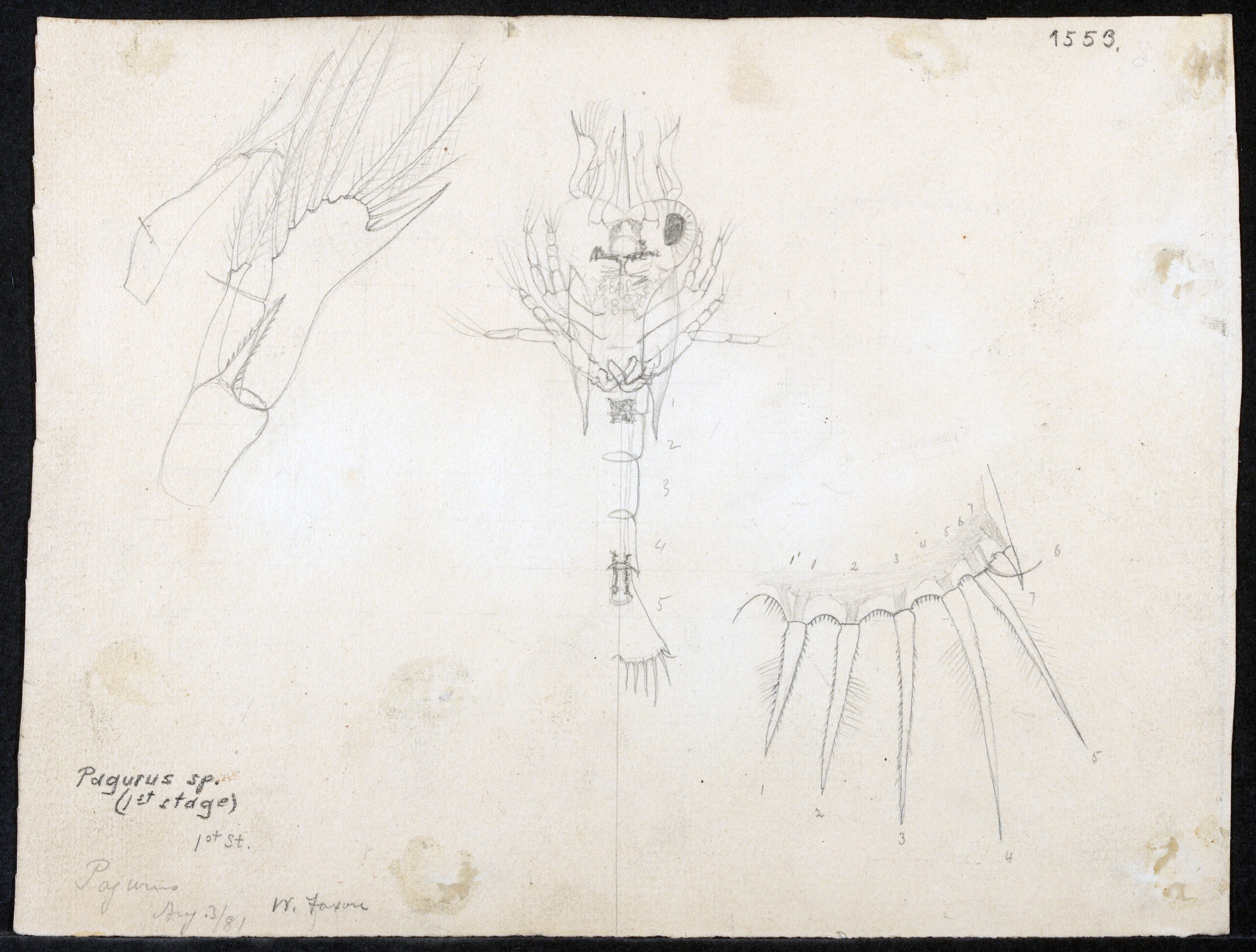
Born on February 4, 1848, in Massachusetts, Walter Faxon established himself as a towering figure in American zoology. Serving as an Assistant Professor of Zoology at Harvard University from 1872 to 1886 and subsequently as the Curator of the Invertebrate Department at Harvard’s Museum of Comparative Zoology (MCZ) for an astonishing 46 years (1874–1920), Faxon dedicated his professional career primarily to the study of crustaceans and mollusks. His meticulous pen-and-ink illustrations of invertebrate morphology—such as his 1881 zoeal-stage sketches of hermit crabs (Pagurus sp.)—demonstrate the hyper-focused precision that characterized his scientific output.
Yet, ornithology was Faxon’s lifelong avocation. Approaching bird study with the same rigor he applied to invertebrate taxonomy, Faxon spent nearly six decades in the field. He became a founding Fellow of the American Ornithologists’ Union, earning a reputation among his peers for absolute authority; historical accounts note that the identification of a bird by Faxon was never questioned. Over a 33-year span from 1886 to 1919, Faxon compiled thousands of meticulous bird observations across New England, capturing species names, dates, localities, counts, sex, life stages, and acoustic behaviors.
2025: Digitization under the Climate Change Mandate
Fast forward more than a century to 2025. Recognizing the urgent ecological value locked within Faxon’s surviving manuscript collection—housed in Harvard’s Ernst Mayr Library—the institution prioritized the materials for high-resolution imaging. With the support of the Harvard Library Collections Digitization Program under its specialized Climate Change theme, Faxon’s 2,200 pages of manuscript materials (including 1,640 pages of field journals, bird lists, and notebooks) were meticulously digitized. This formed part of a broader EML effort that also preserves the papers of contemporaries like William Brewster, which feature extensive correspondence with Faxon.
June – August 2026: The Pforzheimer Fellowship and AI Transcription Trials
To make these high-resolution page images useful for modern ecological modeling, they needed to be transcribed into searchable, structured text—a daunting task given the volume of cursive handwriting, faded pencil marks, and tight marginalia. To tackle this, the Ernst Mayr Library hosted a 2026 Pforzheimer Fellowship, awarding the position to Mohit Mandal, a Harvard PhD candidate in Anthropology.
Working from June 1 to August 31, 2026, Mandal undertook a rigorous comparative analysis of leading artificial intelligence models to determine their viability for manuscript transcription:
- Google Gemini: Evaluated first, Gemini demonstrated exceptional accuracy in deciphering difficult handwriting. However, it presented frustrating limitations, including rigid file upload caps and restricted user-friendliness tied strictly to Google Workspace ecosystems (lacking native support for formats like Microsoft Word).
- OpenAI ChatGPT: While possessing slightly different error profiles initially, ChatGPT proved vastly more flexible. Mandal found that he could successfully train and prompt the model according to specific formatting rules, retaining structural consistency across complex historical documents.
- Anthropic Claude: To ensure maximum fidelity, Mandal implemented a dual-model verification pipeline, utilizing Claude to cross-check and validate the initial transcripts generated by ChatGPT, thereby leveraging the complementary strengths of both AI architectures.
Late August 2026: Project Completion and Initial Findings
By the conclusion of the fellowship in late August 2026—just one week prior to public reporting—the ambitious goal of transcribing nearly 2,000 manuscript pages was successfully achieved. The resulting transcripts were embedded alongside original page images within the BHL book viewer, making Faxon’s century-old ecological observations instantly searchable by scientists and the general public alike.
Supporting Context & Metrics
To appreciate the scale and significance of this undertaking, it is necessary to examine the quantitative framework of the Biodiversity Heritage Library and the specific data dimensions of the Faxon collection.
The Biodiversity Heritage Library at a Glance
- Operational Lifespan: 20 years of continuous open-access service.
- Corpus Size: Over 64 million pages of digitized biodiversity literature, taxonomic monographs, field notes, and institutional archives.
- Global Reach: The world’s largest open-access digital repository for biodiversity literature, serving researchers, conservationists, and citizen scientists across every continent.
- Core Mission: To radically improve the global accessibility of biodiversity literature as a service to science and society, transforming physical museum and library stacks into a globally shared digital commons.
The Walter Faxon Collection Metrics
- Total Manuscript Pages: Just over 2,200 pages.
- Ornithological Observations Corpus: 1,640 pages dedicated specifically to field journals, bird lists, and field notebooks spanning 1886 to 1919 (33 years of continuous data collection).
- Associated Artifacts: Eight detailed pencil drawings of Arthropoda and Crustacea, alongside rich epistolary records, including 145 cataloged letters exchanged with fellow ornithologist William Brewster.
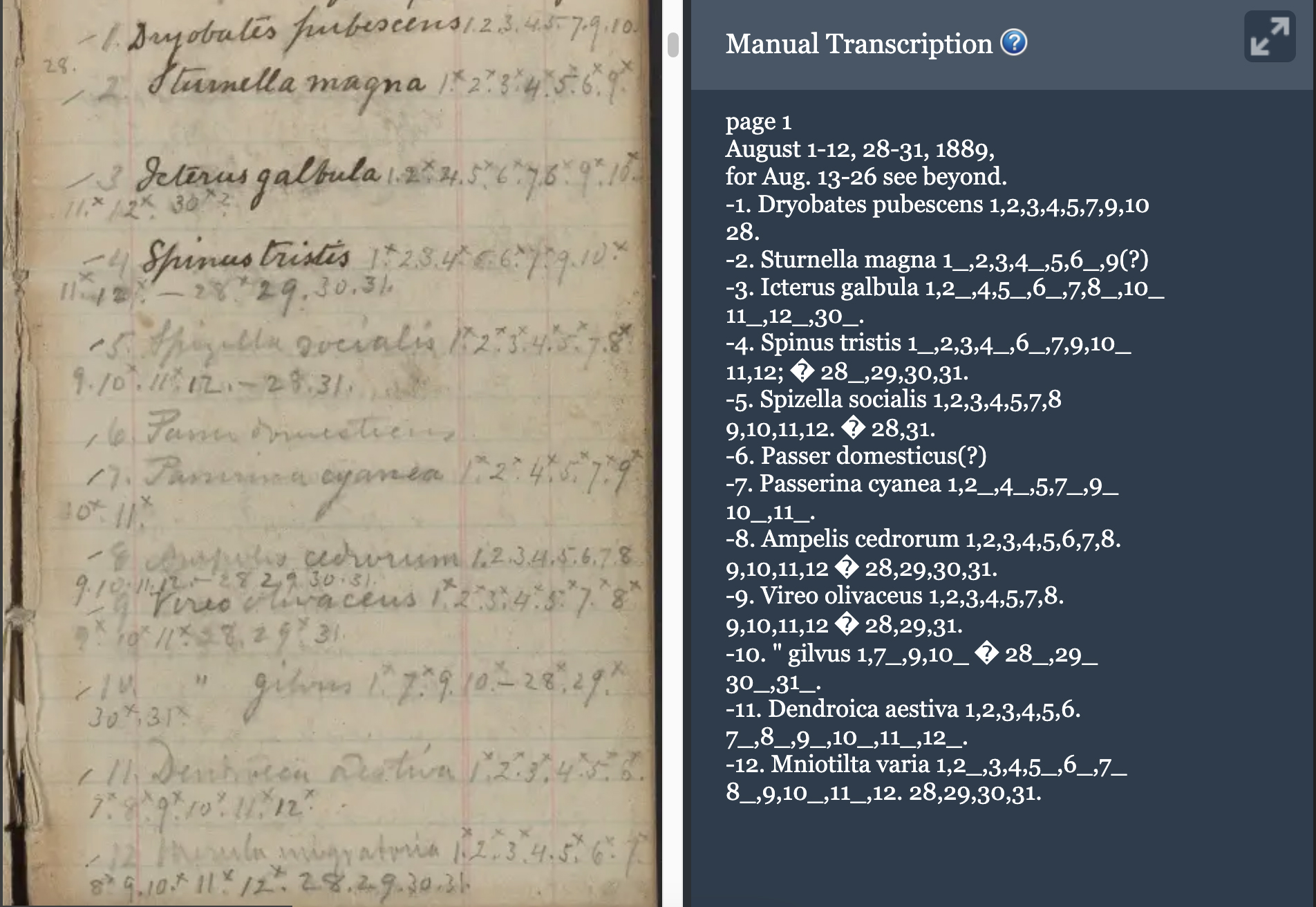
- Data Density: Each journal page typically records dense localized counts of migratory and resident bird species, offering baseline demographic data from an era before intensive habitat fragmentation, chemical agriculture, and anthropogenic climate change.
Official Statements & Expert Perspectives
The intersection of artificial intelligence and archival curation has sparked profound dialogue among digital humanists, librarians, and data scientists.
Joe deVeer, Co-Secretary of the BHL Executive Committee and Digital Projects Manager at the Ernst Mayr Library at Harvard University—where he has served since 2006—reflects on the evolution of the institution:
"The Ernst Mayr Library is a founding member of BHL, and it has been an honor to work with such a fantastic team of international colleagues over the past 20 years. As we celebrate BHL’s twentieth anniversary, projects like the digitization and transcription of Walter Faxon’s field notes demonstrate how historical archives are no longer static shelves of paper, but active fonts of data essential for understanding anthropogenic effects on life on Earth."
Mohit Mandal, the 2026 Pforzheimer Fellow who spearheaded the AI transcription workflow, shared critical methodological insights regarding the limits and capabilities of modern language models when applied to historical documents:
"The major takeaway from this project is the realization that the human element remains central to guide the goals and direction of the project, without which A.I. tools—at least at this stage of their development—often falter in accuracy, especially when handling complex page layouts and difficult handwriting."
Mandal’s field notes highlighted specific technical hurdles encountered during the AI training phase:
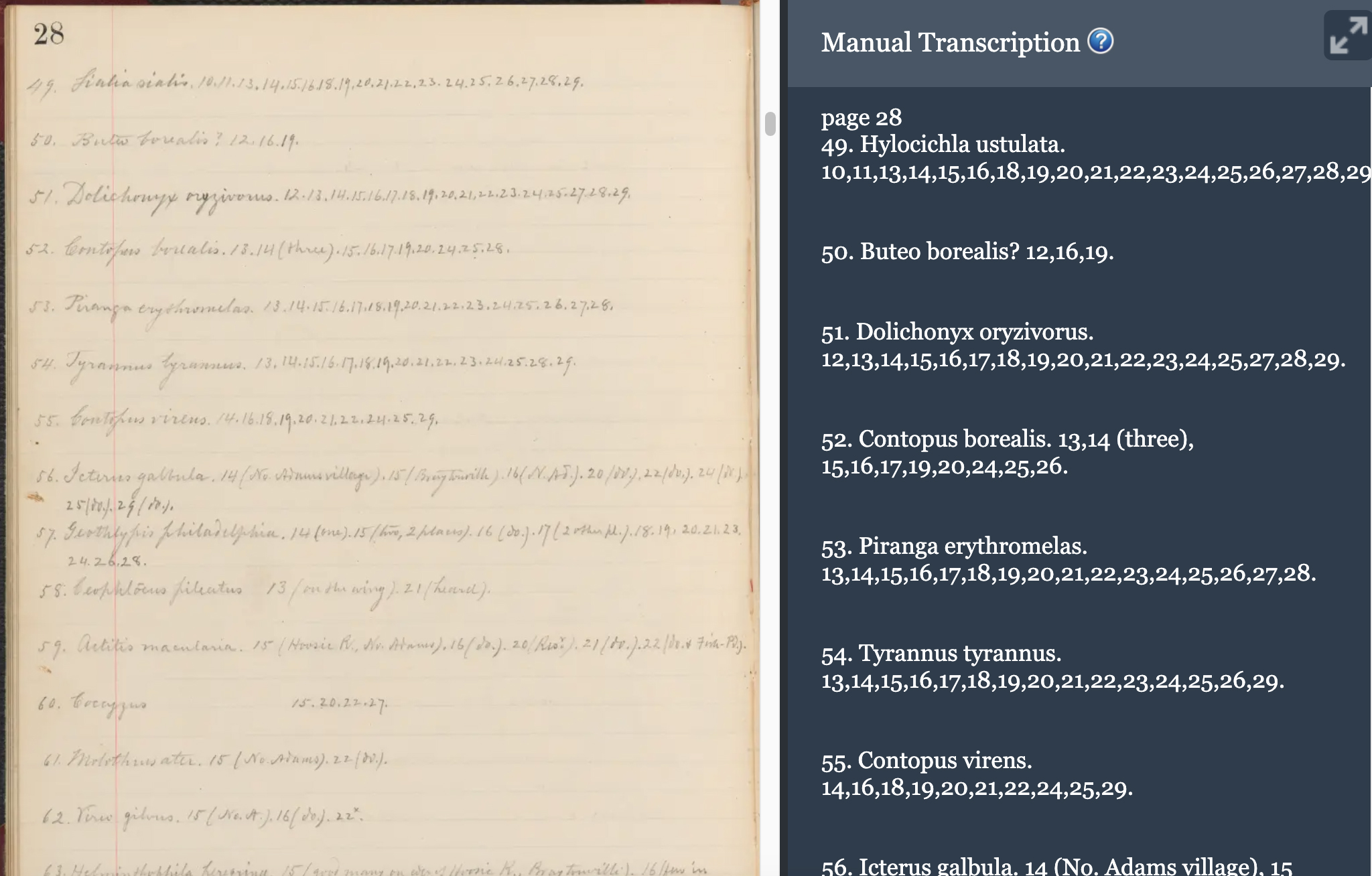
- Handwriting Degradation & Smudging: Faded pencil marks and smudges frequently degraded character recognition, requiring human oversight to interpret contextual intent.
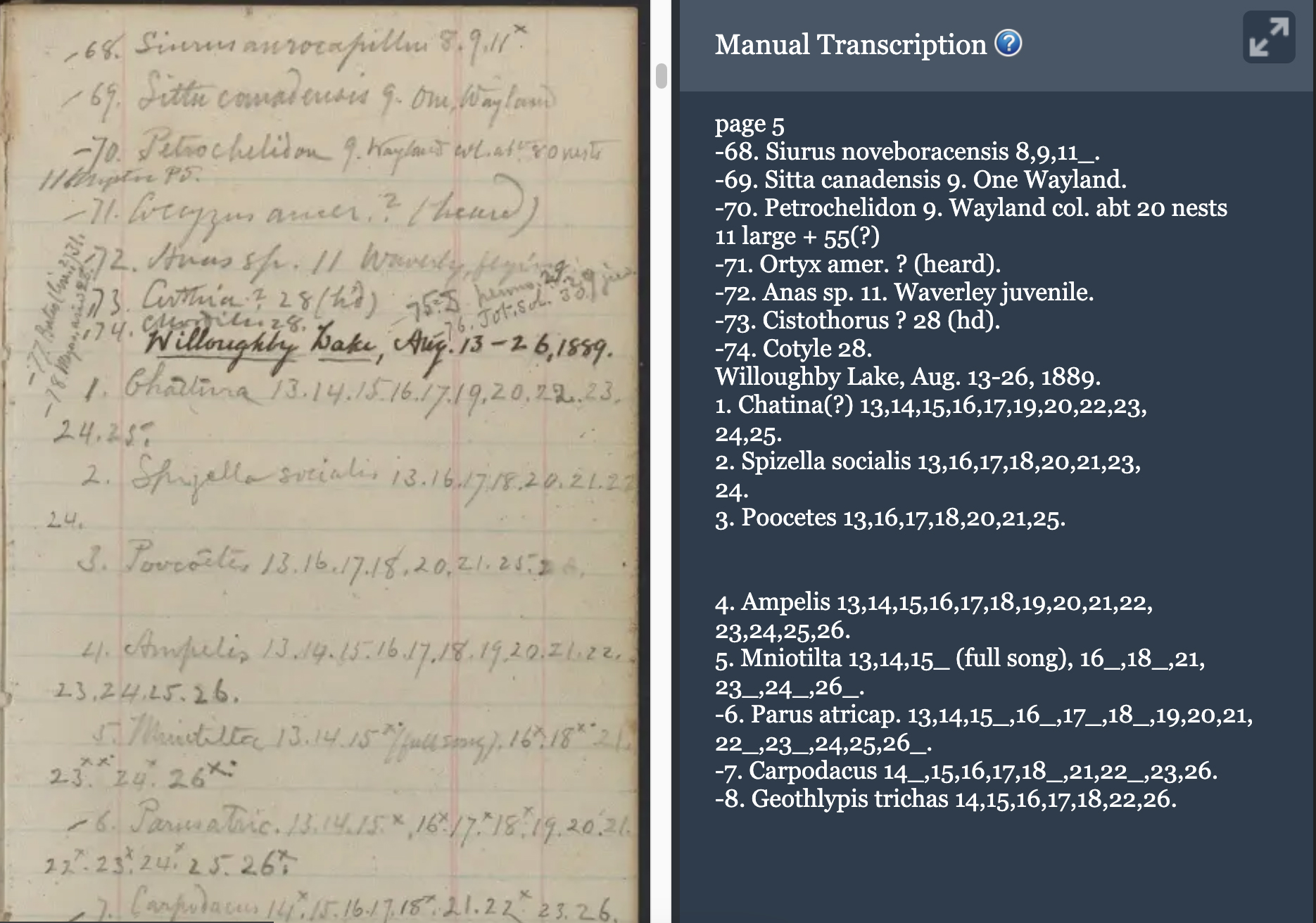
- Angular Marginalia: Notes scribbled at severe angles along page margins were frequently ignored or misaligned by baseline OCR and foundational AI vision models.
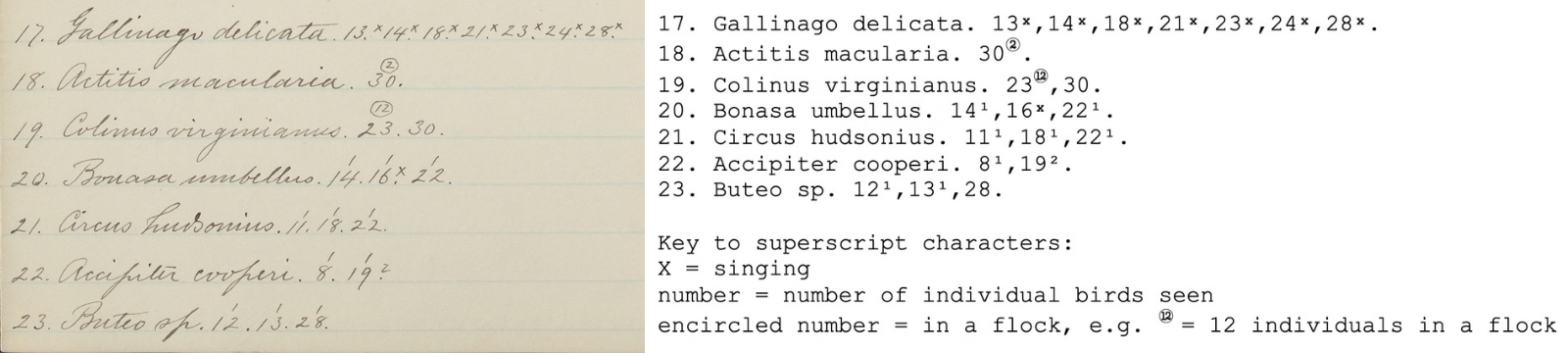
- Interlinear Notations: One of the most persistent operational hurdles involved Faxon’s habit of placing tiny numerical codes, behavioral markers (e.g., whether birds were singing or flocked), and counts between the primary lines of text. Standard word processors and basic LLM outputs tended to collapse these interlinear insertions. Mandal ultimately preserved this relational data by programmatically training the models to format interlinear text as superscript elements.
- AI Hallucinations: Despite high overall accuracy, isolated anomalies occurred. For instance, in Faxon’s 1889–1891 Field Journal, the bluebird species Sialia sialis was occasionally mis-transcribed as Hylocichla ustulata (the Swainson’s thrush), and Merula migratoria (the American robin) was mis-transcribed as Mniotilta varia (the black-and-white warbler)—demonstrating instances where generative models substituted contextually plausible taxonomic names based on flawed visual parsing.
Future Outlook: From Archives to Global Biodiversity Frameworks
The successful completion of the Faxon transcription pilot marks not an endpoint, but a foundational milestone in a broader technological and ecological strategy.
Integration with GBIF
The primary strategic objective of converting Faxon’s manuscript notes into clean, searchable text is export readiness for the Global Biodiversity Information Facility (GBIF). By structuring historical occurrence records—complete with verified species names, precise historical dates, and georeferenced localities—the BHL and EML are opening direct pipelines from locked archival vaults into global ecological databases. When aggregated with millions of other global data points, Faxon’s 19th-century New England bird counts provide researchers with an empirical baseline to measure phenological shifts, range contractions, and population dynamics over a 140-year window.
The Road Ahead: AI-Assisted Archival Processing
As generative artificial intelligence models continue to evolve at an exponential rate, and as the BHL plans its upcoming comprehensive platform modernization, the methodologies forged by Mandal, deVeer, and the Harvard Library team will serve as a scalable framework. Future iterations of AI transcription tools will likely feature native layout-analysis capabilities designed specifically for historical manuscripts, dramatically reducing the manual intervention currently required to parse interlinear notations and complex marginalia.
Ultimately, initiatives like the Walter Faxon project prove that the tools of the future—artificial intelligence and cloud-scale digital libraries—are uniquely equipped to rescue the voices of the past. By liberating handwritten observations from physical archives and feeding them into global biodiversity networks, institutions like Harvard’s Ernst Mayr Library and the Biodiversity Heritage Library are ensuring that centuries-old field notes actively contribute to saving the living biosphere of tomorrow.
Support the Biodiversity Heritage Library
For two decades, the Biodiversity Heritage Library has kept biodiversity knowledge freely accessible to researchers, conservationists, and nature enthusiasts across the globe. Preserving historical treasures like Walter Faxon’s field journals and unlocking the irreplaceable ecological data hidden within their pages requires sustained international cooperation and philanthropic support.
To contribute to the preservation of natural history literature and help fund the next generation of digital archive projects, visit the BHL Donation Portal.



