

Executive Overview
As autumn settles across the British landscape, a familiar seasonal ritual begins for millions of homeowners: sweeping up fallen leaves, cutting back perennial growth, and putting garden beds to bed for the winter. Historically, this period has also signaled a slowdown in biological activity, with traditional cold-composting heaps going dormant in the cold weather and kitchen waste languishing in municipal bins.
However, a quiet revolution in home horticulture is challenging the traditional limitations of backyard waste management. Accelerated composting systems—most notably exemplified by the award-winning HOTBIN composter—are transforming how households handle organic waste. By harnessing high-temperature aerobic decomposition, these insulated units can turn raw food scraps, cooked leftovers, small bones, and stubborn garden weeds into nutrient-dense, peat-free compost in as little as 30 days.
To mark this seasonal shift toward sustainable gardening, a major new giveaway has been launched in partnership with BBC Gardeners’ World Magazine. Two lucky winners will have the opportunity to secure high-performance composting bundles valued up to £313 each. This initiative not only highlights the growing consumer demand for closed-loop household systems but also underscores a broader cultural shift: the urgent need to divert organic waste away from landfills while regenerating depleted garden soils.
This report provides an in-depth examination of the mechanics behind accelerated hot composting, analyzes the environmental imperatives driving its adoption, details the specifics of the current competition, and explores the future outlook of urban and suburban waste recycling in the UK.
Detailed Chronology: The Evolution of Domestic Composting
To understand the significance of modern hot-composting units like the HOTBIN, it is essential to trace the evolution of organic waste management in British backyards.
From Traditional Heaps to Scientific Management
For generations, domestic composting was a passive, low-stakes affair. Gardeners would pile grass clippings, autumn leaves, and vegetable peelings into a wooden pallet bin or a dark plastic cone tucked away in a neglected corner of the garden. Left entirely to nature, this "cold composting" method relied on mesophilic bacteria—microorganisms that thrive in moderate temperatures.
While simple, cold composting comes with severe drawbacks. The process is notoriously slow, often taking anywhere from six months to two years to produce usable humus. Furthermore, because cold heaps rarely reach internal temperatures high enough to destroy pathogens or weed seeds, gardeners were strictly warned against adding cooked food, meat, dairy, or persistent perennial weeds like bindweed and couch grass. Doing so risked attracting vermin, generating foul odors, and contaminating the garden with unwanted plant species.
The Engineering Breakthrough
The introduction of engineered, insulated aerobic digesters marked a major turning point in the early 21st century. Manufacturers realized that by optimizing three core variables—aeration, moisture retention, and thermal insulation—users could rapidly shift the microbial balance from mesophilic to thermophilic (heat-loving) bacteria.
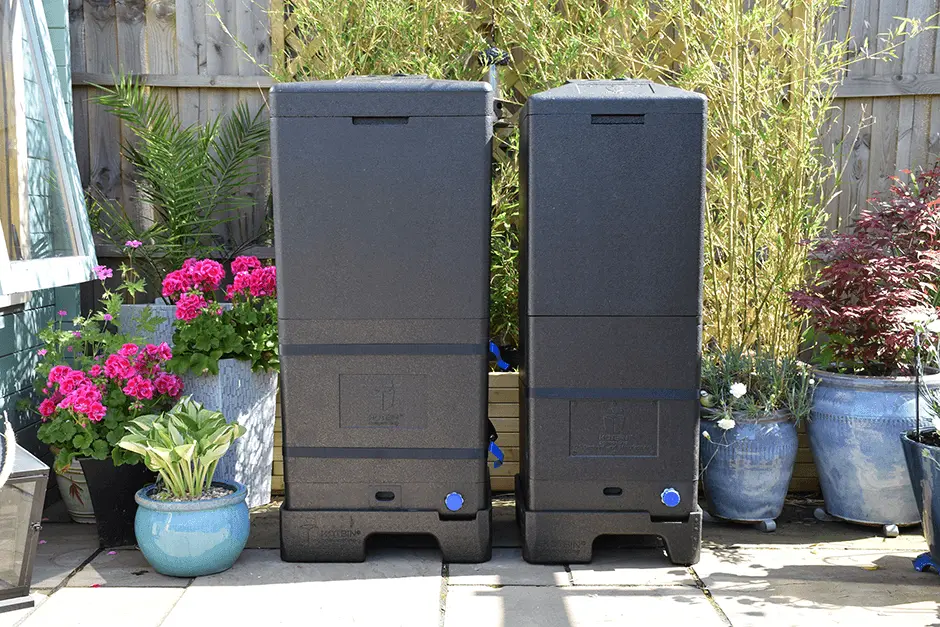
The HOTBIN system emerged as a pioneer in this space, utilizing high-density expanded polypropylene (EPP) to trap the natural heat generated by bacterial respiration. Unlike thin-walled plastic bins that chill rapidly during British winters, a well-managed HOTBIN maintains internal temperatures between 40°C and 60°C year-round. This thermal mass not only accelerates the breakdown of lignin and cellulose but also pasteurizes the contents, neutralizing weed seeds and human or animal pathogens safely.
The Modern Consumer Landscape
Over the past decade, consumer awareness of climate change, landfill overcapacity, and the ecological devastation caused by peat extraction has accelerated the adoption of these advanced systems. No longer viewed merely as a chore for dedicated horticulturalists, composting has become an essential pillar of sustainable living.
The recognition of the HOTBIN as a BBC Gardeners’ World Magazine Best Buy—specifically cited as the fastest composter tested and the premier choice for restricted spatial footprints—cements its status as a mainstream household utility. The current giveaway, offering the Mini 100-litre and 200-litre Essentials Bundles, represents the culmination of this trend, bridging the gap between high-end environmental technology and everyday gardening accessibility.
Supporting Context & Metrics: The Science and Impact of Hot Composting
To fully appreciate the value of accelerated composting, one must examine the hard metrics of household waste and soil health.
The Environmental Toll of Food Waste
According to environmental charity WRAP (Waste and Resources Action Programme, the UK discards millions of tonnes of food and garden waste annually. A significant portion of this organic matter ends up in municipal landfills, where, deprived of oxygen, it undergoes anaerobic decomposition. This process produces methane—a potent greenhouse gas with a global warming potential significantly higher than carbon dioxide over a 20-year timescale.
By diverting food scraps and garden trimmings into an aerobic hot composter, households interrupt this destructive cycle. Aerobic decomposition produces carbon dioxide and water vapor rather than methane, drastically reducing the carbon footprint of domestic refuse.
The Peat Crisis in British Horticulture
Simultaneously, British horticulture faces an existential ecological crisis regarding peat. For decades, commercial compost bags relied heavily on peat harvested from lowland raised bogs—fragile ecosystems that act as vital carbon sinks and support unique biodiversity. Although government regulations and voluntary industry phase-outs are gradually restricting peat sales, gardeners still require high-quality organic matter to condition their soil, retain moisture, and supply essential macronutrients.
Home-produced compost is the ultimate sustainable alternative. A mature batch of HOTBIN compost provides a balanced profile of nitrogen, phosphorus, and potassium (NPK), alongside beneficial trace minerals and microbial life that synthetic fertilizers simply cannot replicate.
Performance Metrics: What Makes a Best Buy?
Independent testing by horticultural authorities highlights several key performance indicators that set elite composting systems apart from standard bins:
- Decomposition Velocity: While traditional bins take up to 24 months, a properly managed HOTBIN processes waste from raw input to finished soil conditioner in 30 to 90 days.
- Input Versatility: Traditional systems restrict users to raw fruit and vegetable waste. Accelerated hot composting safely processes cooked leftovers, bread, meat scraps, small bones, citrus peels, and even diseased plant material, thanks to sustained high temperatures.
- Spatial Efficiency: Modern urban and suburban gardens are shrinking in size. The HOTBIN Mini (100-litre capacity) delivers high-output performance within a compact footprint (approximately 45cm x 45cm), making it ideal for patios, small yards, and tight side-return spaces.
- Thermal Retention: Utilizing closed-cell EPP insulation (similar to the material used in high-performance thermal transport boxes), the unit maintains active biological decomposition even when ambient outdoor temperatures drop below freezing.
Official Prize Details & Giveaway Breakdown
To support gardeners in upgrading their waste management infrastructure, the ongoing promotional campaign offers participants the chance to win comprehensive, professionally curated composting packages.
Prize Options
Two confirmed winners will each be given their choice of one of two flagship packages:
- HOTBIN Mini 100-litre Essentials Bundle (Valued at £243)
- Target Audience: Single-person households, couples, or owners of compact urban gardens with limited outdoor space.
- Capacity: 100 litres of processing volume, optimized for smaller volumes of weekly kitchen and garden waste.
- HOTBIN 200-litre Essentials Bundle (Valued at £313)
- Target Audience: Families, avid gardeners, or households generating higher volumes of organic waste.
- Capacity: 200 litres of processing volume, allowing for simultaneous bulk composting of garden clearances and daily kitchen peelings.
Included Bundle Components
Each bundle is designed to provide an out-of-the-box, frictionless entry into advanced composting. Alongside the primary insulated chamber, winners will receive:
- The HOTBIN Plinth: A specialized riser that elevates the composter off the ground. Beyond improving ergonomic access when adding waste or harvesting compost, the plinth serves a critical functional role by capturing liquid fertilizer (often referred to as "liquid gold") as it drains from the bottom of the unit. This nutrient-rich leachate can be diluted and used to feed potted plants and flower beds.
- The HOTBIN Garden Kneeler: An ergonomic accessory engineered to provide physical support during ground-level horticultural tasks, whether planting bulbs, weeding, or shoveling finished compost from the base hatch.
Future Outlook: The Next Decade of Sustainable Horticulture
As municipal authorities face escalating costs associated with waste collection and landfill tax, the onus of sustainability is increasingly shifting toward the individual household. Looking ahead to the late 2020s and beyond, several key trends are set to shape the future of domestic composting and urban agriculture.
Decentralized Waste Management
Municipalities across the UK are under immense financial and environmental pressure to reduce kerbside collection tonnages. Encouraging decentralized, on-site composting represents one of the most cost-effective methods for local authorities to hit net-zero targets. We can anticipate broader educational initiatives, and potentially local council subsidies, encouraging residents to adopt thermal composting systems to minimize the burden on municipal food-waste fleets.
Technological Integration and Smart Gardening
Just as robotic lawnmowers and automated irrigation systems have revolutionized garden maintenance, the future of composting is becoming increasingly data-driven. Future iterations of accelerated composters are expected to integrate smart sensors—monitoring internal moisture levels, carbon-to-nitrogen ratios, and core temperatures in real-time, transmitting this data directly to smartphone applications to guide users on when to add bulking agents or harvest finished material.
The Circular Economy in the Suburban Backyard
Ultimately, the growing popularity of systems like the HOTBIN reflects a profound philosophical shift in how we view "waste." In a truly circular economy, the boundary between the kitchen and the garden dissolves. Potato peelings, coffee grounds, autumn leaves, and pruned branches are no longer discarded burdens; they are valuable raw materials earmarked for the regeneration of local soil.
By embracing high-performance thermal composting today, gardeners are not merely tidying up their plots for the winter—they are actively participating in a grassroots ecological movement that redefines waste as the lifeblood of tomorrow’s harvest.
Competition Summary & Entry Guidelines
For those eager to transform their garden waste management strategy, participating in the giveaway is straightforward, though strict eligibility criteria apply:
- Eligibility: Entrants must be UK residents aged 18 or over.
- Deadline: All correct entries must be submitted by 23:59 on 9 November 2026.
- Action Required: Participants must correctly answer the designated horticultural question hosted on the official competition portal before the closing timestamp.
- Notification: Winners will be formally notified following the closing date, at which point arrangements for the delivery of their chosen bundle (£243 Mini or £313 Standard 200L package) will be coordinated.
As winter approaches and gardens enter their dormant phase, investing time in mastering accelerated composting ensures your household is primed for a greener, more productive, and entirely sustainable growing season ahead.



